Nature appreciation Adding Up to 5 Worksheets for 3-Year-Olds
5 filtered results
-
From - To
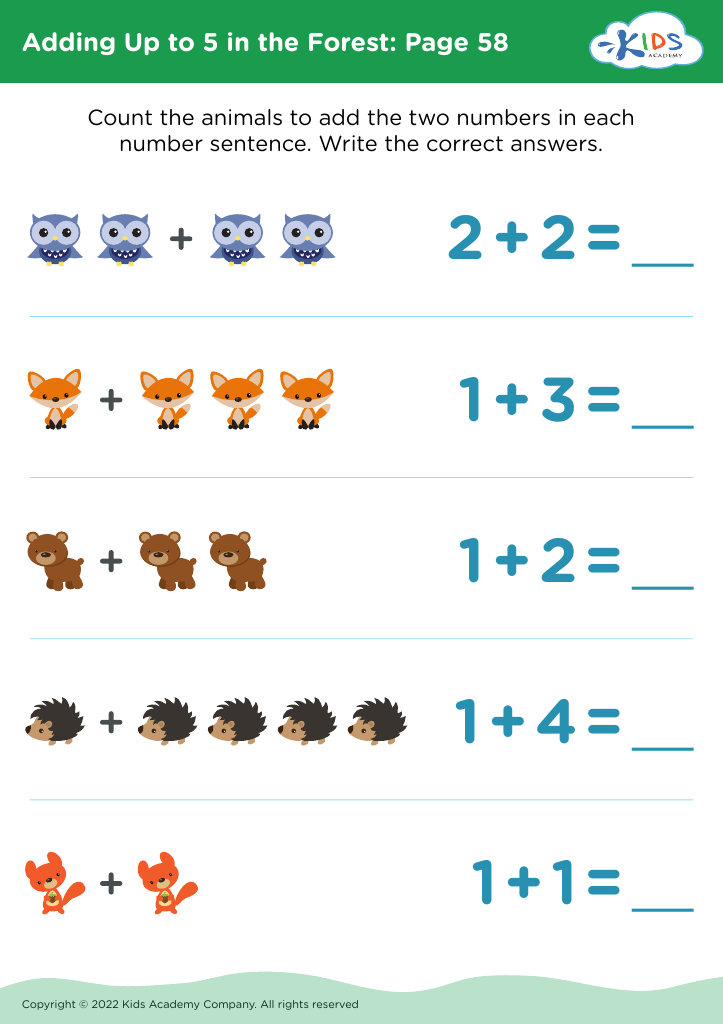
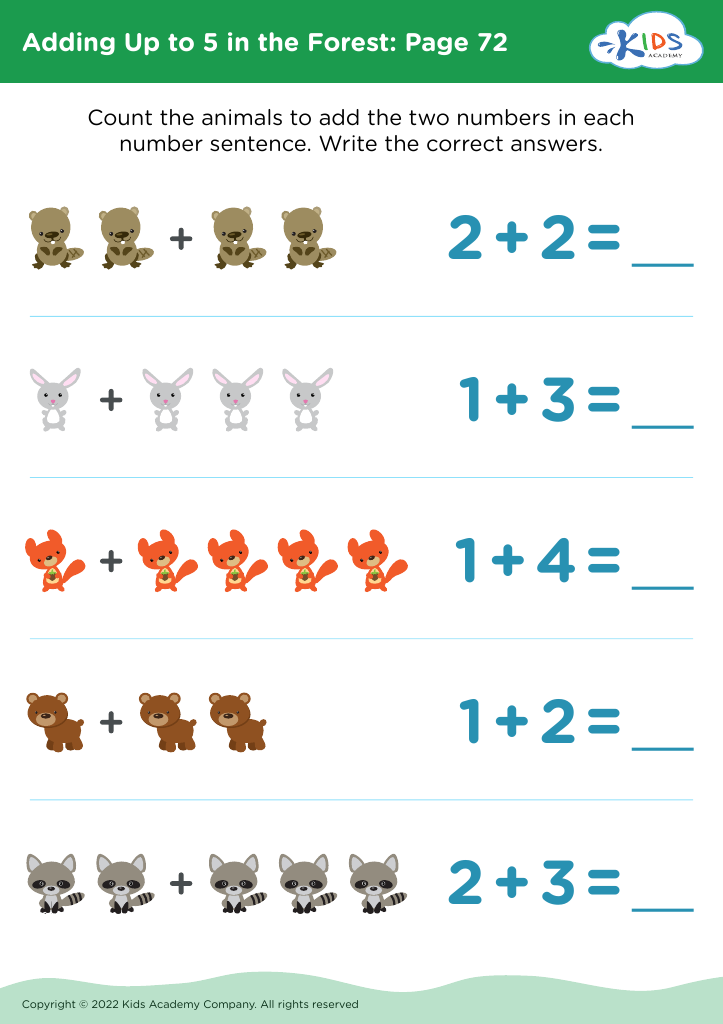
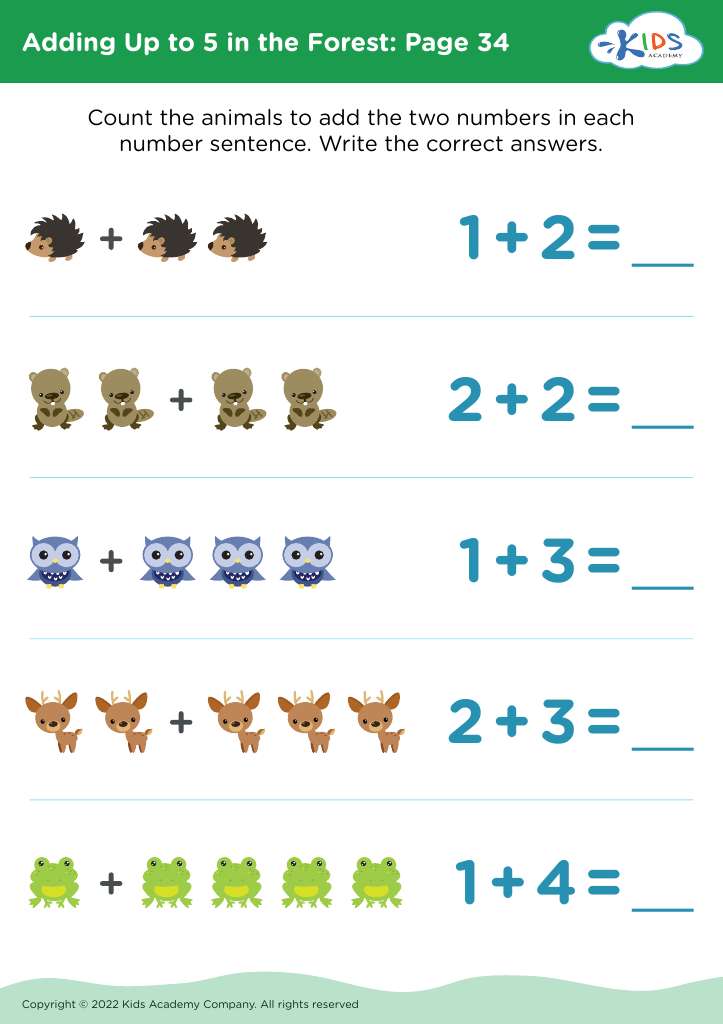
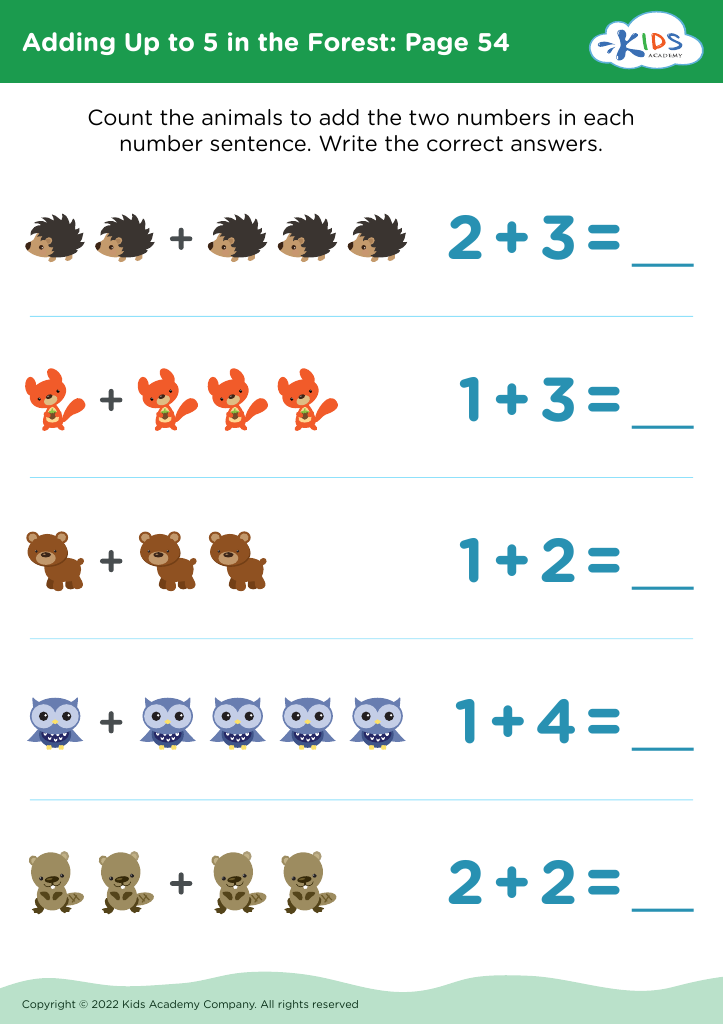
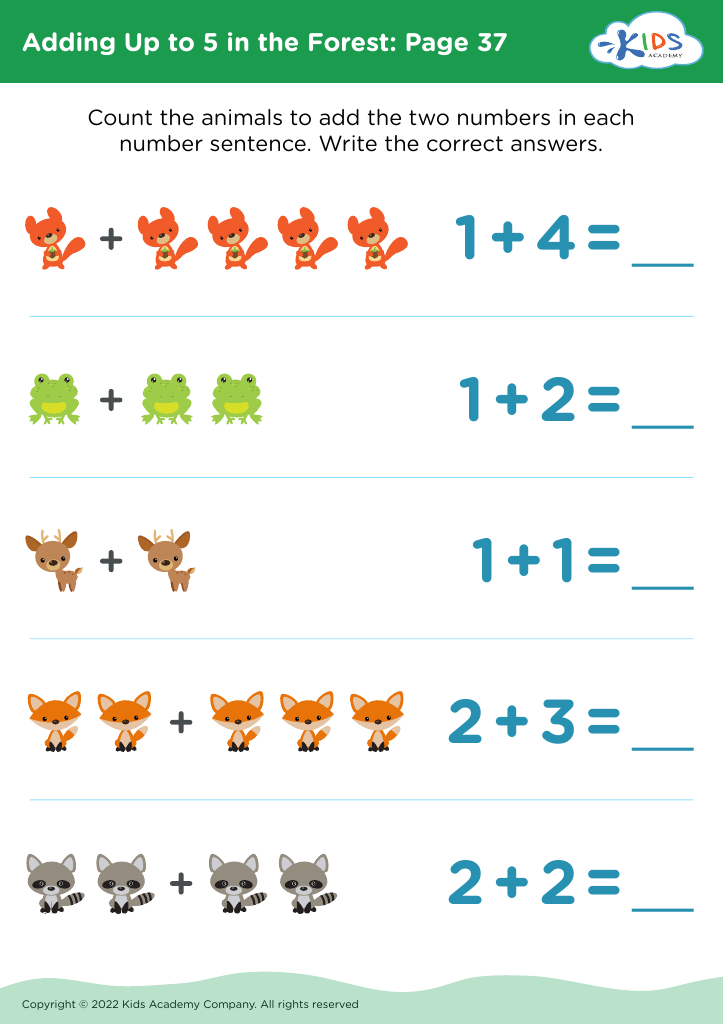
Explore the beauty of nature while enhancing math skills with our "Nature Appreciation: Adding Up to 5" worksheets for 3-year-olds! Designed to cultivate a love for the environment, these engaging activities integrate fun and foundational math learning. Your little ones will count and add various elements found in nature, such as trees, animals, and flowers, while developing essential early math skills. These worksheets not only promote early numeracy but also foster curiosity and respect for the natural world. Perfect for preschool settings or at-home learning, each worksheet is crafted to ensure hours of interactive fun while encouraging appreciation for our planet!




%20(1).jpg)



Nature appreciation plays a vital role in the development of young children, particularly for three-year-olds learning to add. Engaging with nature stimulates curiosity and encourages exploration, fostering a sense of wonder as they observe plants, animals, and the environment. This connection with nature can enhance their cognitive development, supporting early math skills, including counting and addition.
By using natural objects, like stones or leaves, parents and teachers can make math engaging and relatable. For instance, counting rocks during a walk or adding up flowers in a garden teaches basic addition in a playful context. This hands-on learning allows children to visualize numbers, reinforcing their understanding of quantity and relationships.
Additionally, outdoor activities can boost children's physical health and emotional well-being. When children spend time in nature, they develop social skills through cooperative play, enhancing their overall learning experience.
Ultimately, fostering nature appreciation at this early age builds a strong foundation for math skills while nurturing respect for the environment. By integrating joyful, nature-based experiences into their learning, educators and parents can create a holistic educational experience that supports both emotional and intellectual growth.








