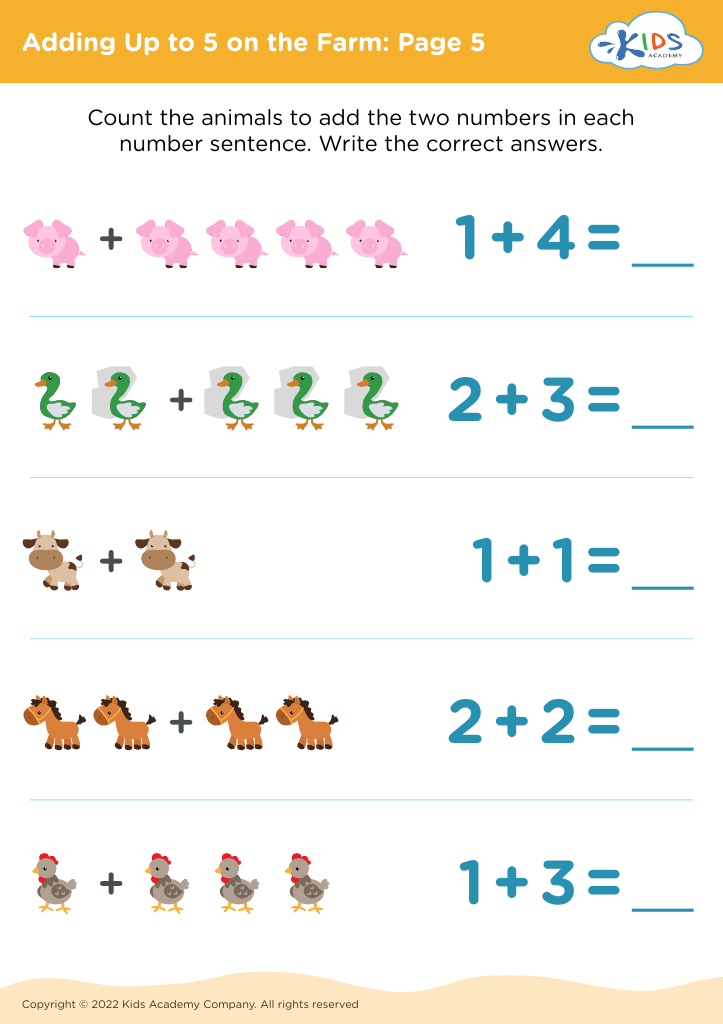
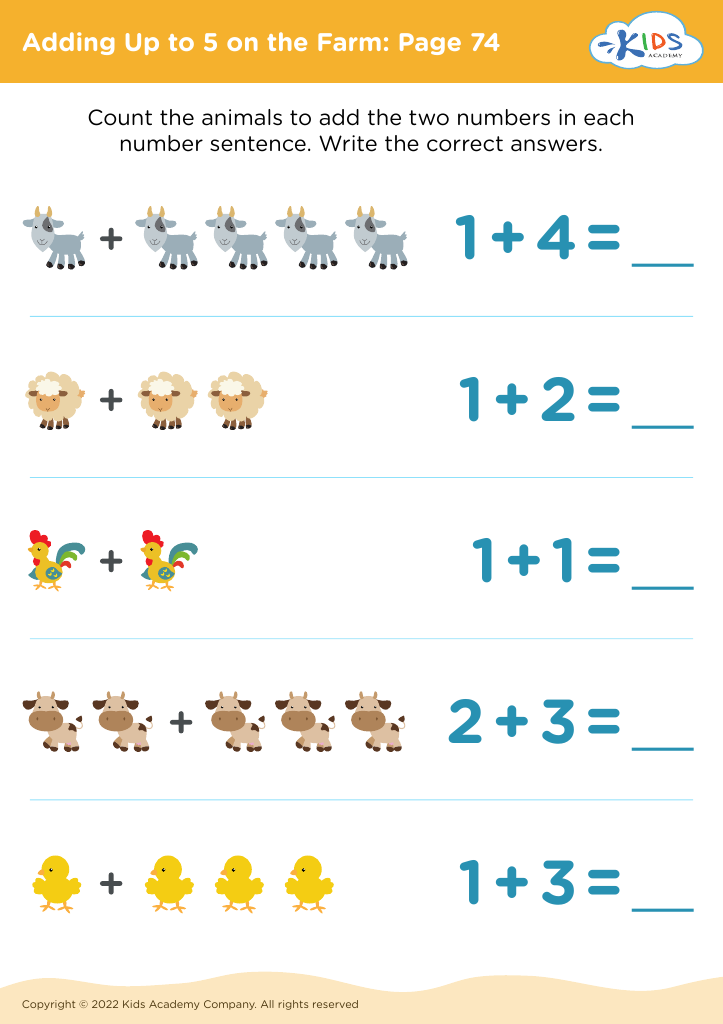
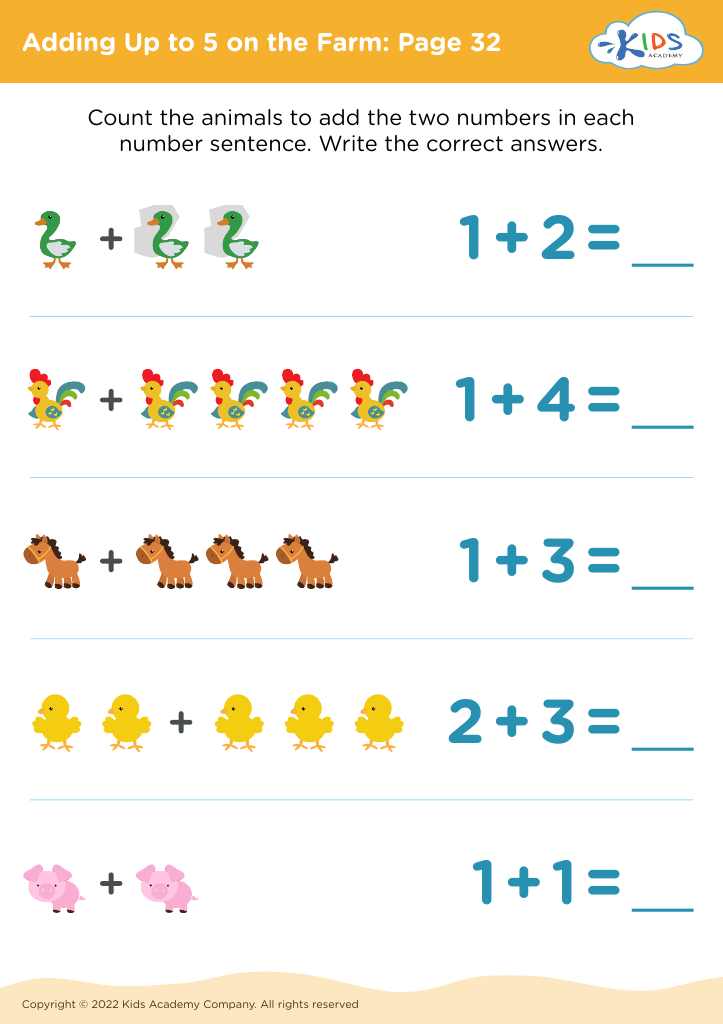
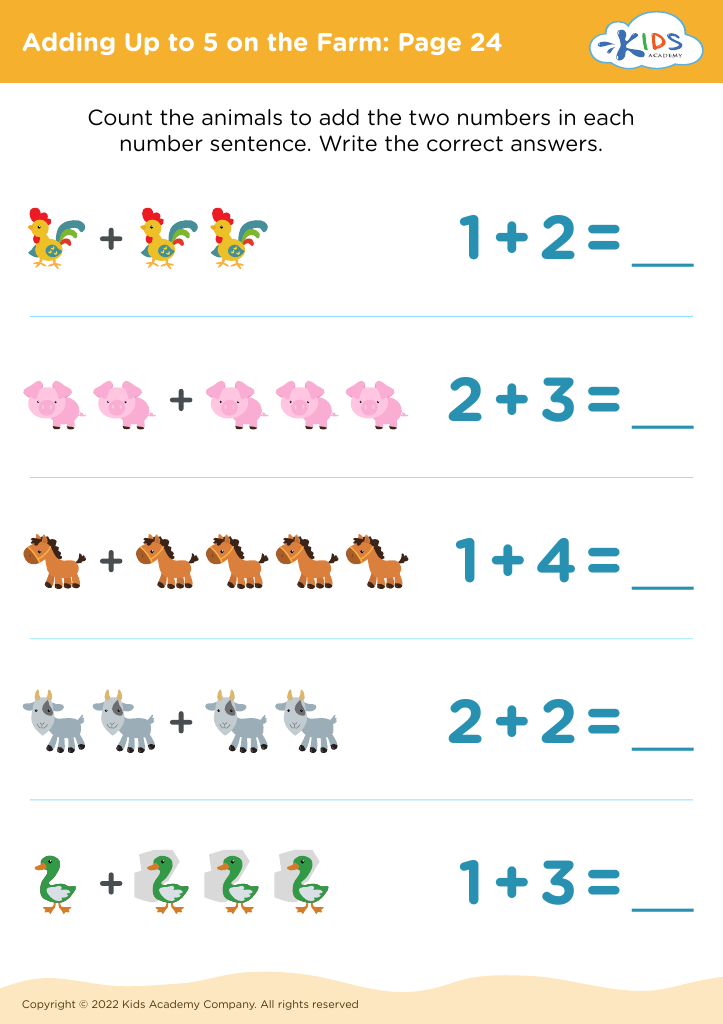
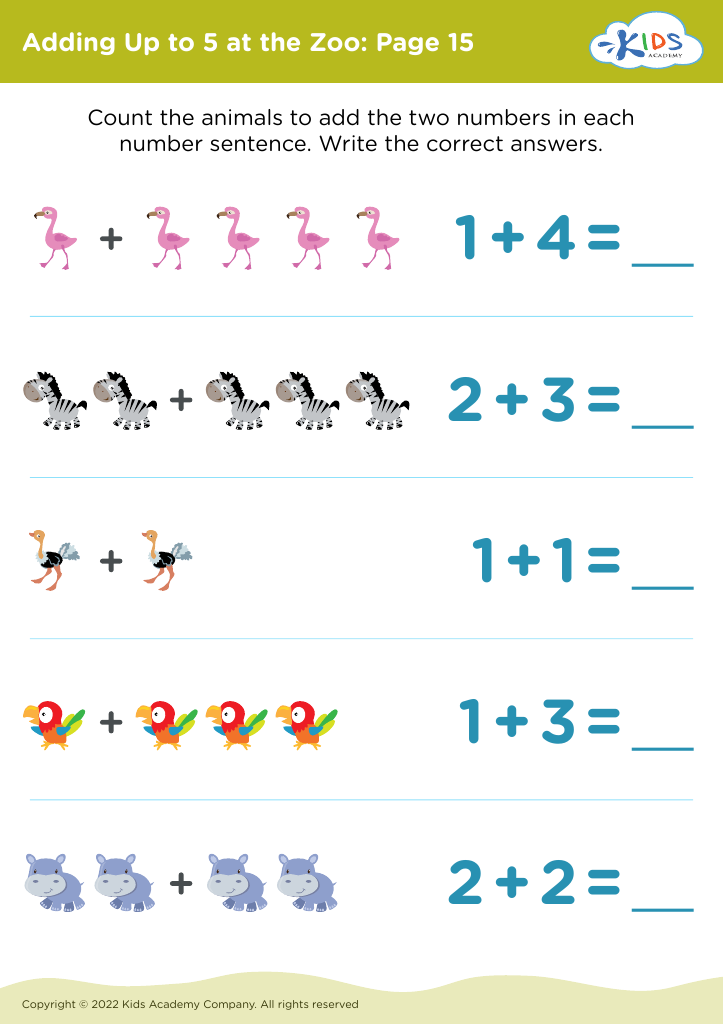
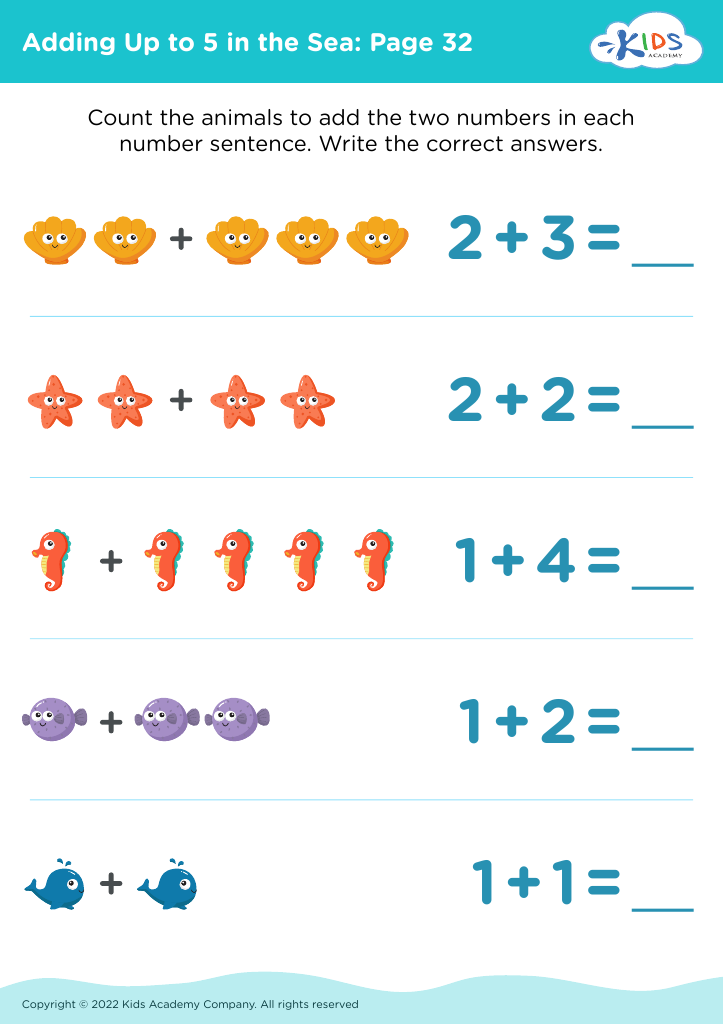
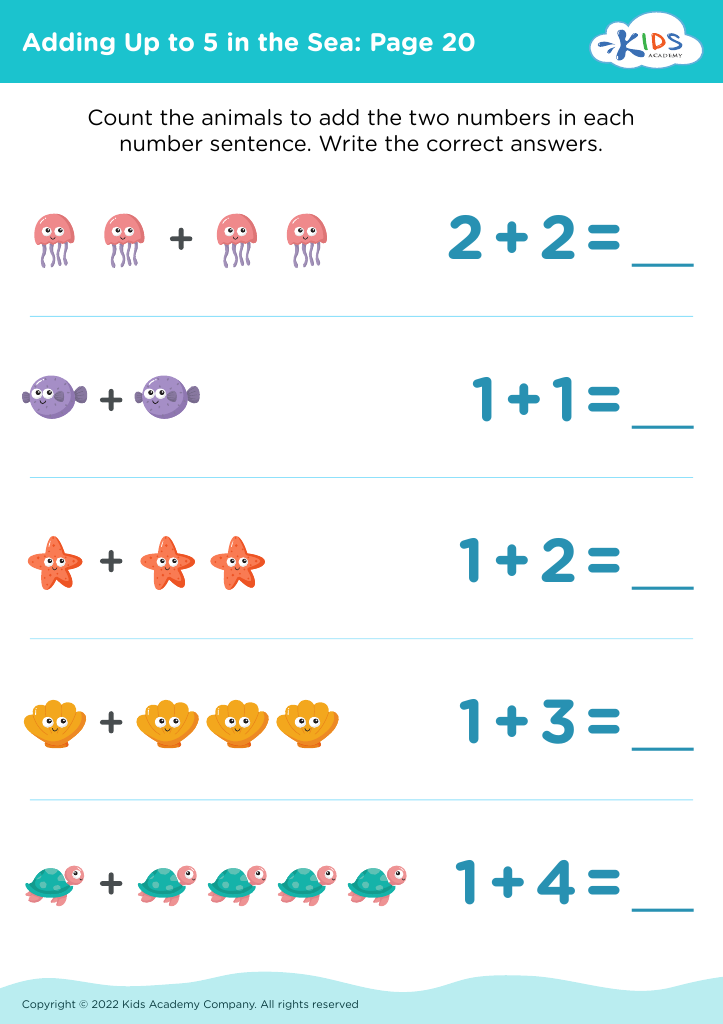
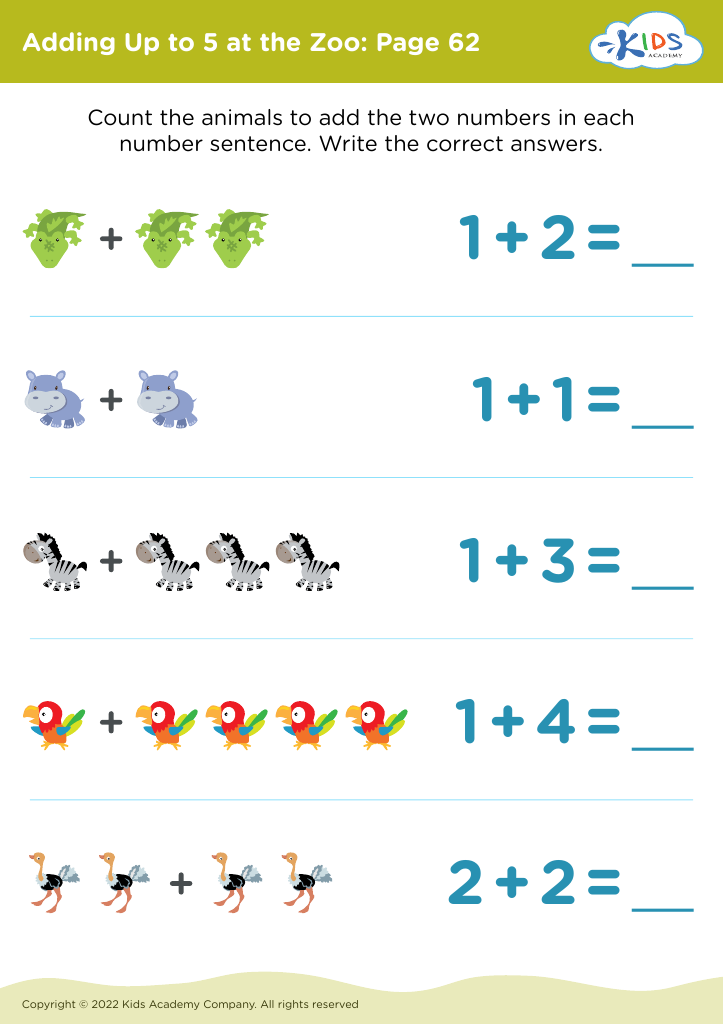
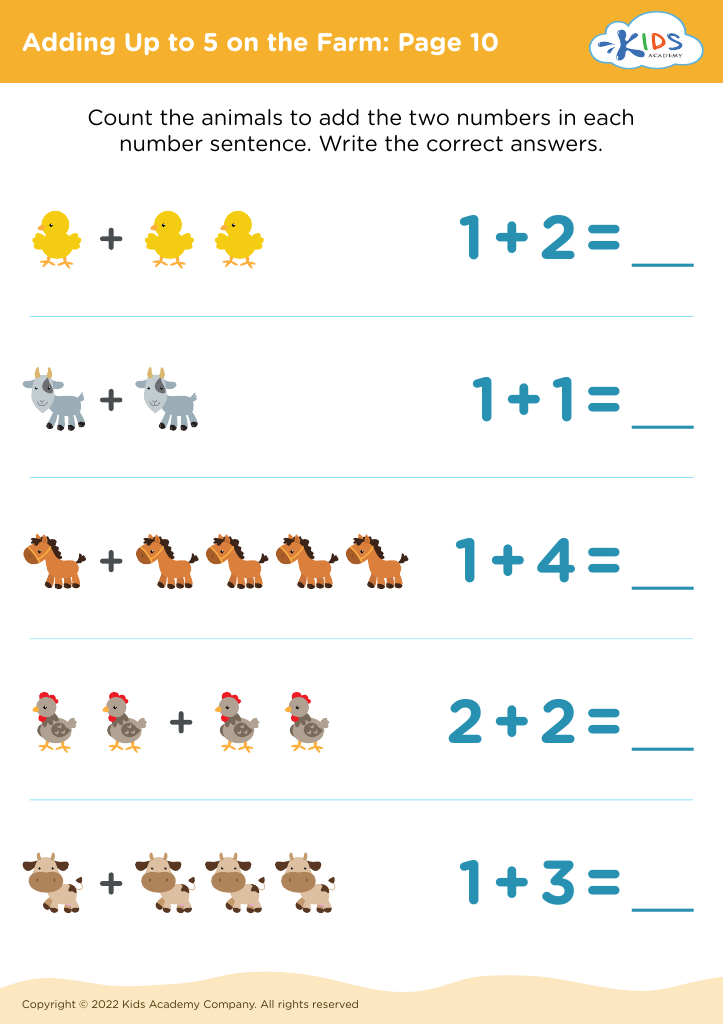
Our "Understanding Quantities Adding Up to 5" worksheets are designed for 3-year-olds to foster early math skills. These engaging activities help children recognize and count quantities up to five, promoting basic addition understanding in a playful and educational manner. Perfect for both classroom and at-home learning, these worksheets use colorful illustrations and simple exercises to keep toddlers captivated while building their numerical proficiency. As they complete each task, little learners gain confidence in their ability to understand and manipulate numbers, setting a strong foundation for future math success. Dive into fun learning with these expertly crafted sheets!
Check out this FREE Trial Lesson on Adding Up to 5 for age 3!

Match Objects that Fit Together

Favorites
With answer key
Interactive
  • 3
  • Understanding Quantities
  • Adding Up to 5
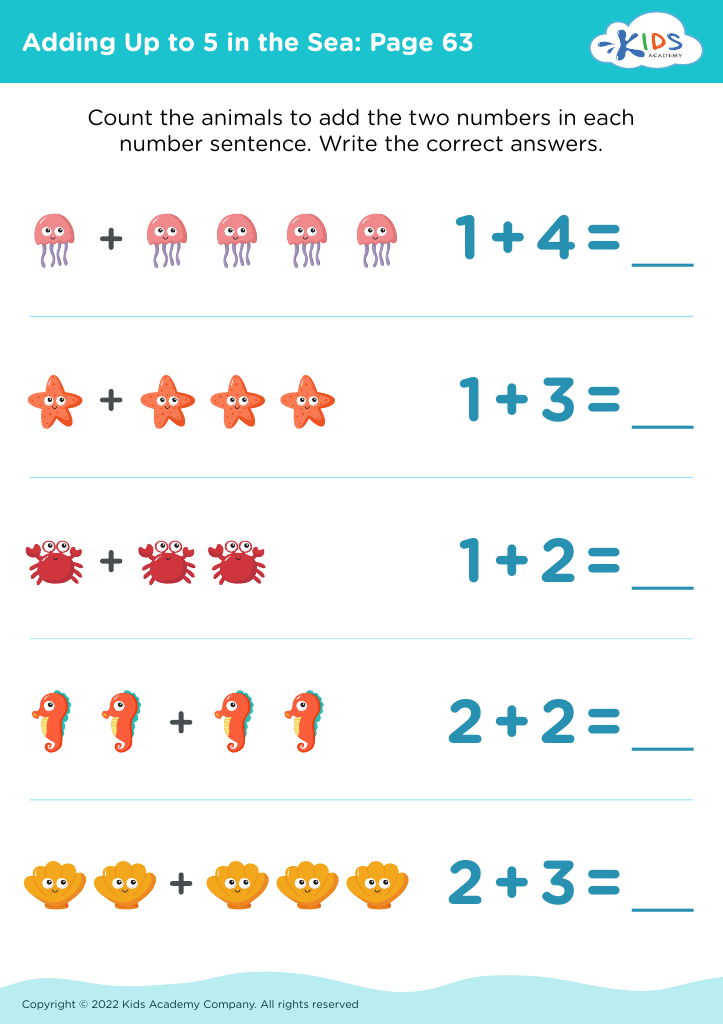
Adding Up to 5 in the Sea: Page 63
Worksheet
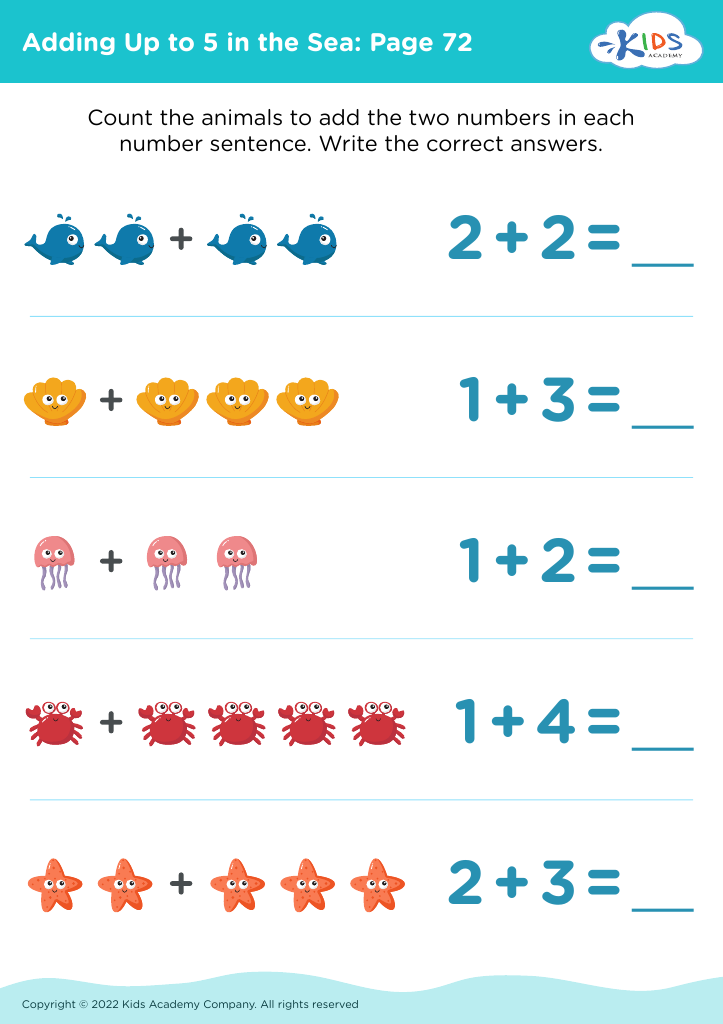
Adding Up to 5 in the Sea: Page 72
Worksheet
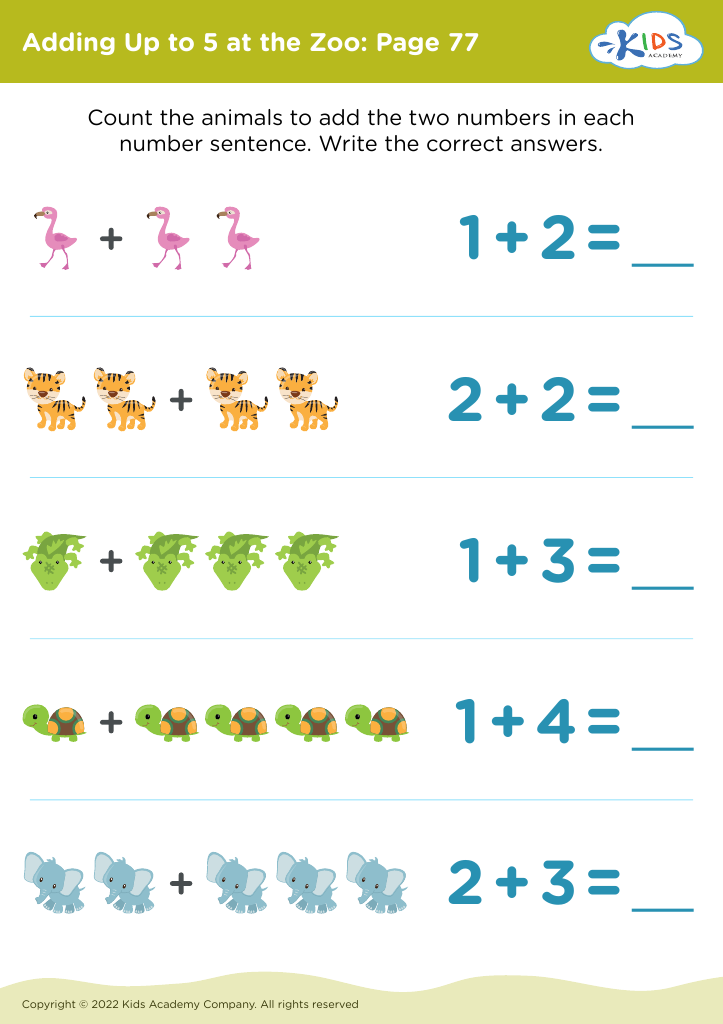
Adding Up to 5 at the Zoo: Page 77
Worksheet
Adding Up to 5 on the Farm: Page 5
Worksheet
Adding Up to 5 on the Farm: Page 74
Worksheet
Adding Up to 5 on the Farm: Page 32
Worksheet
Adding Up to 5 on the Farm: Page 24
Worksheet
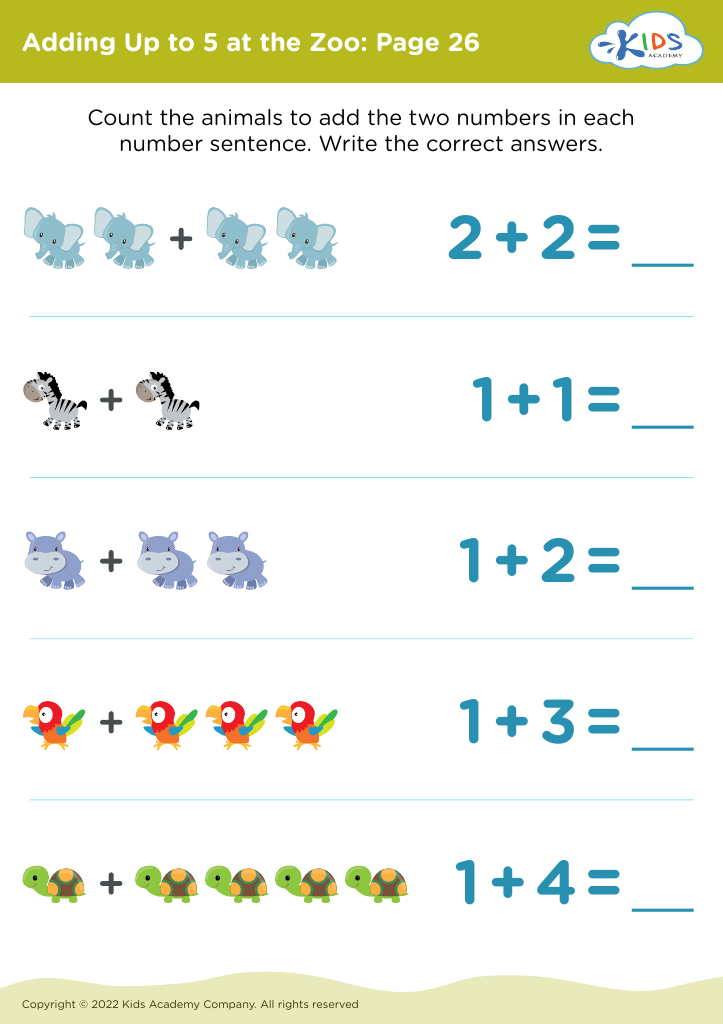
Adding Up to 5 at the Zoo: Page 26
Worksheet
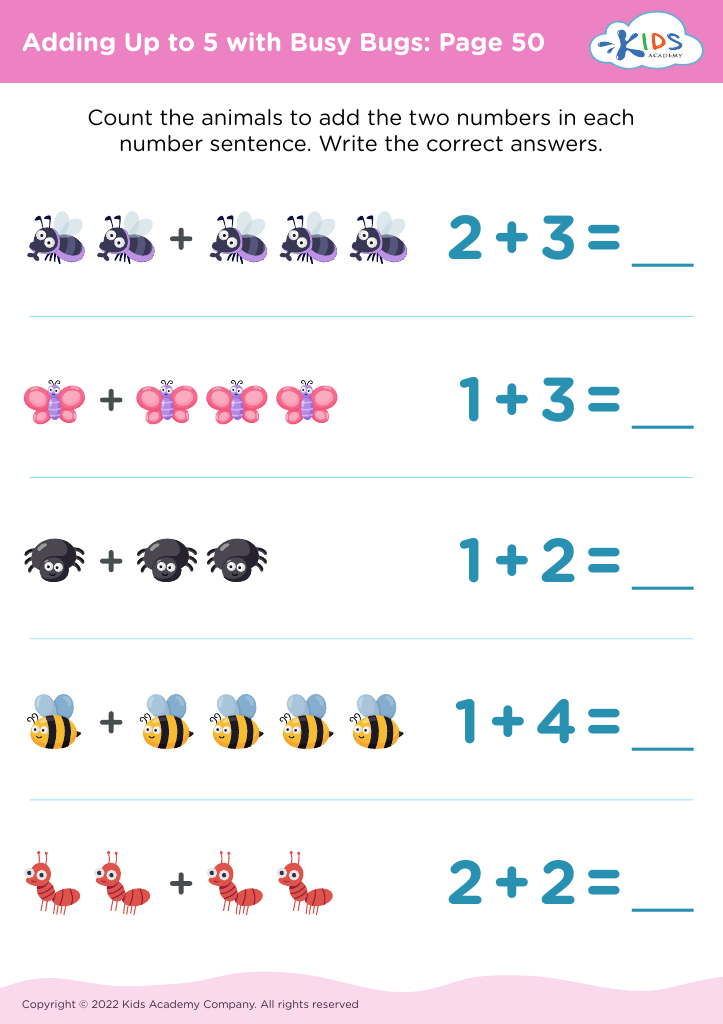
Adding Up to 5 with Busy Bugs: Page 50
Worksheet
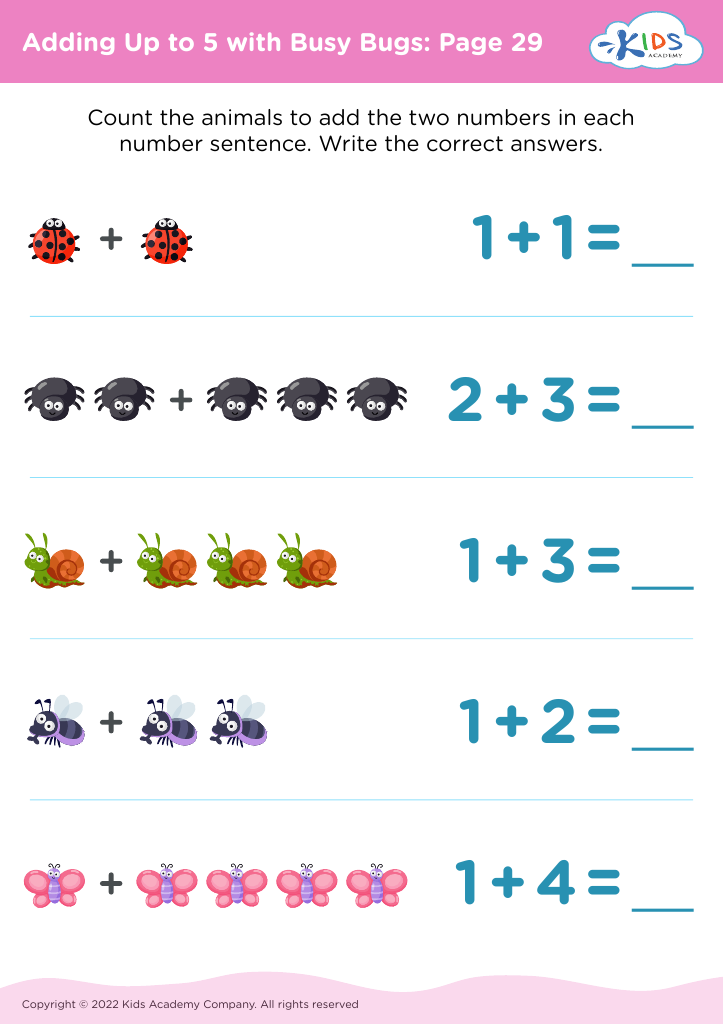
Adding Up to 5 with Busy Bugs: Page 29
Worksheet
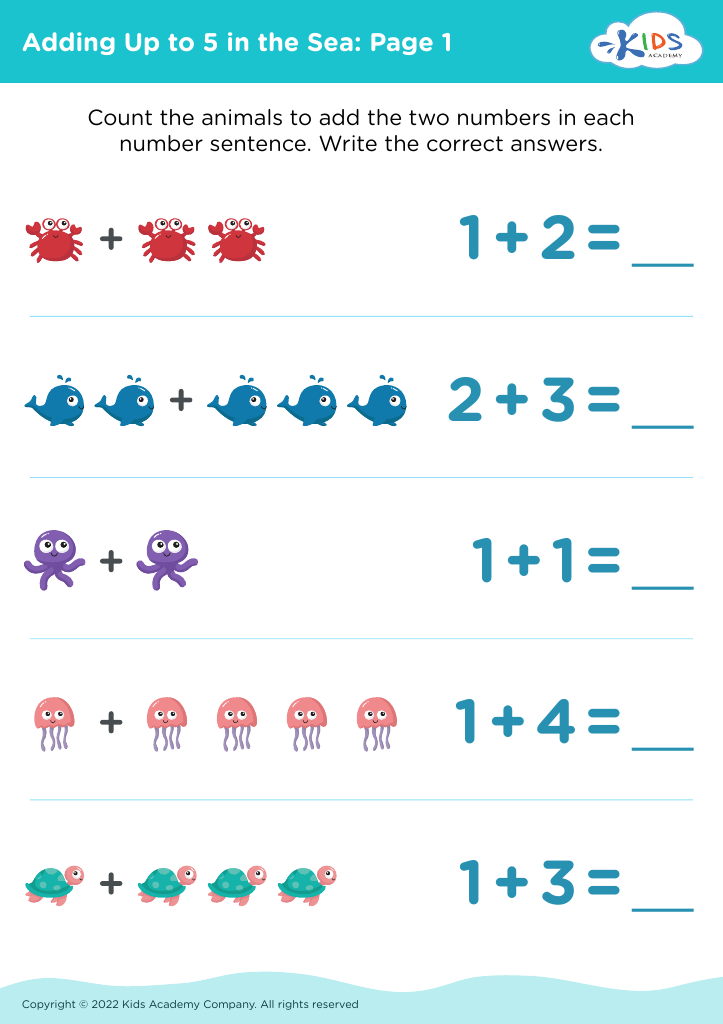
Adding Up to 5 in the Sea: Page 1

Adding Up to 5 in the Sea: Page 1

Adding Up to 5 in the Sea: Page 1
Worksheet
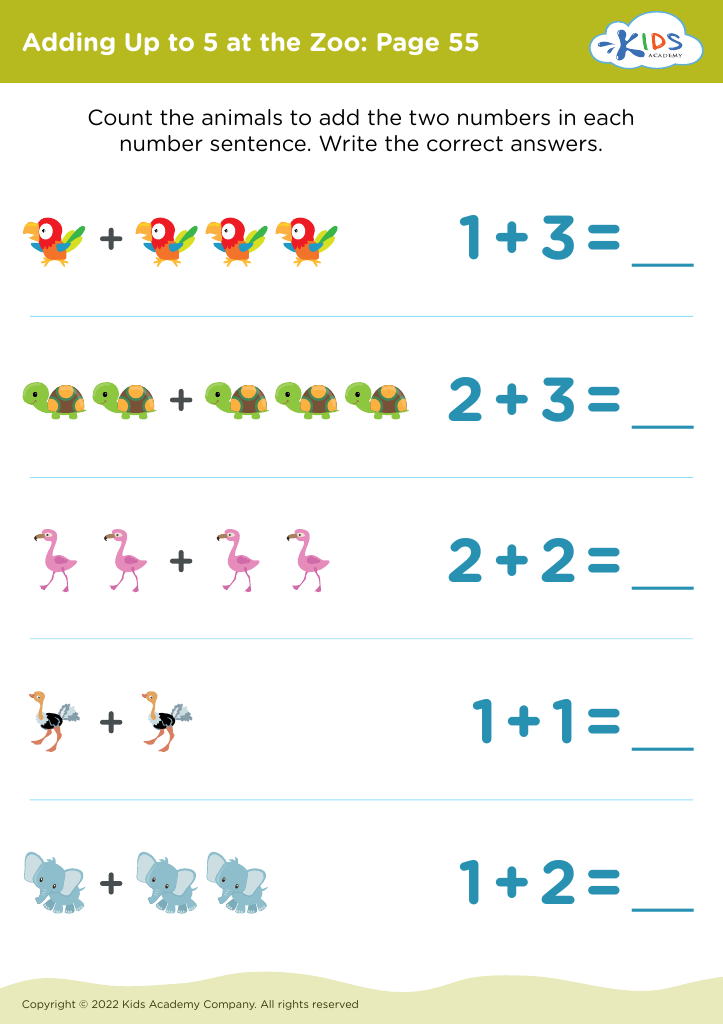
Adding Up to 5 at the Zoo: Page 55
Worksheet
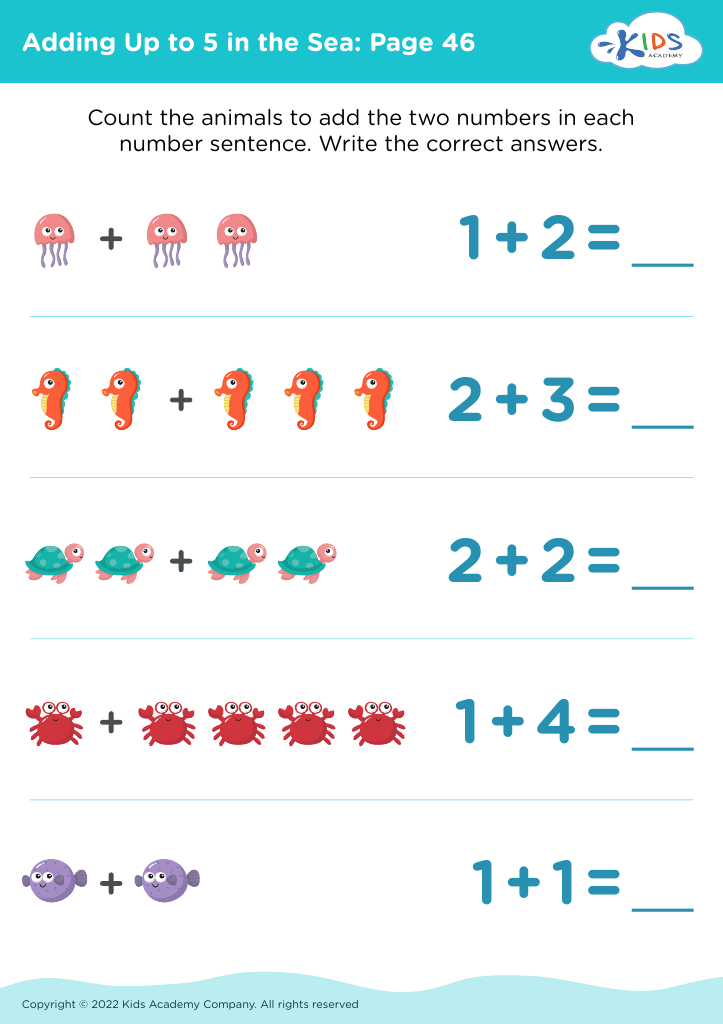
Adding Up to 5 in the Sea: Page 46
Worksheet
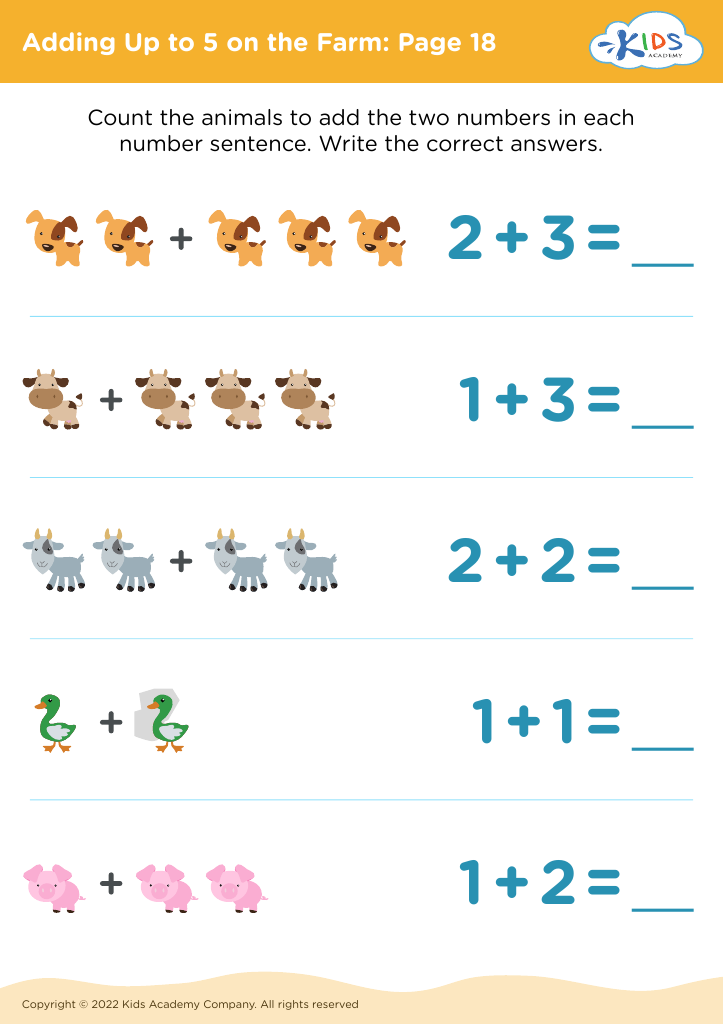
Adding Up to 5 on the Farm: Page 18
Worksheet
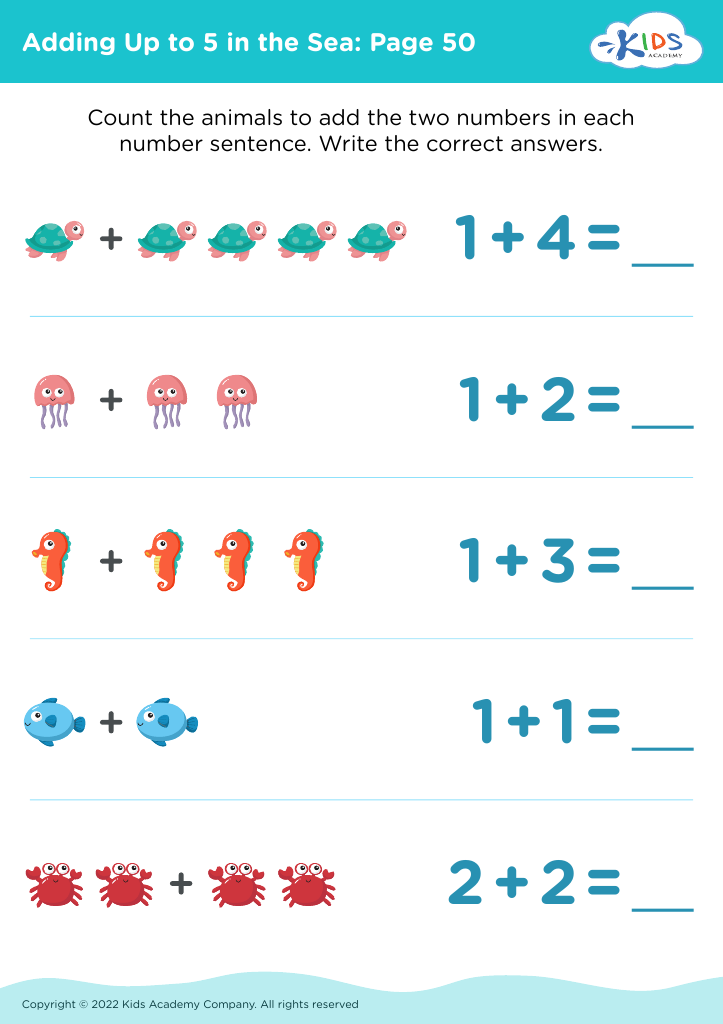
Adding Up to 5 in the Sea: Page 50
Worksheet
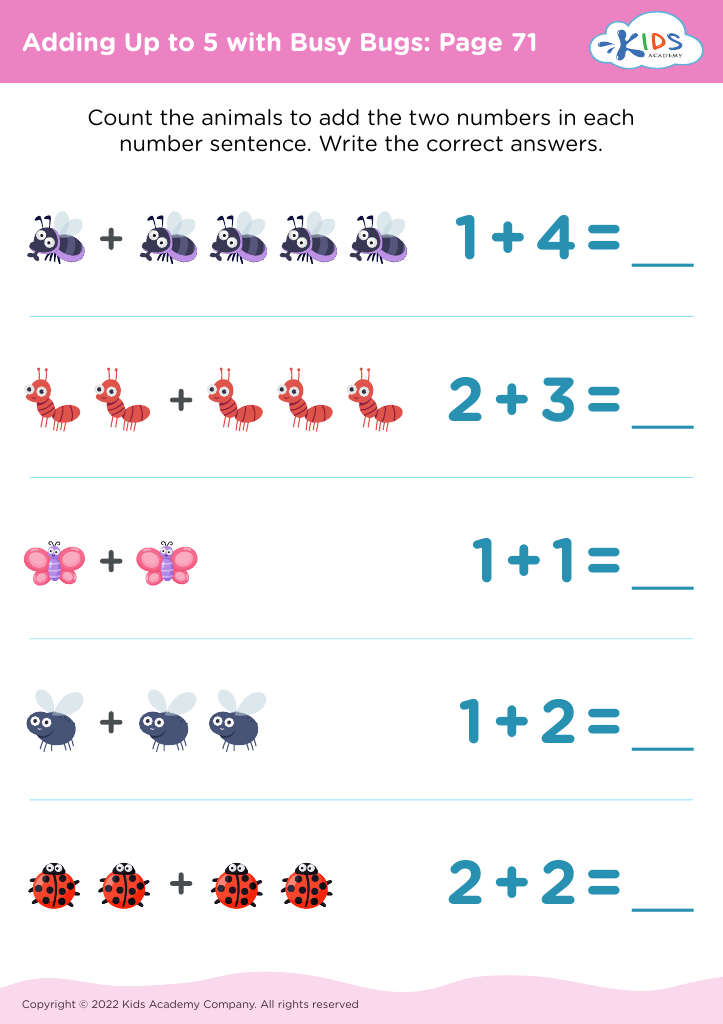
Adding Up to 5 with Busy Bugs: Page 71
Worksheet
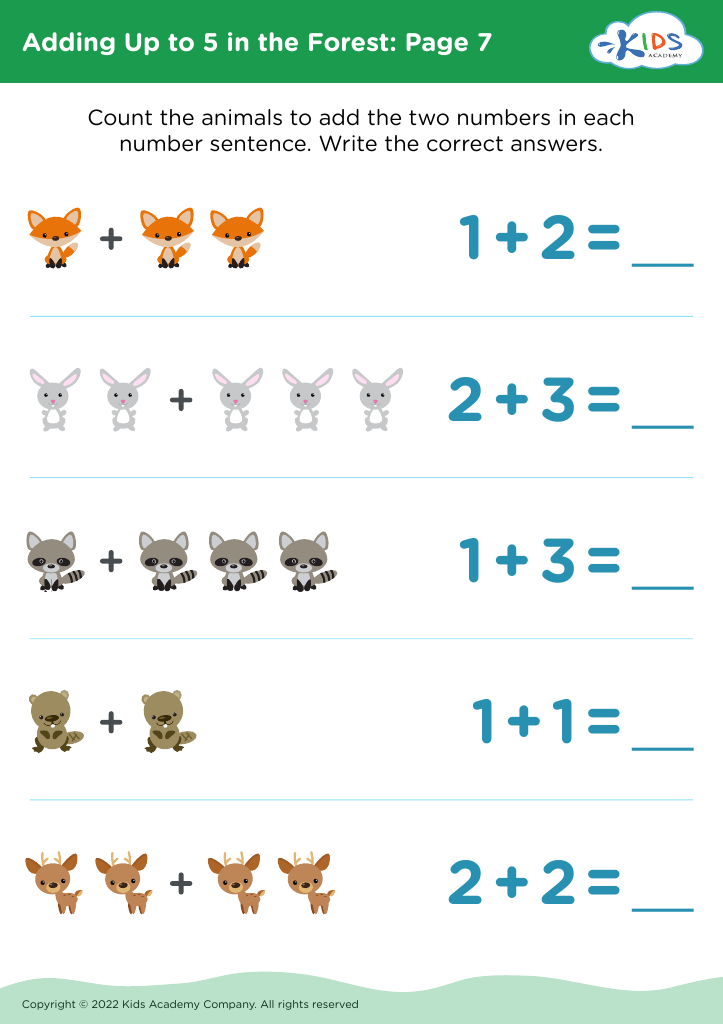
Adding Up to 5 in the Forest: Page 7
Worksheet
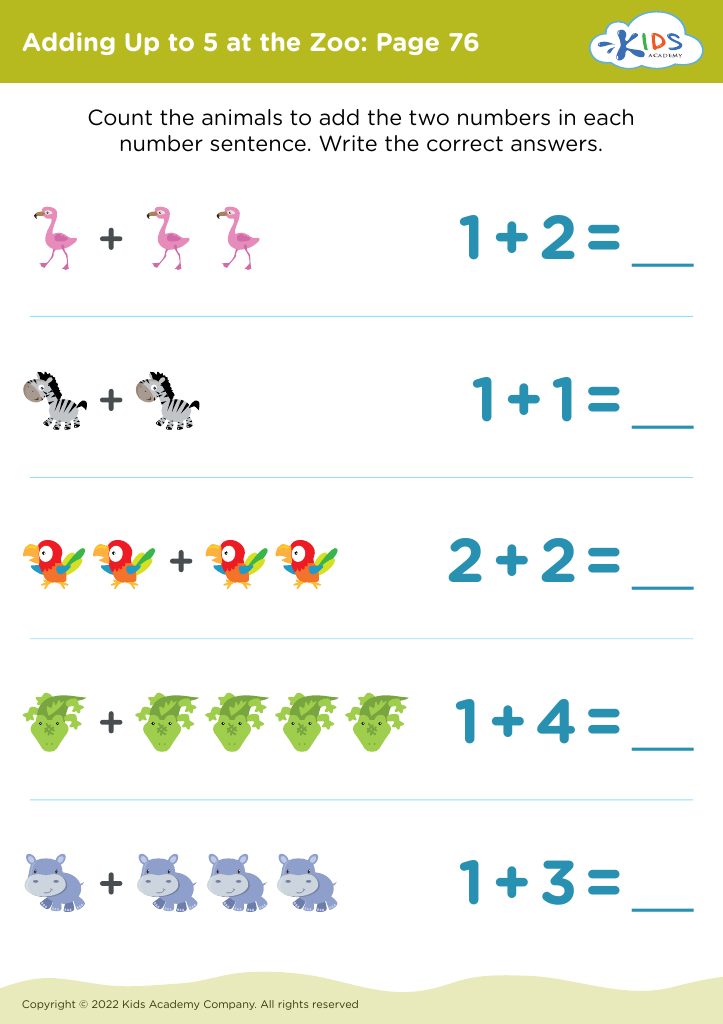
Adding Up to 5 at the Zoo: Page 76
Worksheet
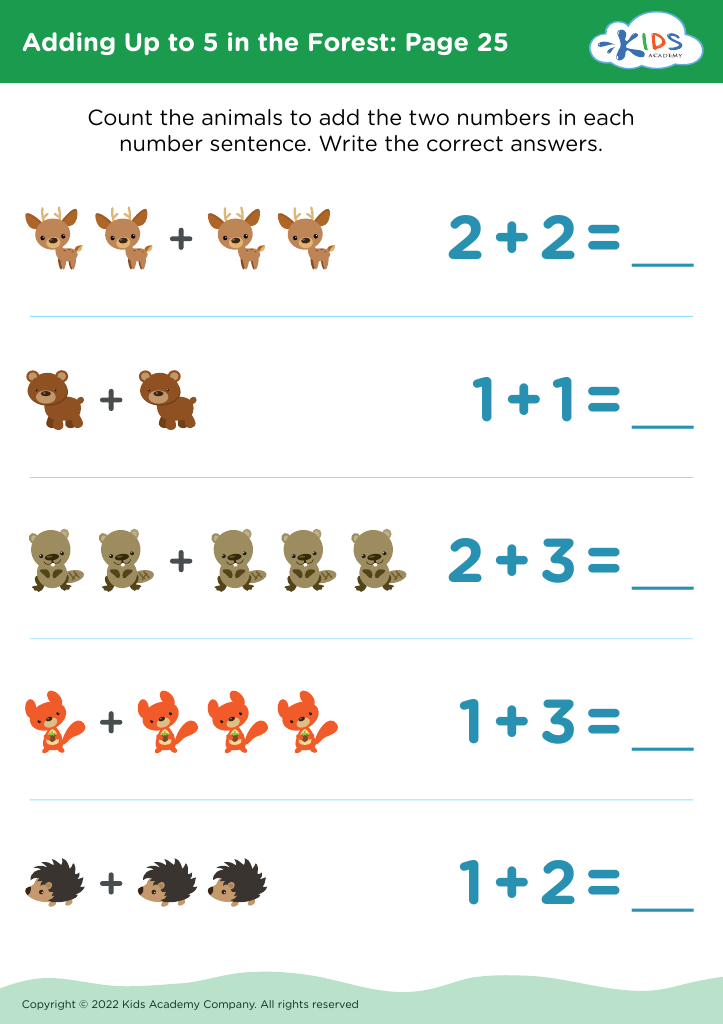
Adding Up to 5 in the Forest: Page 25
Worksheet
Adding Up to 5 at the Zoo: Page 15
Worksheet
Adding Up to 5 in the Sea: Page 32
Worksheet
Adding Up to 5 in the Sea: Page 20
Worksheet
Adding Up to 5 at the Zoo: Page 62
Worksheet
Adding Up to 5 on the Farm: Page 10
Worksheet


Parents and teachers should place importance on teaching 3-year-olds to understand quantities adding up to 5 because it creates a strong mathematical foundation during early childhood, which is crucial for later academic success. At this developmental stage, children are naturally curious and rapidly developing cognitive skills. Grasping basic concepts such as adding quantities up to 5 enhances their number sense, an essential precursor to more complex mathematical learning.

Understanding small quantities fosters the ability to recognize patterns and relationships between numbers, critical thinking, and problem-solving skills. For instance, learning that 2 and 3 make 5 not only teaches a fundamental arithmetic fact but also helps children comprehend the idea of parts making up a whole. This understanding is key for future arithmetic, algebra, and even logical reasoning.

Moreover, early math skills have been linked to better academic performance in both math and literacy as children progress through school. By engaging young minds with fun, hands-on learning activities such as counting objects, using fingers, or playing simple number games, parents and teachers can make learning enjoyable and boost confidence in the child's ability to tackle new challenges.

In essence, investing attention in this developmental milestone paves the way for academic achievement, nurturing confidence, and an ongoing interest in learning.