Basic Addition Skills Adding with Busy Bugs Worksheets for 3-Year-Olds - Page 2
34 filtered results
-
From - To
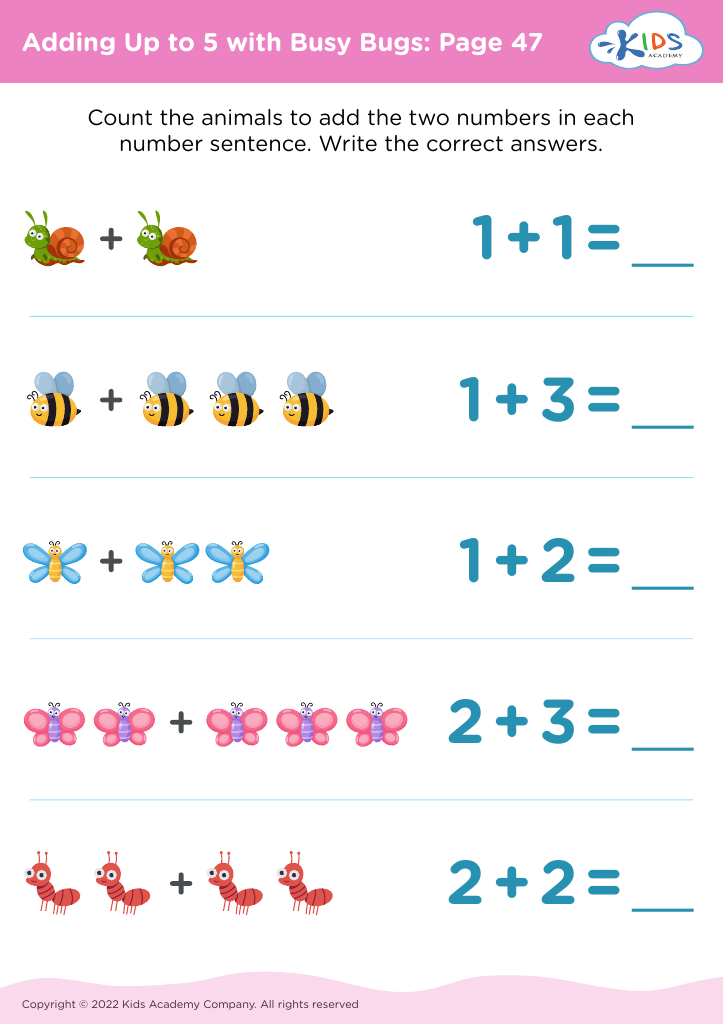
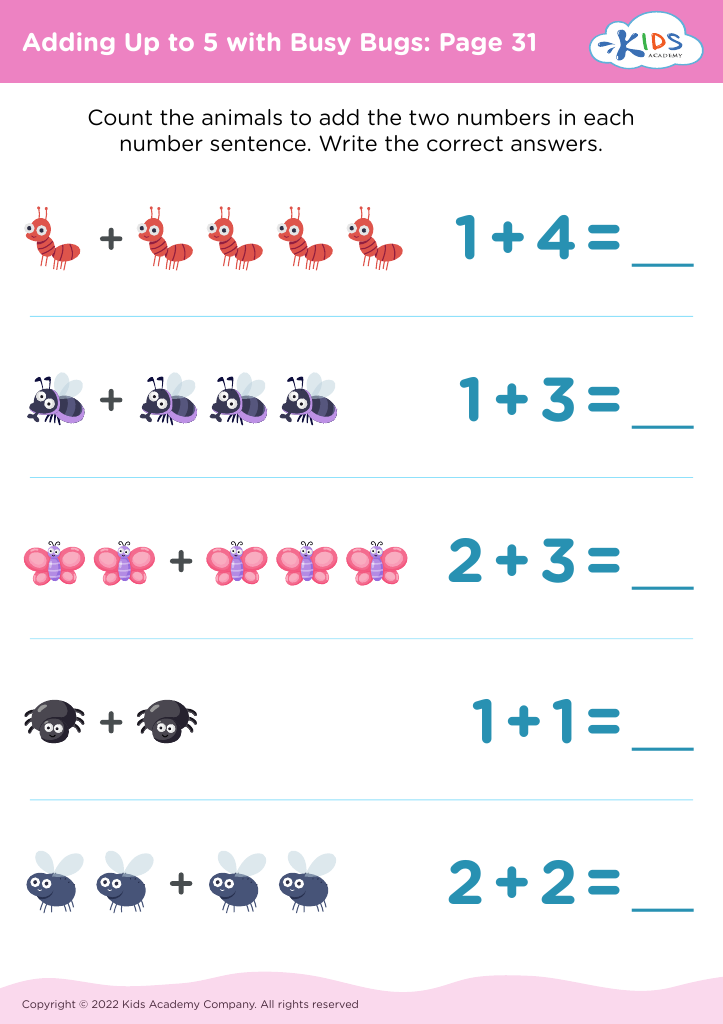
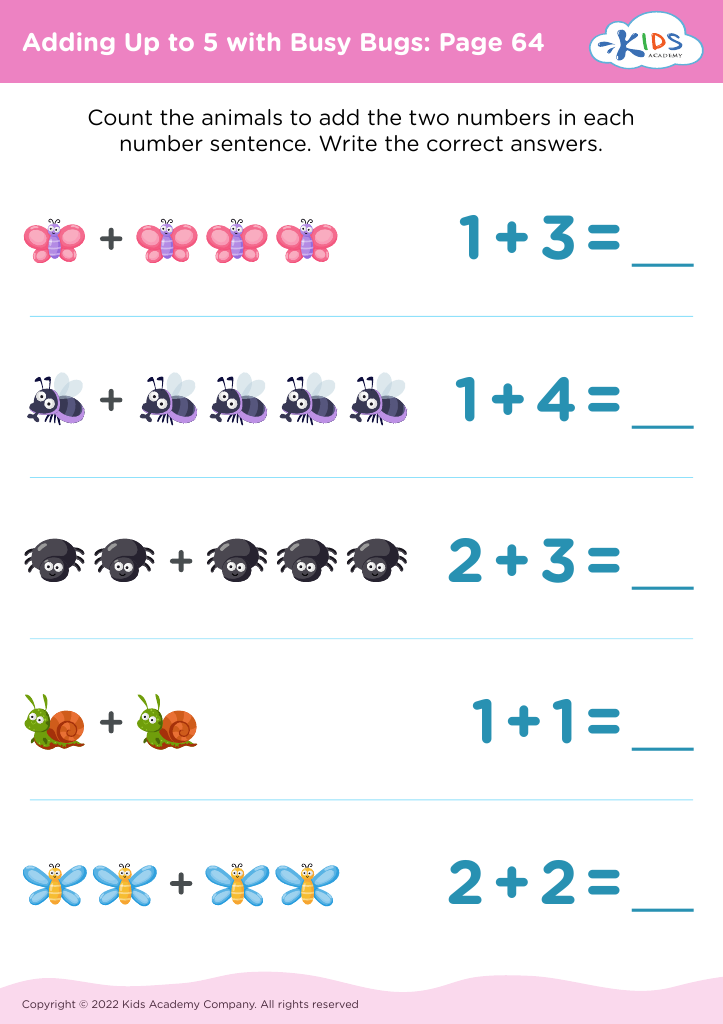
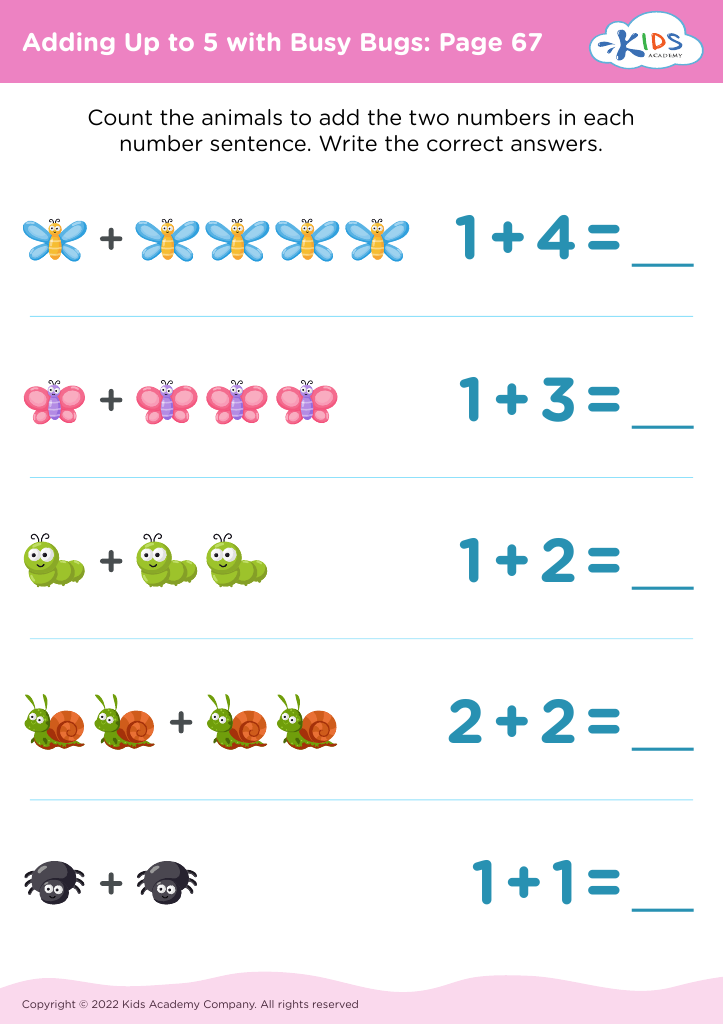
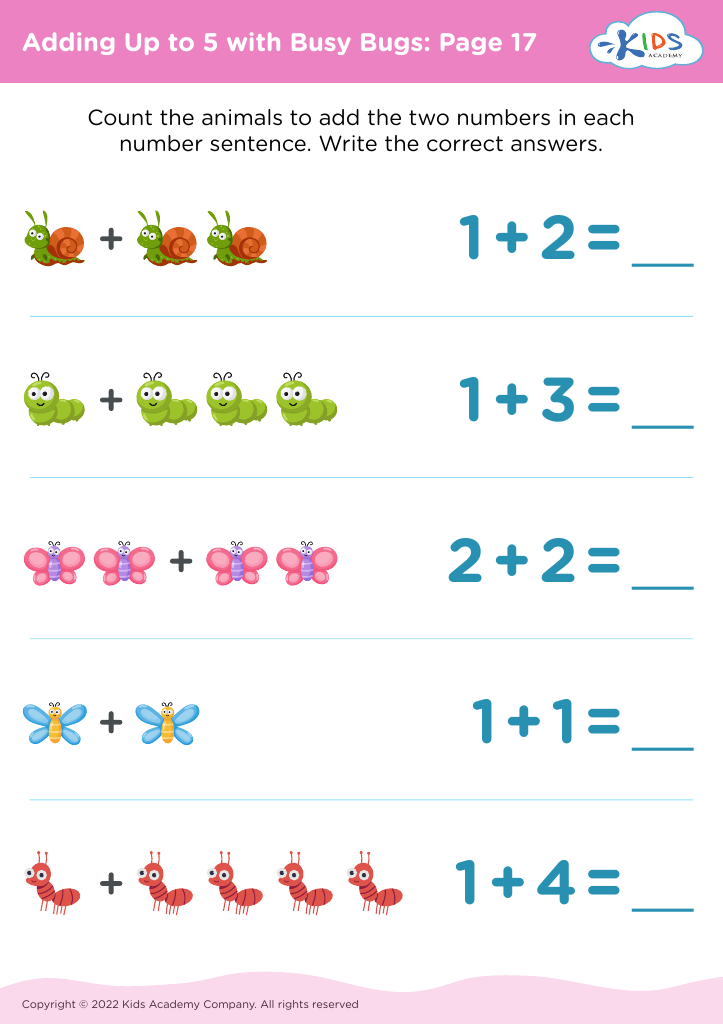
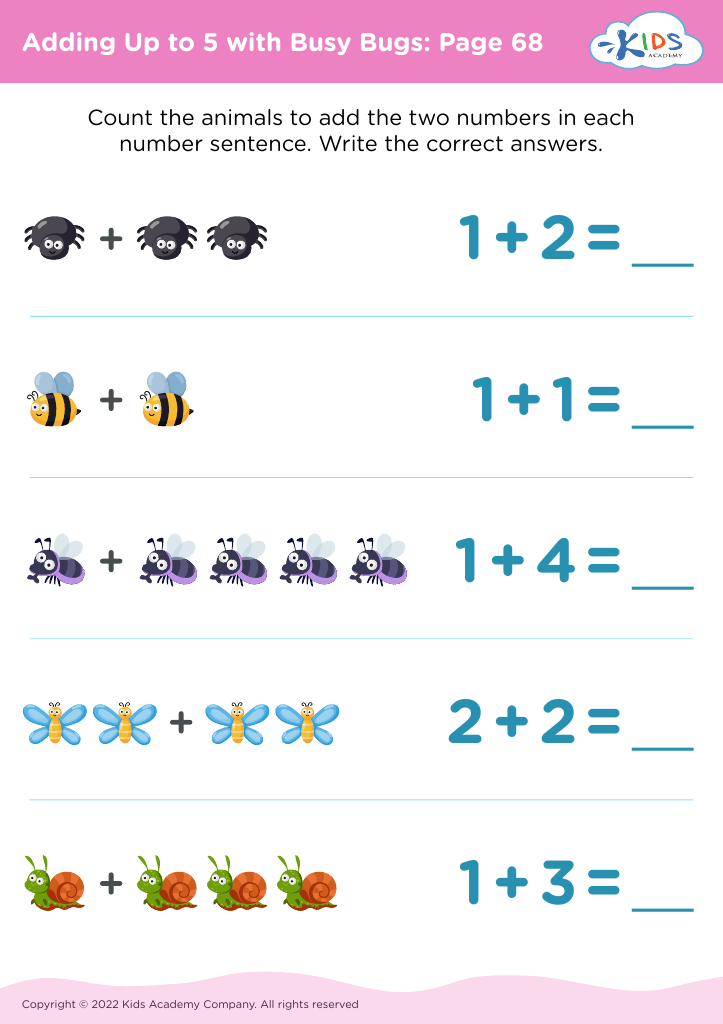
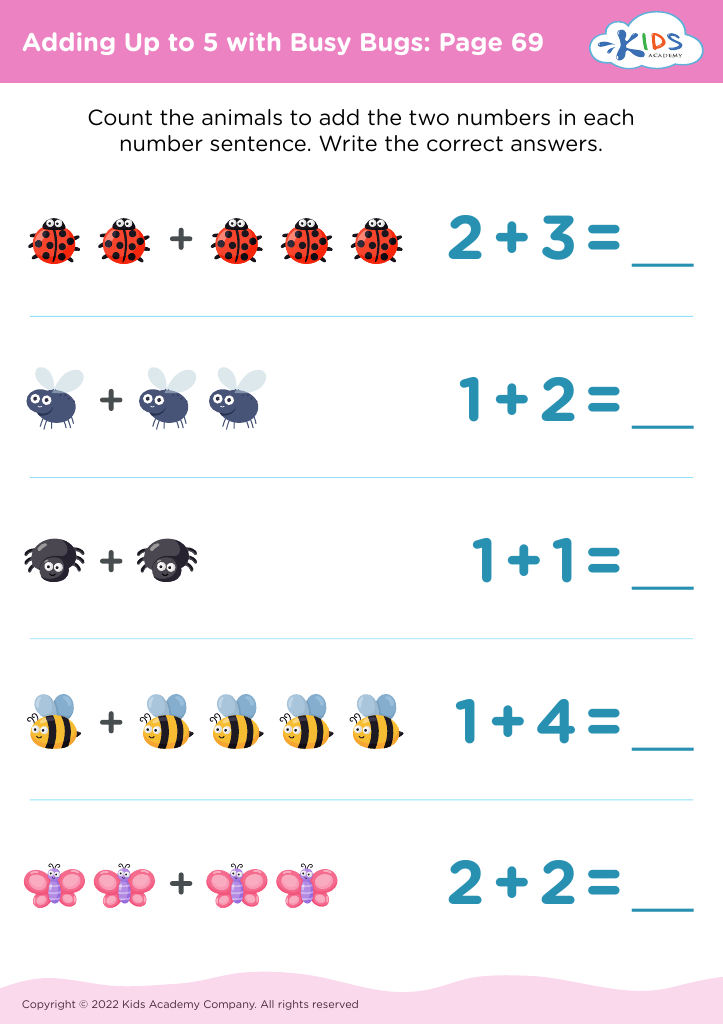
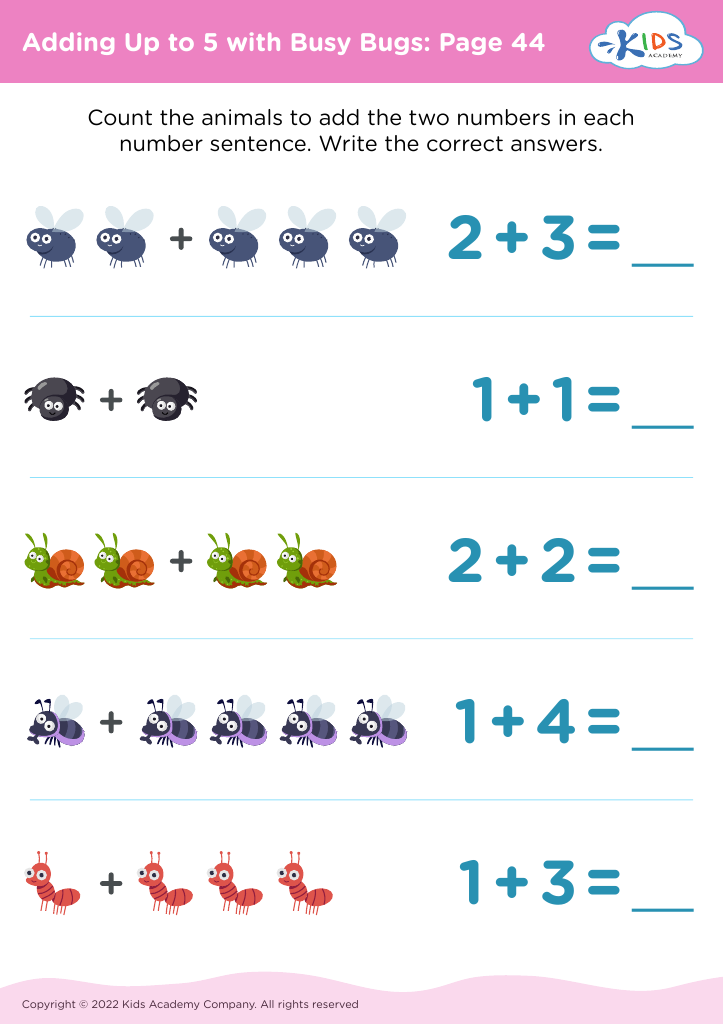
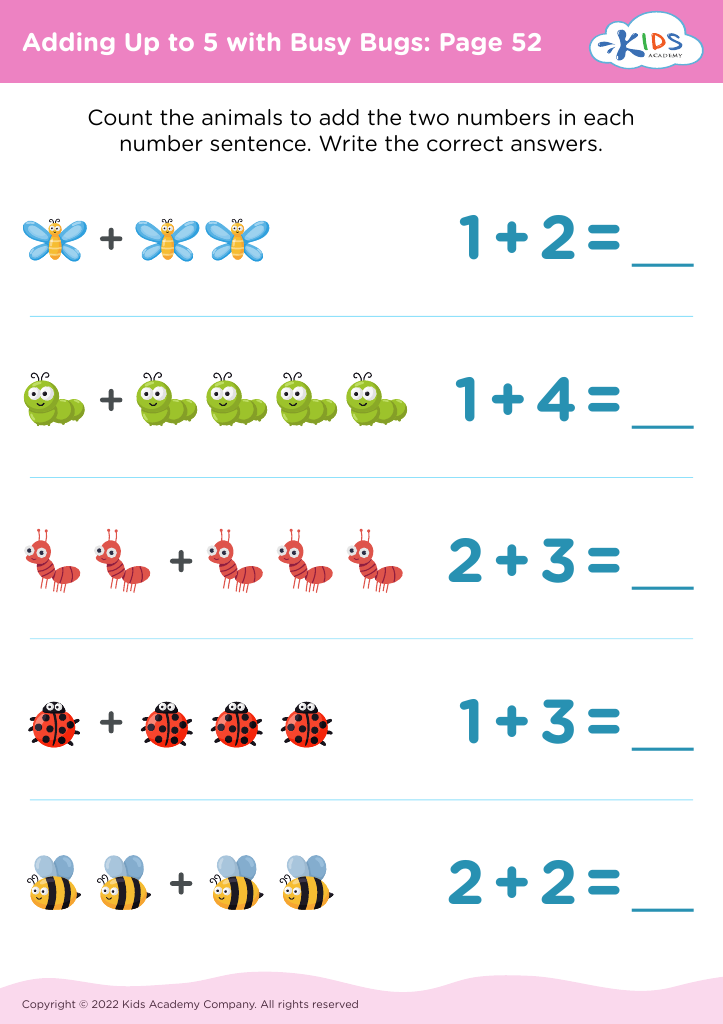
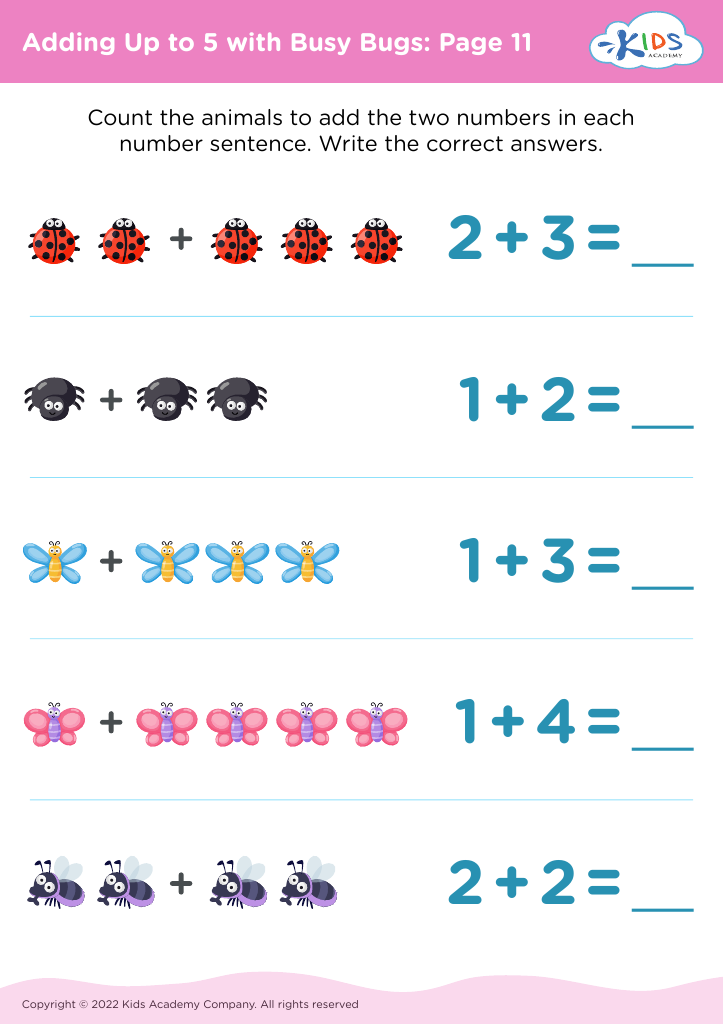



Parents and teachers should care about basic addition skills for 3-year-olds using activities like "Adding with Busy Bugs" because these early math experiences lay the foundation for future academic success and cognitive development. At this age, children's brains are highly receptive to learning new concepts, and hands-on, playful approaches capitalize on their natural curiosity and enthusiasm.
Activities that incorporate colorful and engaging manipulatives, like counting and adding with busy bugs, make abstract concepts more concrete. This kind of play fosters an intuitive grasp of numbers, quantities, and basic arithmetic operations. It also helps children develop fine motor skills, improve attention spans, and strengthen memory.
Moreover, introducing basic addition at this early stage nurtures a positive attitude toward mathematics. When children find joy and satisfaction in solving problems, they build confidence and are more likely to persevere in the face of challenges.
Learning through playful activities encourages social interaction and cooperative play, which boosts communication skills and teamwork. For teachers and parents, identifying each child’s learning style becomes easier through observation during these activities, allowing for more tailored and effective educational support.
Overall, basic addition with fun methods like Busy Bugs is crucial for holistic early childhood development, setting the stage for lifelong learning and success in mathematics.