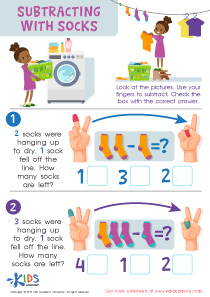
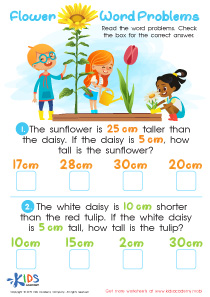
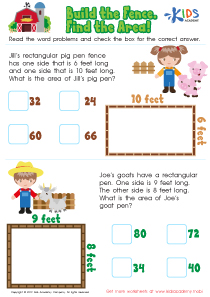
Logical thinking development Addition and Subtraction Word Problems Worksheets for 3-Year-Olds
3 filtered results
-
From - To
Introduce your 3-year-old to the exciting world of numbers with our addition and subtraction word problems worksheets designed to stimulate logical thinking development. These engaging activities encourage young learners to solve simple mathematical challenges through relatable scenarios, enhancing their problem-solving skills and cognitive reasoning. Each worksheet is crafted with colorful visuals and interactive prompts that capture children's attention while promoting foundational math concepts. Ideal for preschool or at-home learning, our resources foster critical thinking in a fun and playful way. Empower your child to master the basics of addition and subtraction with our thoughtfully designed worksheets, making math an enjoyable adventure!
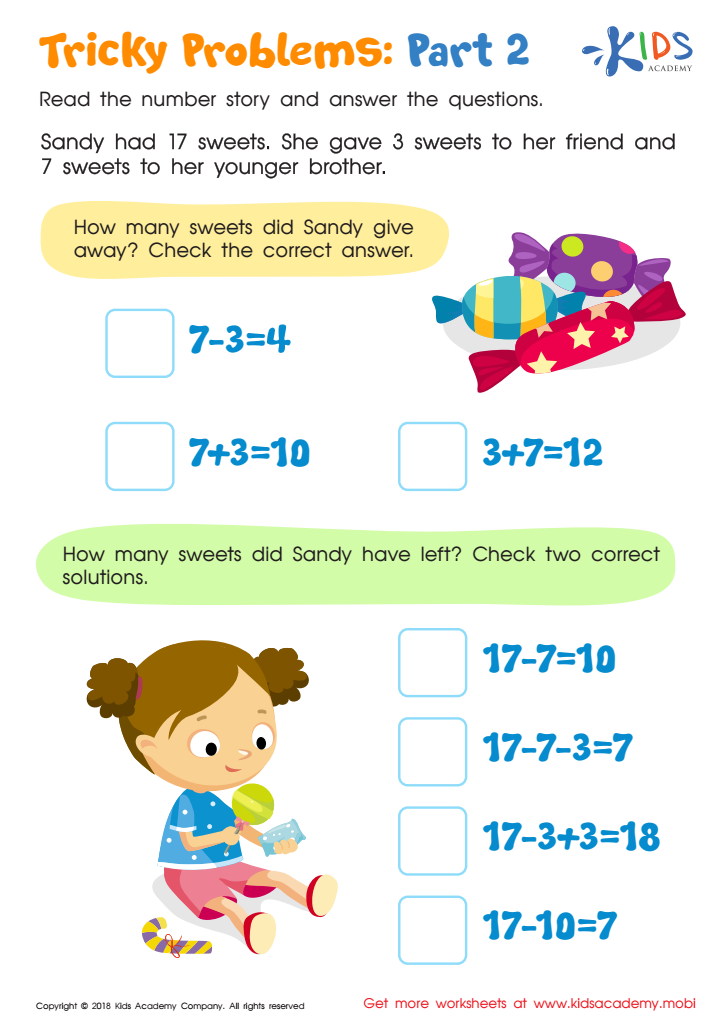
Tricky Problems Worksheet: Part 2
 Assign to My Students
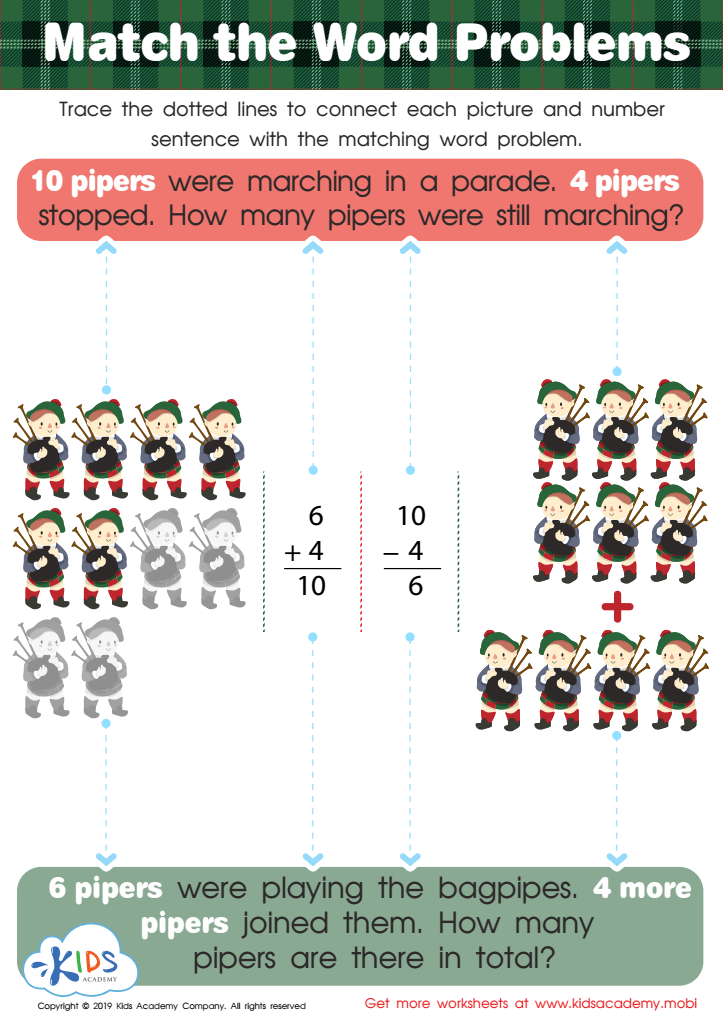
Match the Word Problems Worksheet
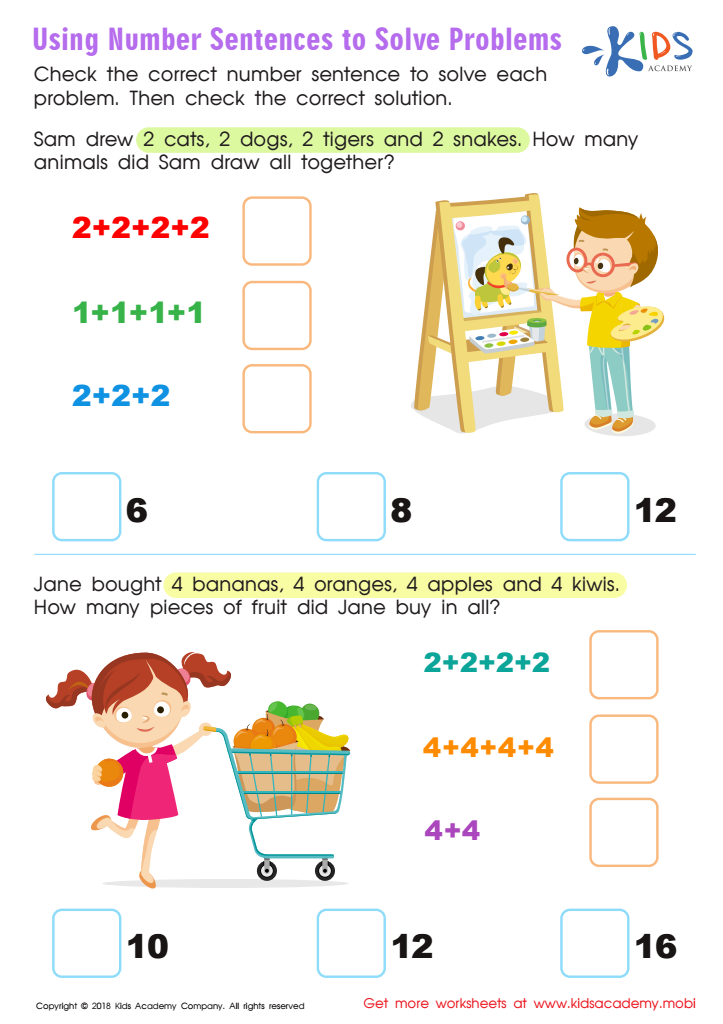
Using Number Sentences to Solve Problems Worksheet








Logical thinking development in young children is foundational for their overall cognitive growth, particularly as they engage with concepts like addition and subtraction through word problems. For parents and teachers, fostering this skill in 3-year-olds is crucial because it sets the stage for lifelong learning.
At this age, children are naturally curious and eager to explore how the world works. Engaging them with addition and subtraction word problems promotes critical thinking and problem-solving capabilities. These activities encourage kids to process information, recognize patterns, and develop reasoning skills. When children learn to visualize a problem through storytelling, they grasp mathematical concepts in a relatable way.
By introducing these activities early, parents and teachers can help young learners build a strong foundation in numeracy. This not only enhances math skills but also boosts language development, as children articulate their thought processes. Furthermore, developing logical thinking at this stage can enhance children's confidence in tackling more complex problems later on.
In essence, caring about logical thinking involving addition and subtraction word problems empowers children to become independent thinkers, cultivates their enthusiasm for learning, and prepares them for future academic challenges. It's an investment in their cognitive skills and emotional growth.