Check out this FREE Trial Lesson on Addition & Subtraction for age 3!

Sorting Objects into 3 Categories

Favorites
With answer key
Interactive
  • 3
  • Addition skills
  • Addition & Subtraction
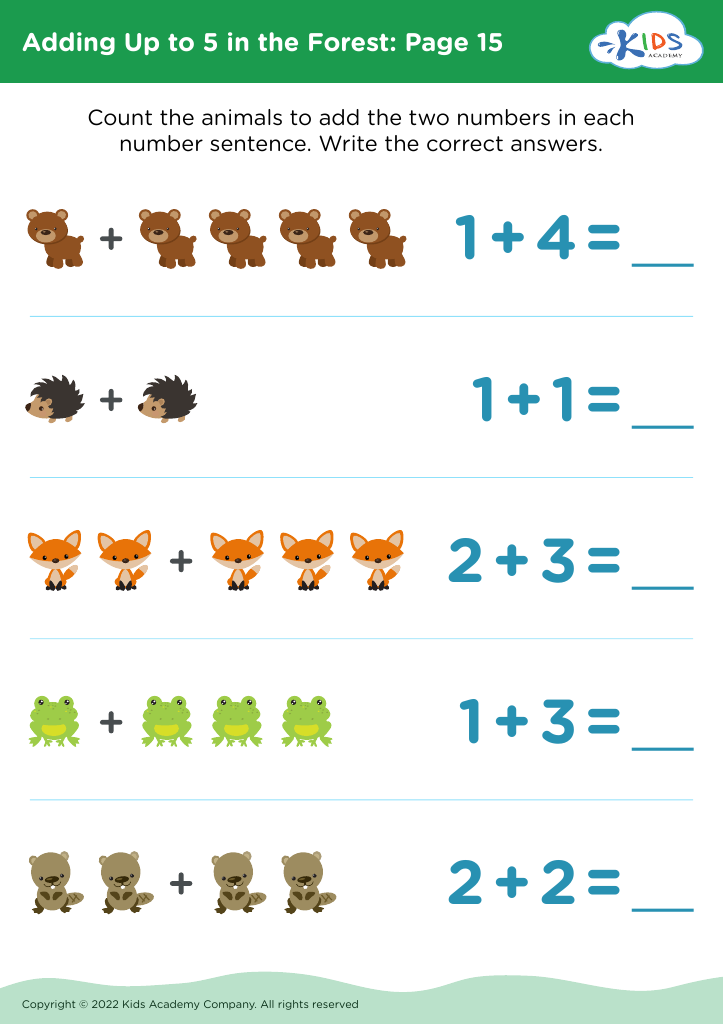
Adding Up to 5 in the Forest: Page 15
Worksheet
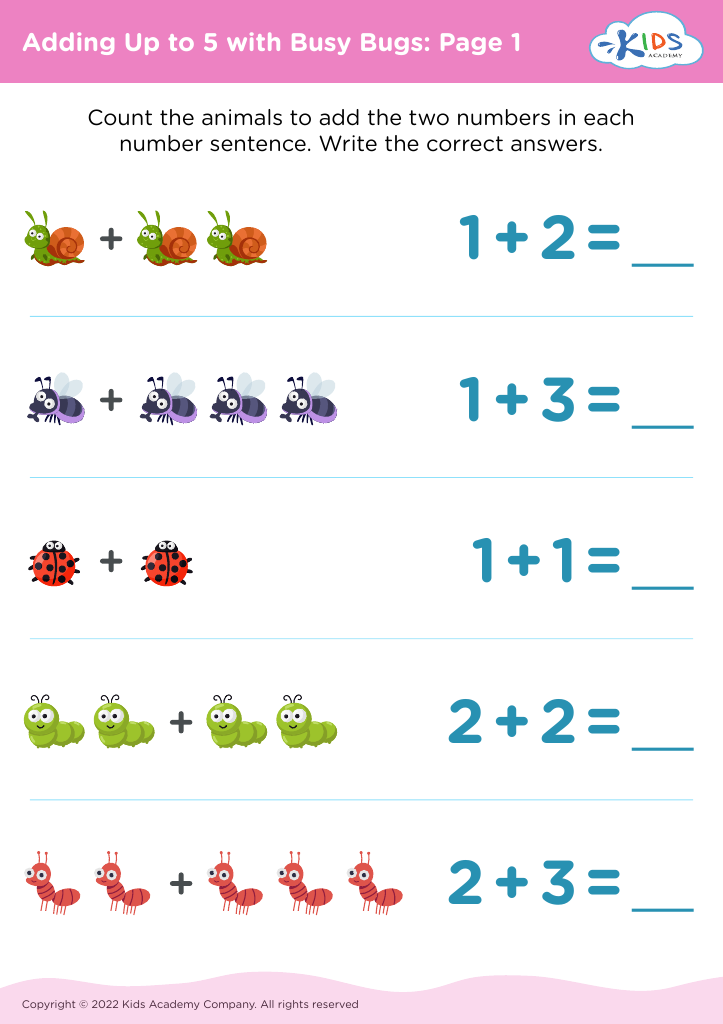
Adding Up to 5 with Busy Bugs: Page 1
Worksheet
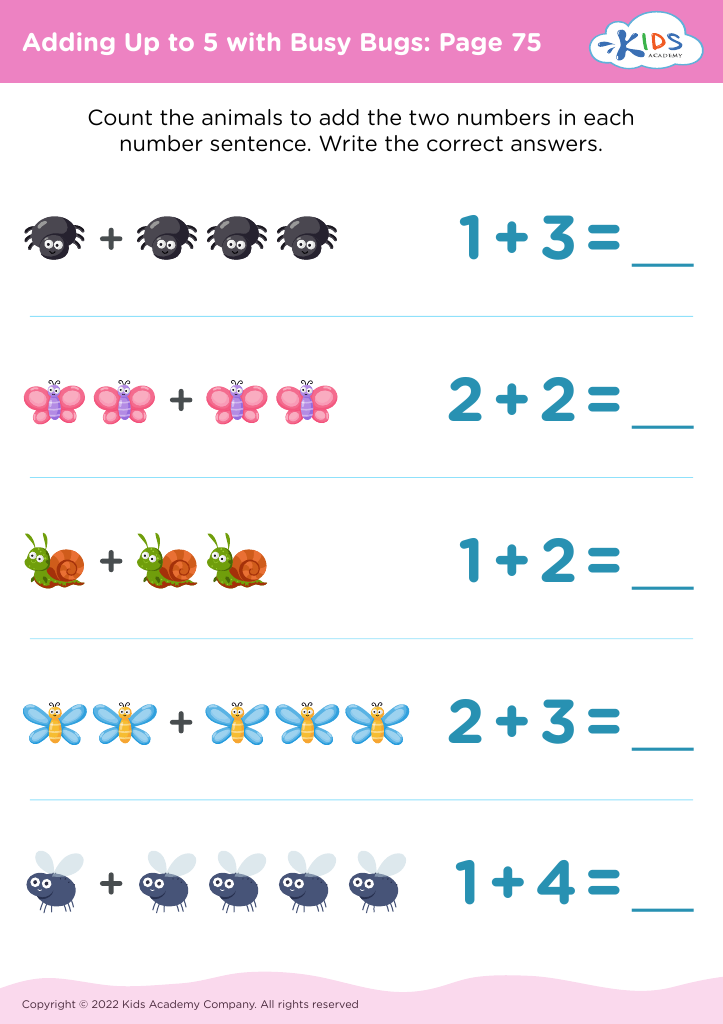
Adding Up to 5 with Busy Bugs: Page 75
Worksheet
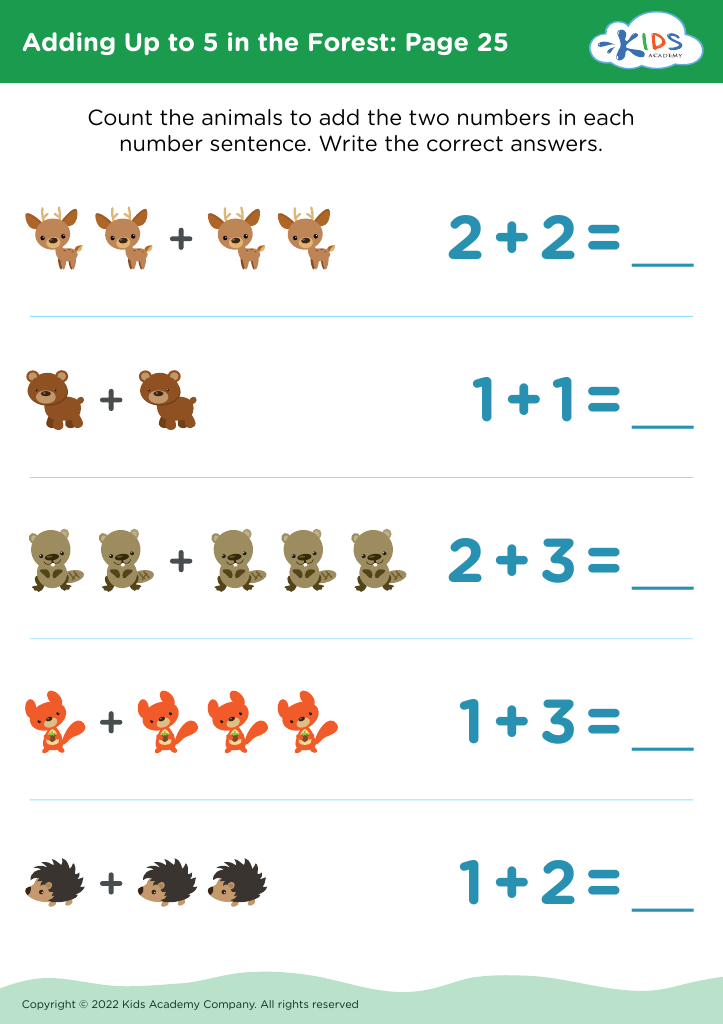
Adding Up to 5 in the Forest: Page 25
Worksheet
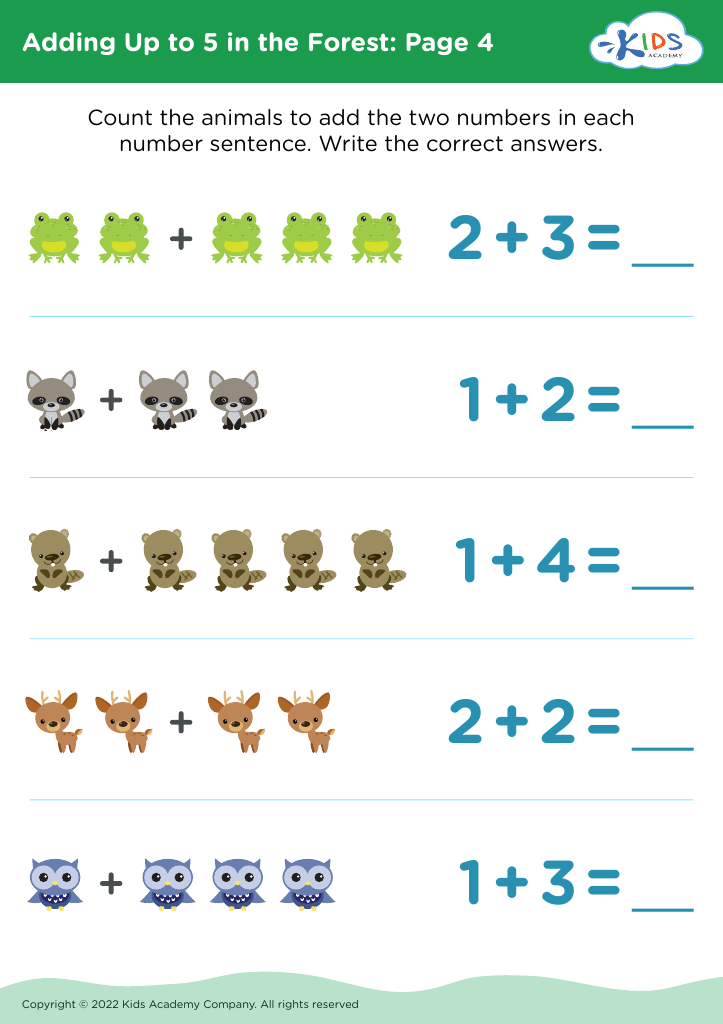
Adding Up to 5 in the Forest: Page 4
Worksheet
Addition up to 20 worksheet

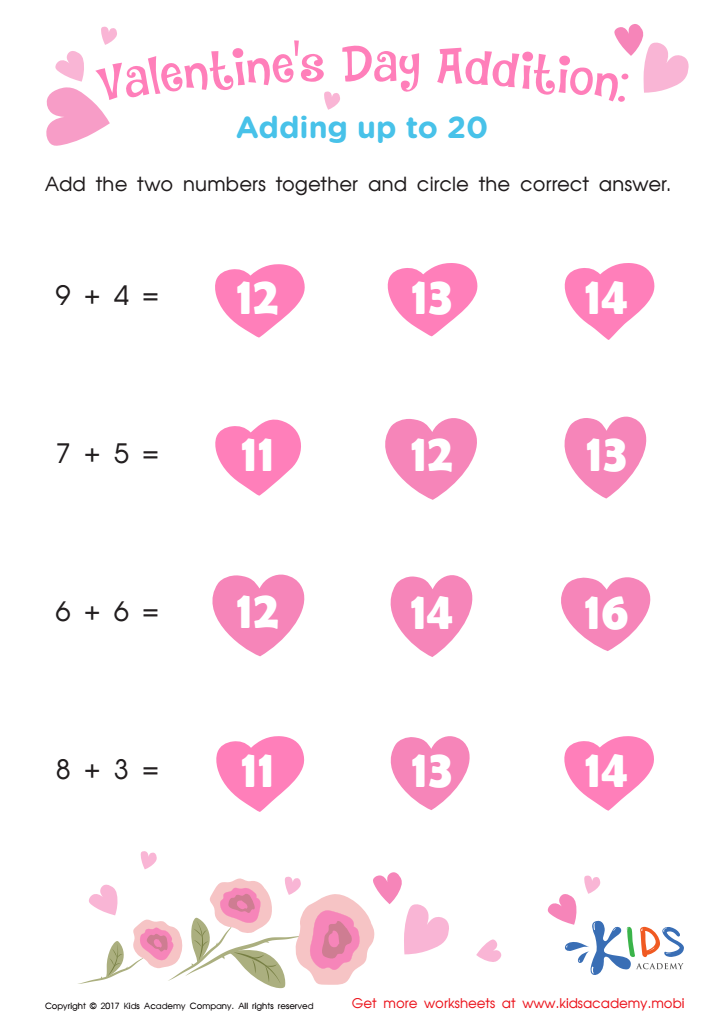
Valentine's Day Addition Worksheet

This Valentine's Day themed worksheet is a fun way for your child to practice adding single digits up to 20! Hearts feature to help your child increase their math skills and have fun at the same time.
Valentine's Day Addition Worksheet
Worksheet
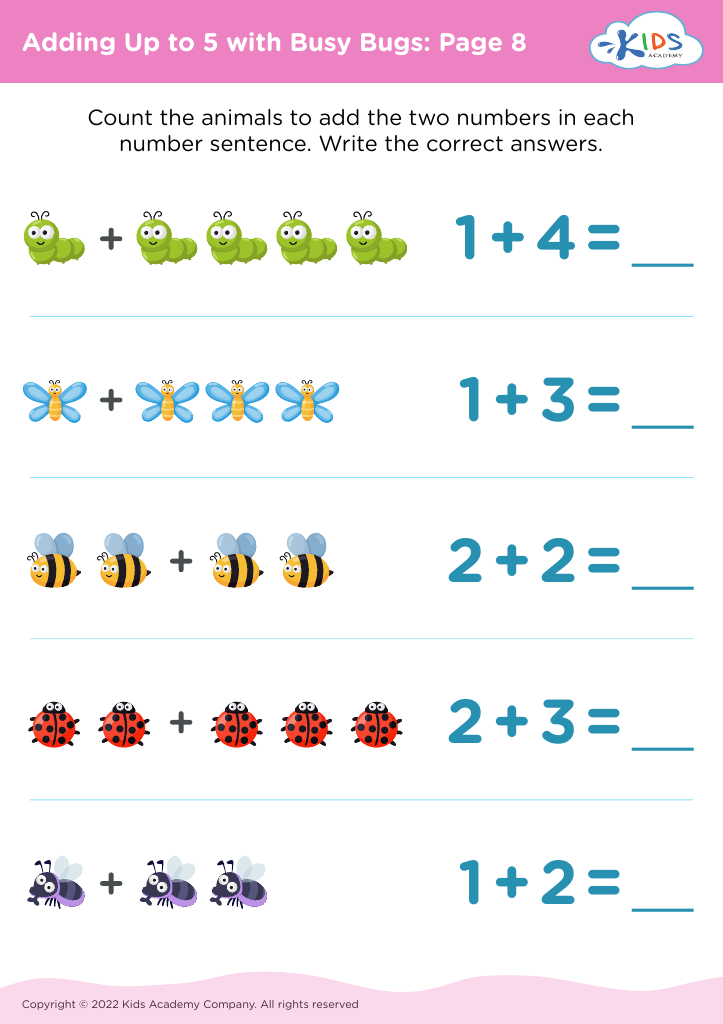
Adding Up to 5 with Busy Bugs: Page 8
Worksheet
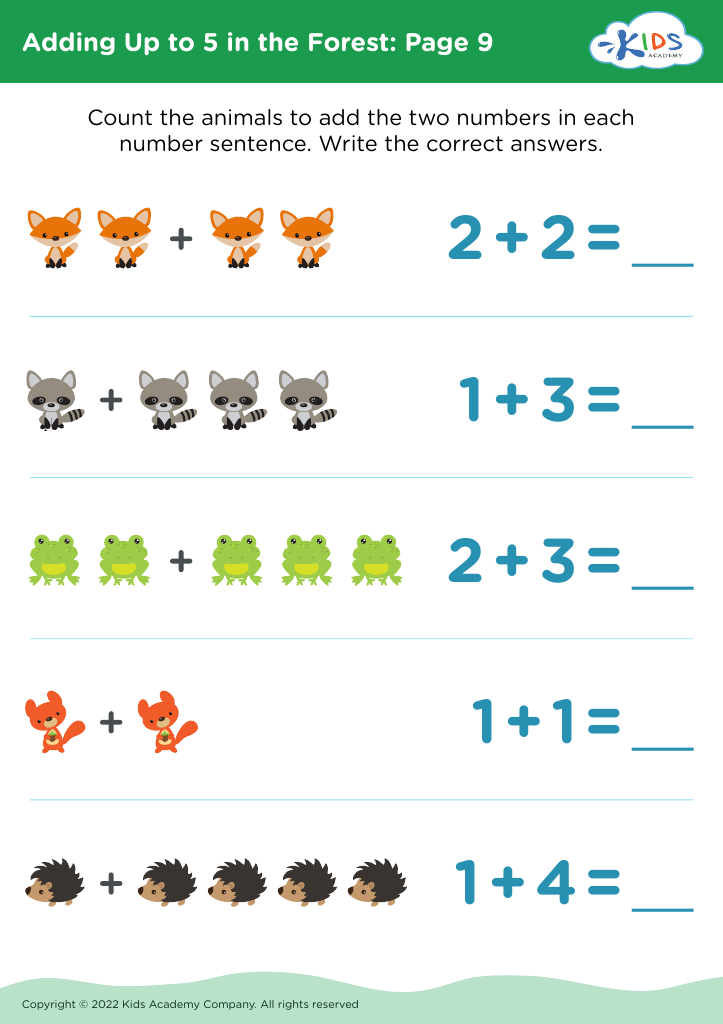
Adding Up to 5 in the Forest: Page 9
Worksheet
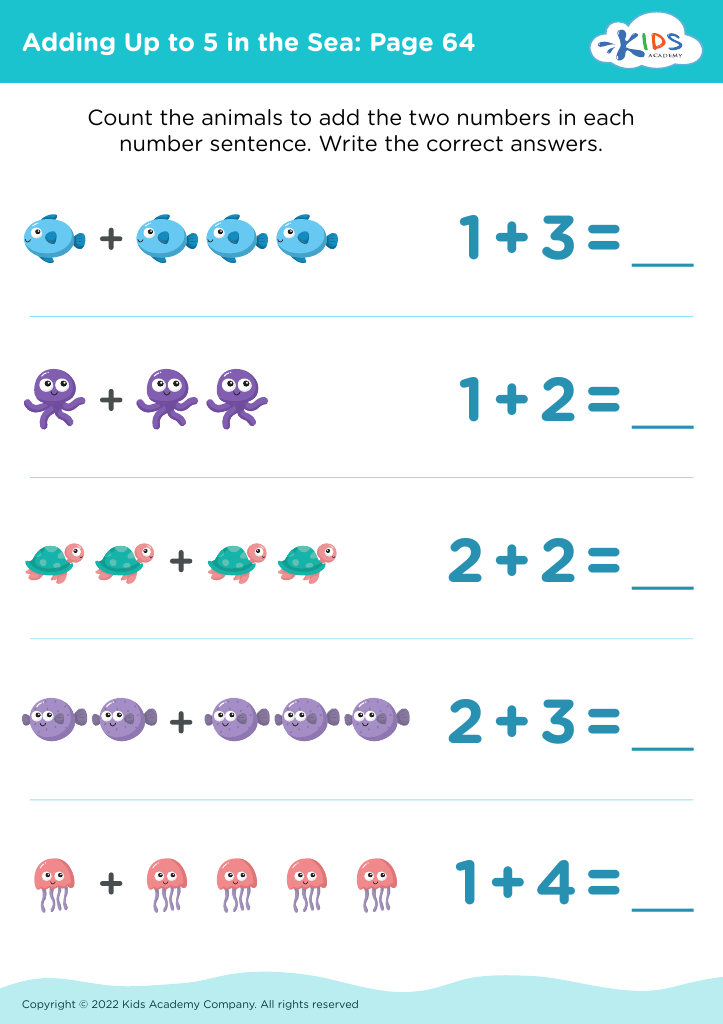
Adding Up to 5 in the Sea: Page 64
Worksheet
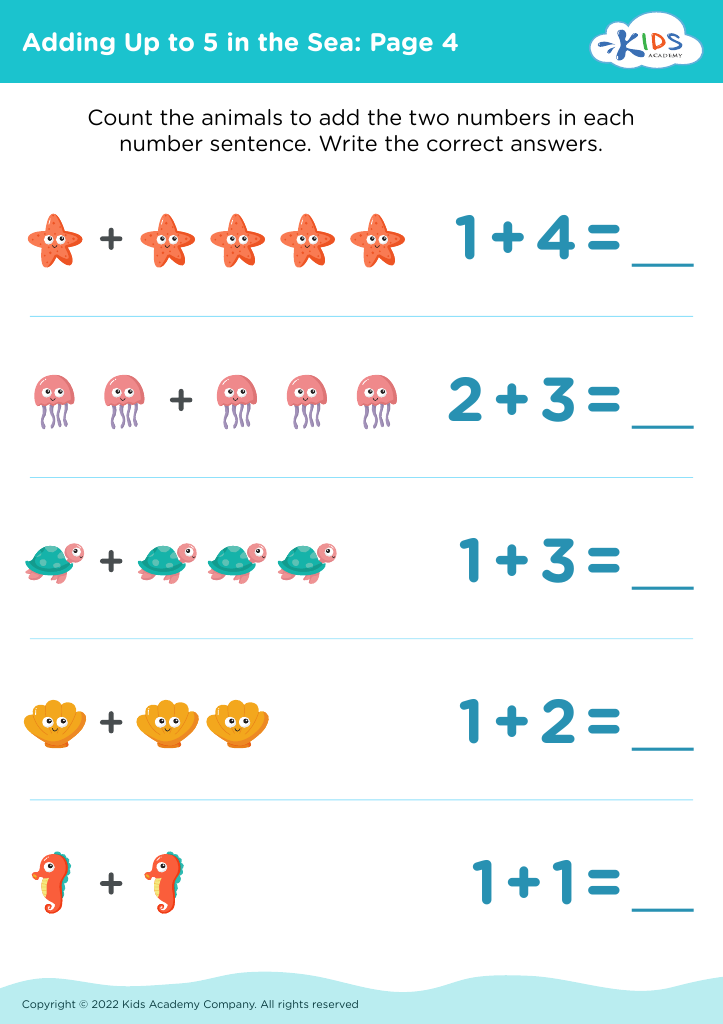
Adding Up to 5 in the Sea: Page 4

Adding Up to 5 in the Sea: Page 4

Adding Up to 5 in the Sea: Page 4
Worksheet
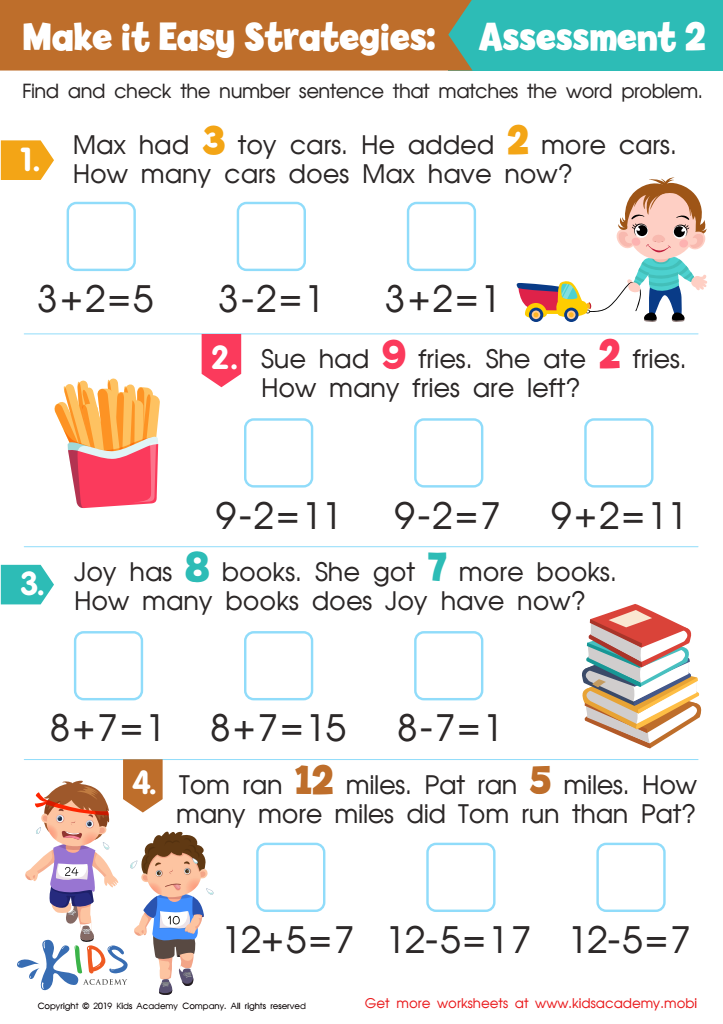
Make it Easy Strategies: Assessment 2 Worksheet
Make it Easy Strategies: Assessment 2 Worksheet
Utilize images and objects your students know to facilitate learning. Simple math problems should be a cinch for kindergartners who can count to 30. Ask them to identify the picture's subject. Then read word problems and help them find the right number sentences to match.
Make it Easy Strategies: Assessment 2 Worksheet
Worksheet
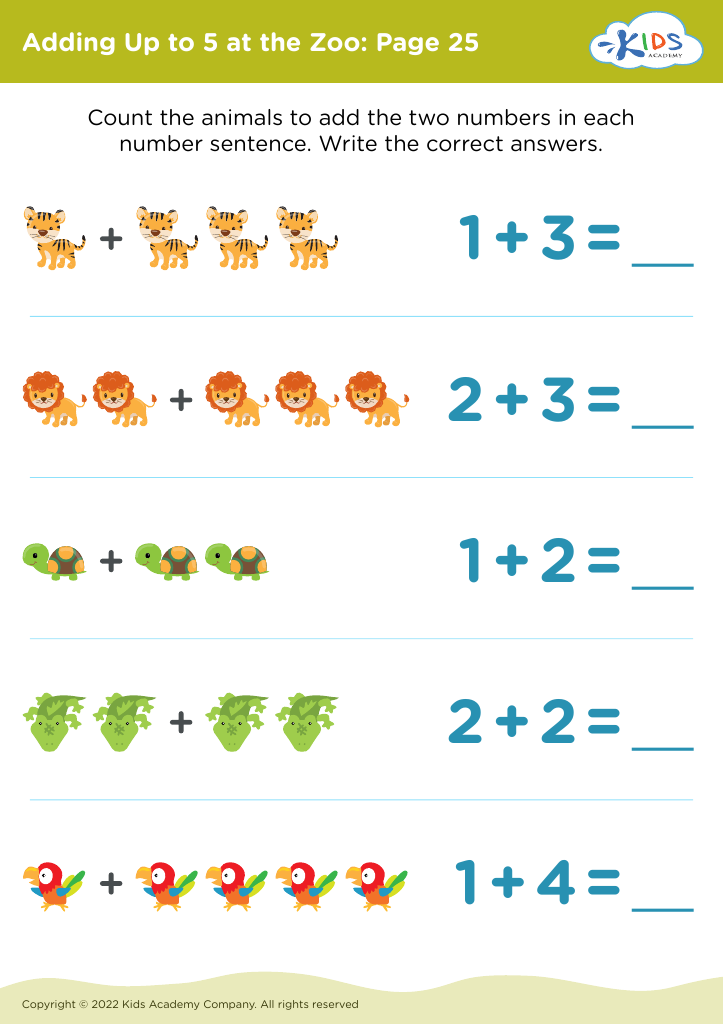
Adding Up to 5 at the Zoo: Page 25
Worksheet
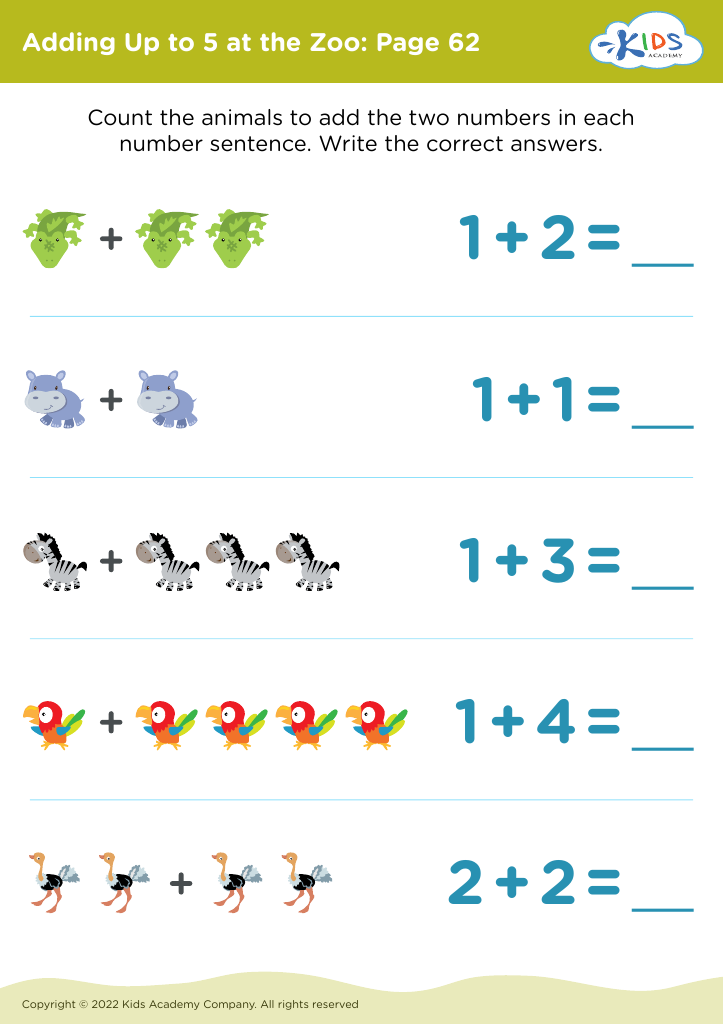
Adding Up to 5 at the Zoo: Page 62
Worksheet
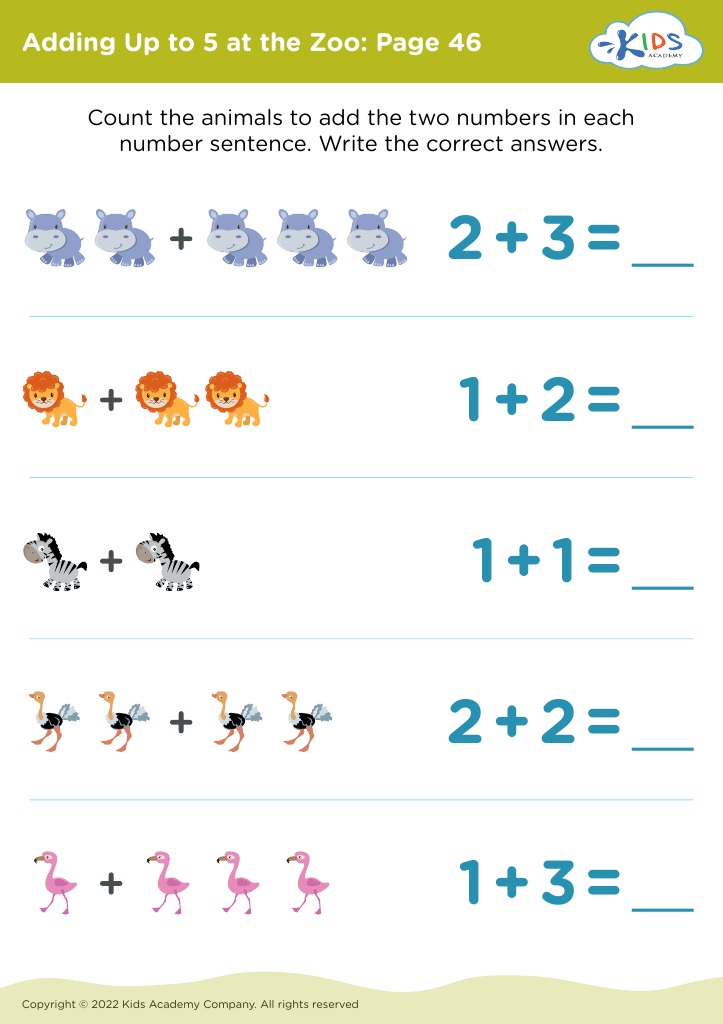
Adding Up to 5 at the Zoo: Page 46
Worksheet
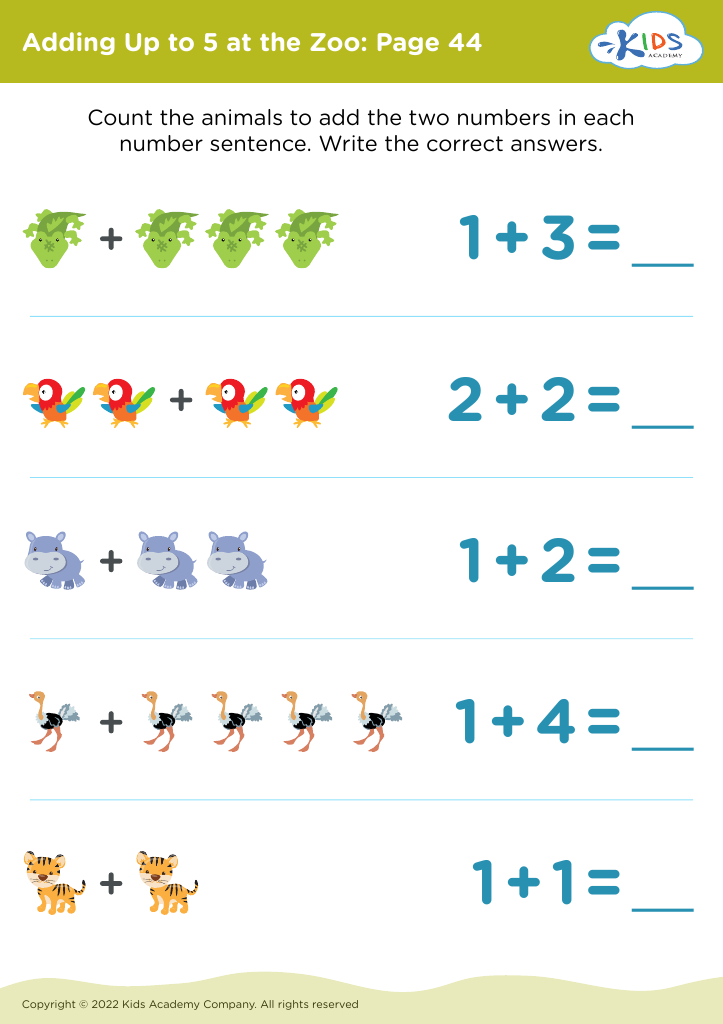
Adding Up to 5 at the Zoo: Page 44
Worksheet
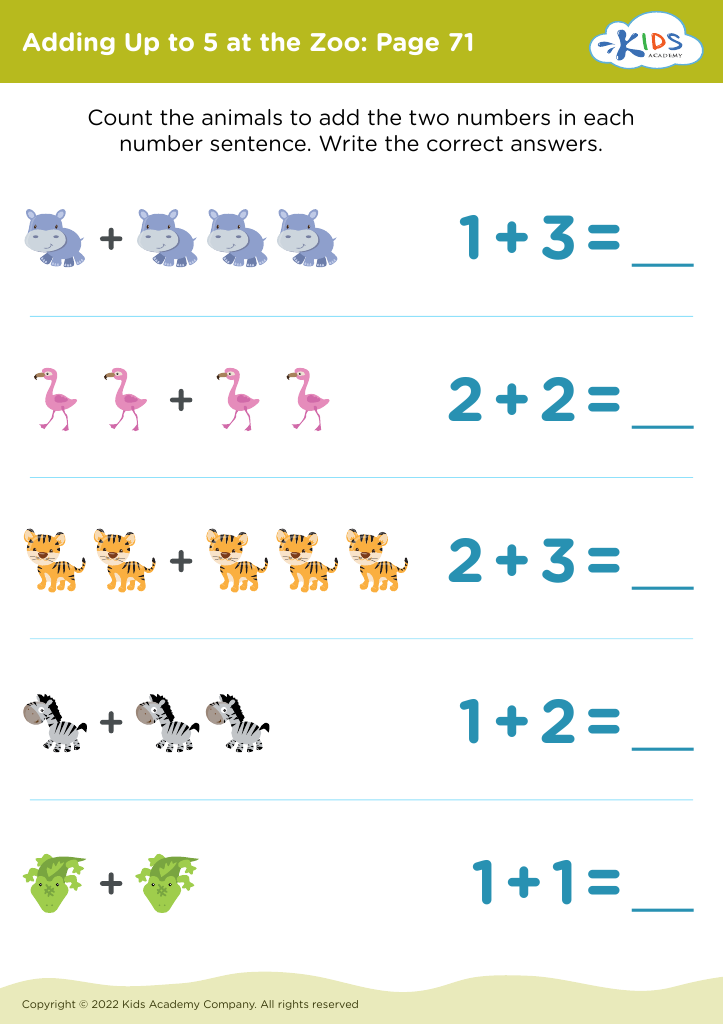
Adding Up to 5 at the Zoo: Page 71
Worksheet
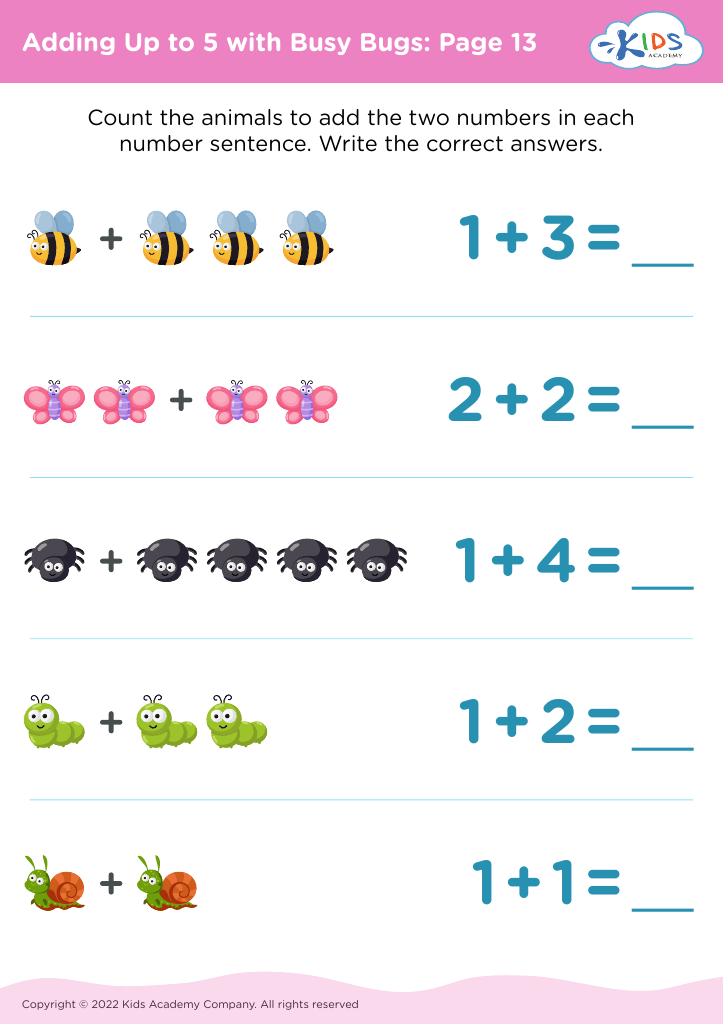
Adding Up to 5 with Busy Bugs: Page 13
Worksheet
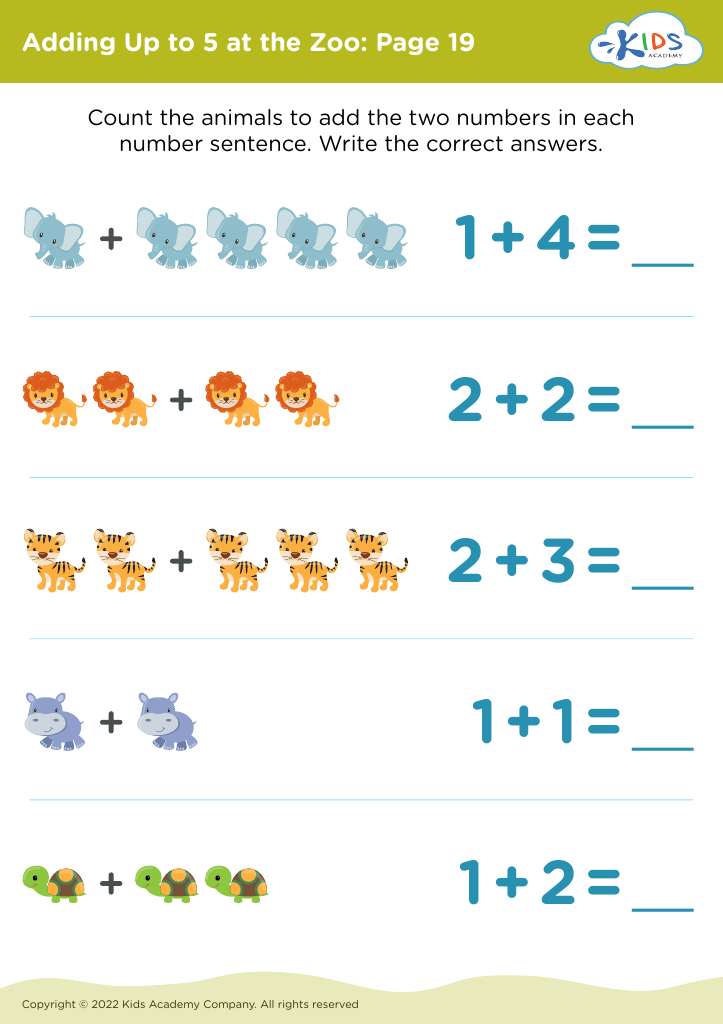
Adding Up to 5 at the Zoo: Page 19
Worksheet
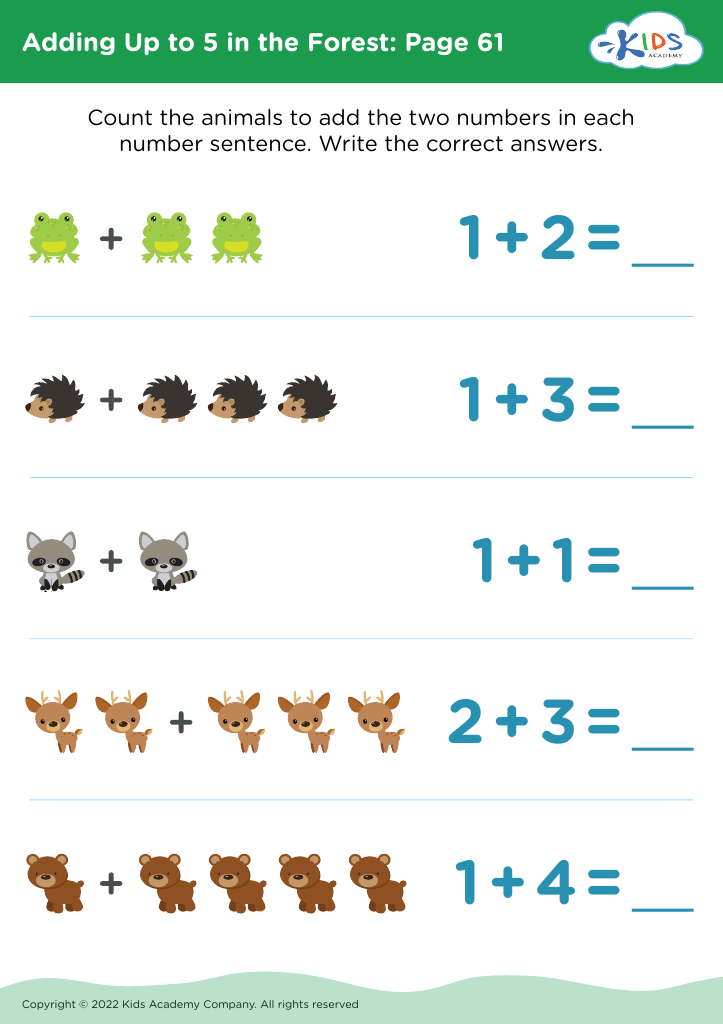
Adding Up to 5 in the Forest: Page 61
Worksheet
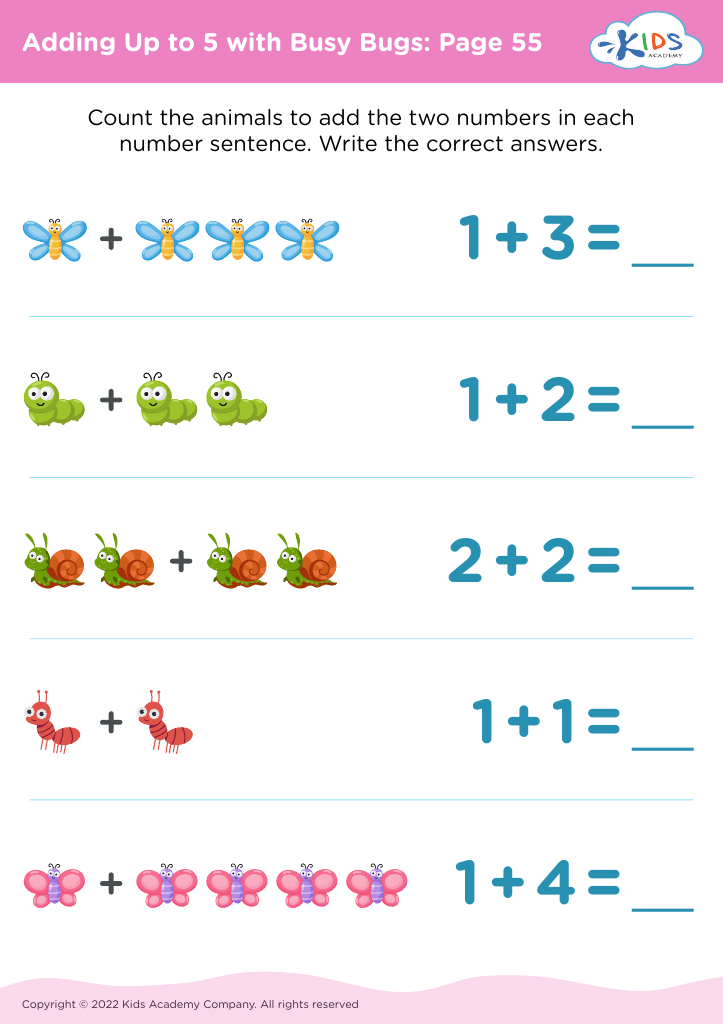
Adding Up to 5 with Busy Bugs: Page 55
Worksheet
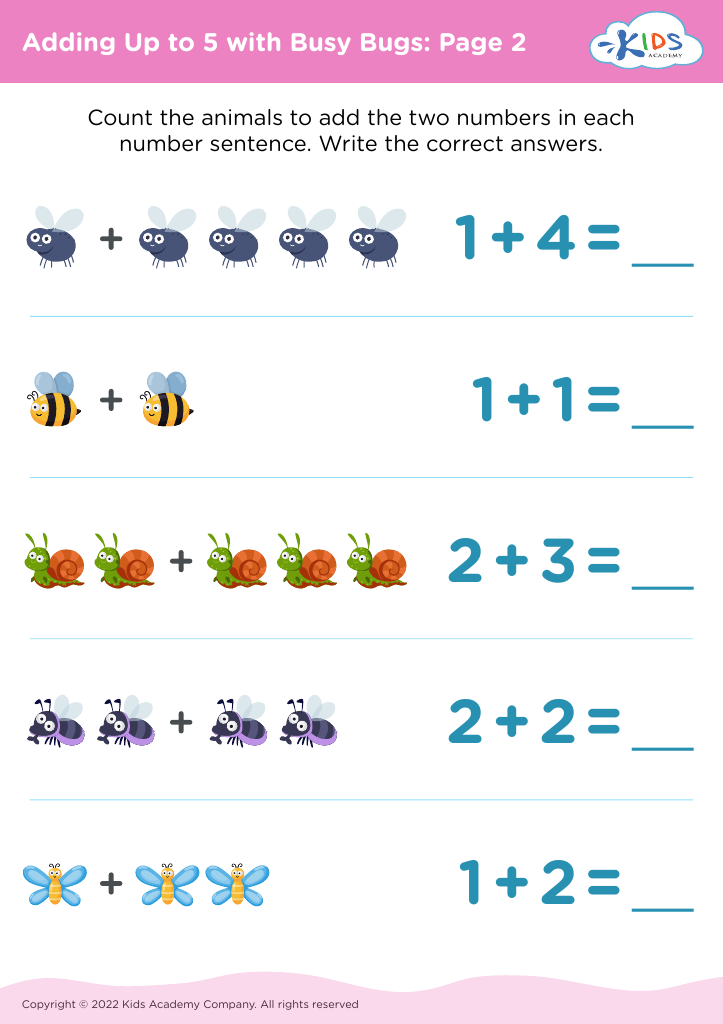
Adding Up to 5 with Busy Bugs: Page 2
Worksheet
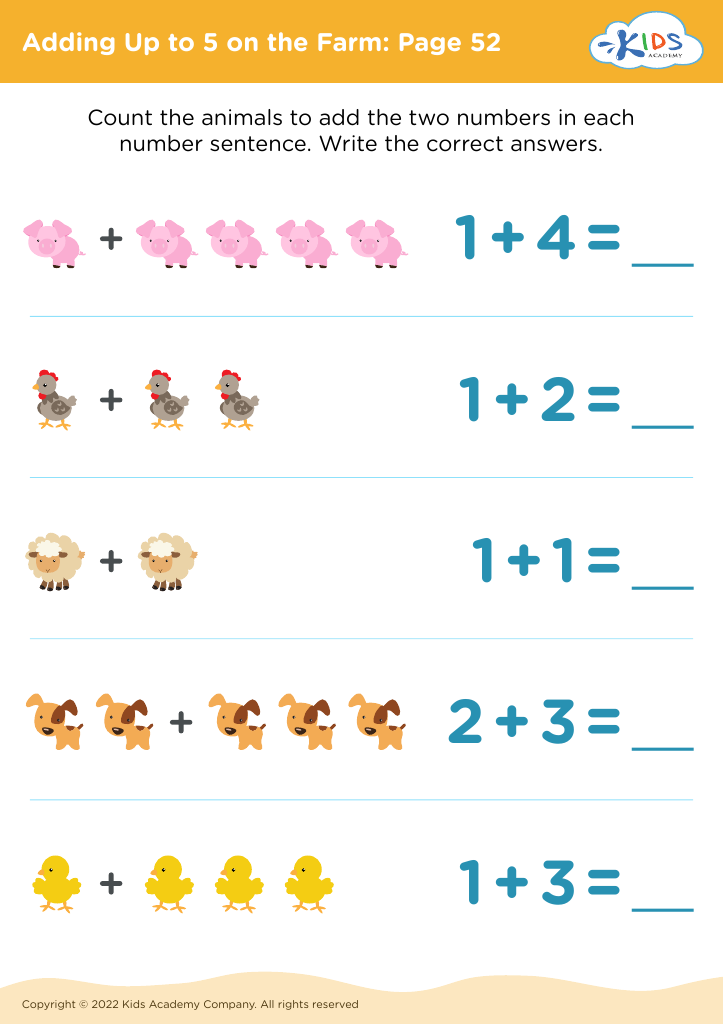
Adding Up to 5 on the Farm: Page 52
Worksheet
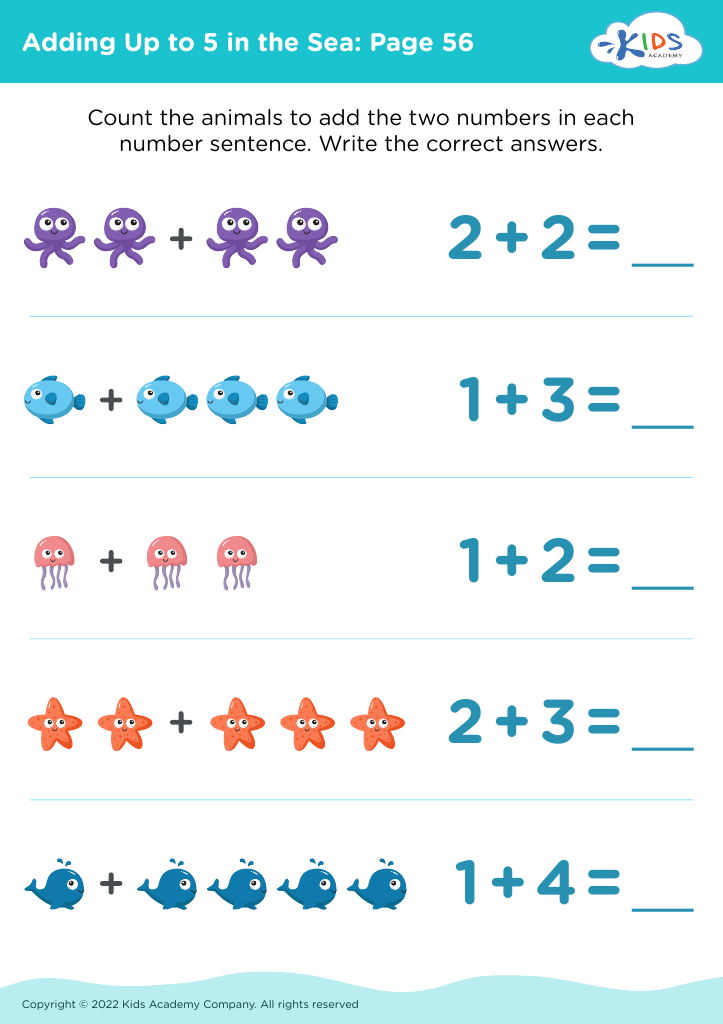
Adding Up to 5 in the Sea: Page 56
Worksheet
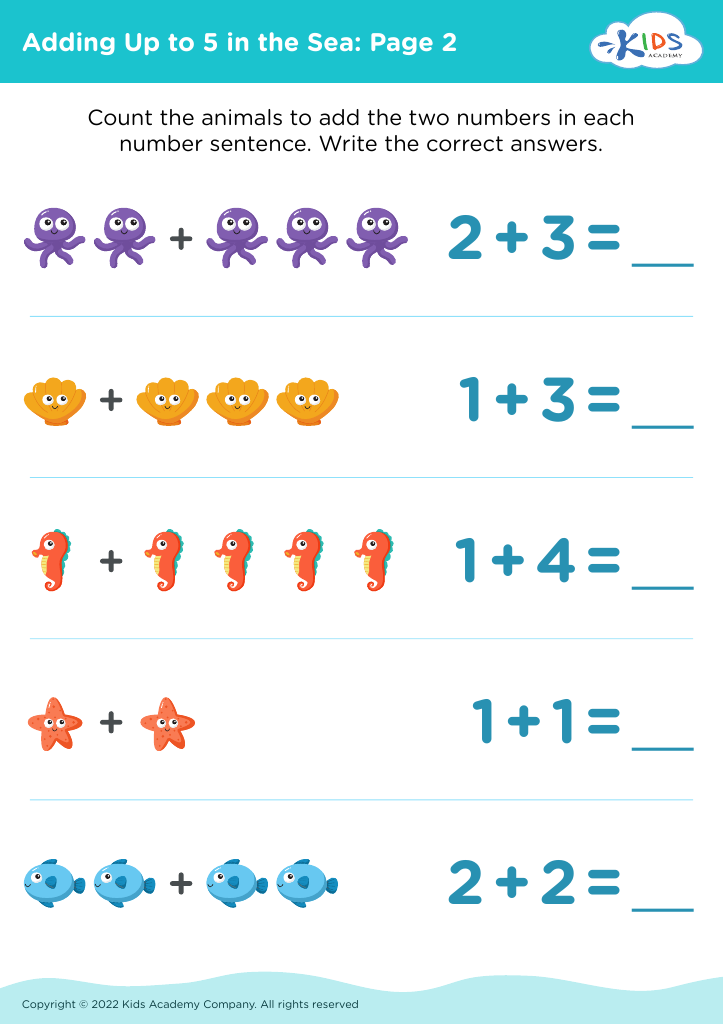
Adding Up to 5 in the Sea: Page 2

Adding Up to 5 in the Sea: Page 2

Adding Up to 5 in the Sea: Page 2
Worksheet


Parents and teachers should prioritize addition and subtraction skills for 3-year-olds because these foundational math concepts are crucial for cognitive development. At this age, children are incredibly curious and absorb information quickly. Engaging them in simple addition and subtraction activities helps strengthen their problem-solving abilities and critical thinking skills.

Early exposure to math fosters a positive attitude toward learning, nurturing a child's innate curiosity and encouraging them to explore mathematical concepts further as they grow. Moreover, addition and subtraction serve as essential skills that they will continually build upon throughout their educational journey.

Practicing these skills through playful activities—such as counting toys, using everyday objects, or singing songs—transforms learning into an enjoyable experience. This approach not only lays the groundwork for future math proficiency but also enhances fine motor skills and coordination when children use objects to visualize numbers.

Furthermore, developing early math skills can support literacy skills by enhancing a child's understanding of patterns and sequences. Ultimately, investment in basic addition and subtraction skills promotes a well-rounded early education, leading to greater success in school and beyond. By caring about these fundamental skills, parents and teachers equip children with the tools they need for lifelong learning.