Filters

96 filtered results

Clear all filters
Favorites
With answer key
Interactive

96 filtered results

Difficulty Level

Grade


Check out this FREE Trial Lesson on Addition & Subtraction for age 3!

Match Objects that Fit Together

Favorites
With answer key
Interactive
  • 3
  • Animal recognition
  • Addition & Subtraction
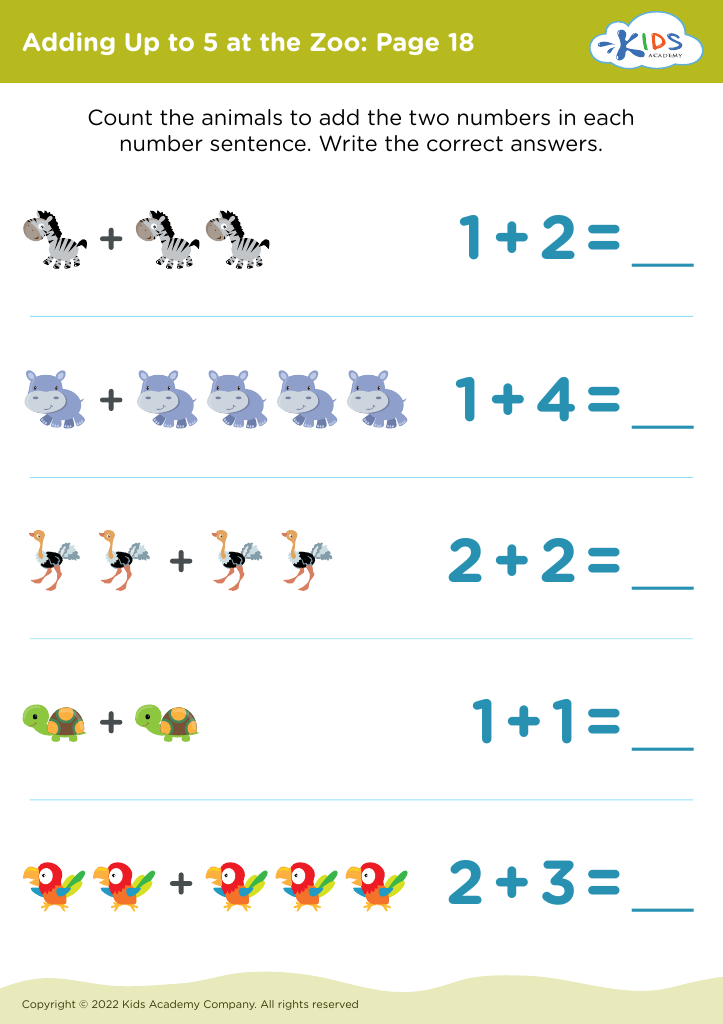
Adding Up to 5 at the Zoo: Page 18
Worksheet
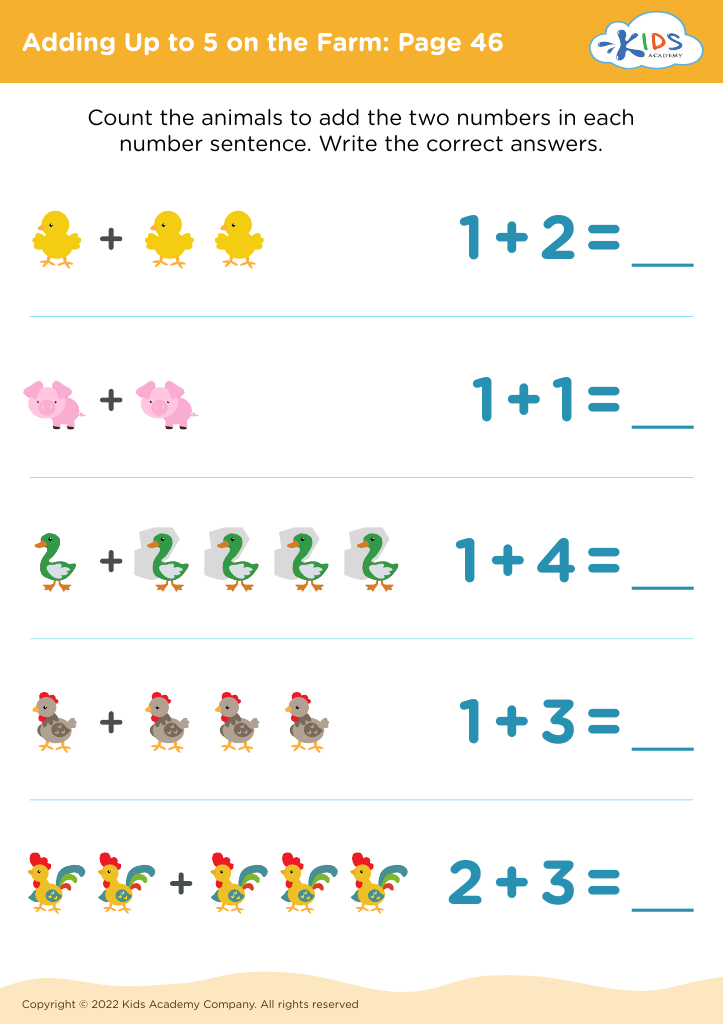
Adding Up to 5 on the Farm: Page 46
Worksheet
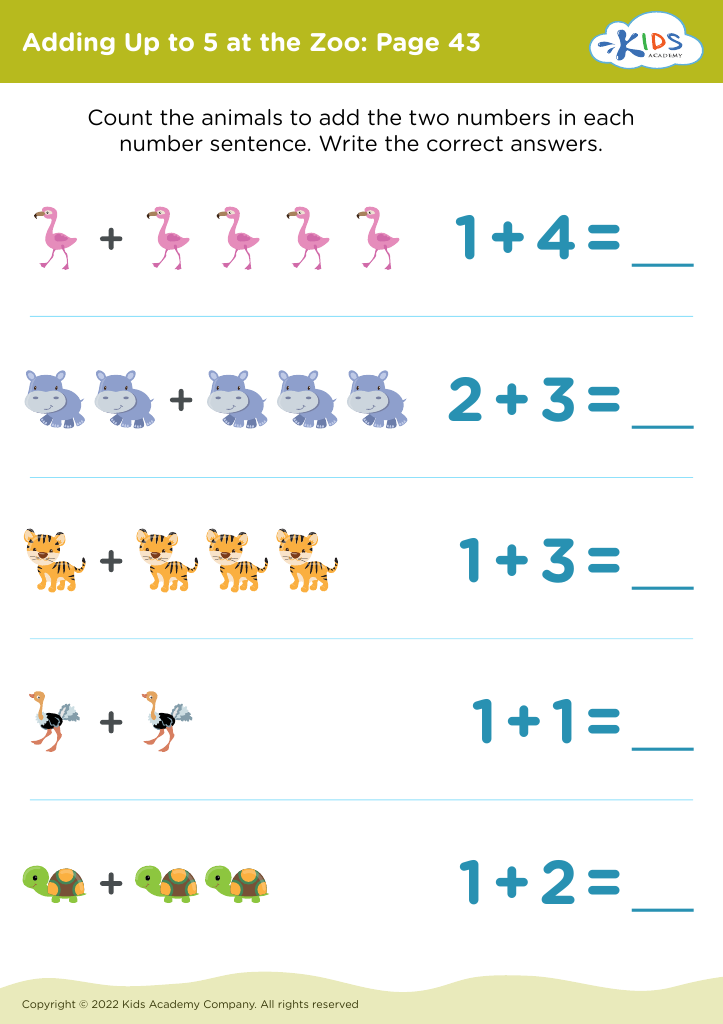
Adding Up to 5 at the Zoo: Page 43
Worksheet
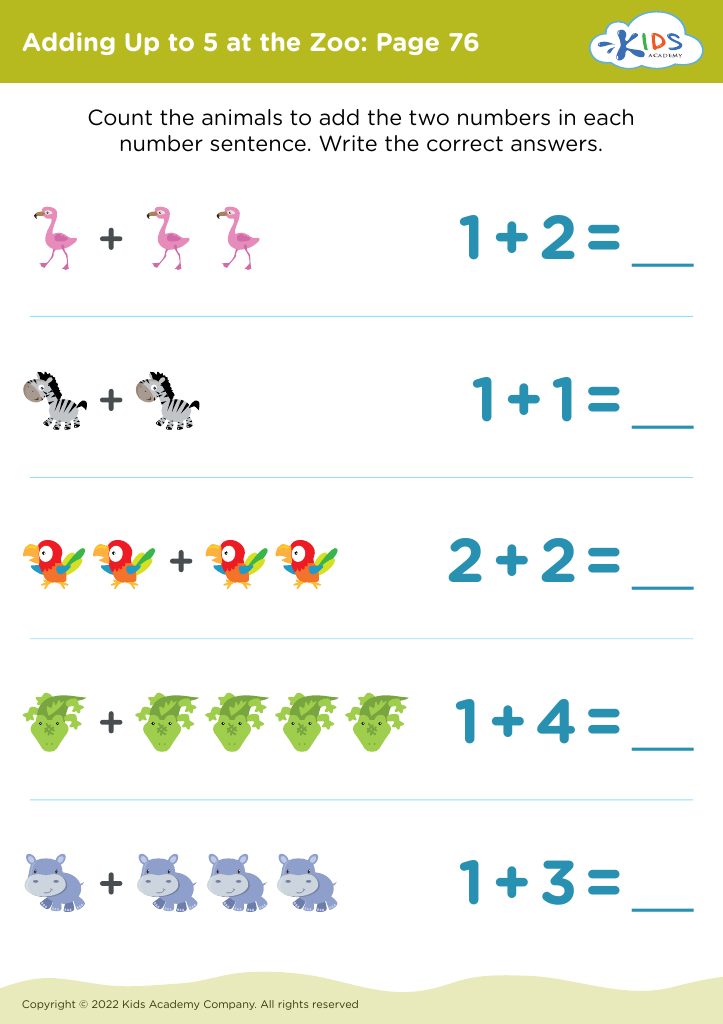
Adding Up to 5 at the Zoo: Page 76
Worksheet
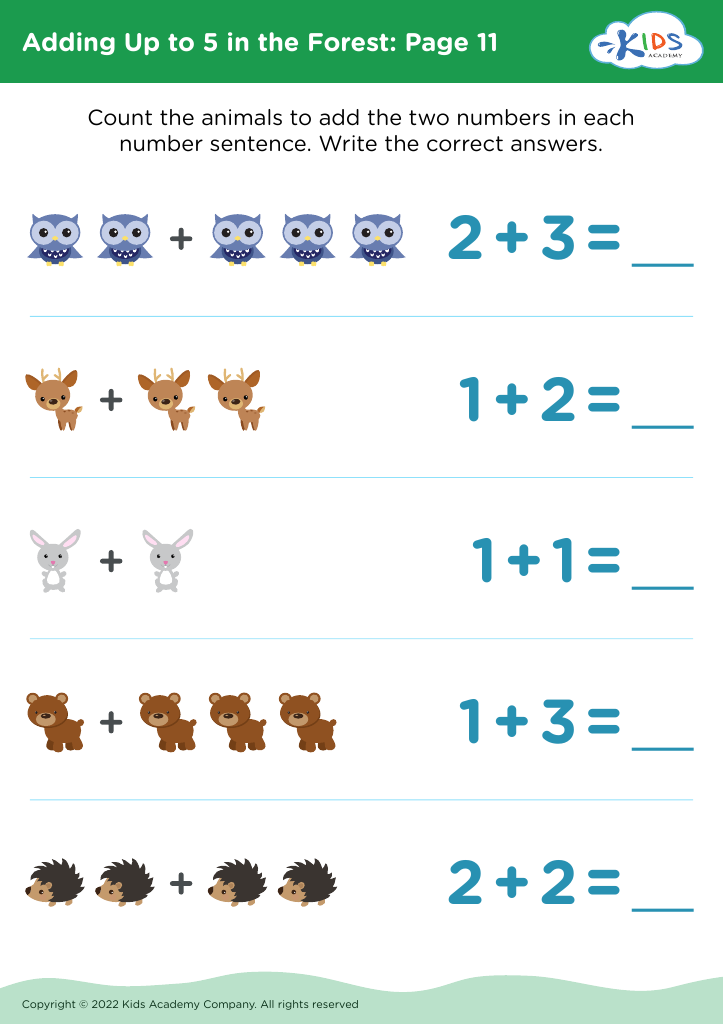
Adding Up to 5 in the Forest: Page 11
Worksheet
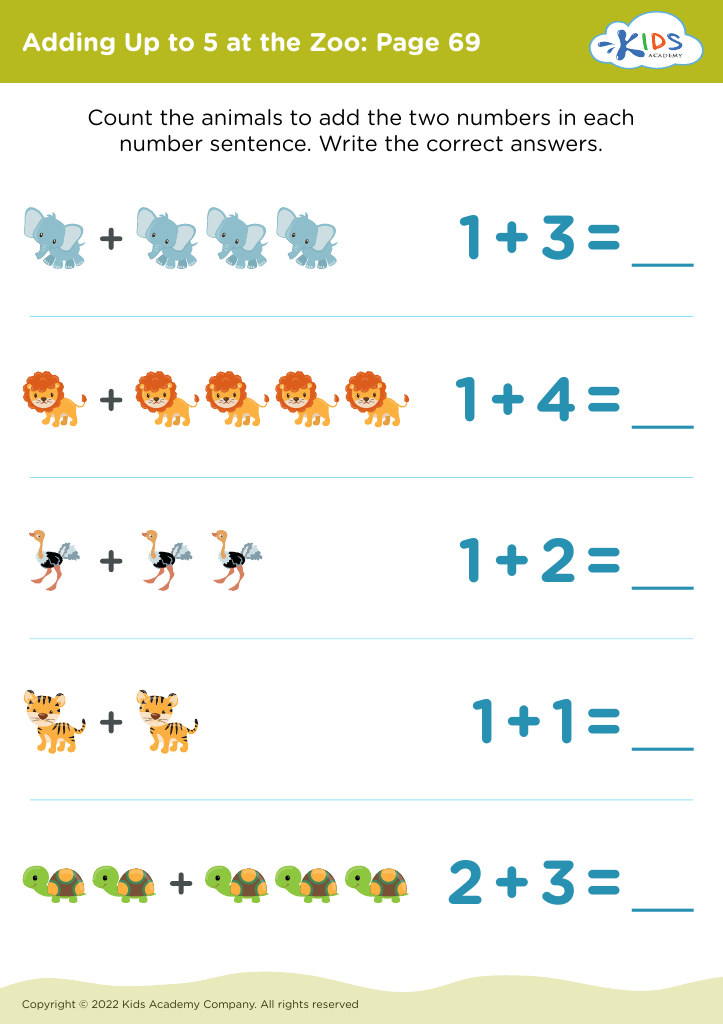
Adding Up to 5 at the Zoo: Page 69
Worksheet
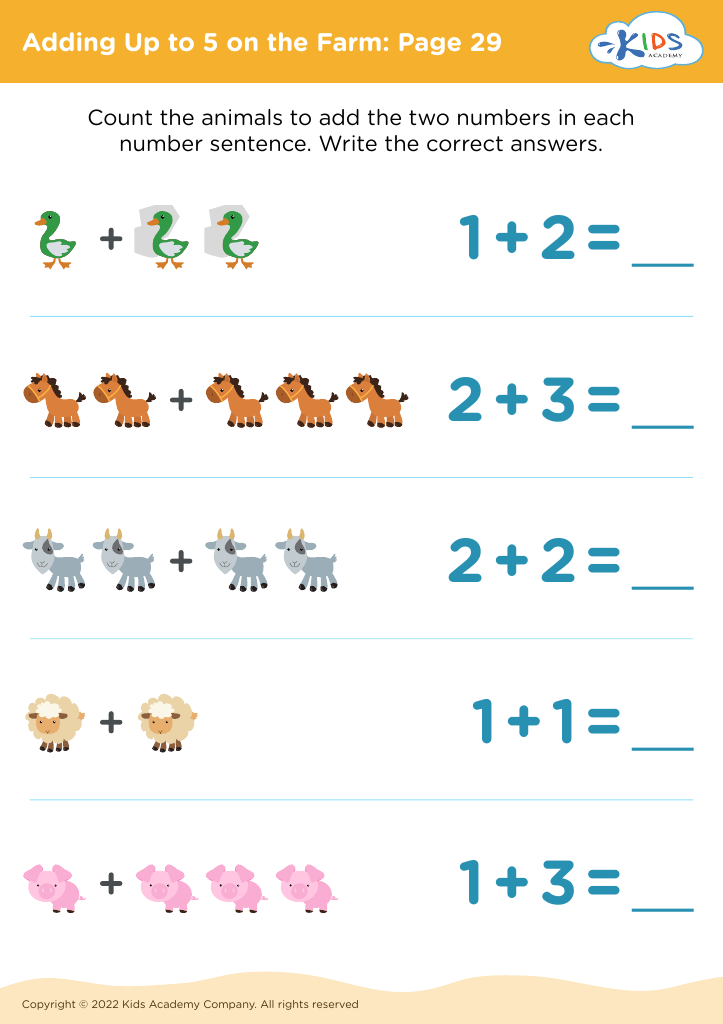
Adding Up to 5 on the Farm: Page 29
Worksheet
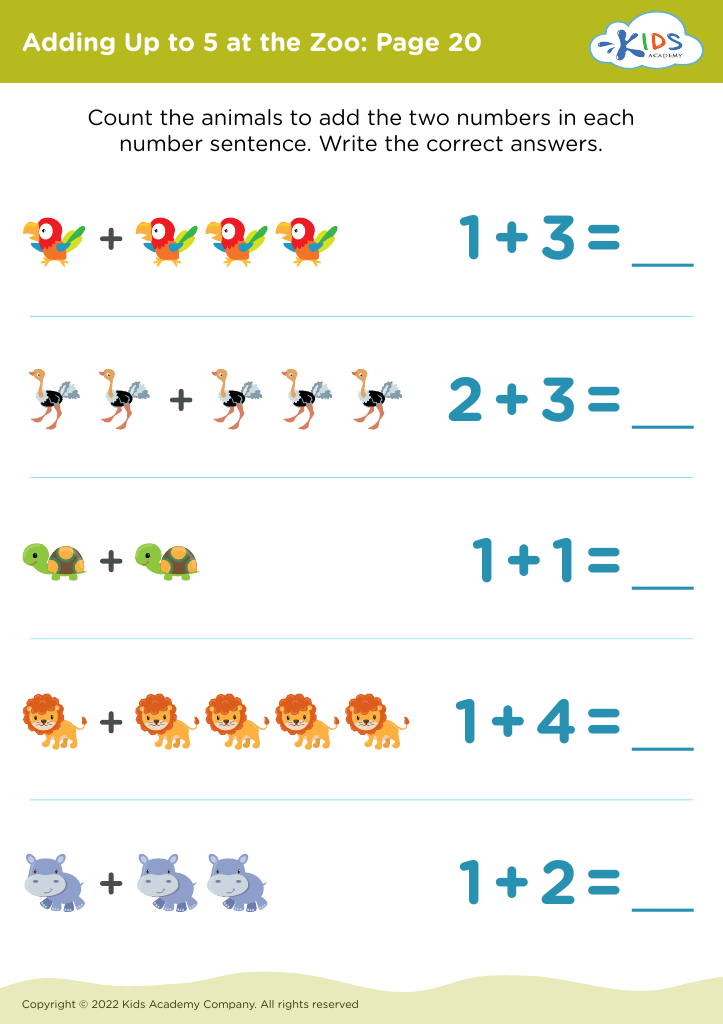
Adding Up to 5 at the Zoo: Page 20
Worksheet
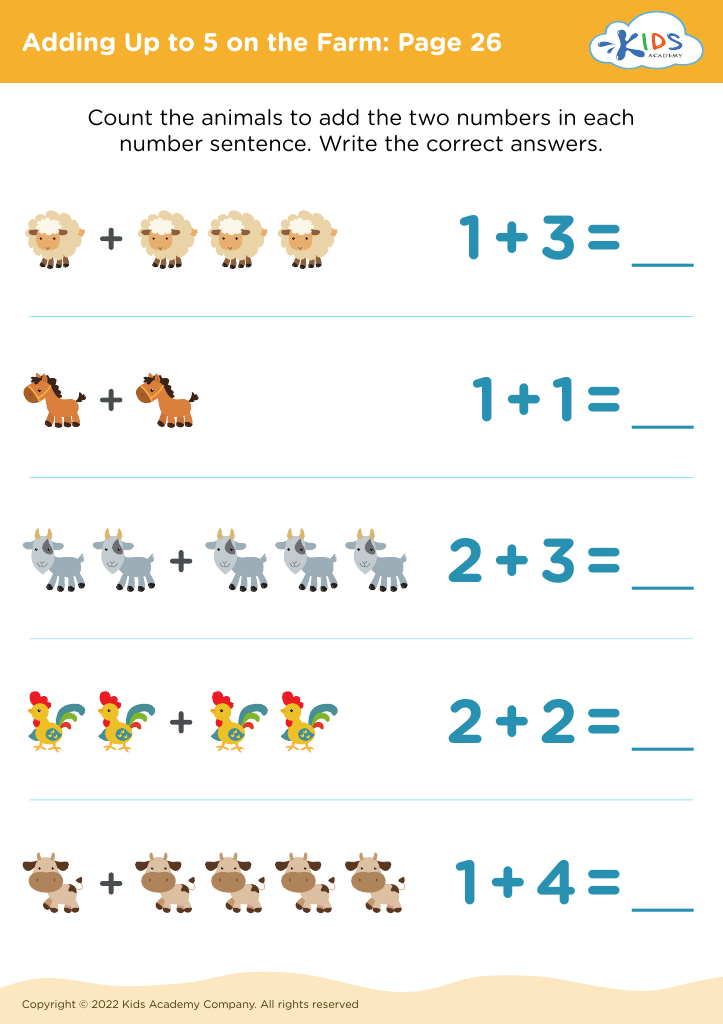
Adding Up to 5 on the Farm: Page 26
Worksheet
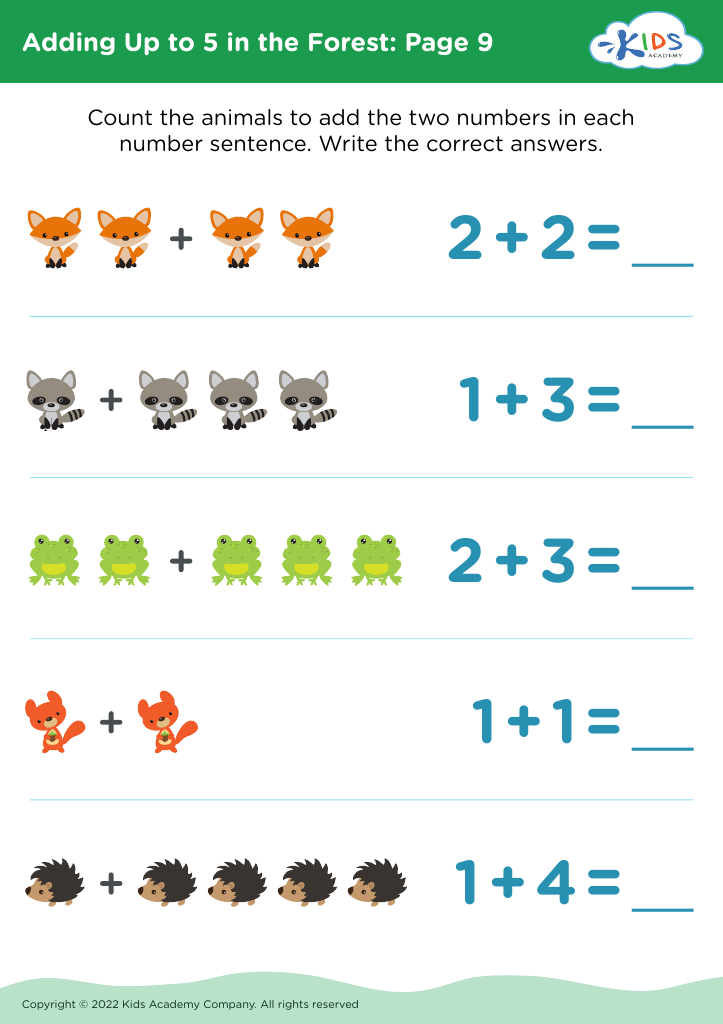
Adding Up to 5 in the Forest: Page 9
Worksheet
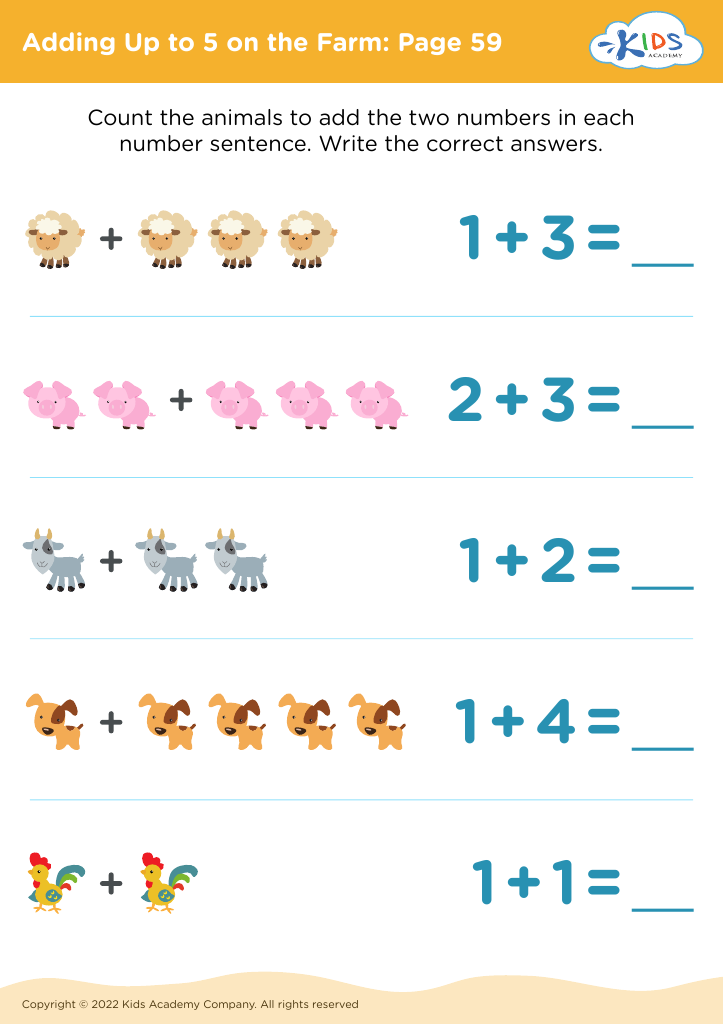
Adding Up to 5 on the Farm: Page 59
Worksheet
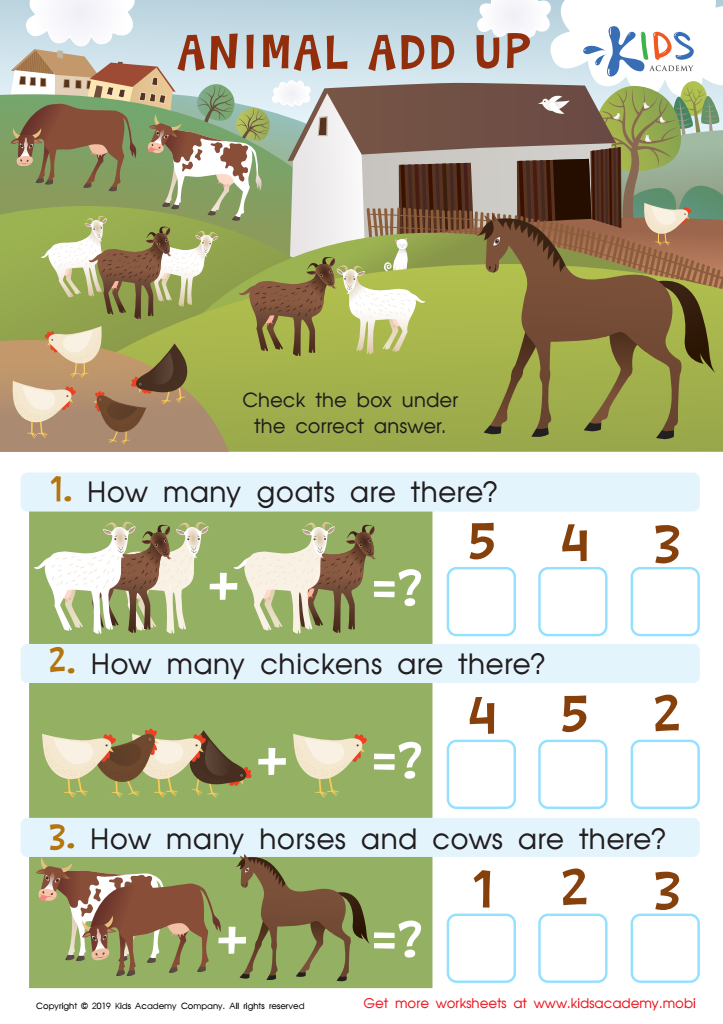
Animal Add Up Worksheet

Animal Add Up Worksheet

Animals are fun to observe and interact with. They can be seen at the zoo, parks, farms and in homes with pets. This worksheet helps kids identify animals, and build addition skills. Look at the picture with them and help name each animal. After that, add the animals up and check the box for the correct answer. 80 words.
Animal Add Up Worksheet
Worksheet
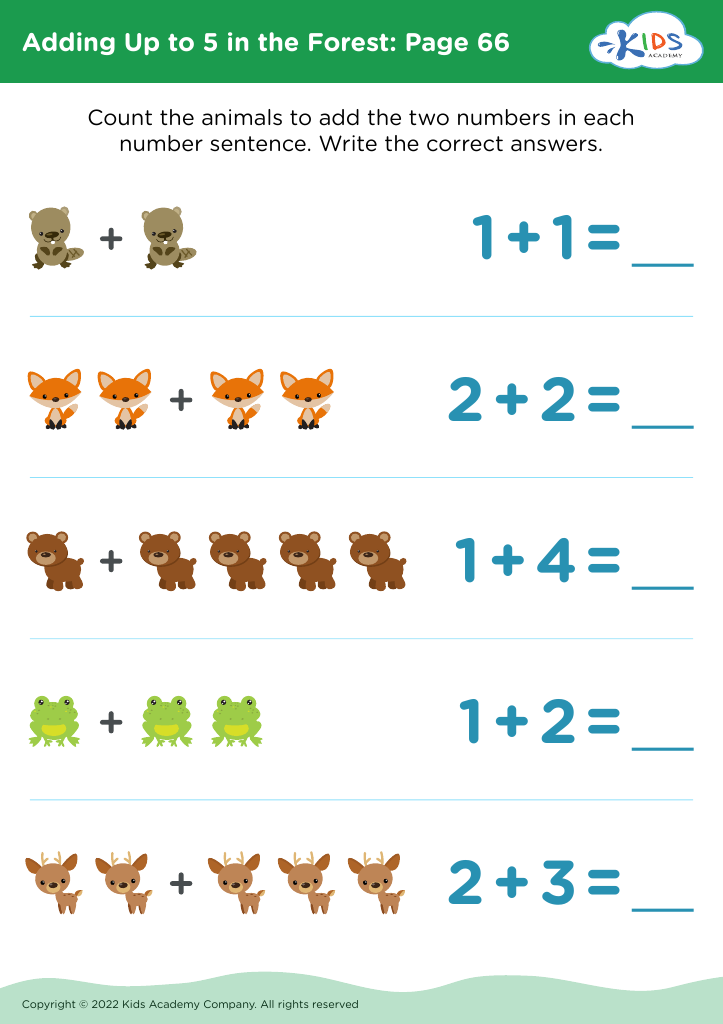
Adding Up to 5 in the Forest: Page 66
Worksheet
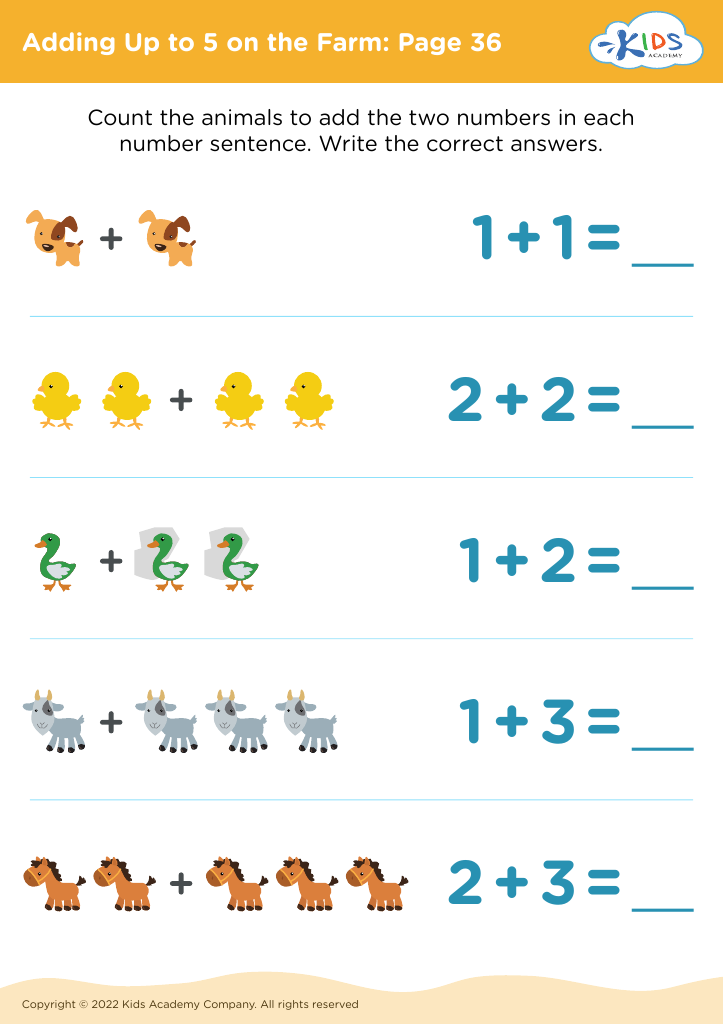
Adding Up to 5 on the Farm: Page 36
Worksheet
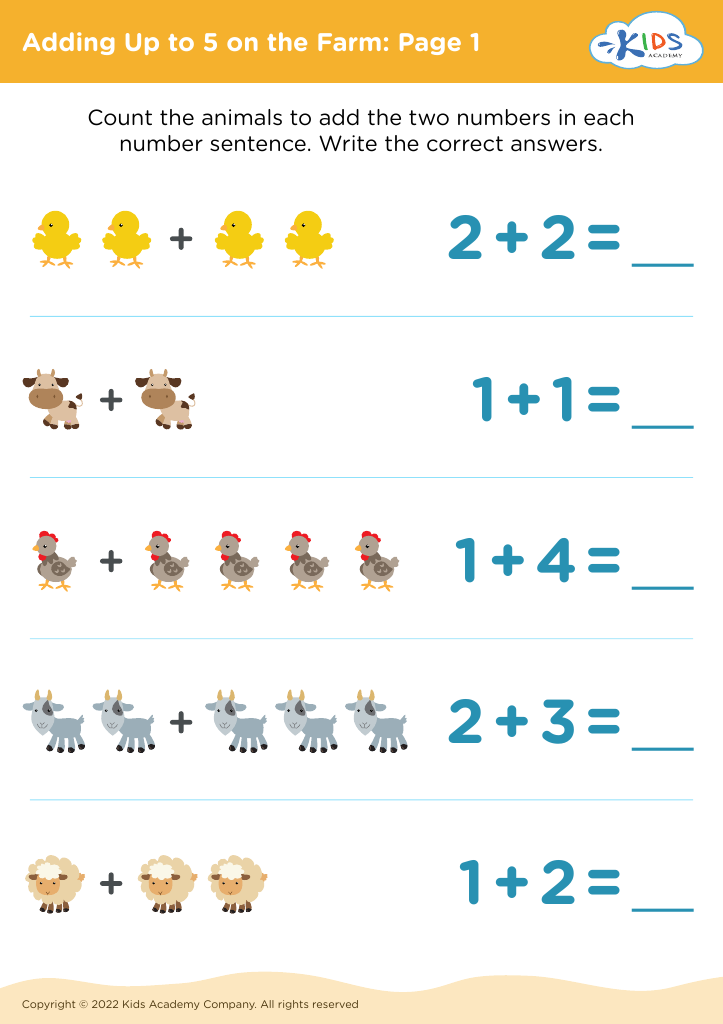
Adding Up to 5 on the Farm: Page 1
Worksheet
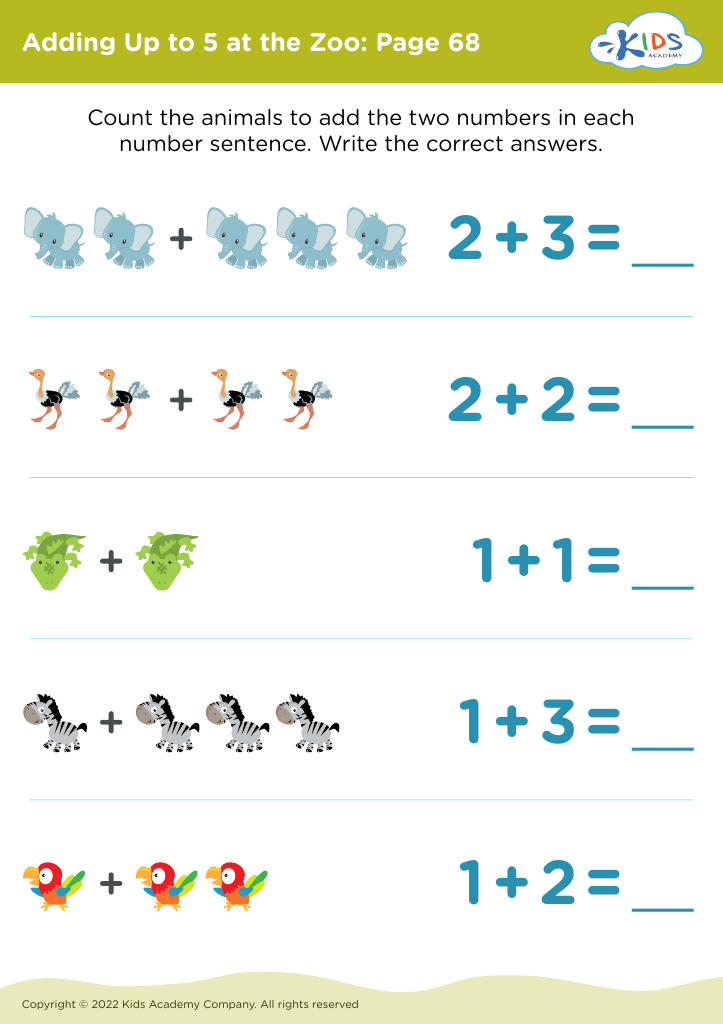
Adding Up to 5 at the Zoo: Page 68
Worksheet
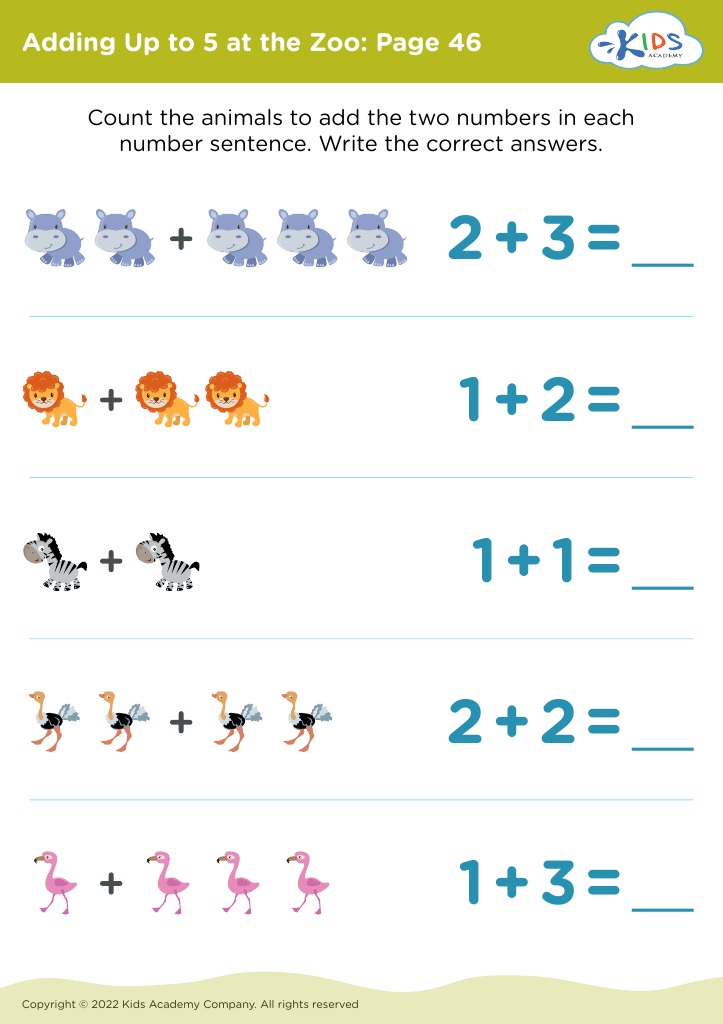
Adding Up to 5 at the Zoo: Page 46
Worksheet
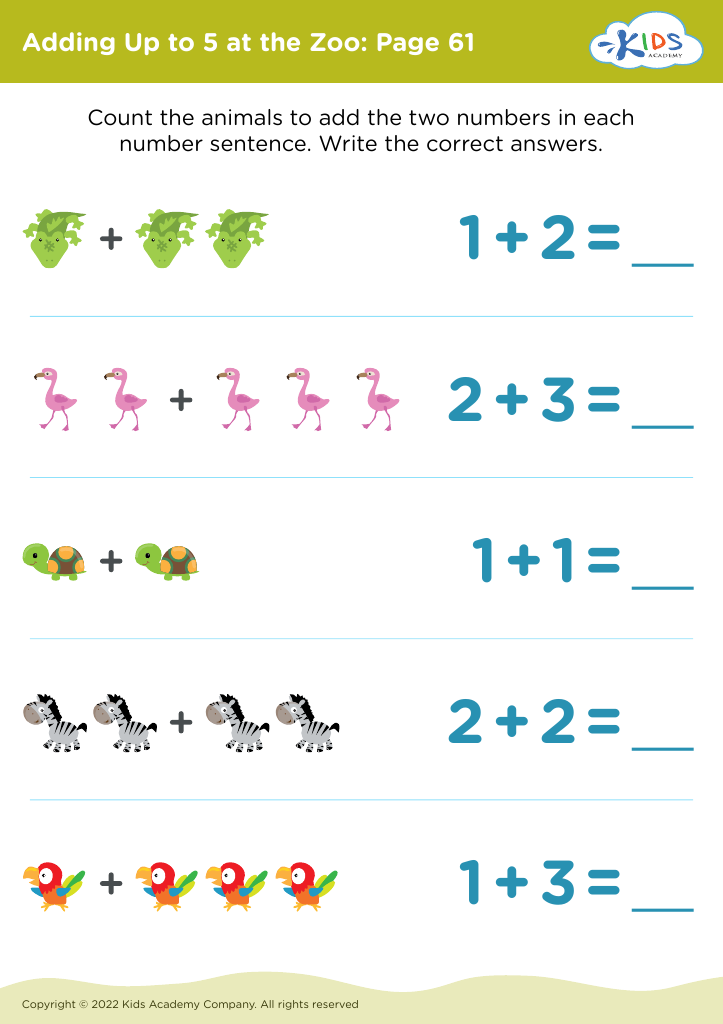
Adding Up to 5 at the Zoo: Page 61
Worksheet
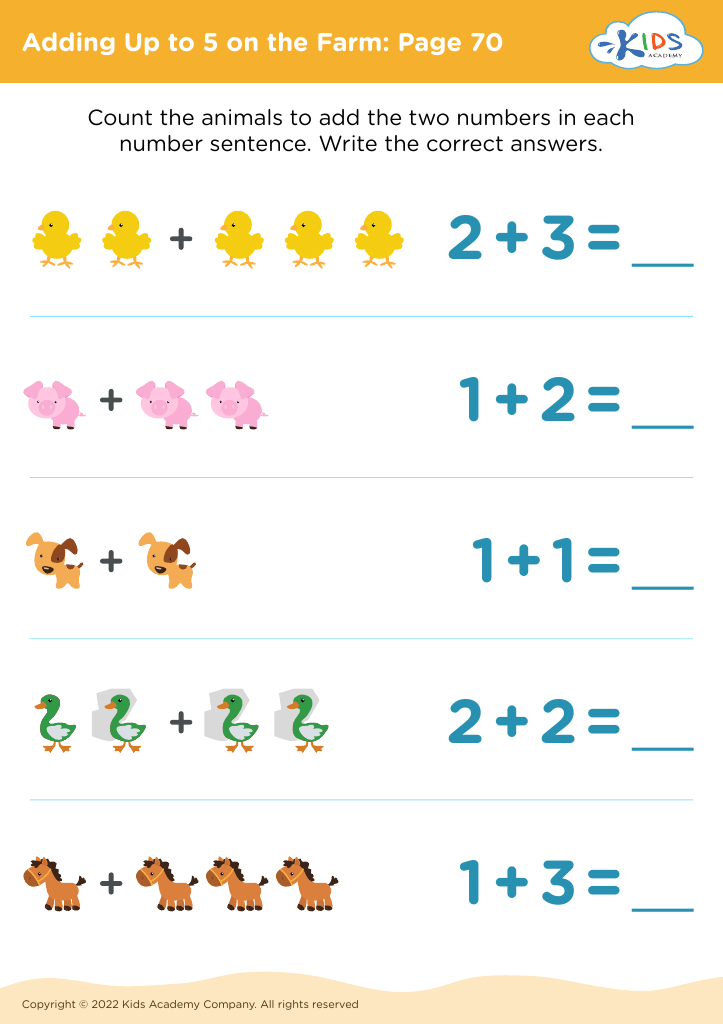
Adding Up to 5 on the Farm: Page 70
Worksheet
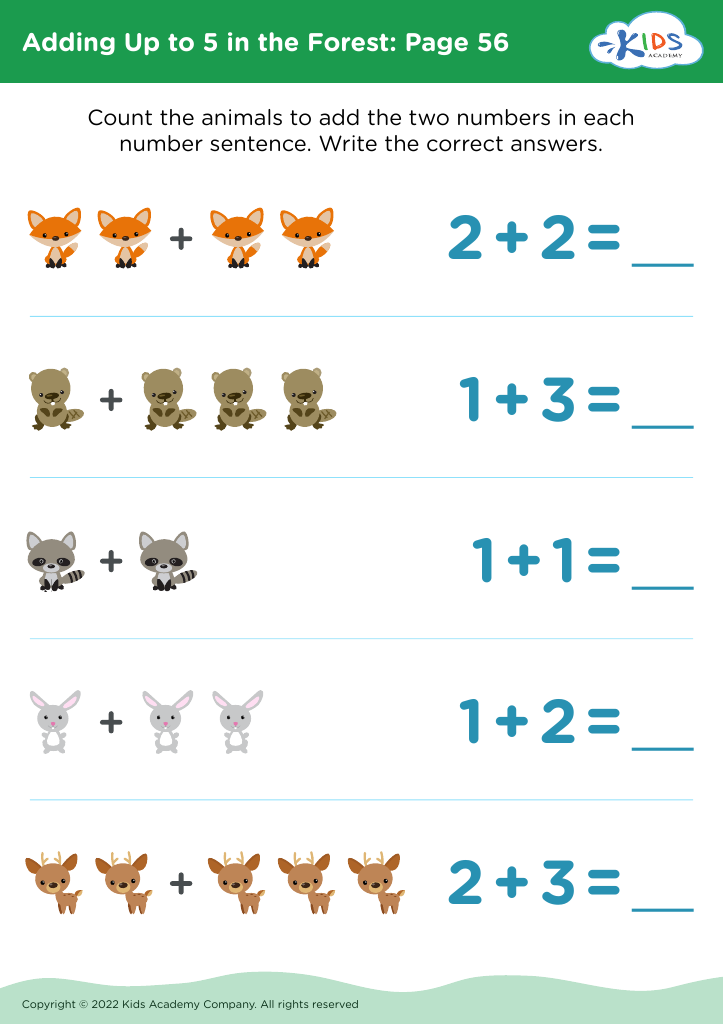
Adding Up to 5 in the Forest: Page 56
Worksheet
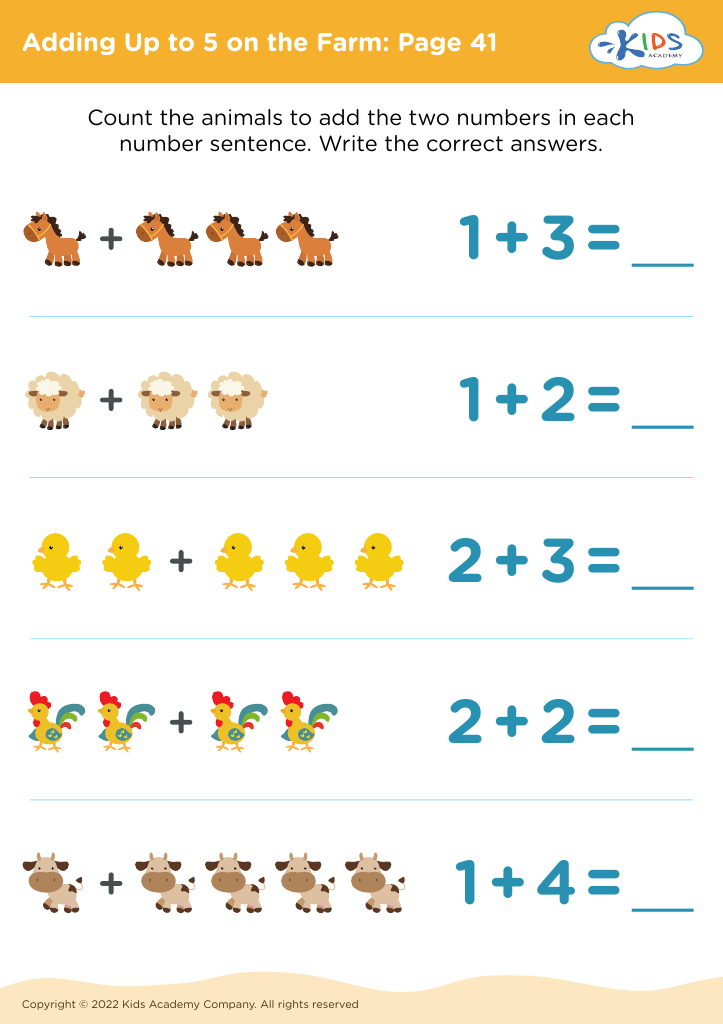
Adding Up to 5 on the Farm: Page 41
Worksheet
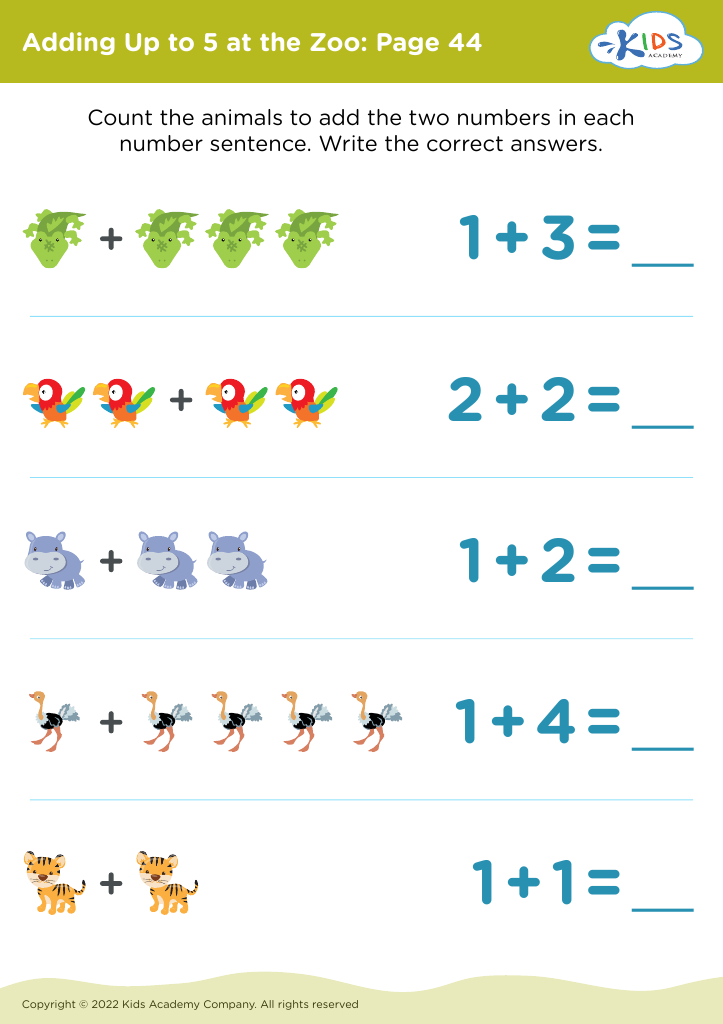
Adding Up to 5 at the Zoo: Page 44
Worksheet
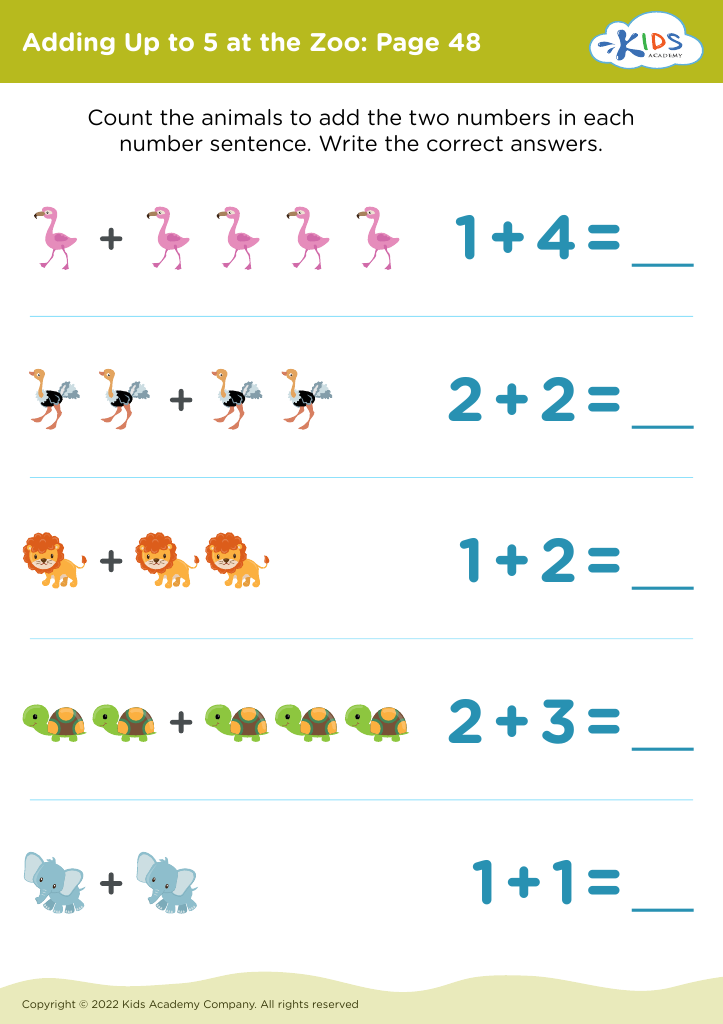
Adding Up to 5 at the Zoo: Page 48
Worksheet
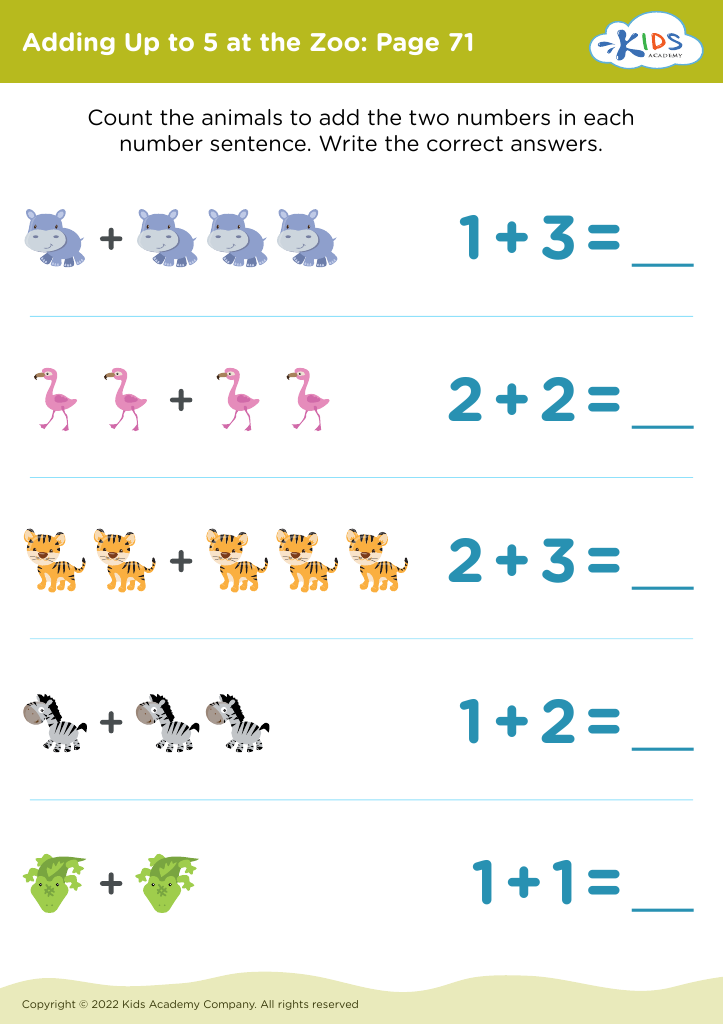
Adding Up to 5 at the Zoo: Page 71
Worksheet


Introducing animal recognition and basic addition and subtraction to 3-year-olds is crucial for several reasons. First, young children are naturally drawn to animals, making learning more engaging and enjoyable. When they can identify various animals, they are also developing essential language skills and vocabulary.

Furthermore, integrating simple addition and subtraction concepts using animals fosters early mathematical thinking. For instance, using visuals of animals can help children grasp the idea of quantities, which is foundational for future math skills. This not only enhances numeracy but also supports critical thinking as they learn to solve simple problems with concrete examples.

Additionally, these activities often involve play, which is a vital mode of learning at this age. Through play-based learning, children develop fine motor skills, social skills, and emotional intelligence as they interact with peers or caregivers during these activities. Engaging in such learning experiences helps to create a strong foundation for lifelong learning.

Finally, parents and teachers should value these early educational experiences as they promote a love for learning and curiosity about the world, setting the stage for academic success and personal growth in the long term. Encouraging a balanced blend of play and educational content nurtures well-rounded development.