Basic addition practice Addition & Subtraction Worksheets for 3-Year-Olds
9 filtered results
-
From - To
Boost your child's early math skills with our Basic Addition & Subtraction Worksheets designed for 3-Year-Olds! These engaging activities introduce foundational concepts of addition and subtraction in a playful and approachable manner. Perfect for young learners, our worksheets feature colorful visuals and interactive exercises that make math fun! Kids will practice counting, recognizing numbers, and solving simple problems through enjoyable exercises that develop critical thinking. Ideal for home or preschool settings, support your child's journey in mastering basic arithmetic while stimulating their love of learning. Start their mathematical adventure today with our carefully crafted worksheets!
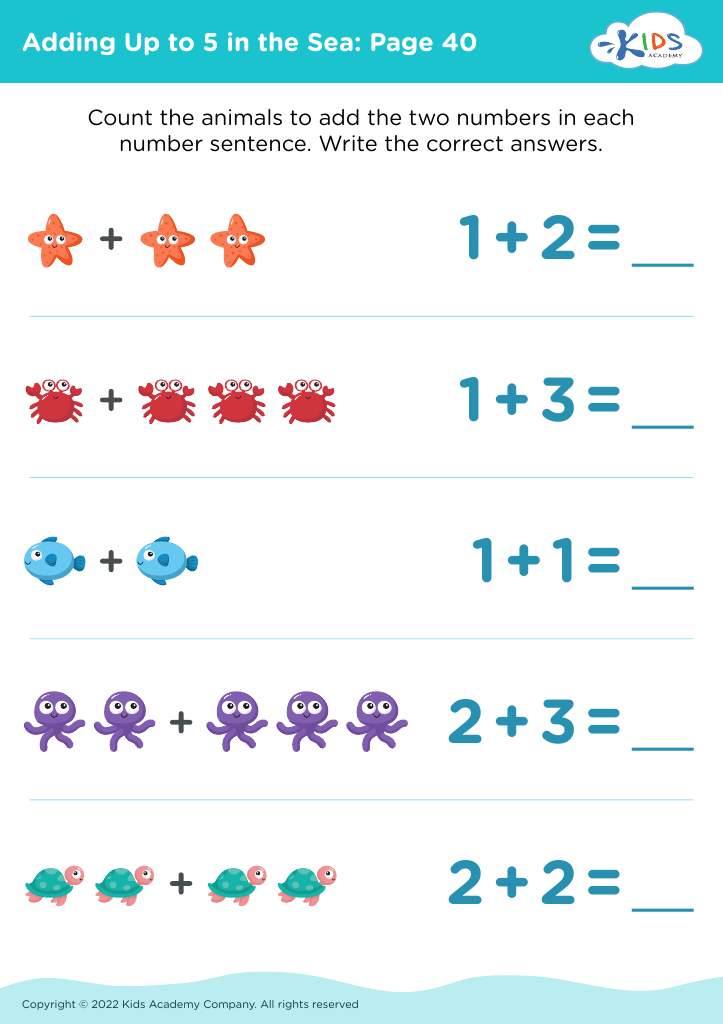
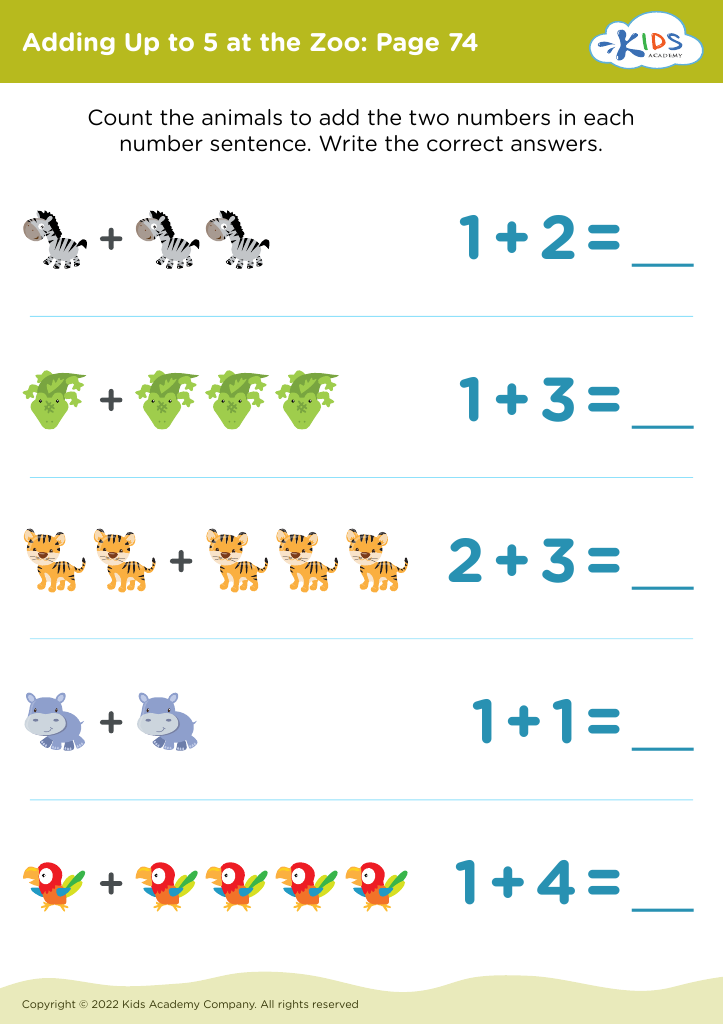
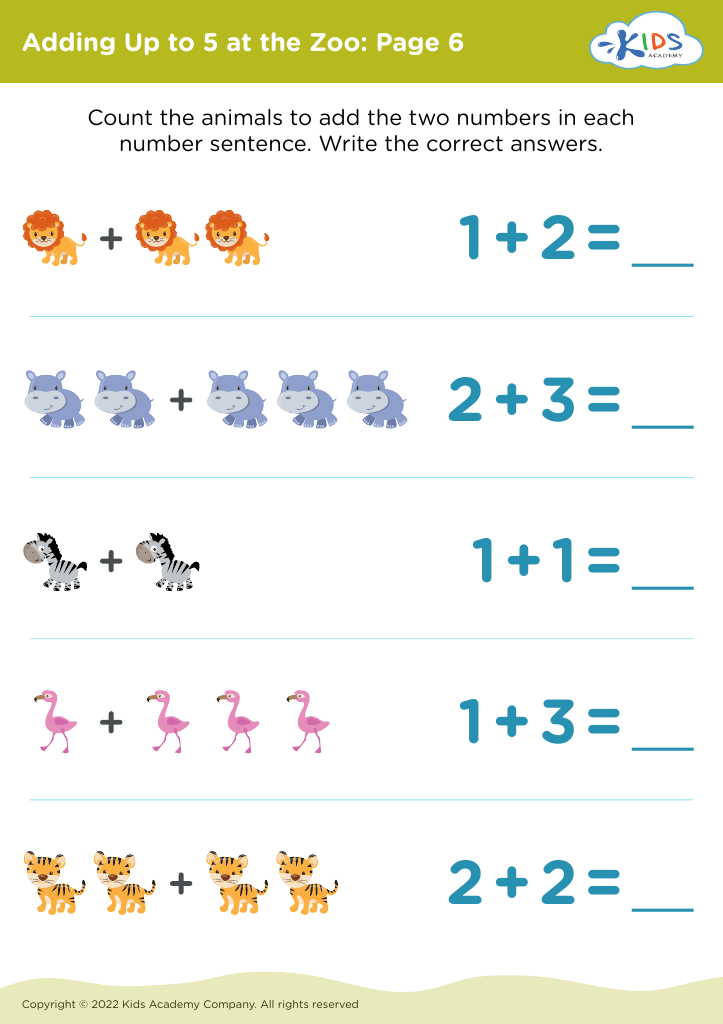
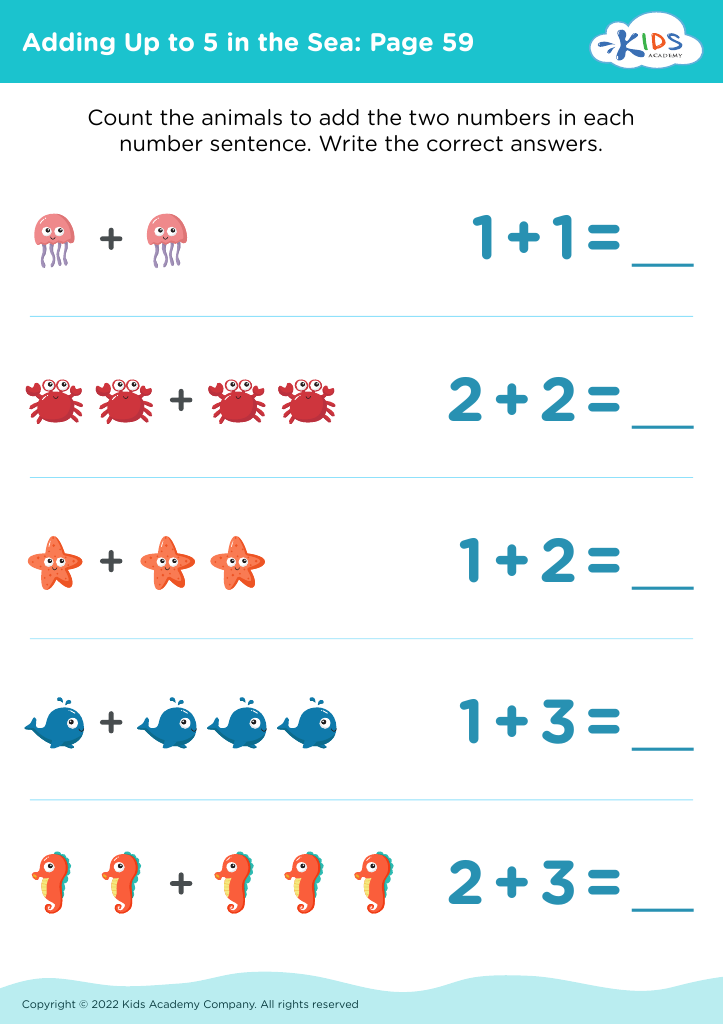
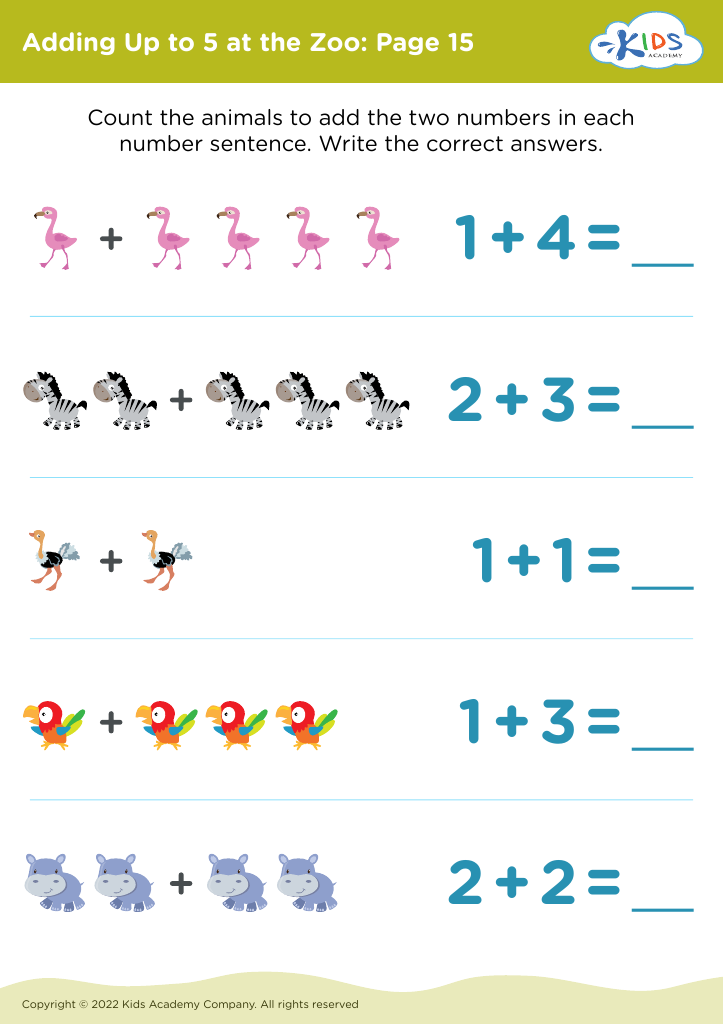
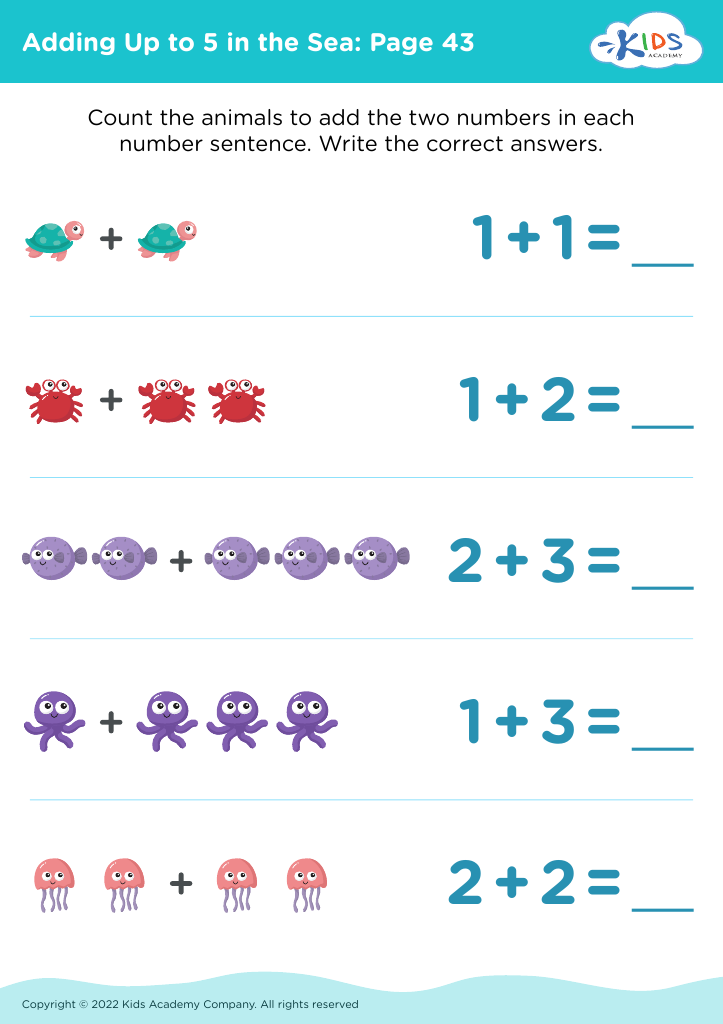
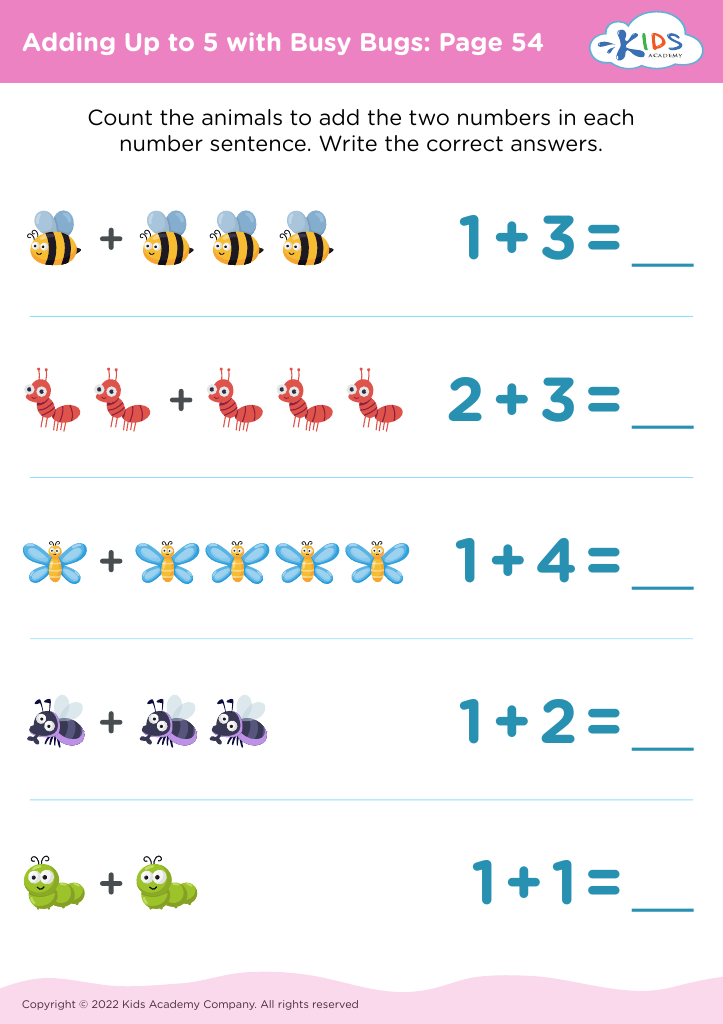
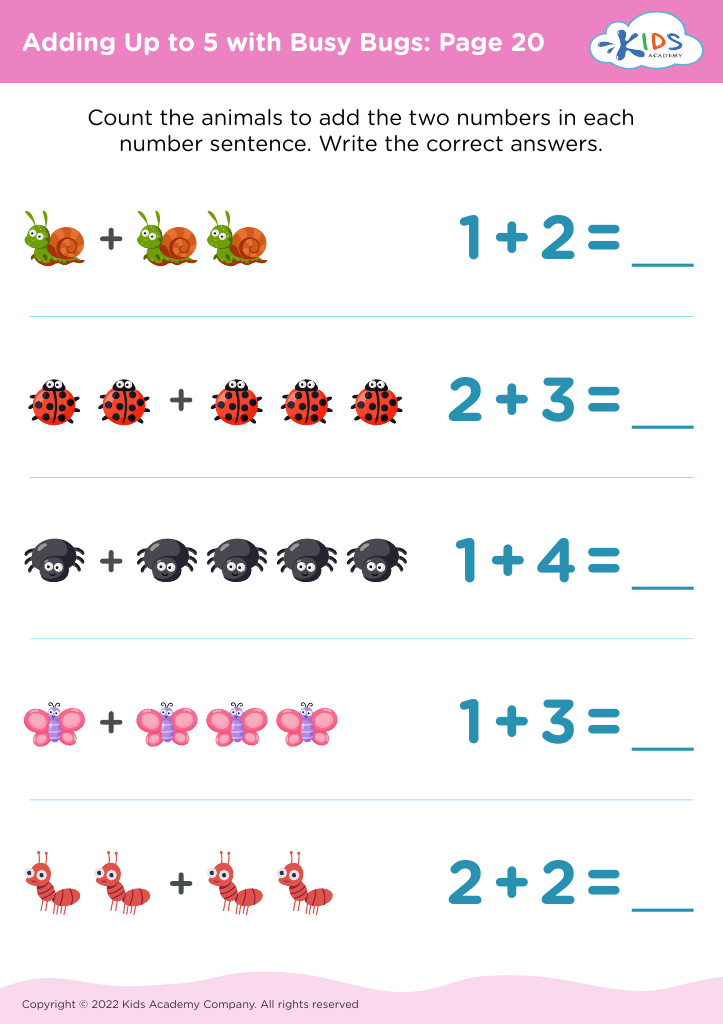
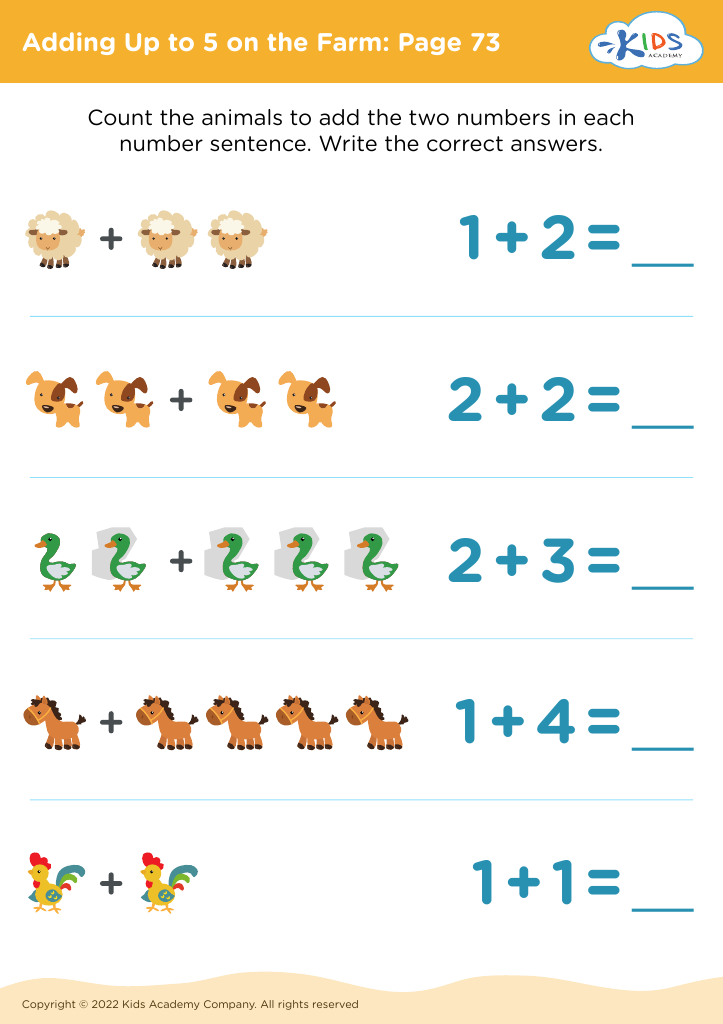








Introducing basic addition and subtraction to 3-year-olds is vital for several reasons. Early mathematical skills lay the foundation for cognitive development and critical thinking. Engaging children in basic addition and subtraction during this formative stage boosts their numerical understanding and enhances their problem-solving abilities.
First, incorporating math concepts into early childhood education promotes a love for learning. Simple activities like counting toys or sharing snacks can be framed as fun games, making the experience enjoyable and interactive. Through these activities, children begin to grasp the concepts of quantity and value, which are essential for further mathematical learning as they grow.
Second, practicing basic addition and subtraction also aids in the development of fine motor skills. Using manipulatives—such as blocks, counters, or fingers—not only reinforces math practice but enhances hand-eye coordination, an important skill for many everyday tasks.
Finally, early math skills are predictive of later academic success. By cultivating numerical literacy early on, parents and teachers empower children to approach math with confidence in school and beyond. This groundwork fosters a strong educational trajectory and supports the development of essential life skills such as logical reasoning and critical thinking.








