Filters

101 filtered results

Clear all filters
Favorites
With answer key
Interactive

101 filtered results

Difficulty Level

Grade


Check out this FREE Trial Lesson on Addition & Subtraction for age 3!

Match Exactly the Same

Favorites
With answer key
Interactive
  • 3
  • Cognitive Development
  • Addition & Subtraction
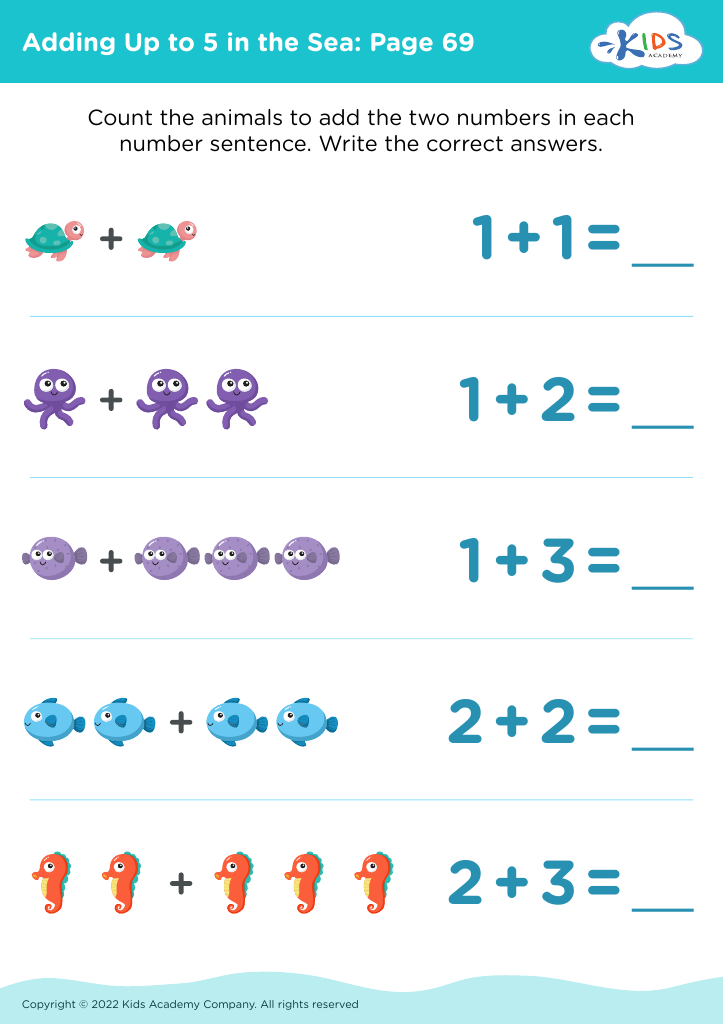
Adding Up to 5 in the Sea: Page 69
Worksheet
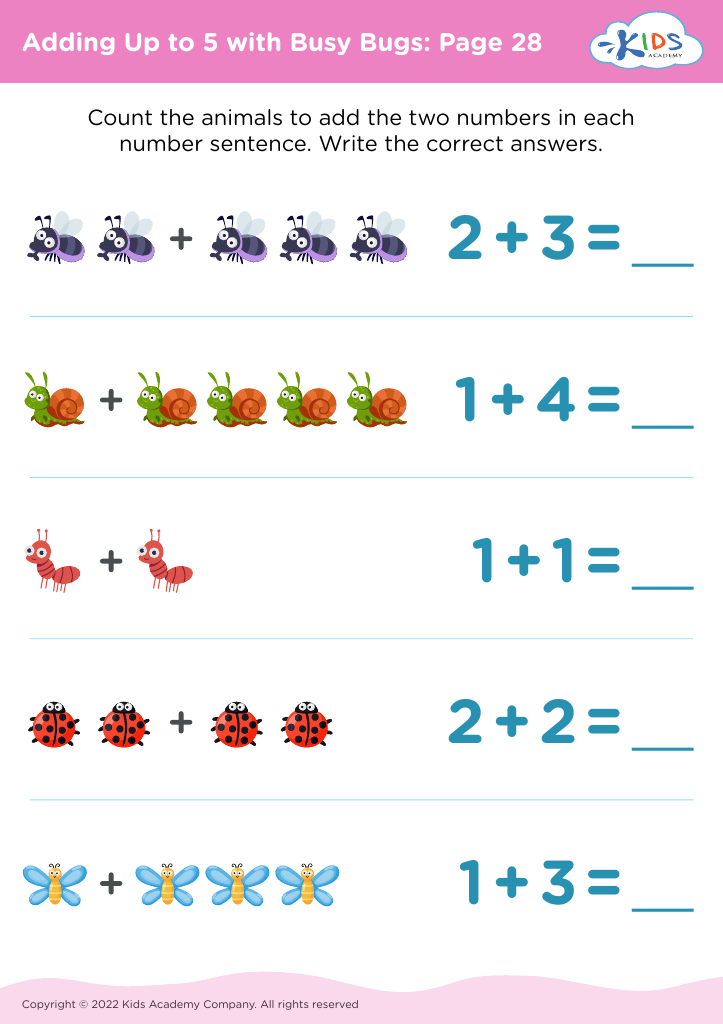
Adding Up to 5 with Busy Bugs: Page 28
Worksheet
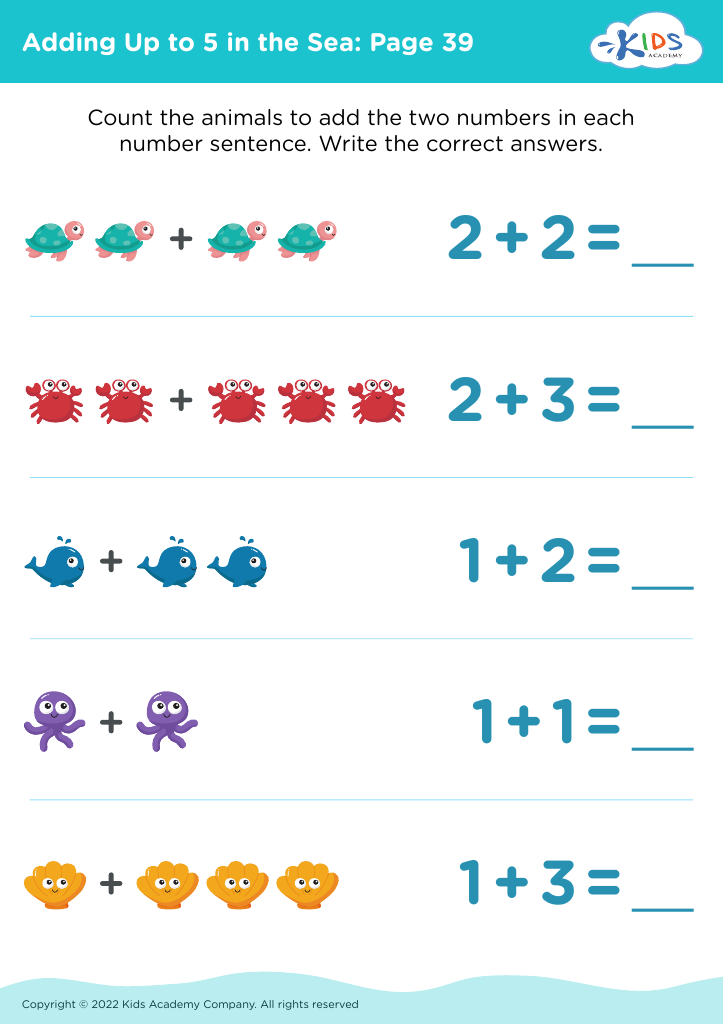
Adding Up to 5 in the Sea: Page 39
Worksheet
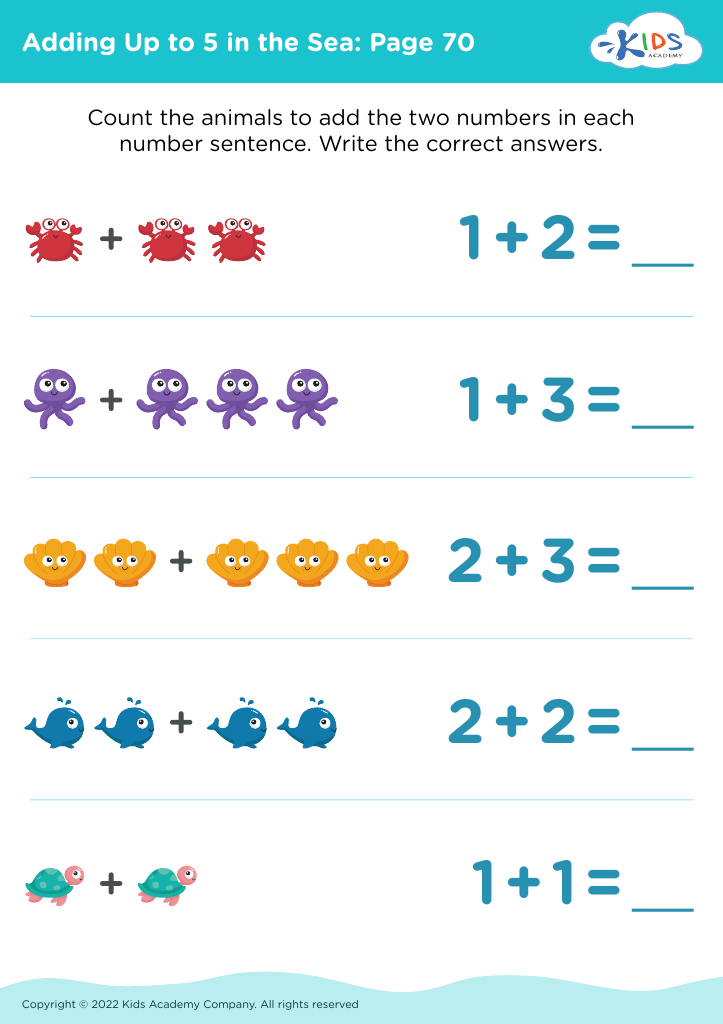
Adding Up to 5 in the Sea: Page 70
Worksheet
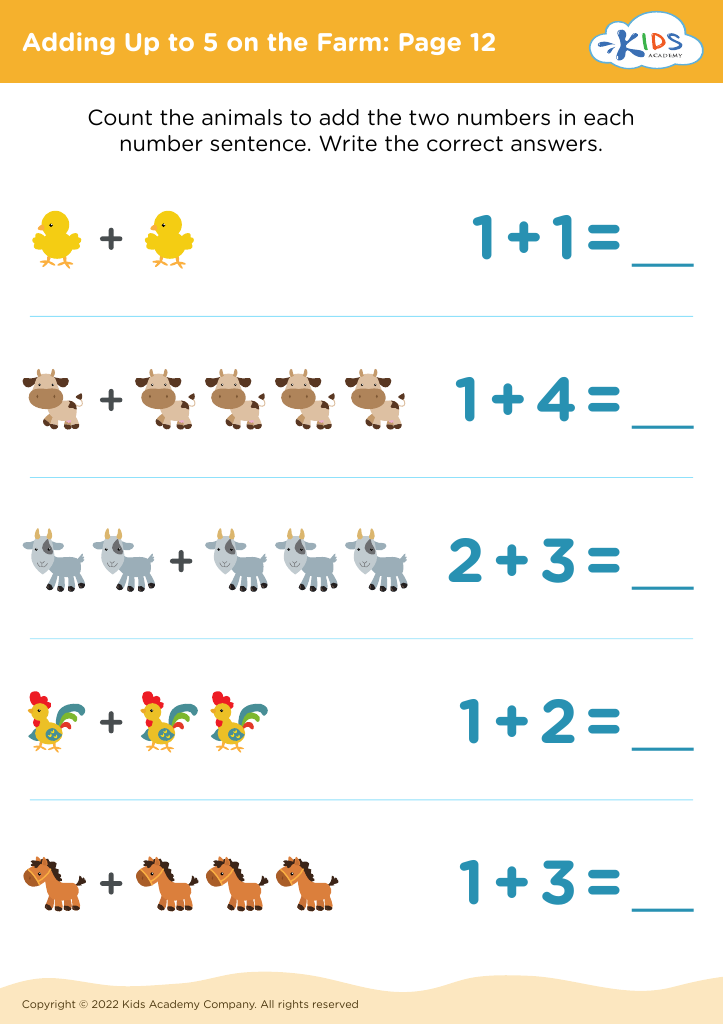
Adding Up to 5 on the Farm: Page 12
Worksheet
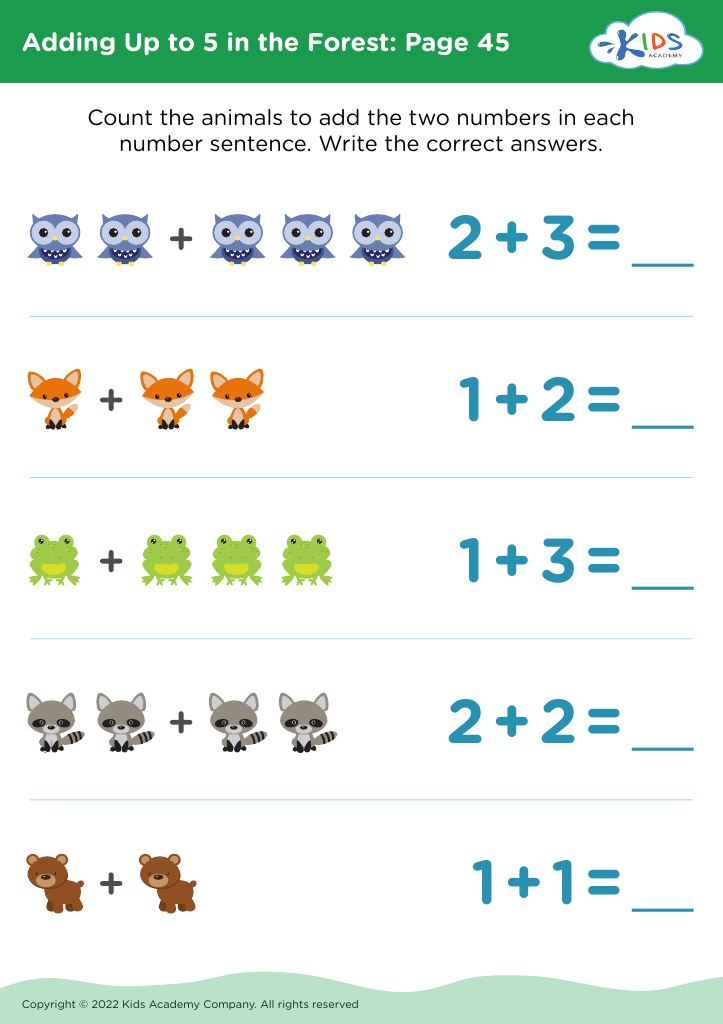
Adding Up to 5 in the Forest: Page 45
Worksheet
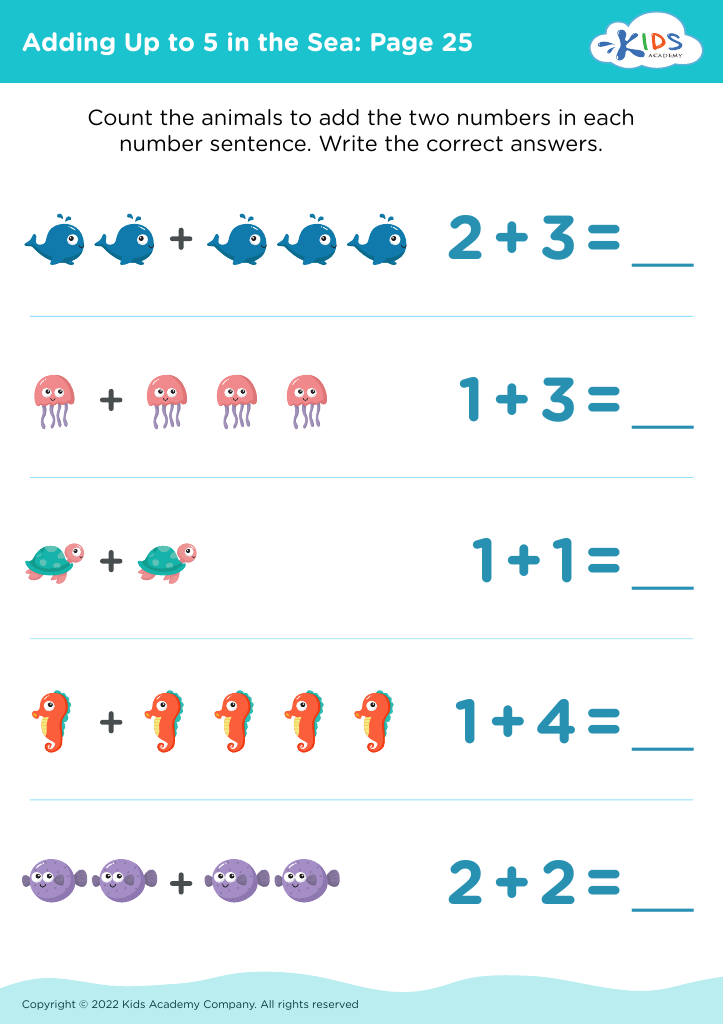
Adding Up to 5 in the Sea: Page 25
Worksheet
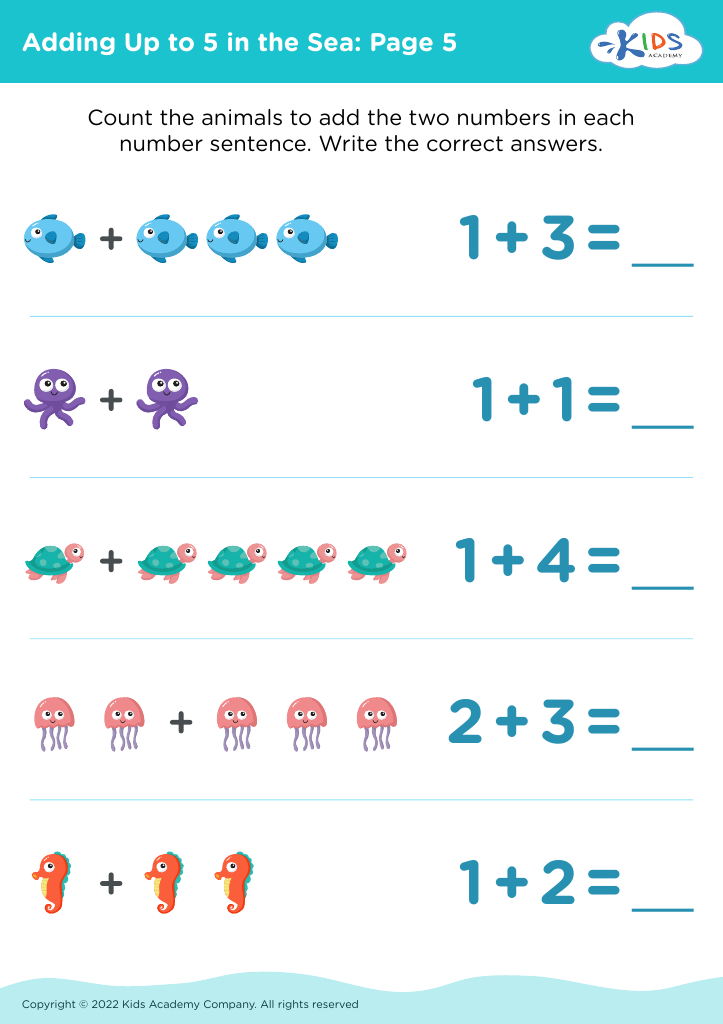
Adding Up to 5 in the Sea: Page 5

Adding Up to 5 in the Sea: Page 5

Adding Up to 5 in the Sea: Page 5
Worksheet
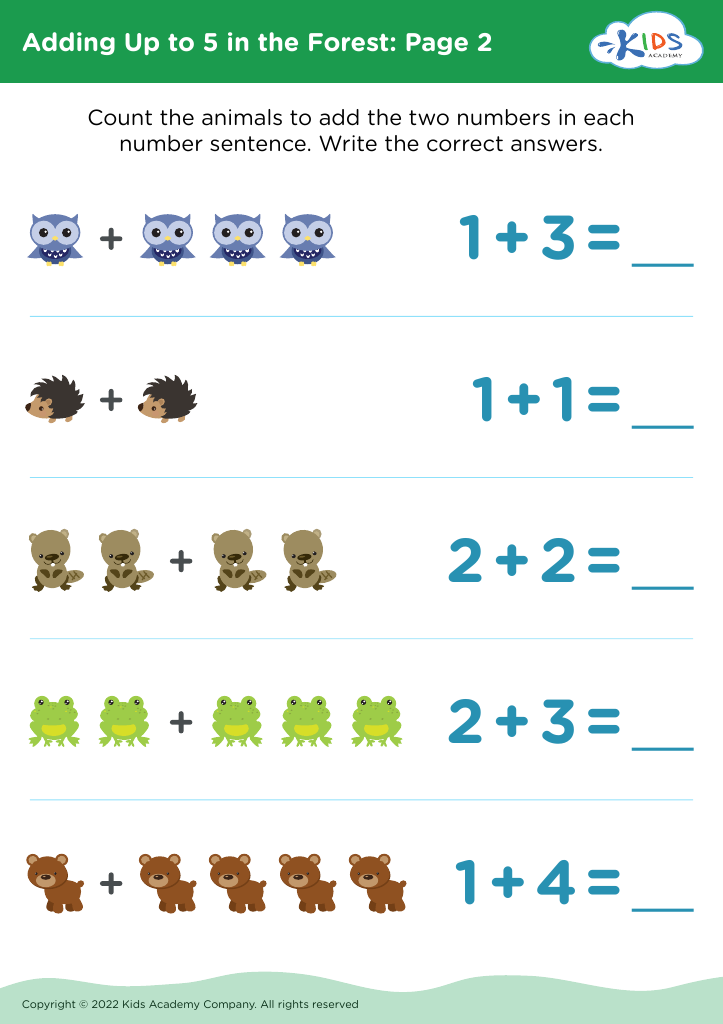
Adding Up to 5 in the Forest: Page 2
Worksheet
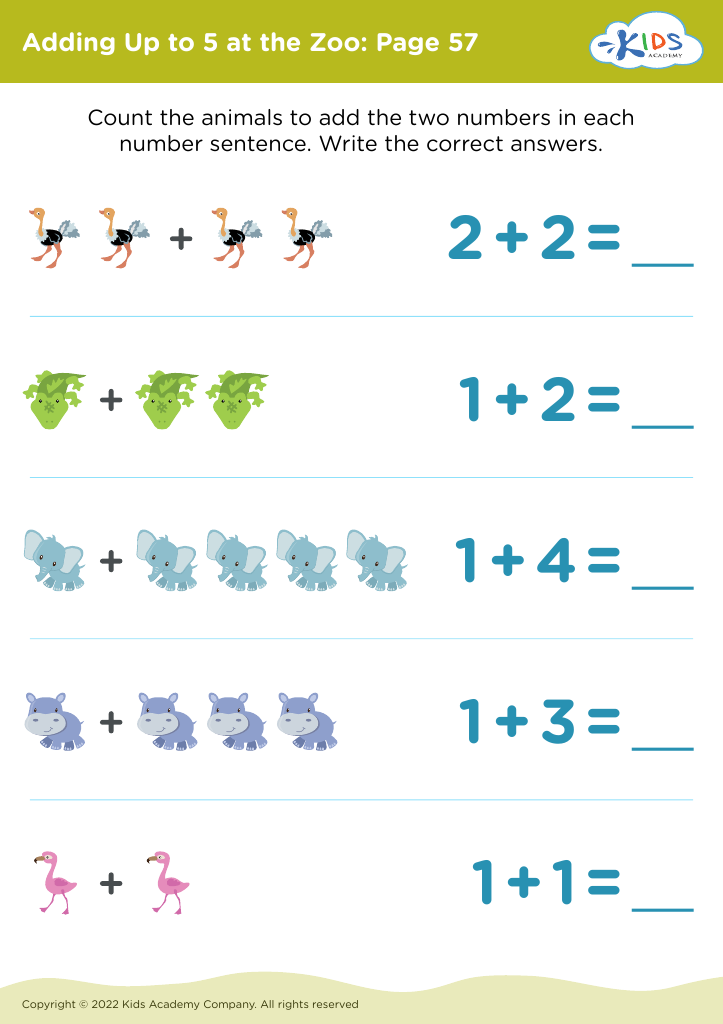
Adding Up to 5 at the Zoo: Page 57
Worksheet
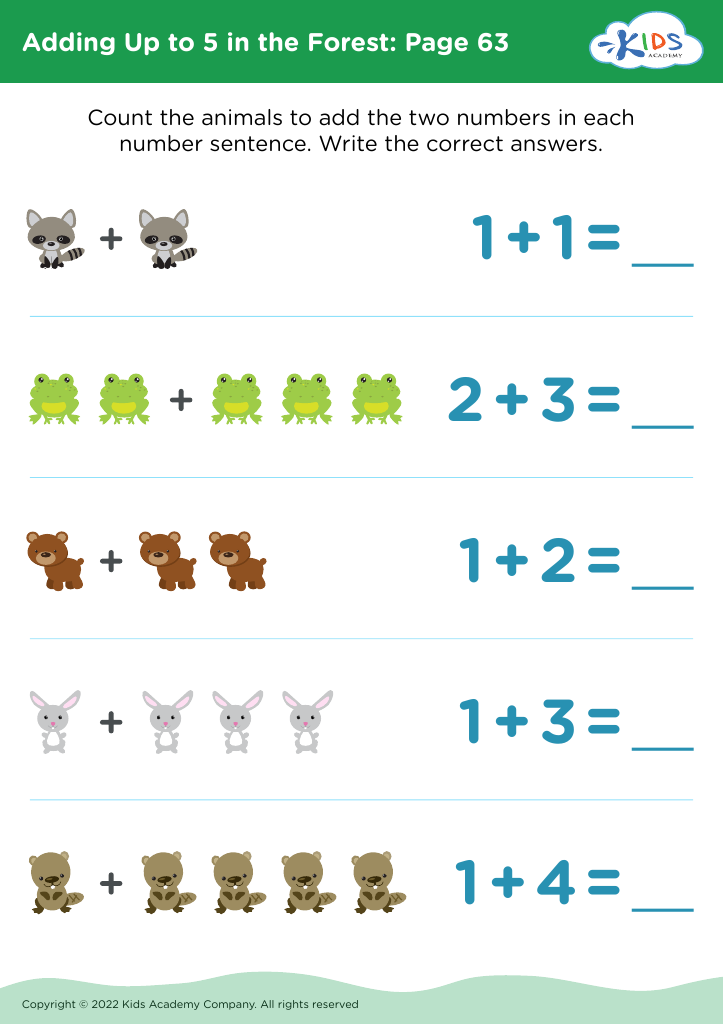
Adding Up to 5 in the Forest: Page 63
Worksheet
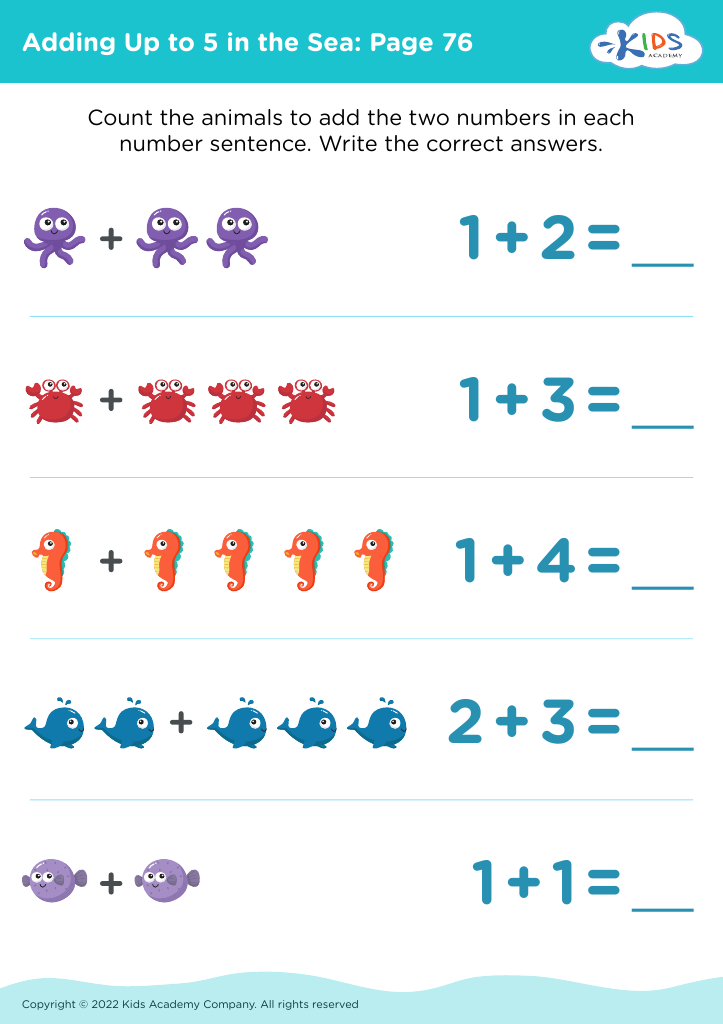
Adding Up to 5 in the Sea: Page 76
Worksheet
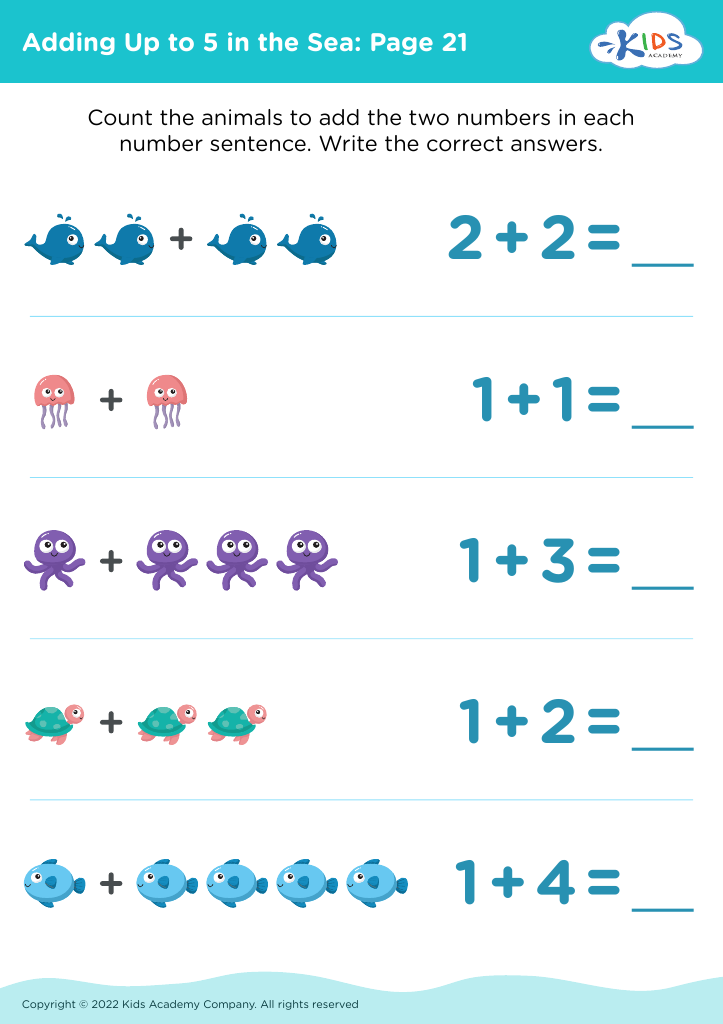
Adding Up to 5 in the Sea: Page 21
Worksheet
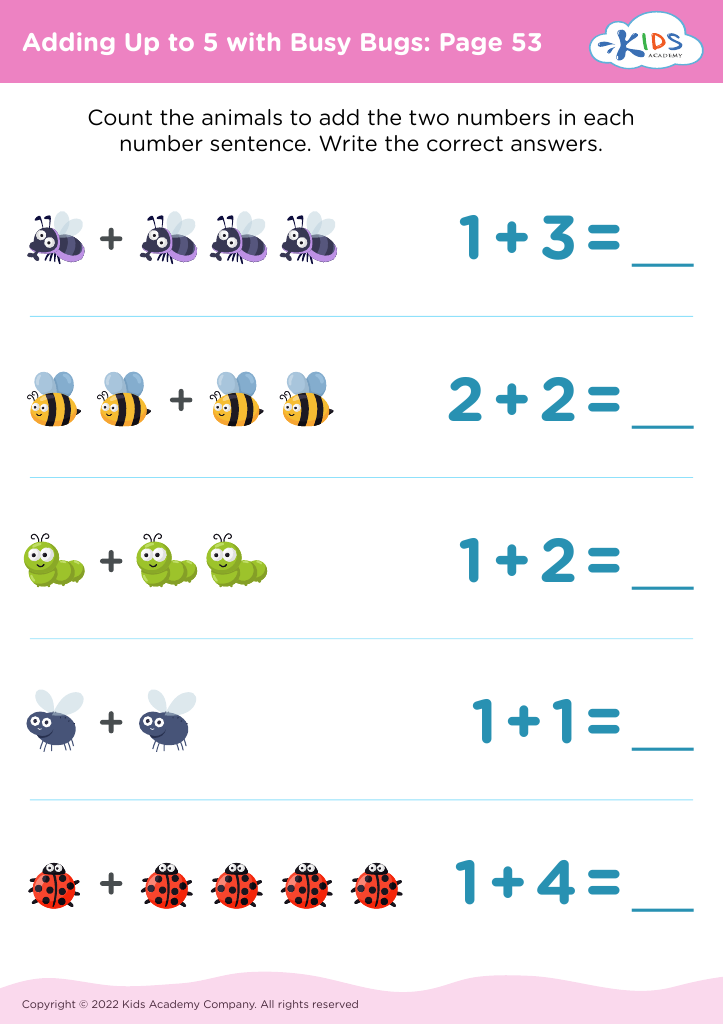
Adding Up to 5 with Busy Bugs: Page 53
Worksheet
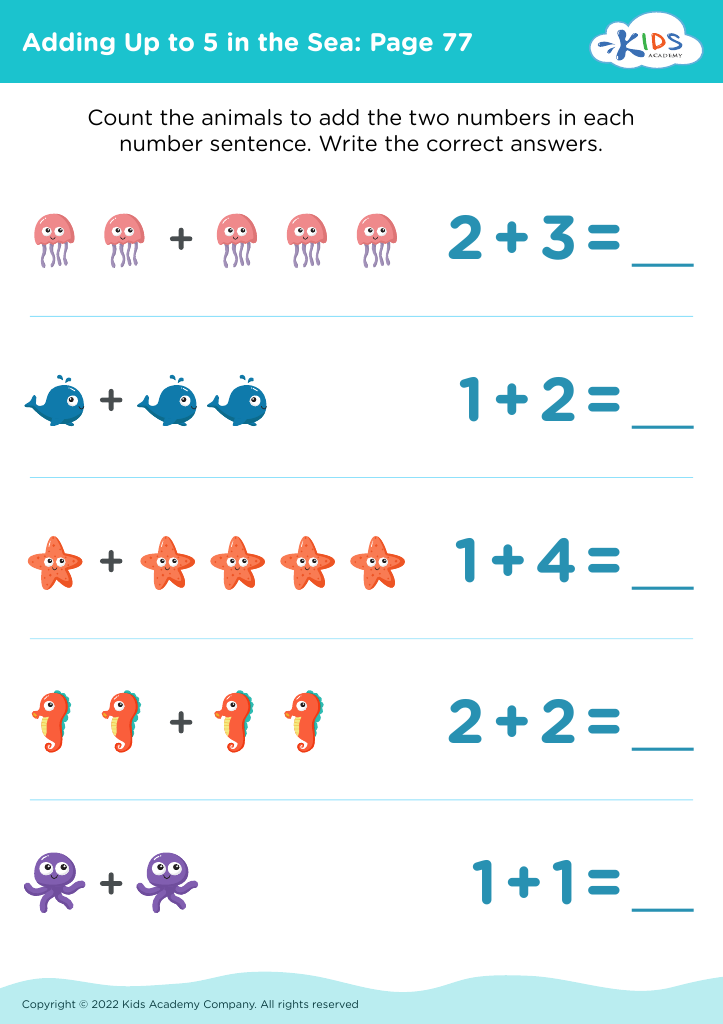
Adding Up to 5 in the Sea: Page 77
Worksheet
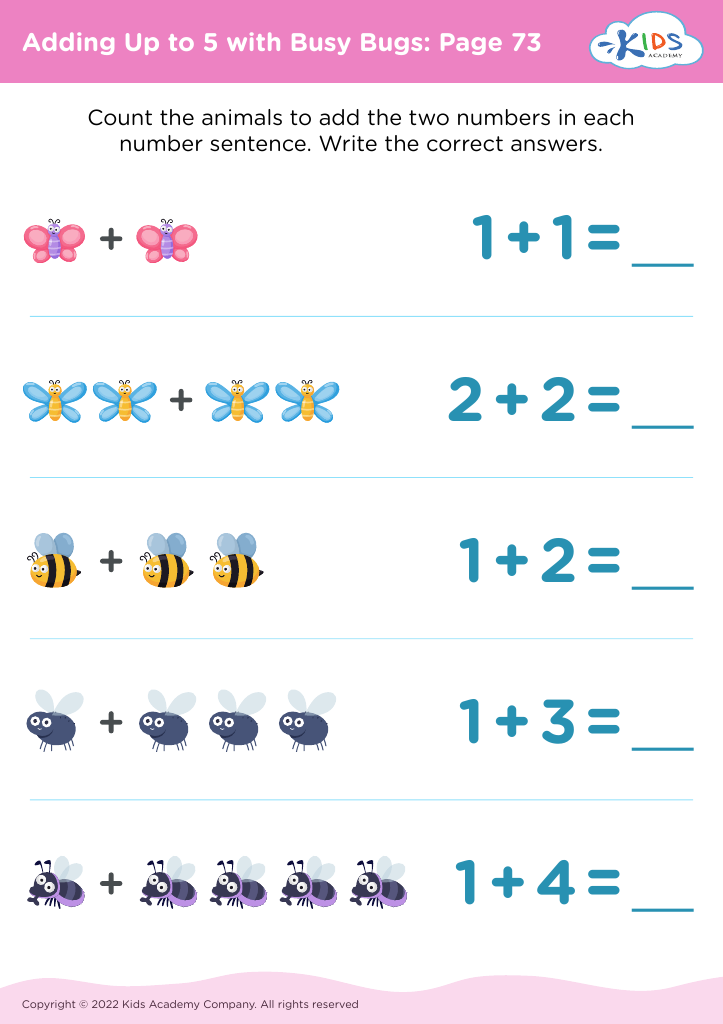
Adding Up to 5 with Busy Bugs: Page 73
Worksheet
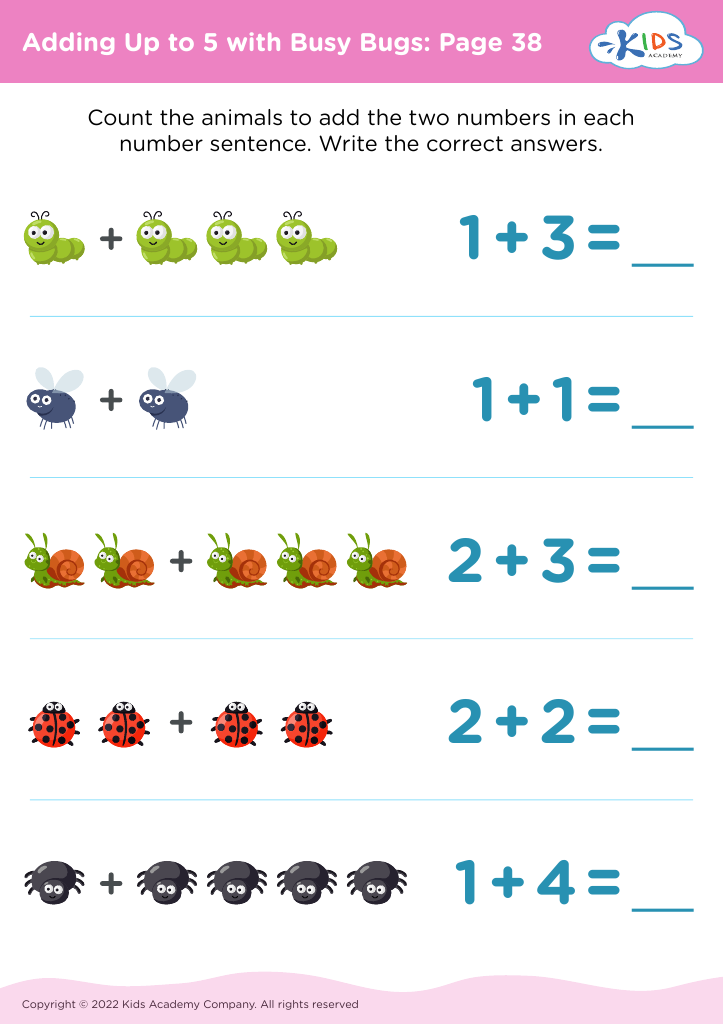
Adding Up to 5 with Busy Bugs: Page 38
Worksheet
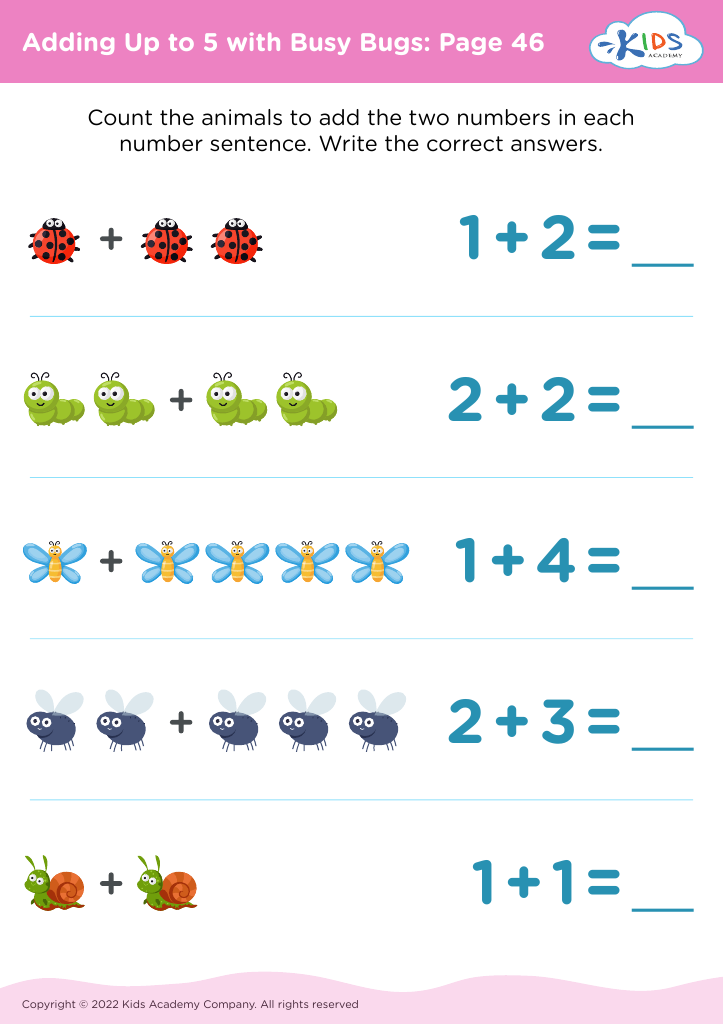
Adding Up to 5 with Busy Bugs: Page 46
Worksheet
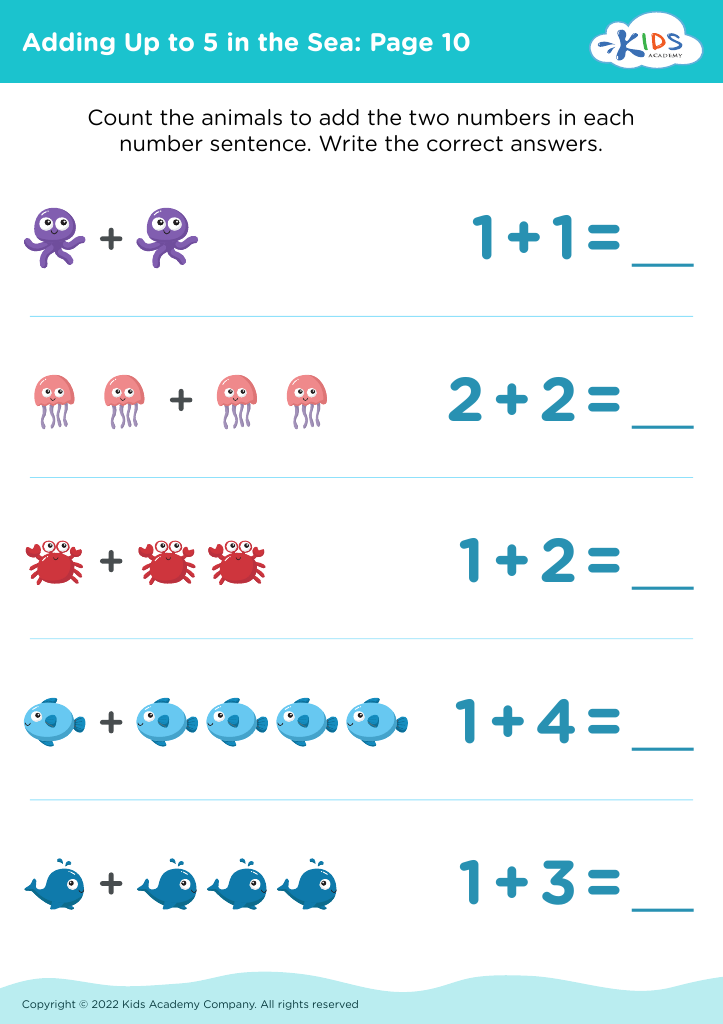
Adding Up to 5 in the Sea: Page 10
Worksheet
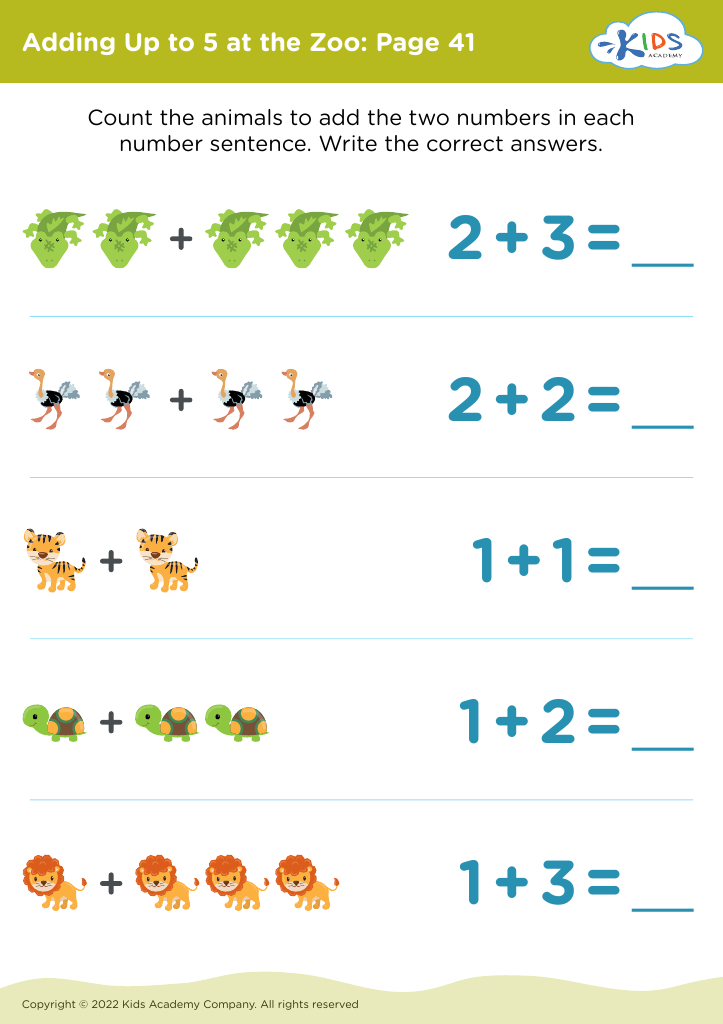
Adding Up to 5 at the Zoo: Page 41
Worksheet
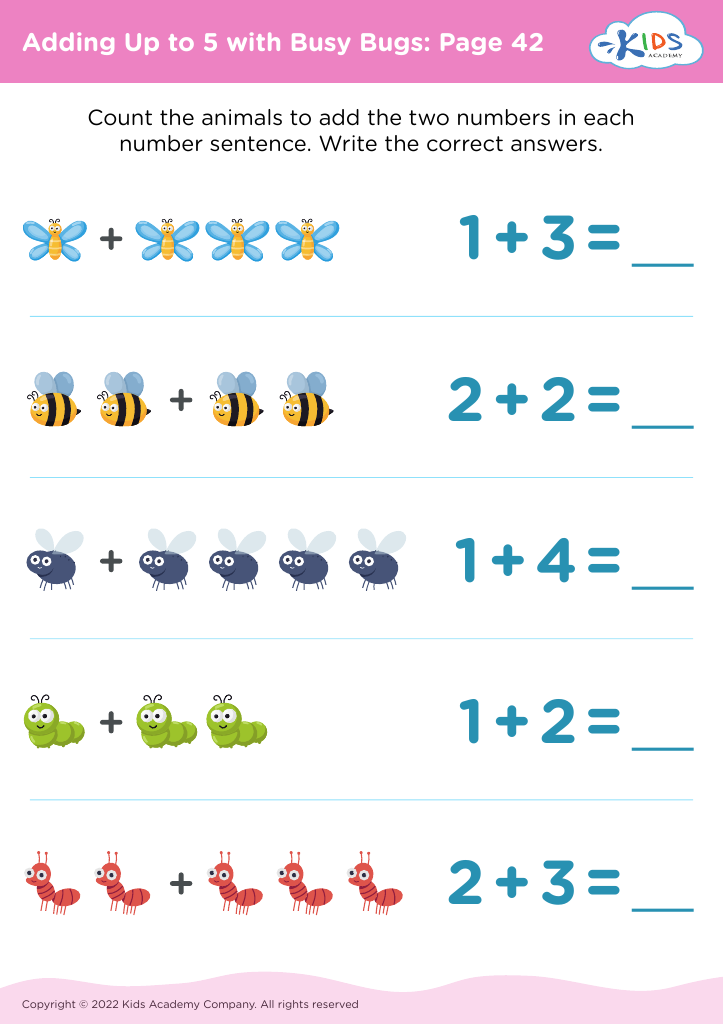
Adding Up to 5 with Busy Bugs: Page 42
Worksheet
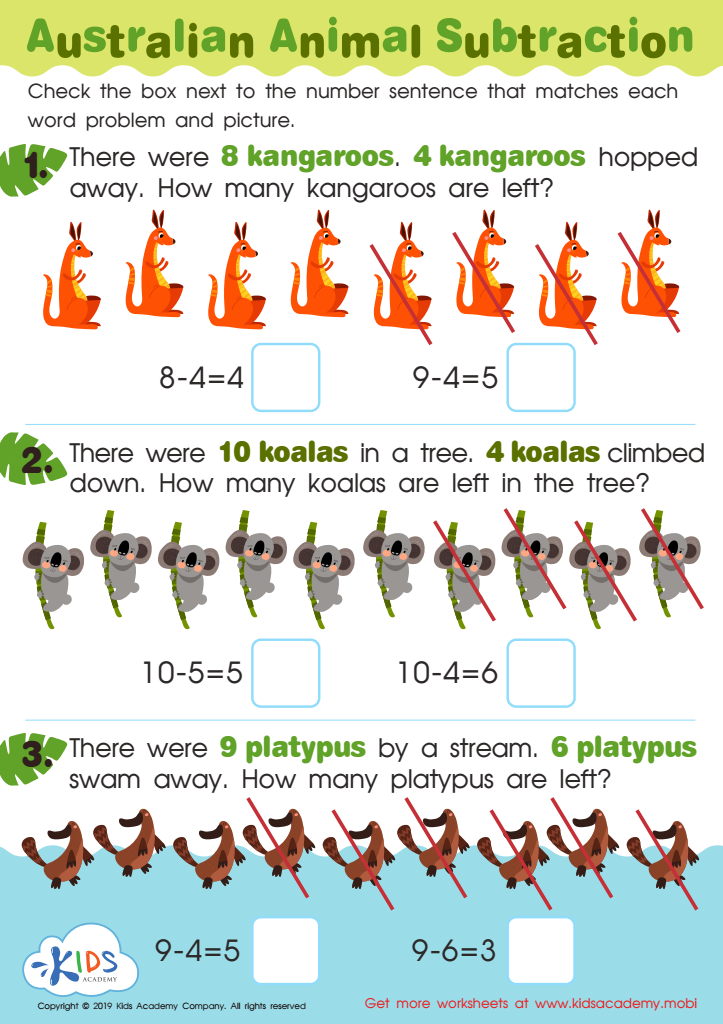
Australian Animal Subtraction Worksheet

Australian Animal Subtraction Worksheet

Test your child's wildlife knowledge. Ask them to name animals indigenous to Australia or other countries. Show them the animals in this worksheet and have them match each word problem and picture with the correct number sentence.
Australian Animal Subtraction Worksheet
Worksheet
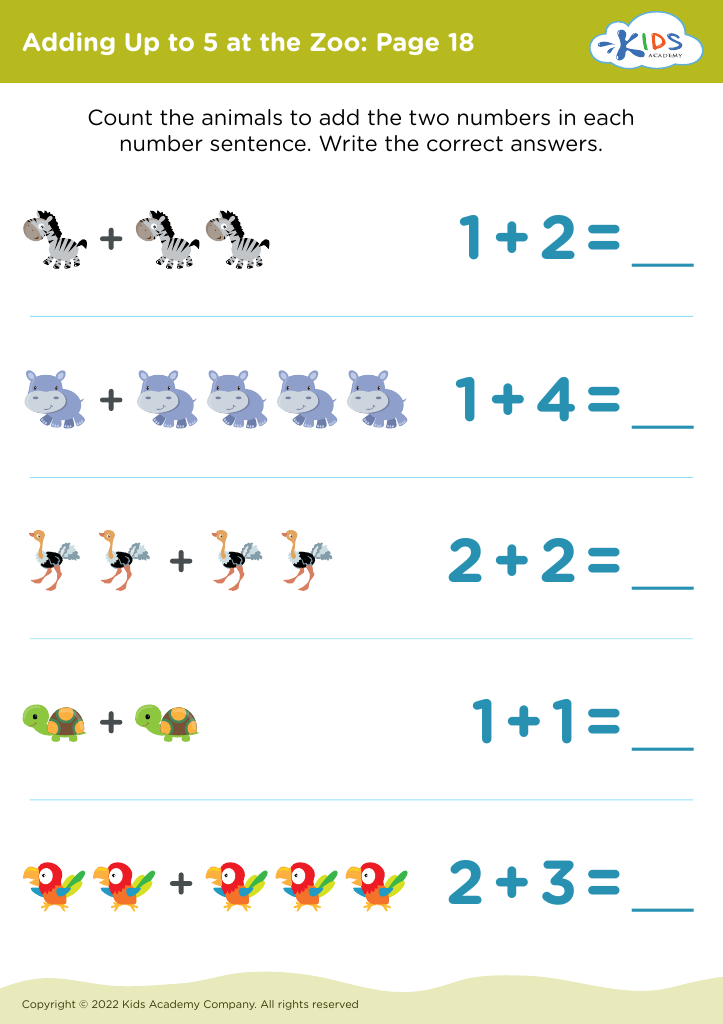
Adding Up to 5 at the Zoo: Page 18
Worksheet
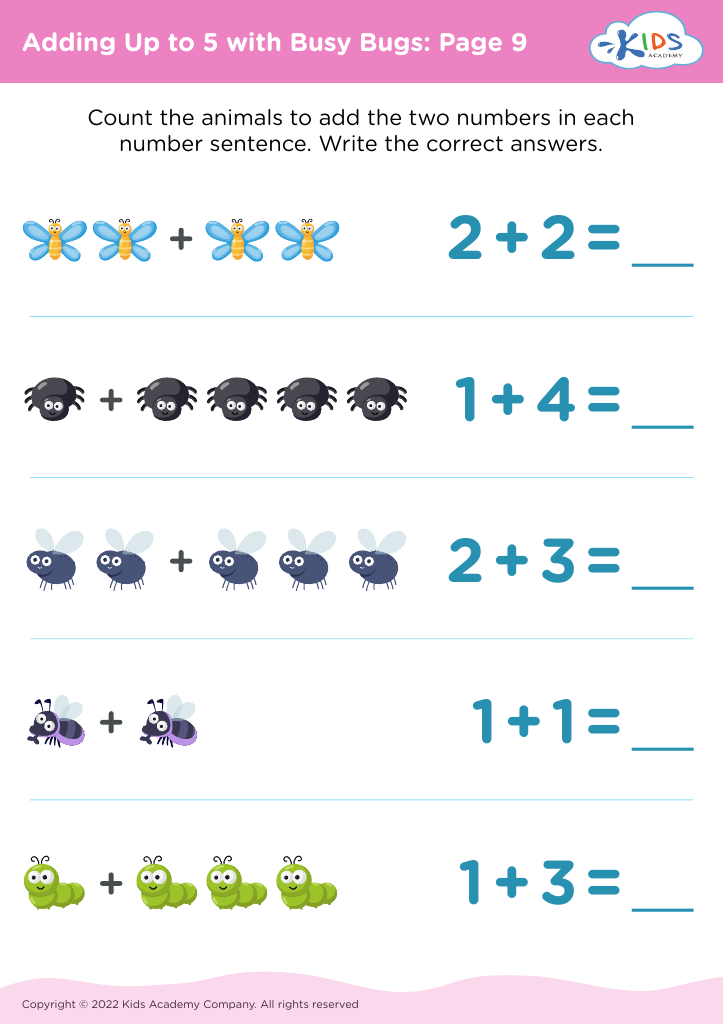
Adding Up to 5 with Busy Bugs: Page 9
Worksheet


Caring about cognitive development in areas like addition and subtraction for 3-year-olds is crucial for several reasons. At this tender age, children's brains are highly malleable and capable of rapid learning. Introducing concepts of addition and subtraction early on can enhance their cognitive skills by promoting their ability to think logically, solve problems, and understand numerical relationships. These foundational skills not only support later mathematical learning but also foster essential life skills such as critical thinking and decision-making.

When parents and teachers engage young children in simple addition and subtraction activities, they are stimulating areas of the brain responsible for higher-order thinking. Familiarizing 3-year-olds with these basic mathematical operations encourages curiosity and a love for learning, setting a positive tone for future educational growth. Additionally, early exposure to math concepts instills a sense of achievement and confidence in children, which can enhance their overall self-esteem and prepare them for more structured learning environments in preschool and beyond.

Moreover, understanding basic math enables children to make sense of the world around them, from sharing toys fairly to understanding portions during meals. Parents and teachers who invest time in nurturing these skills are equipping children with essential tools that contribute to their overall cognitive and emotional development.