Enhance your child's early math skills with our Visual Perception Addition & Subtraction Worksheets designed for 3-year-olds. These colorful and engaging exercises help little ones grasp basic addition and subtraction while improving their visual perception and cognitive skills. Perfectly tailored for young learners, the worksheets combine fun illustrations with practical problems, making learning enjoyable and effective. With guided activities that involve recognizing shapes and patterns, children can develop crucial mathematical foundations and boost their confidence. Download now from Kids Academy to provide your child a solid start in their educational journey.
Check out this FREE Trial Lesson on Addition & Subtraction for age 3!

2 Step Addition Word Problems Using Drawings to Write Equations

Favorites
With answer key
Interactive
  • 3
  • Visual perception
  • Addition & Subtraction
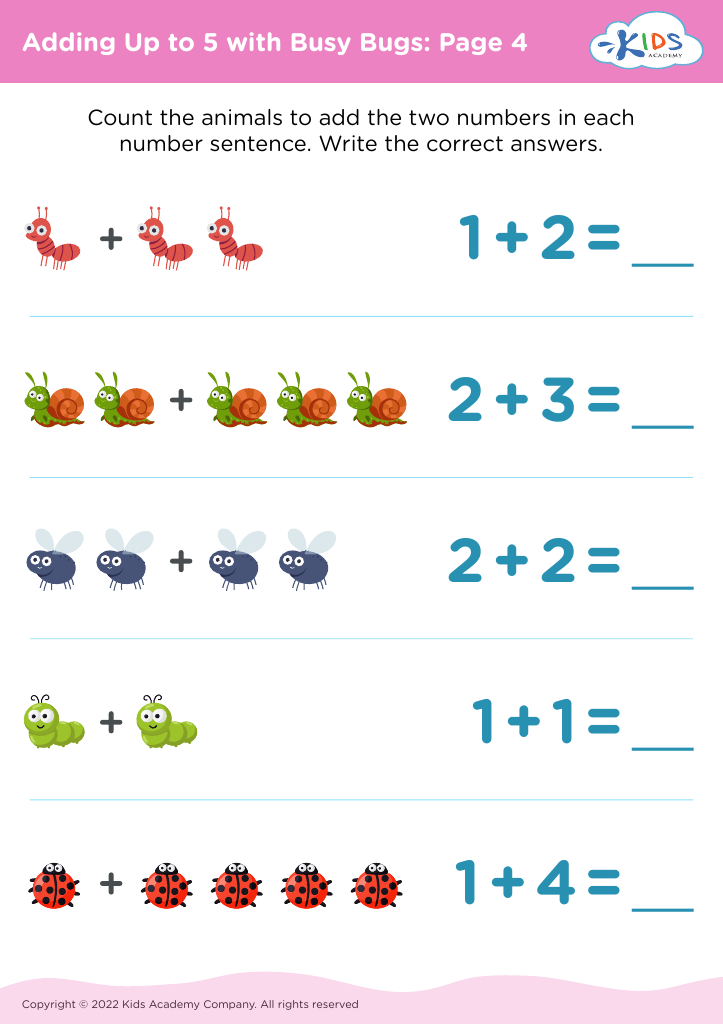
Adding Up to 5 with Busy Bugs: Page 4
Worksheet
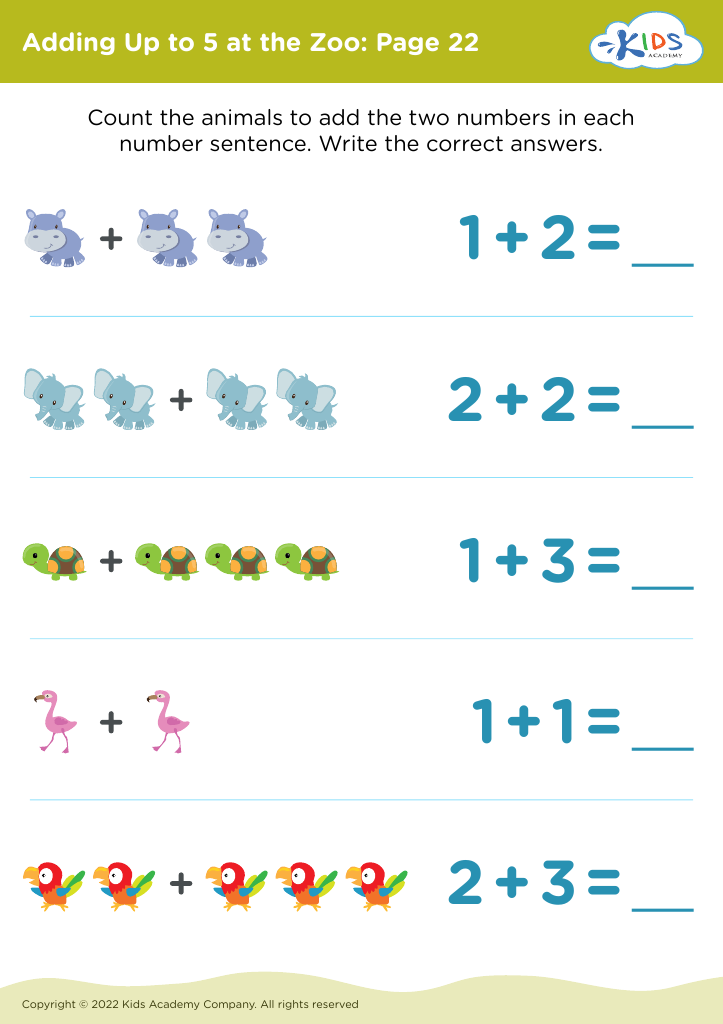
Adding Up to 5 at the Zoo: Page 22
Worksheet
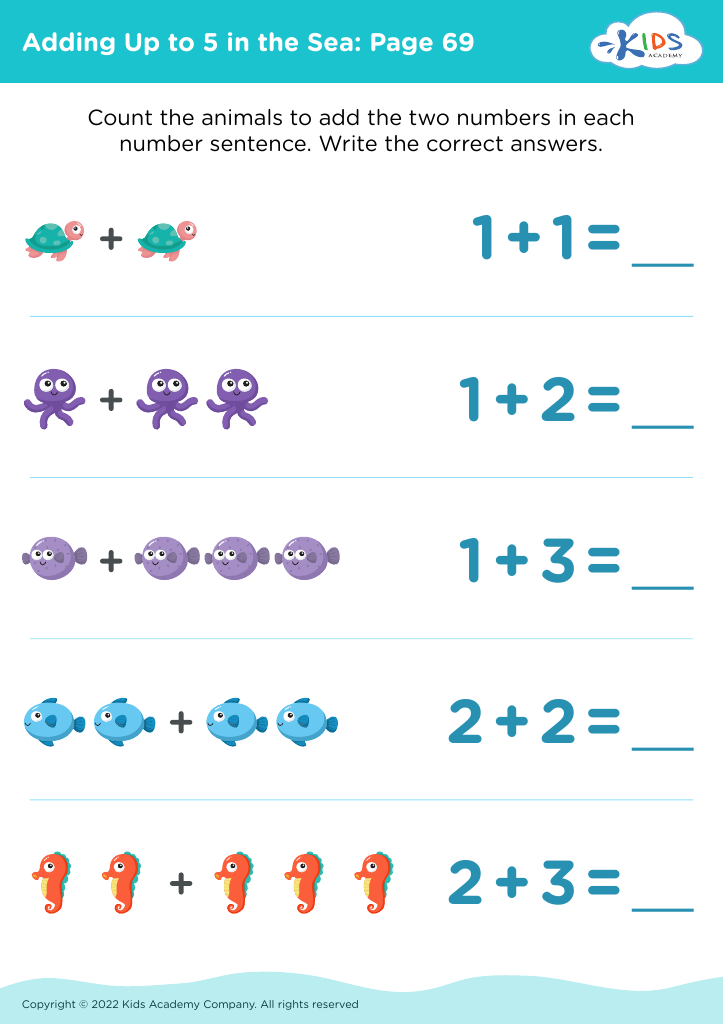
Adding Up to 5 in the Sea: Page 69
Worksheet
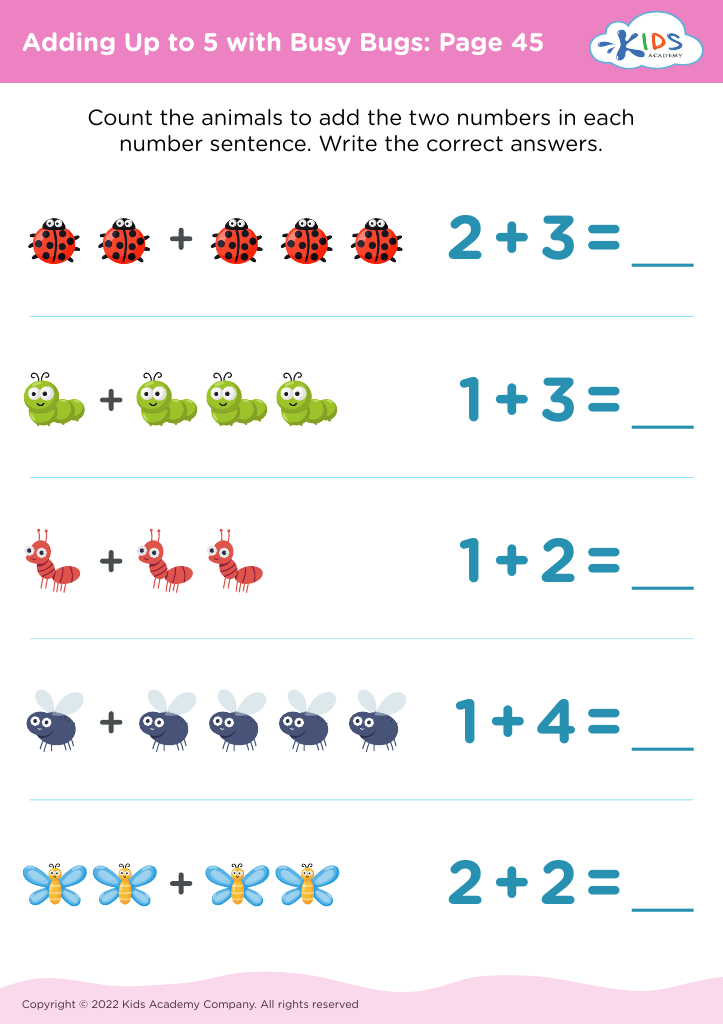
Adding Up to 5 with Busy Bugs: Page 45
Worksheet
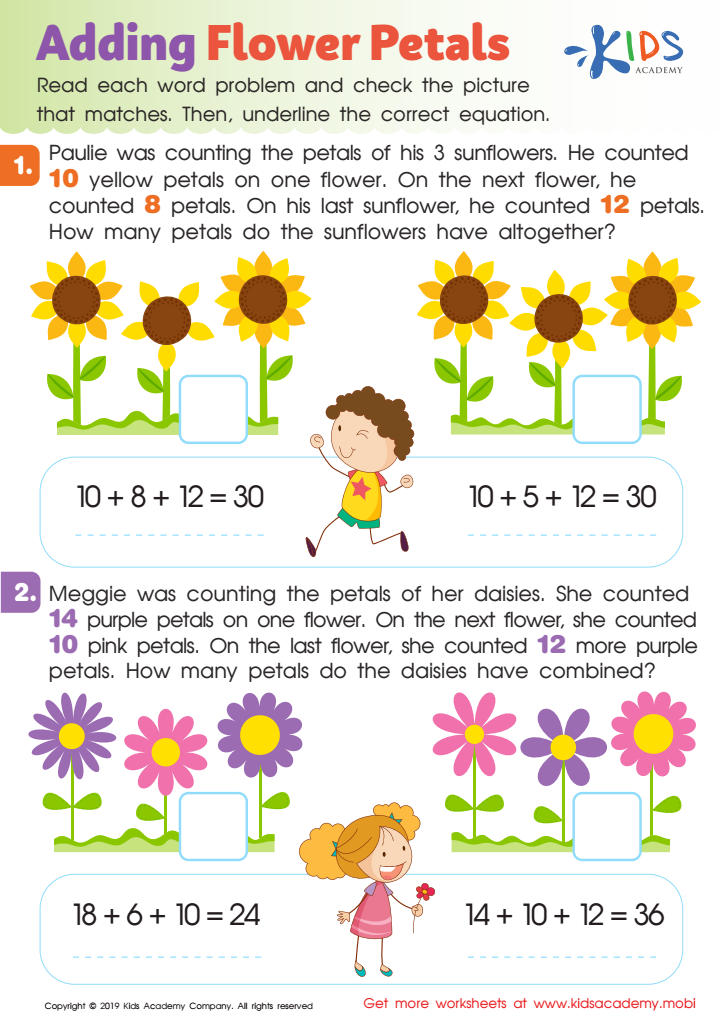
Adding Flower Petals Worksheet

Adding Flower Petals Worksheet

This free worksheet helps little mathematicians learn to understand word problems. They'll read each one and match it to the corresponding picture. Important info is highlighted, teaching kids to look for key info when solving problems. Then they'll underline the correct number equation that matches the picture. A great way to practice problem-solving skills!
Adding Flower Petals Worksheet
Worksheet
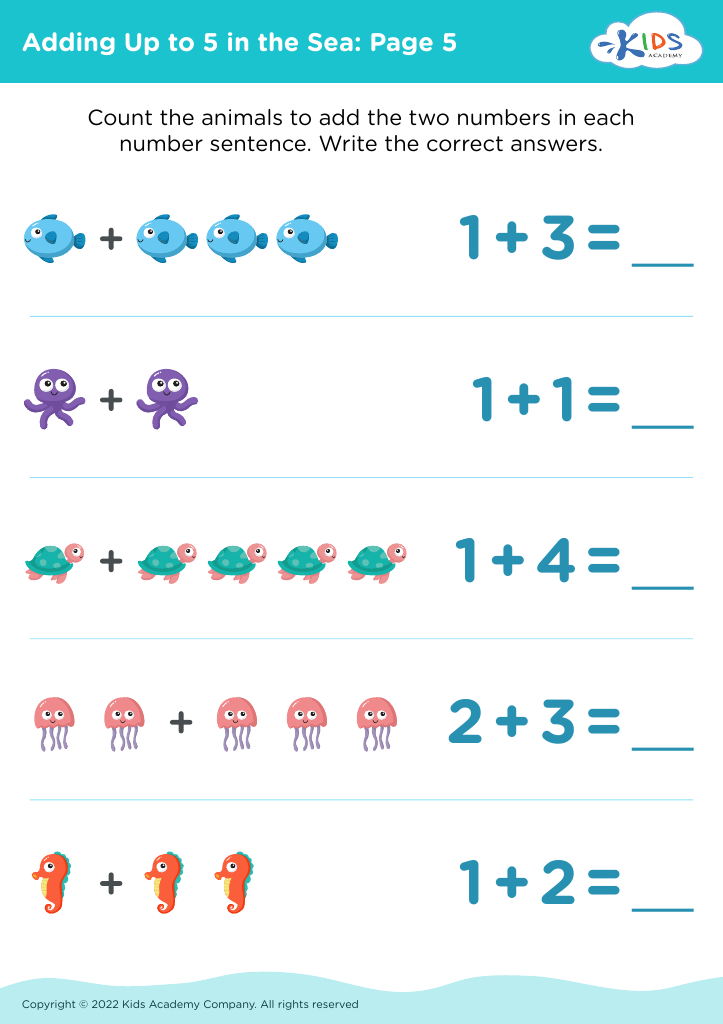
Adding Up to 5 in the Sea: Page 5

Adding Up to 5 in the Sea: Page 5

Adding Up to 5 in the Sea: Page 5
Worksheet
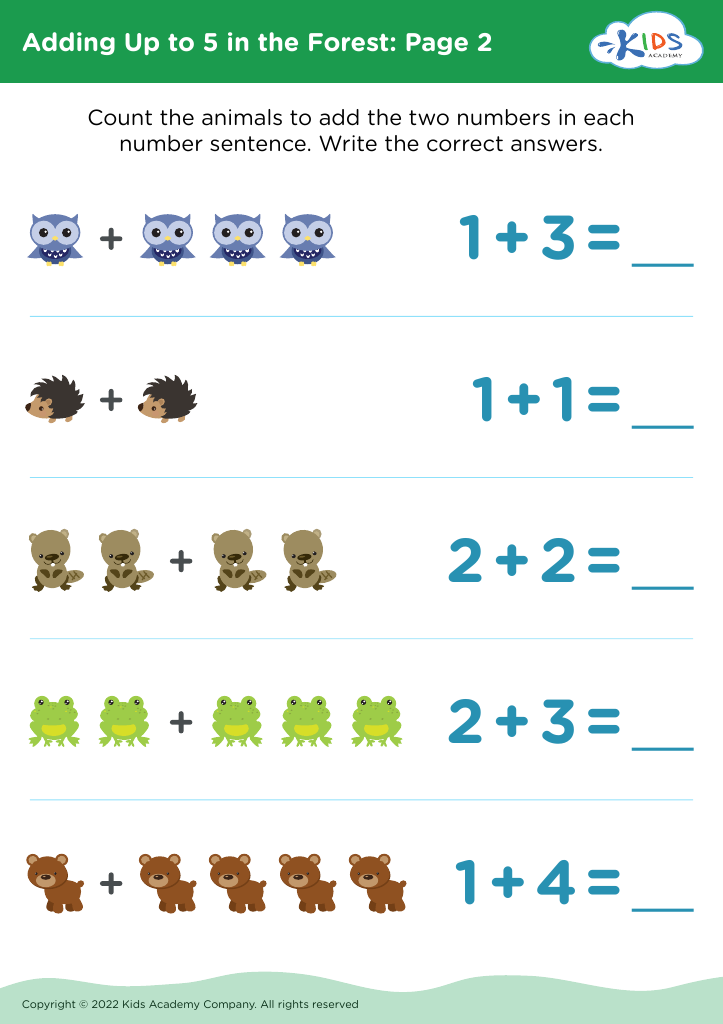
Adding Up to 5 in the Forest: Page 2
Worksheet
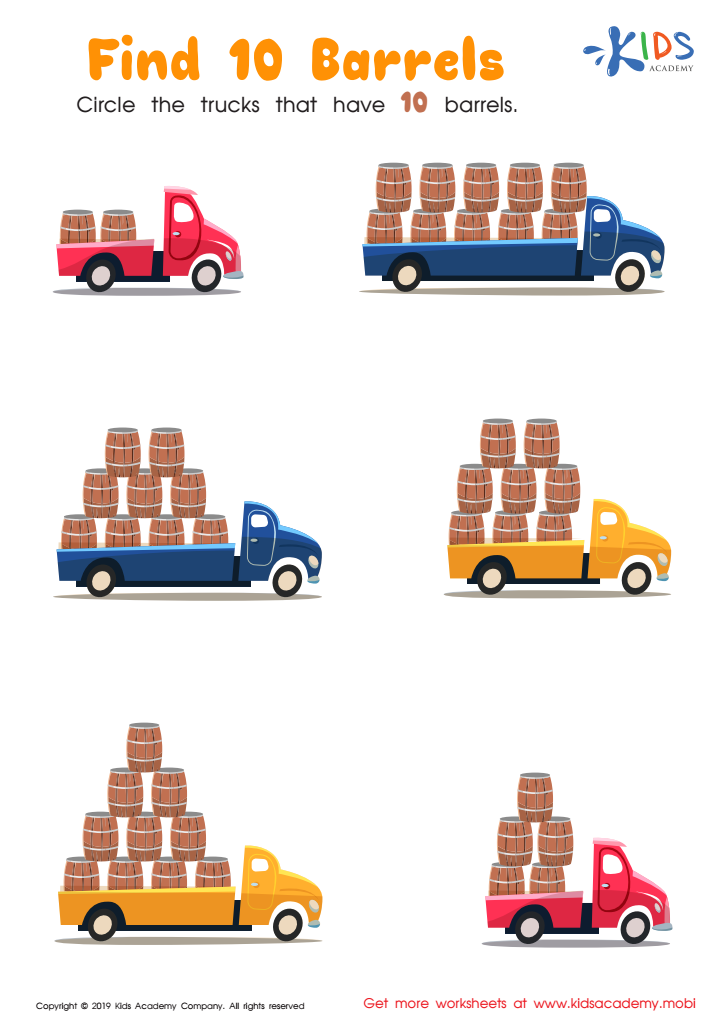
Find 10 Barrels Worksheet


Find 10 Barrels Worksheet

Help your kids learn to count with 1, 2 and 3, then progress to tens and hundreds. Supplied with educational materials and colorful worksheets, they'll be counting as high as they can. Together, count the barrels on the trucks in the printout and encourage them to circle the ones with 10 barrels.
Find 10 Barrels Worksheet

Worksheet
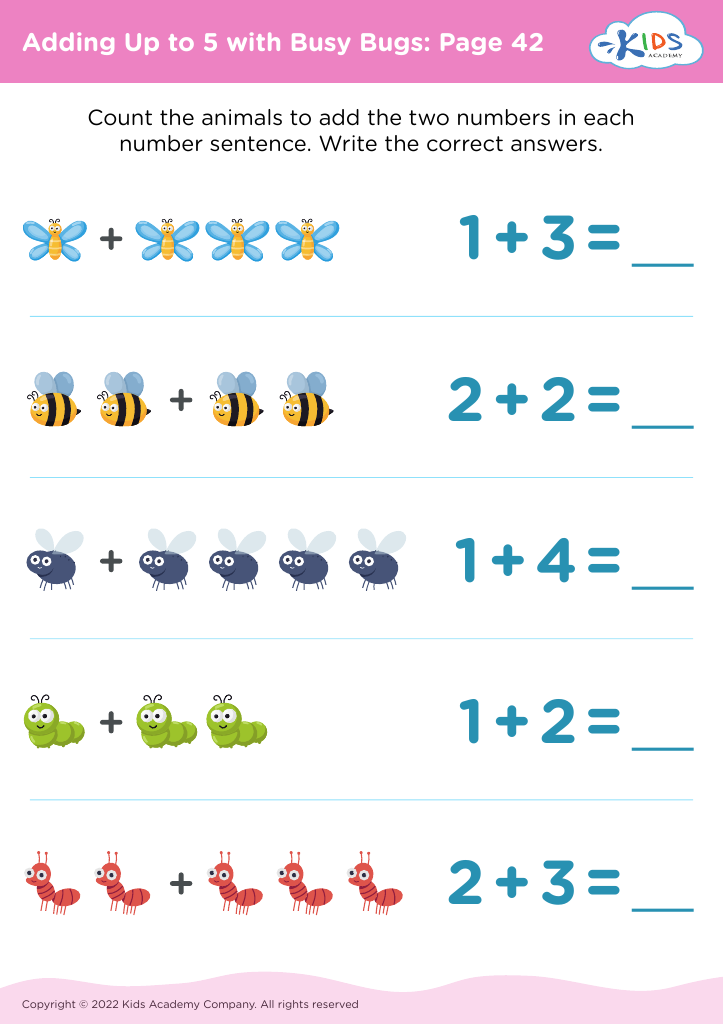
Adding Up to 5 with Busy Bugs: Page 42
Worksheet
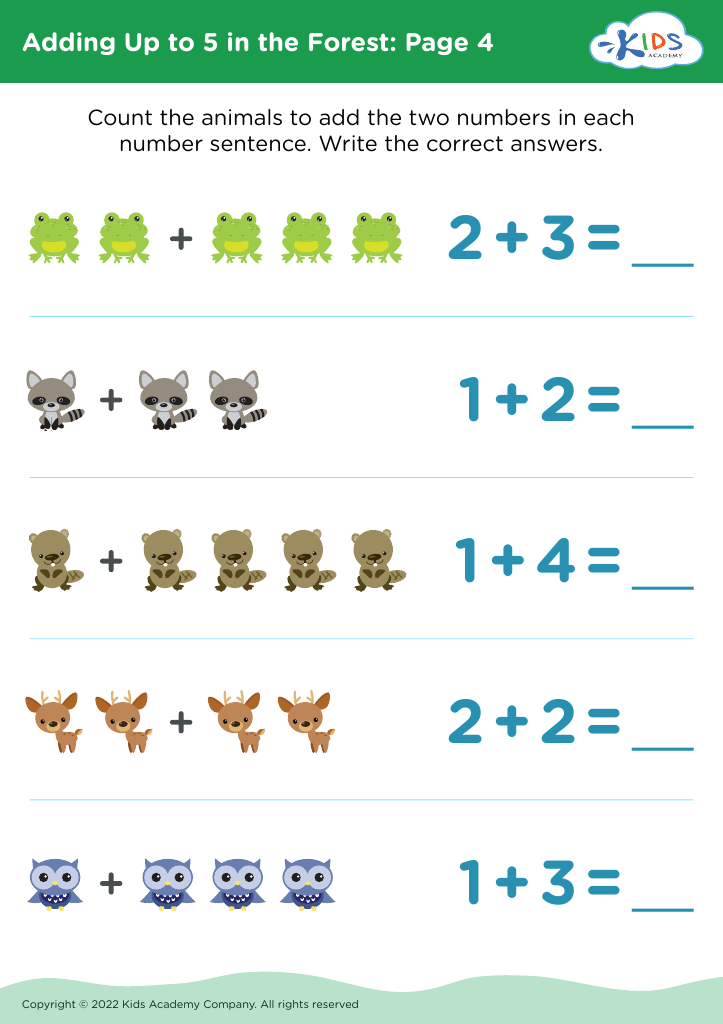
Adding Up to 5 in the Forest: Page 4
Worksheet
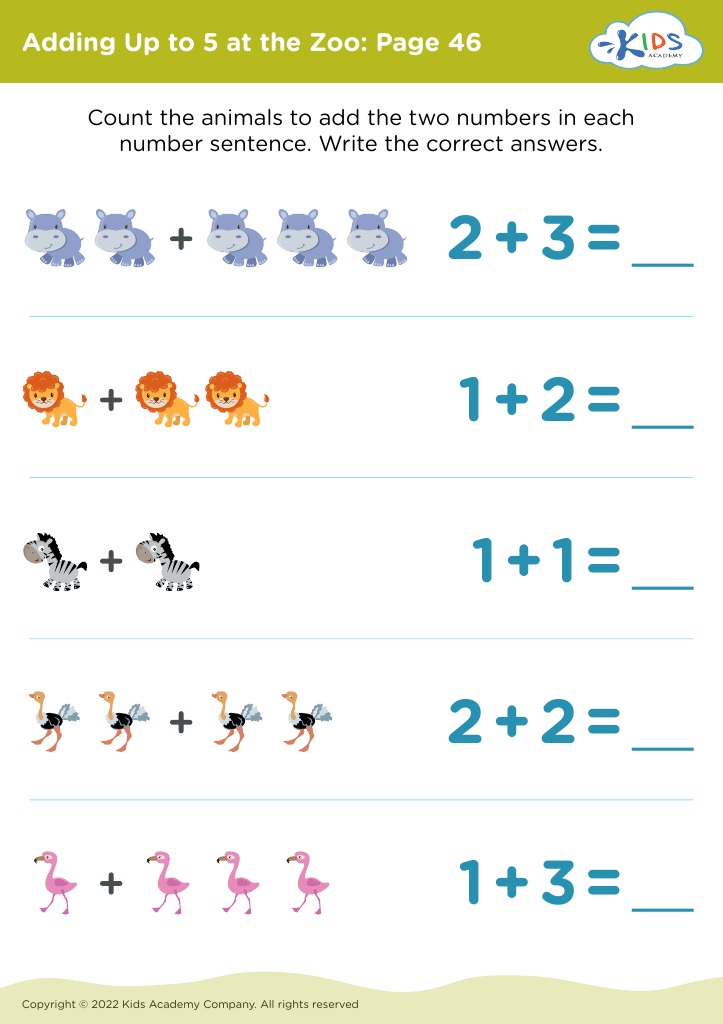
Adding Up to 5 at the Zoo: Page 46
Worksheet
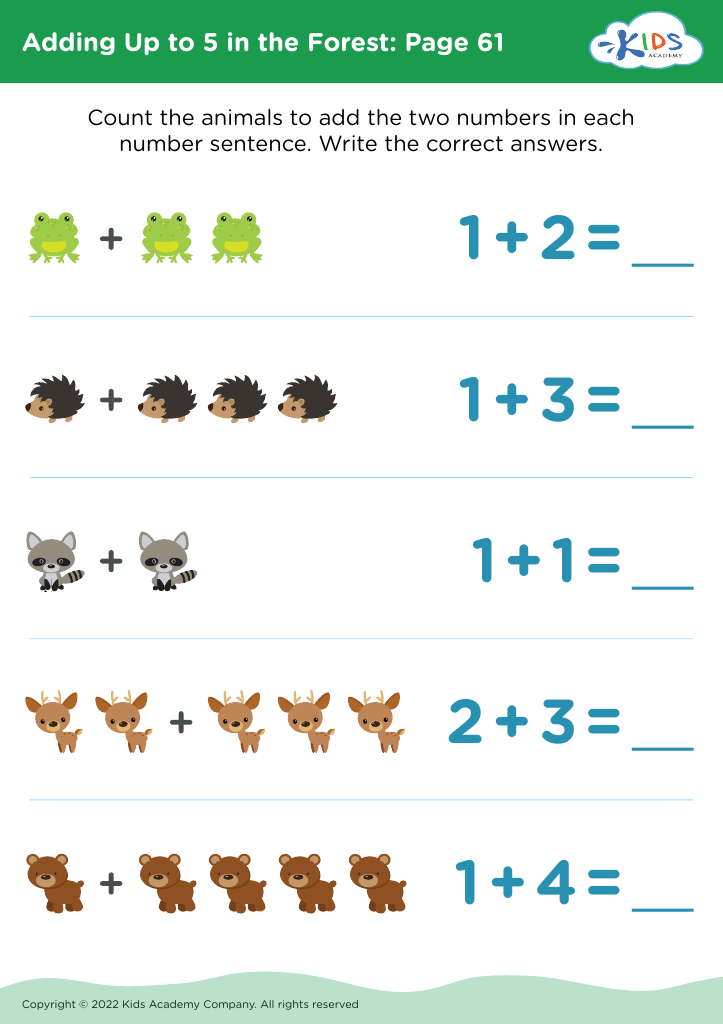
Adding Up to 5 in the Forest: Page 61
Worksheet
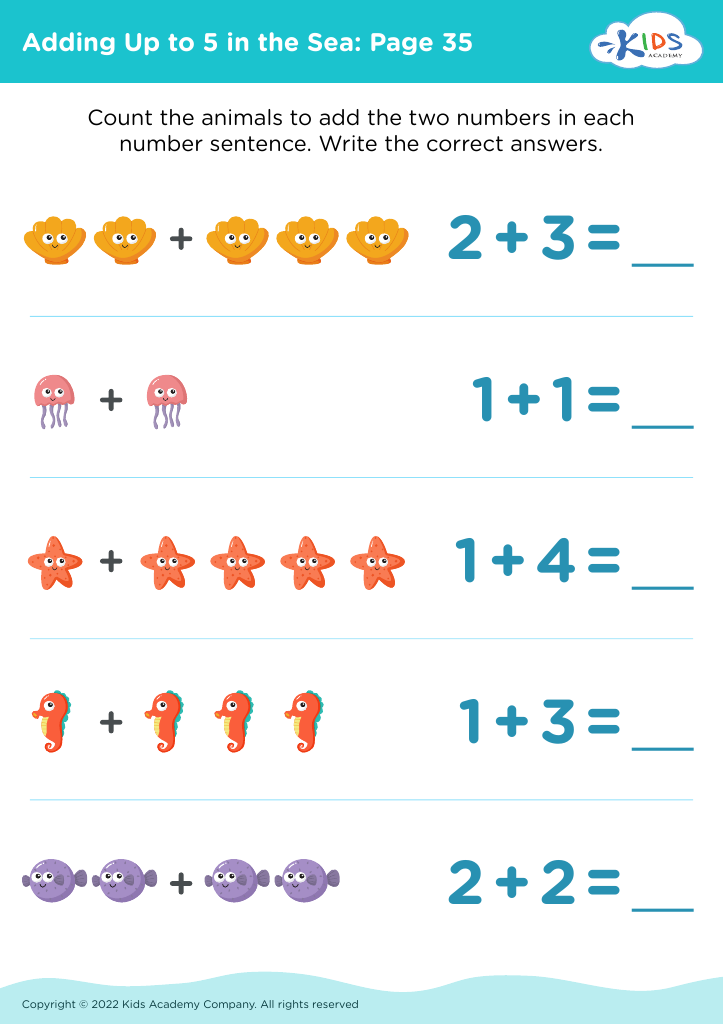
Adding Up to 5 in the Sea: Page 35
Worksheet
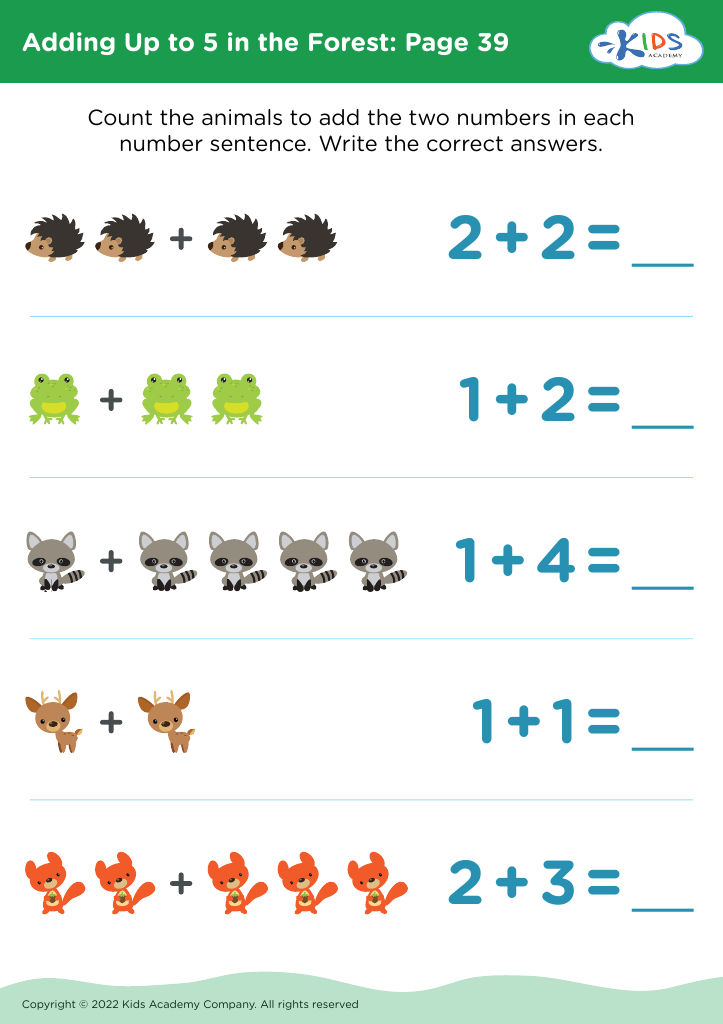
Adding Up to 5 in the Forest: Page 39
Worksheet


Parents and teachers should care about visual perception, addition, and subtraction for 3-year-olds because these foundational skills significantly influence a child's early cognitive and academic development. Visual perception, the brain's ability to interpret and make sense of visual information, is crucial for tasks like reading, writing, and understanding spatial relationships. This skill helps children recognize shapes, sizes, patterns, and the orientation of objects, laying the groundwork for more complex learning activities.

Introducing basic concepts of addition and subtraction at this age promotes early numeracy skills. While 3-year-olds are generally not expected to perform formal addition and subtraction, engaging them in simple, fun activities—such as counting objects, playing with building blocks, or distributing toys—helps them understand the basic principles of mathematics. These activities enhance problem-solving abilities, logical reasoning, and counting proficiency.

Moreover, early exposure to these concepts builds confidence and enthusiasm for learning. It establishes a solid educational framework, making future concepts less intimidating and more manageable as children progress through school. Overall, nurturing visual perception and early math skills fosters a love of learning, equips children with essential tools for academic success, and promotes well-rounded cognitive development.