Basic arithmetic practice Addition Worksheets for 3-Year-Olds
10 filtered results
-
From - To
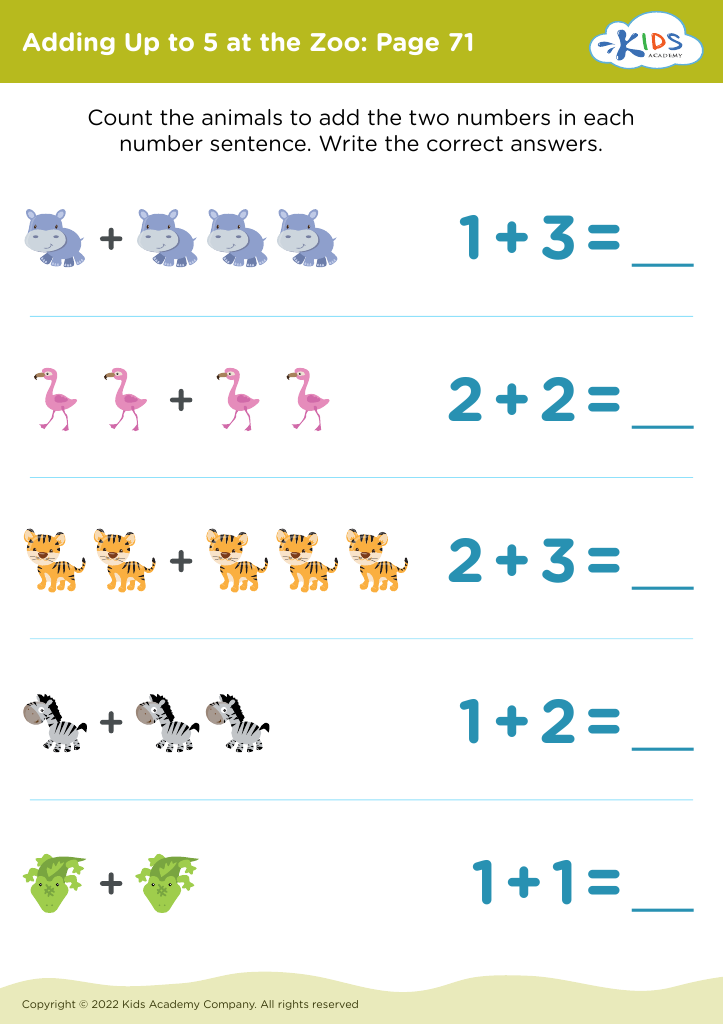
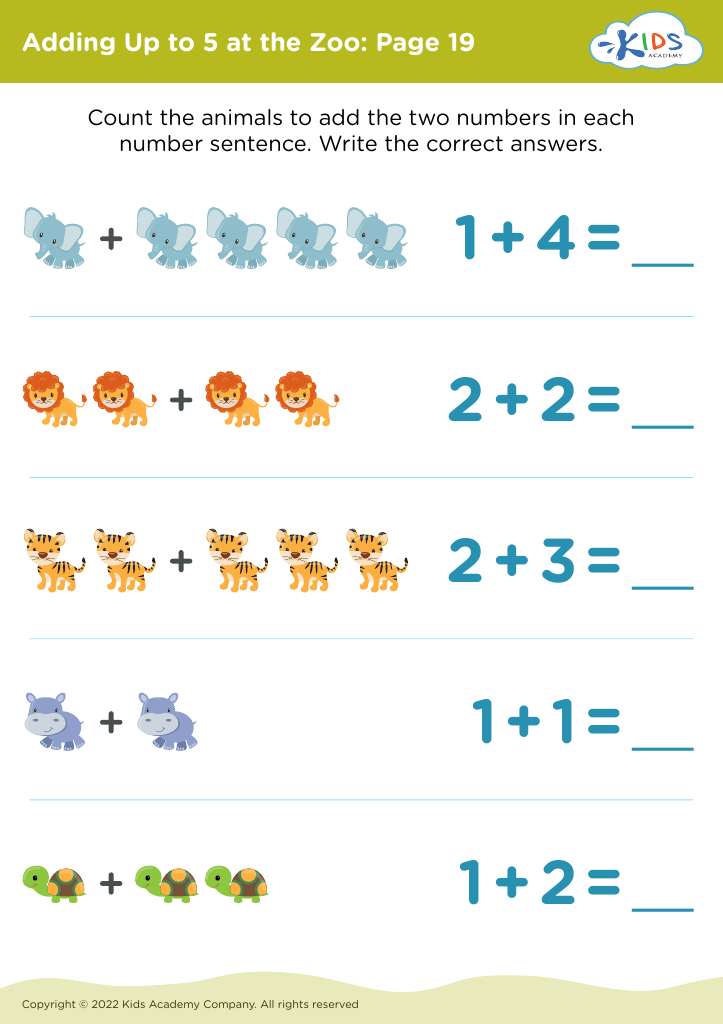
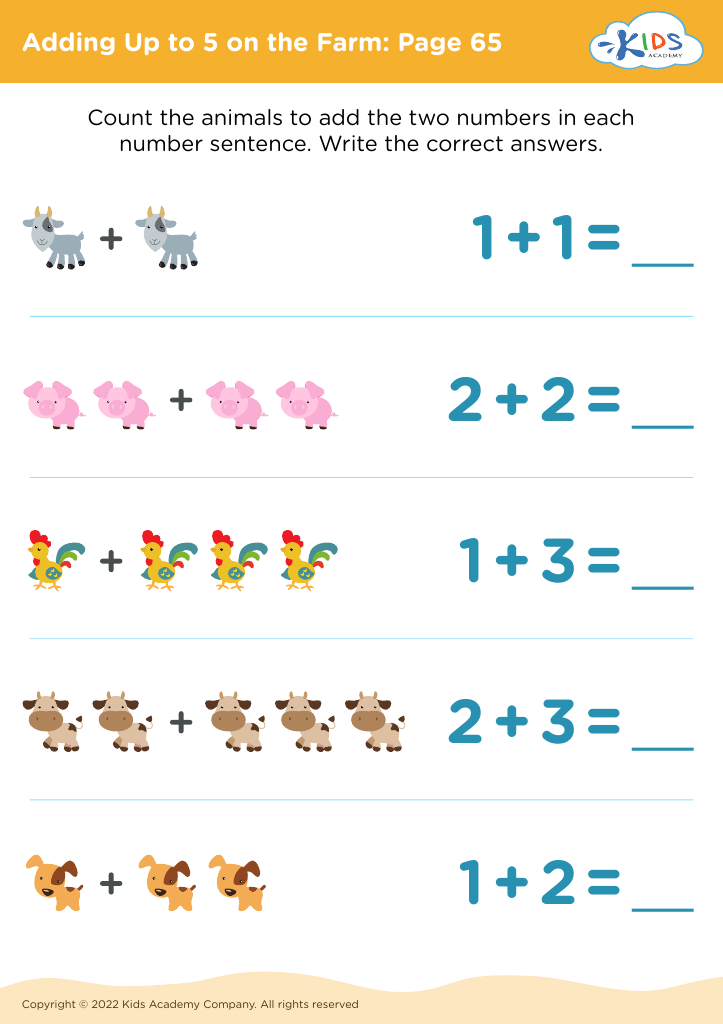
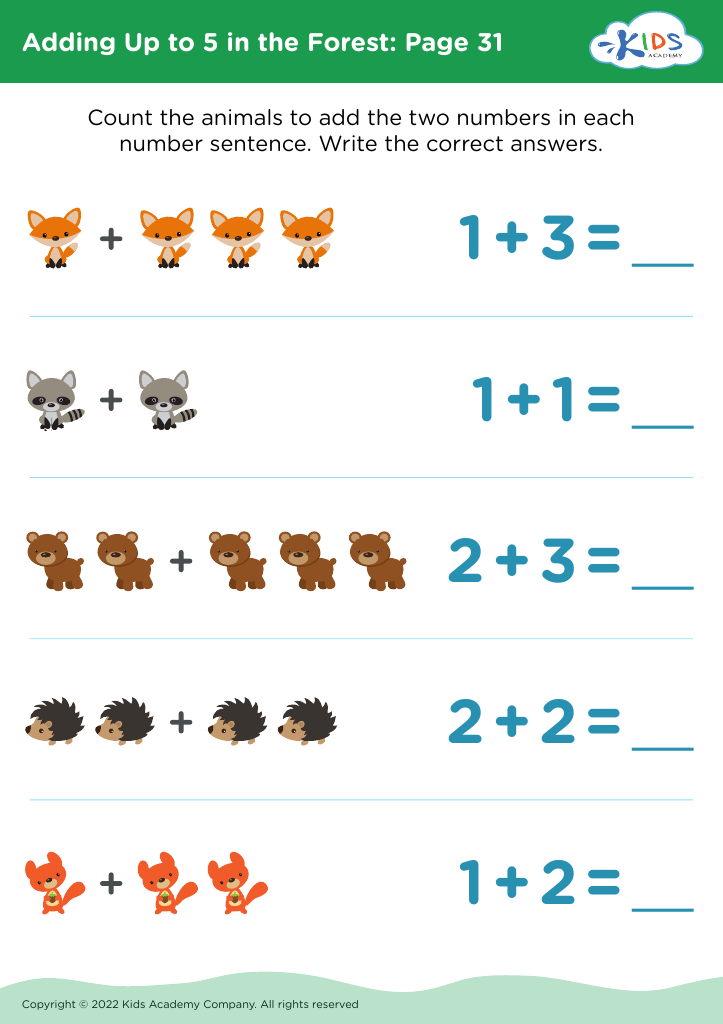
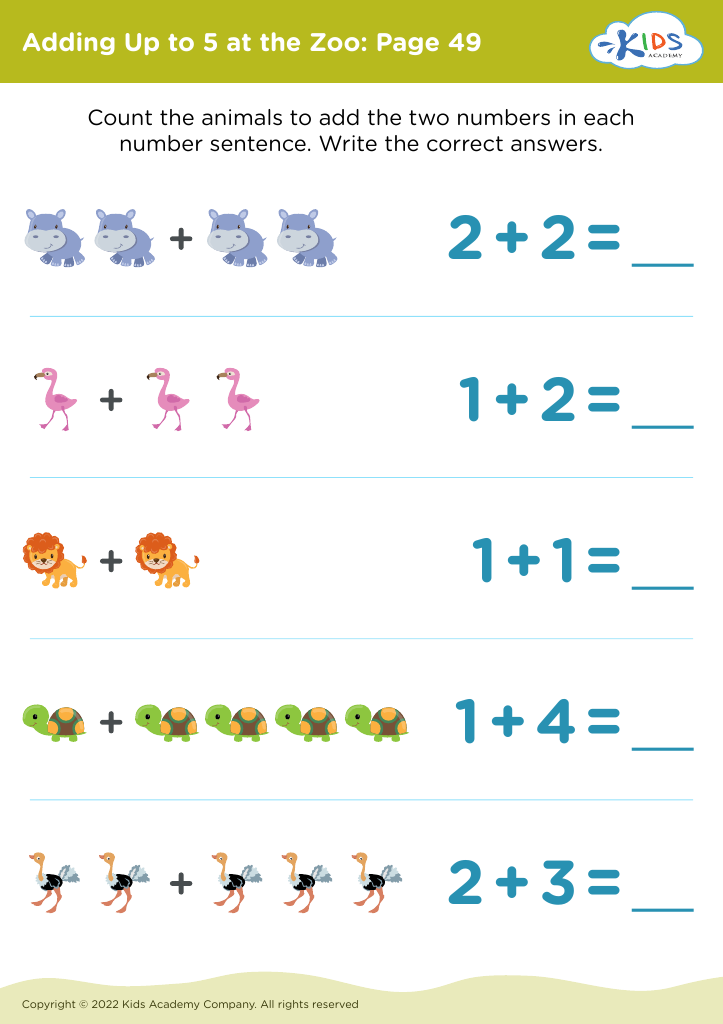
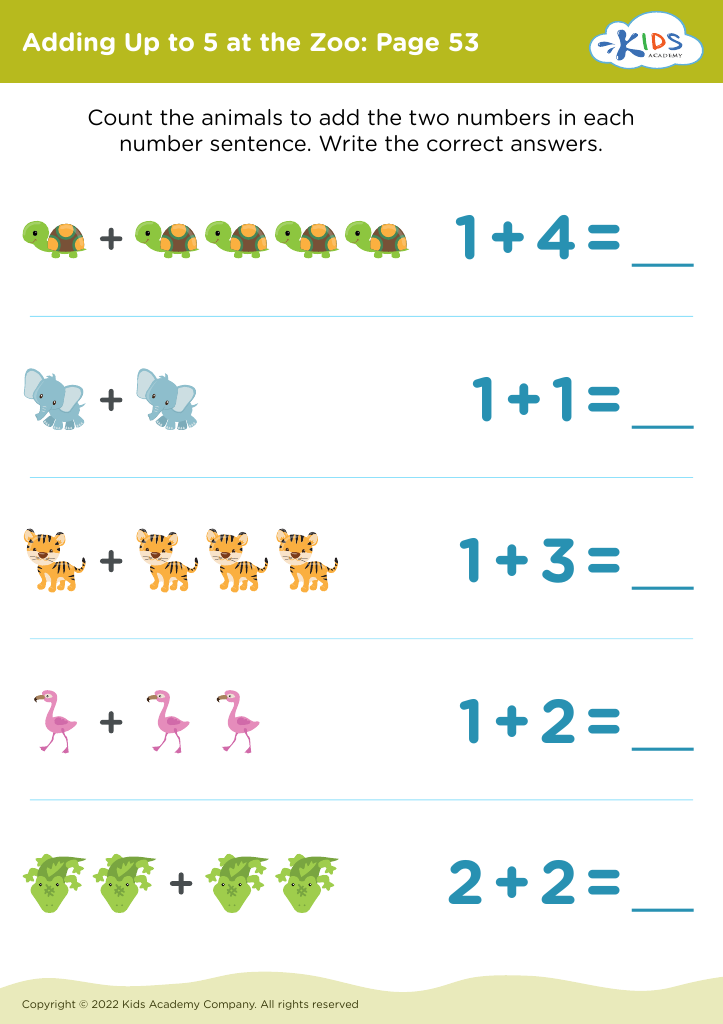
Welcome to our "Basic Arithmetic Practice Addition Worksheets" designed specifically for 3-year-olds! These engaging and colorful worksheets help young learners develop essential addition skills in a fun and interactive way. With a variety of activities tailored for early learners, your child will explore numbers, learn to recognize symbols, and practice counting through hands-on exercises. Our worksheets encourage creativity while reinforcing basic math concepts, making learning enjoyable. Whether at home or in the classroom, these resources provide the perfect foundation for arithmetic success. Start your child's math journey today with our delightful addition worksheets!
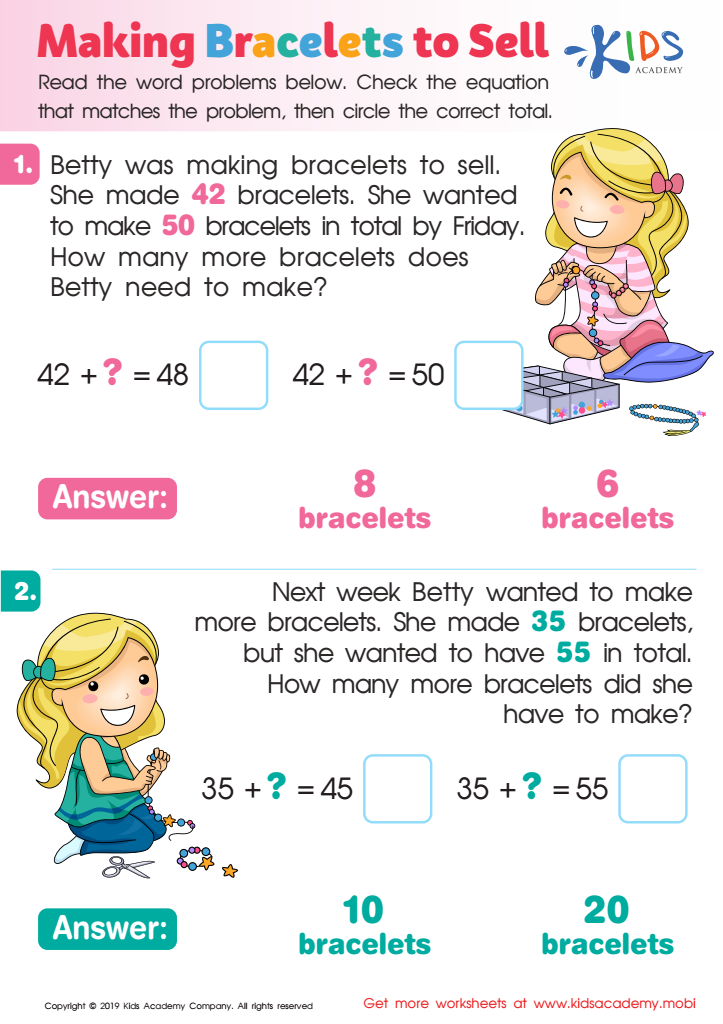
Making Bracelets to Sell Worksheet
 Assign to My Students
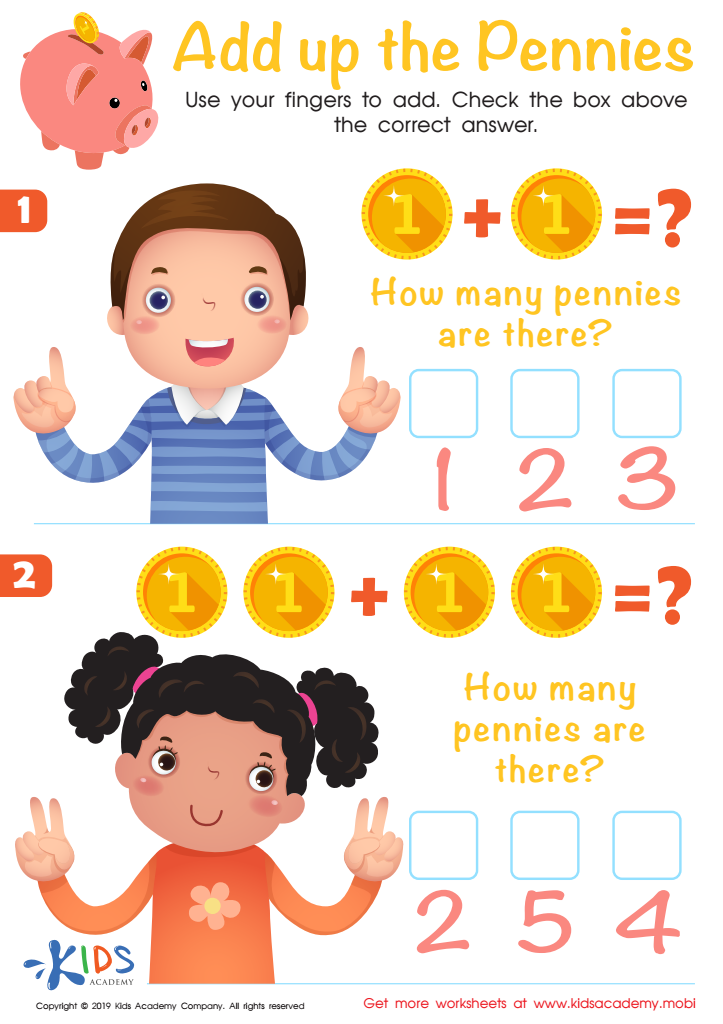
Add up the Pennies Worksheet






.jpg)

Parents and teachers should prioritize basic arithmetic practice, particularly addition, for 3-year-olds because it lays the foundation for mathematical understanding and cognitive development. Early exposure to basic arithmetic helps children develop critical thinking skills, enhances problem-solving abilities, and fosters numerical fluency. At this age, children are naturally curious and keen to explore patterns, making it an ideal time to introduce foundational math concepts in a playful and engaging manner.
Practicing addition helps strengthen fine motor skills when children manipulate objects or draw numbers, promoting hand-eye coordination and dexterity. Furthermore, engaging in arithmetic activities fosters social skills as young learners often work in groups, learn to share, and develop communication abilities through collaborative play and discussions.
Establishing a strong foundation in arithmetic also supports overall academic readiness. Early mathematical skills significantly influence later performance in math and other subjects. In addition, incorporating fun and interactive methods, such as counting games and simple puzzles, makes learning enjoyable and reinforces a positive attitude toward math. Ultimately, prioritizing addition practice helps kids become confident learners, ready to tackle more complex mathematical concepts as they grow. Investing time in these foundational skills now will pay dividends in their future education.








