Filters

112 filtered results

Clear all filters
Favorites
With answer key
Interactive

112 filtered results

Difficulty Level

Grade


Check out this FREE Trial Lesson on Addition for age 3!

A

Favorites
With answer key
Interactive
  • 3
  • Counting skills
  • Addition
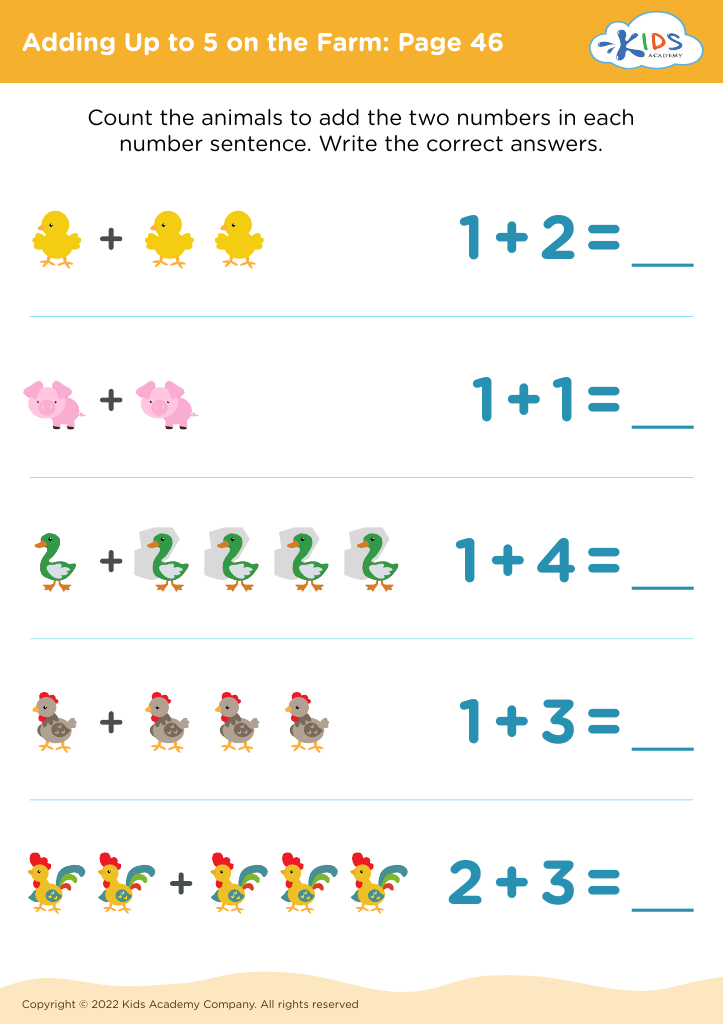
Adding Up to 5 on the Farm: Page 46
Worksheet
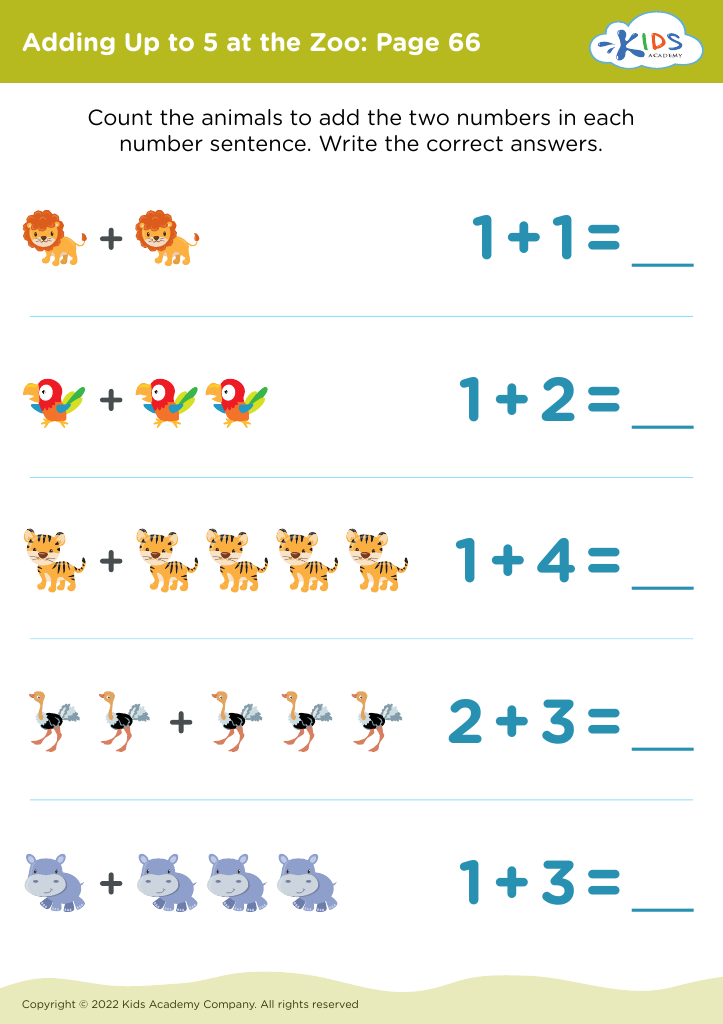
Adding Up to 5 at the Zoo: Page 66
Worksheet
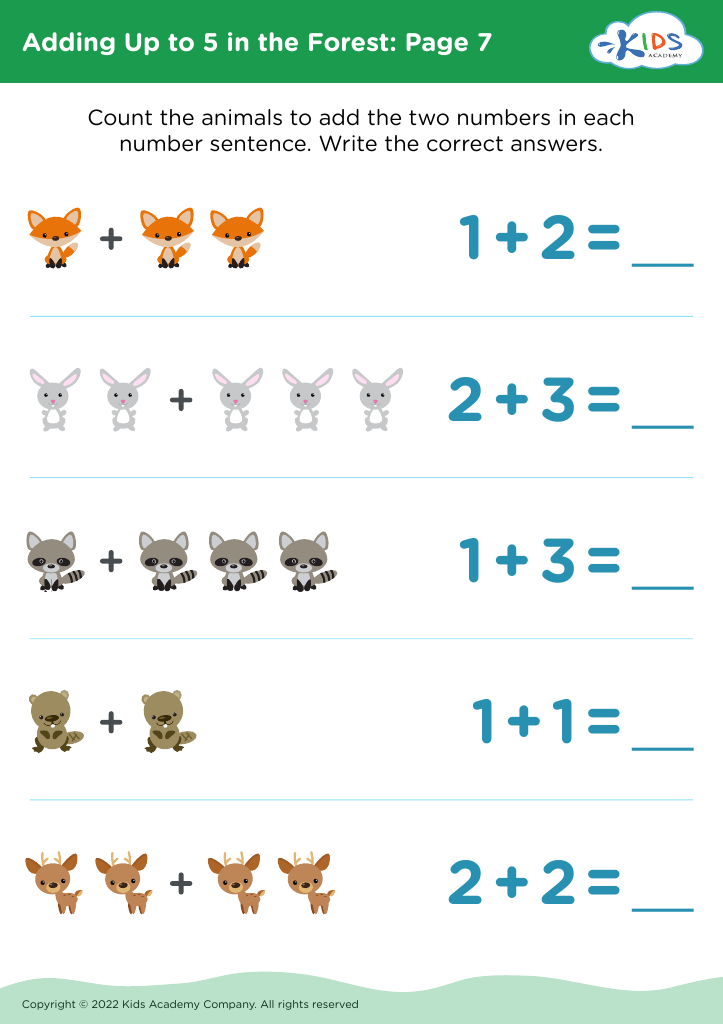
Adding Up to 5 in the Forest: Page 7
Worksheet
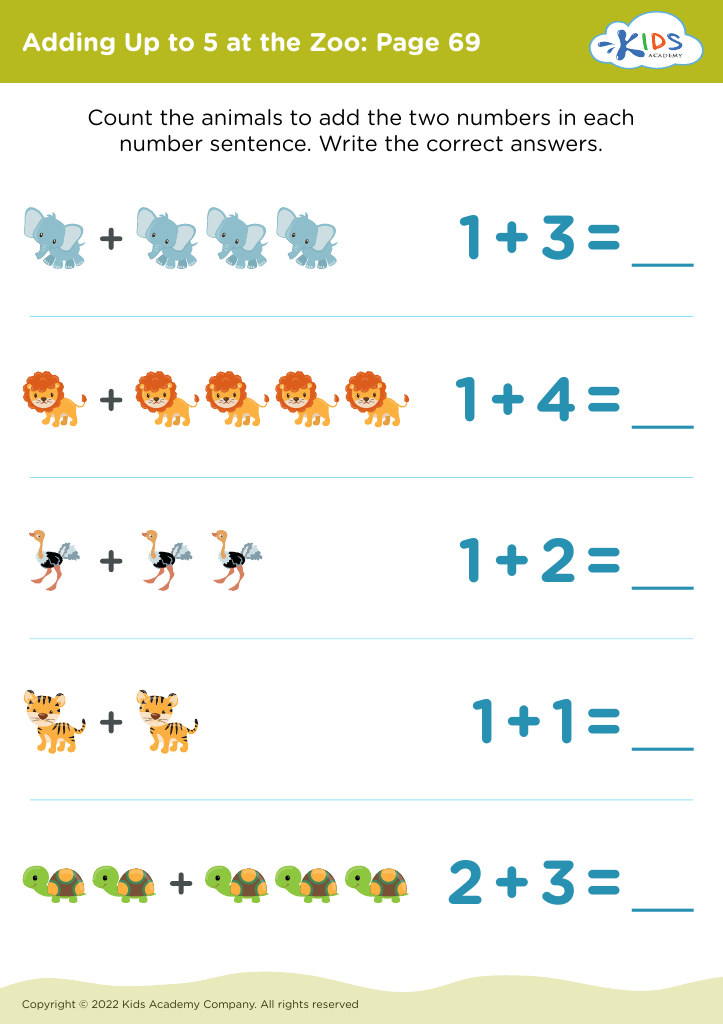
Adding Up to 5 at the Zoo: Page 69
Worksheet
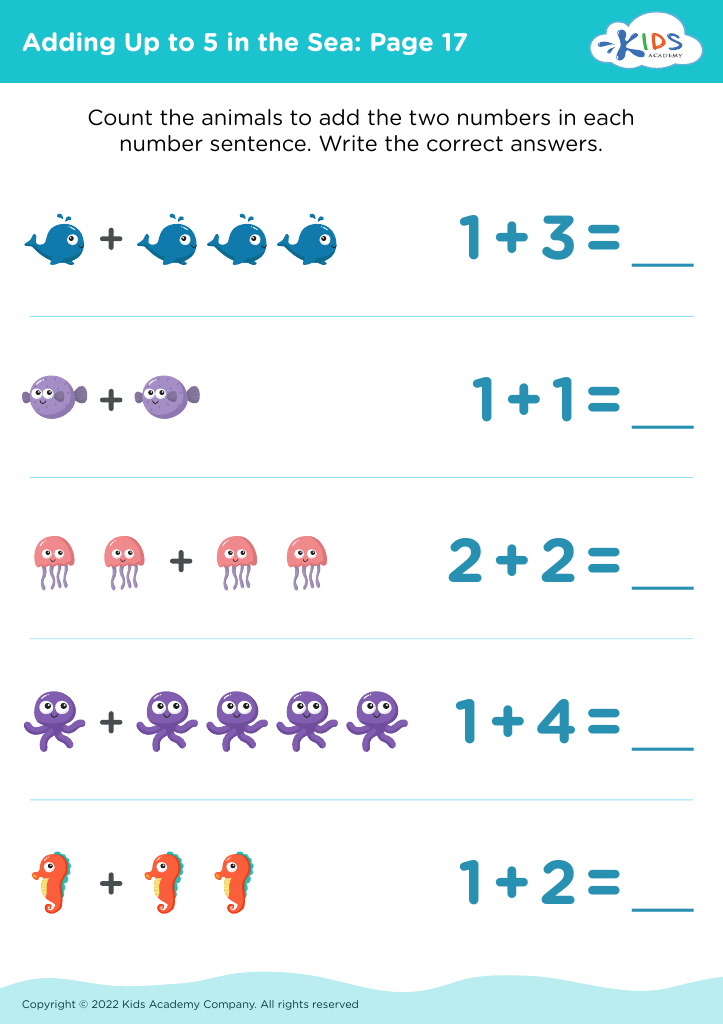
Adding Up to 5 in the Sea: Page 17
Worksheet
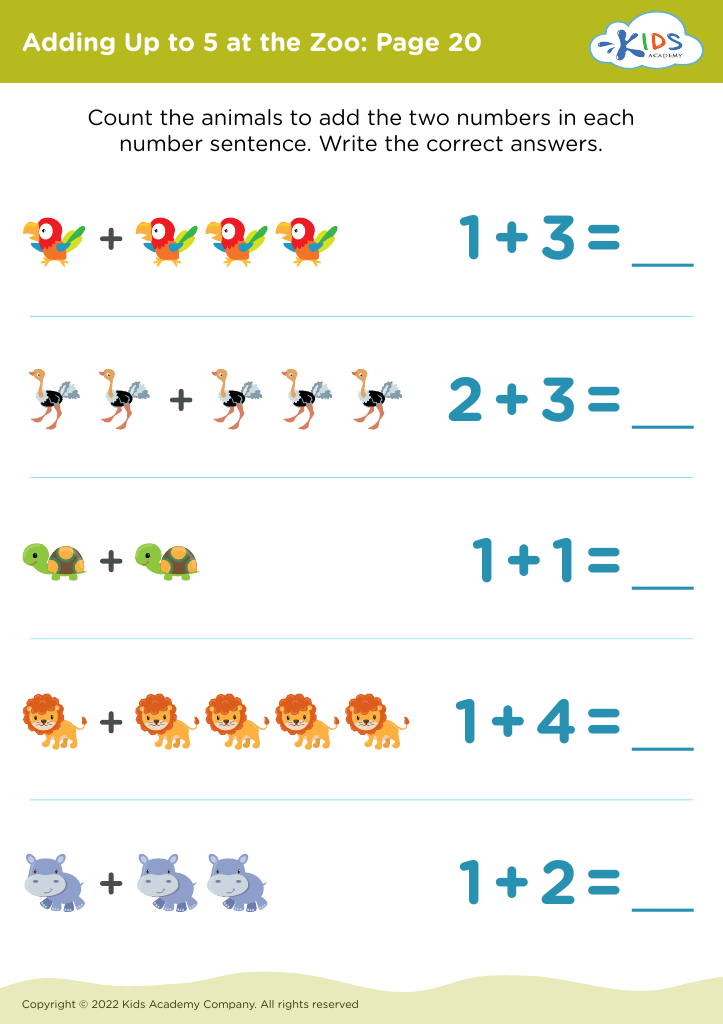
Adding Up to 5 at the Zoo: Page 20
Worksheet
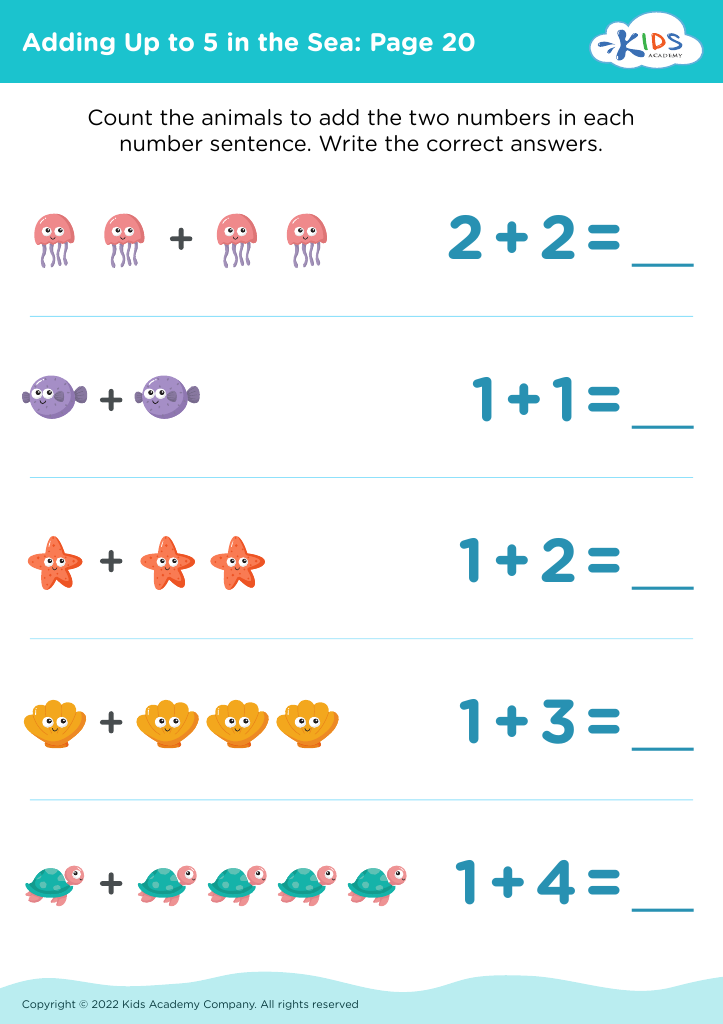
Adding Up to 5 in the Sea: Page 20
Worksheet
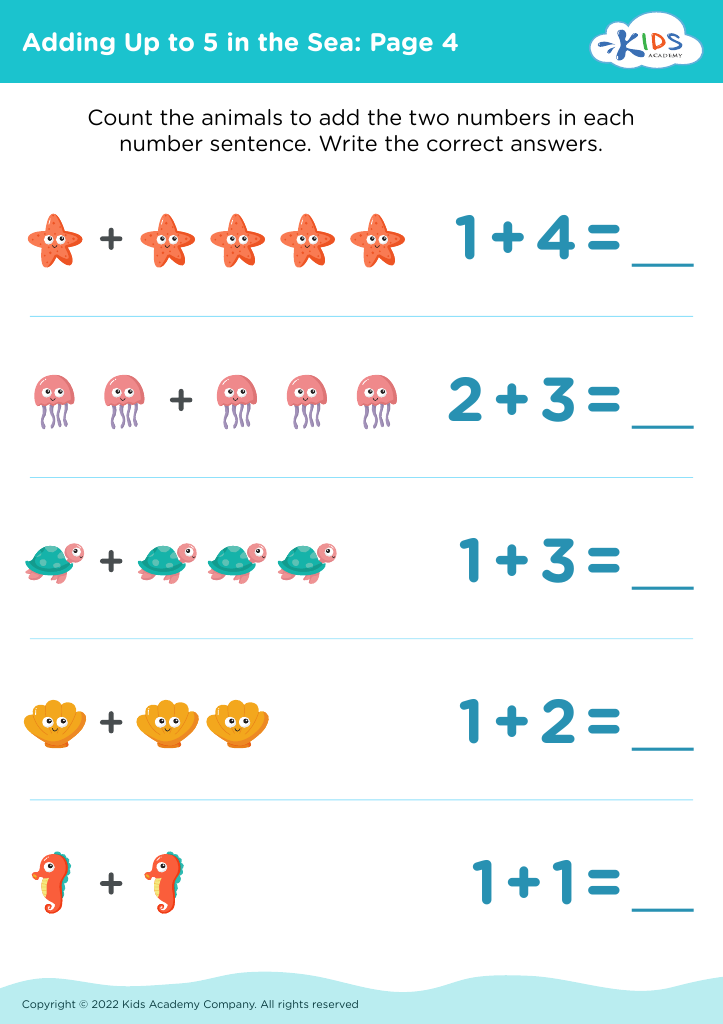
Adding Up to 5 in the Sea: Page 4

Adding Up to 5 in the Sea: Page 4

Adding Up to 5 in the Sea: Page 4
Worksheet
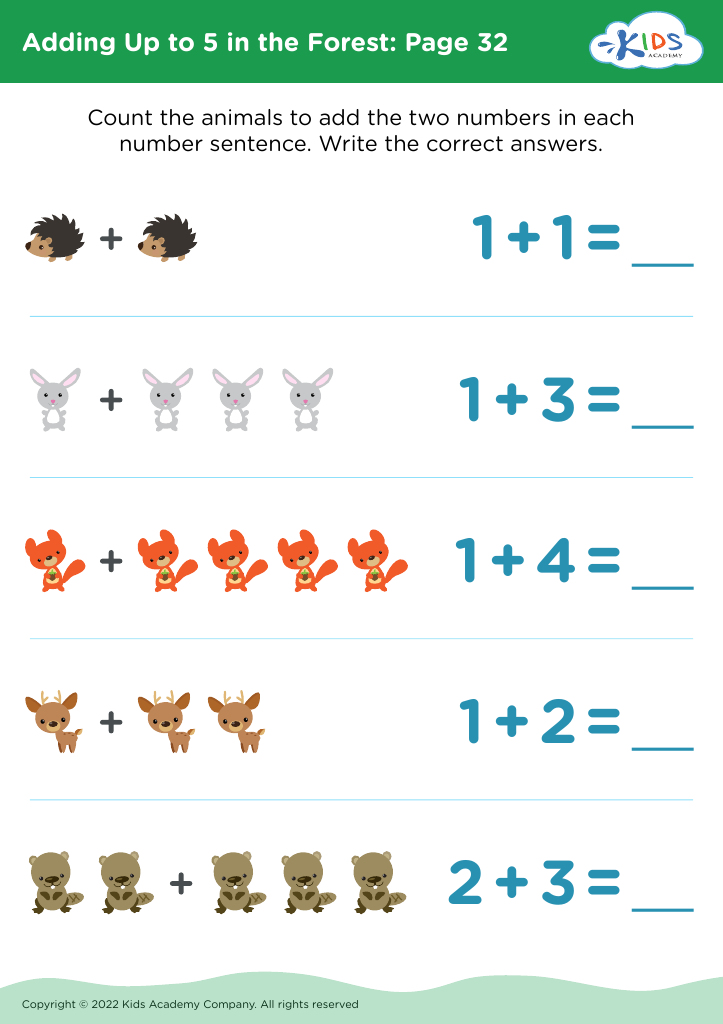
Adding Up to 5 in the Forest: Page 32
Worksheet
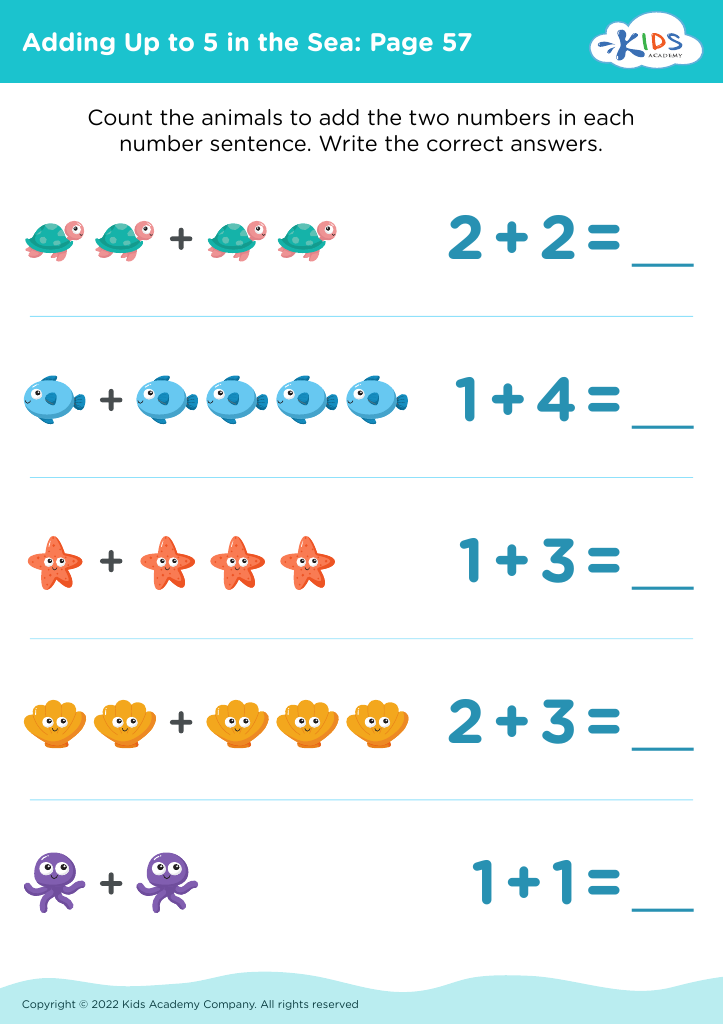
Adding Up to 5 in the Sea: Page 57
Worksheet
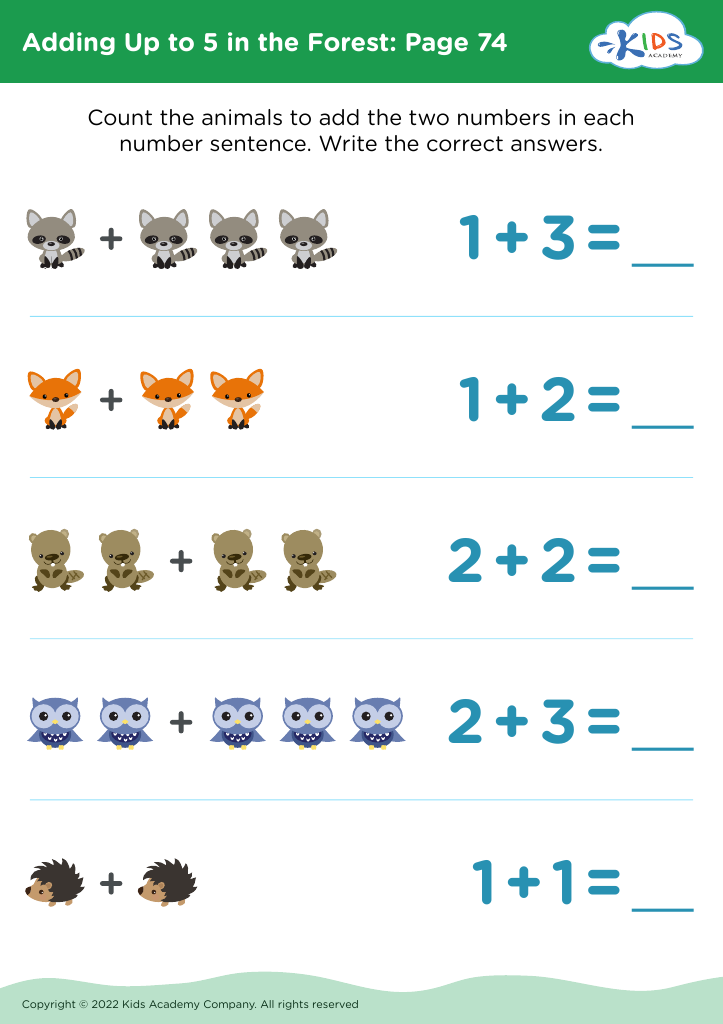
Adding Up to 5 in the Forest: Page 74
Worksheet
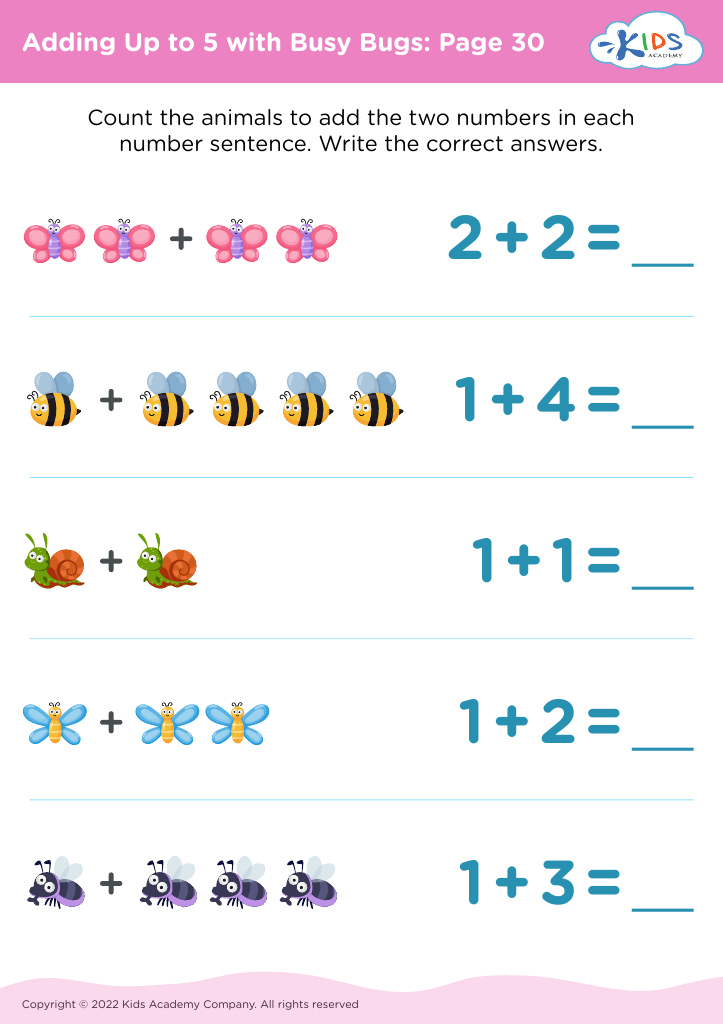
Adding Up to 5 with Busy Bugs: Page 30
Worksheet
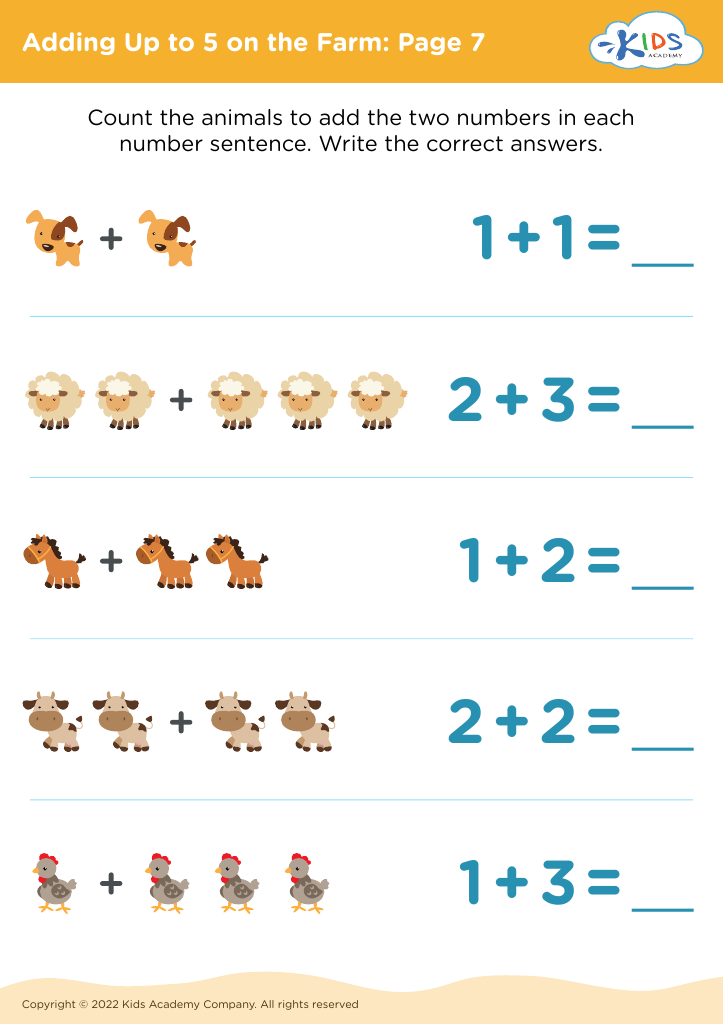
Adding Up to 5 on the Farm: Page 7
Worksheet
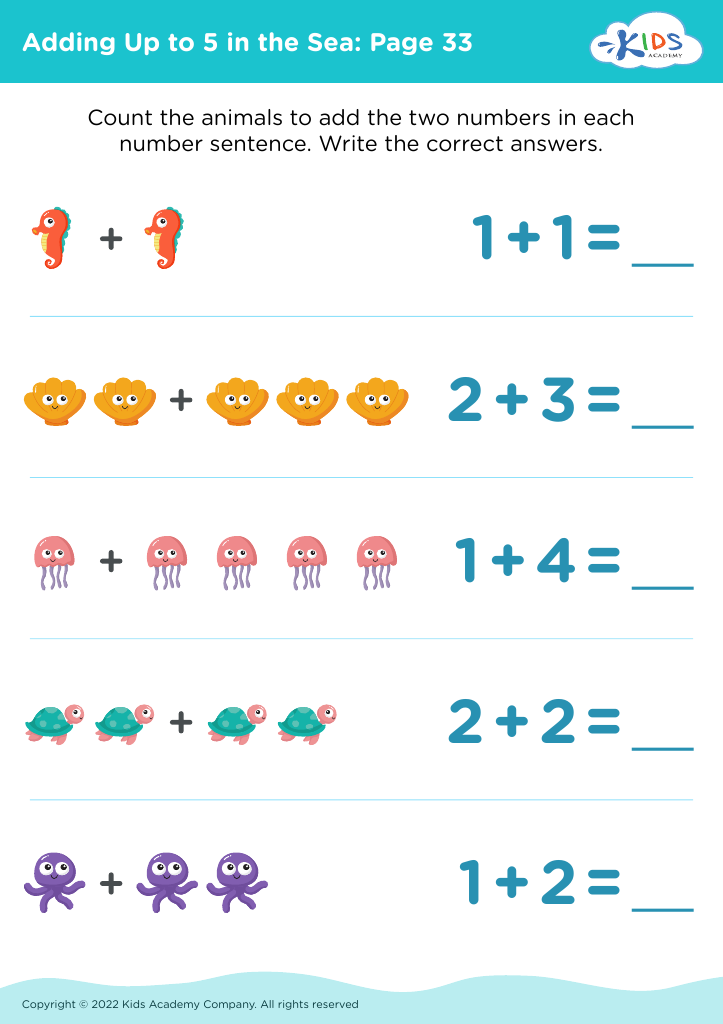
Adding Up to 5 in the Sea: Page 33
Worksheet
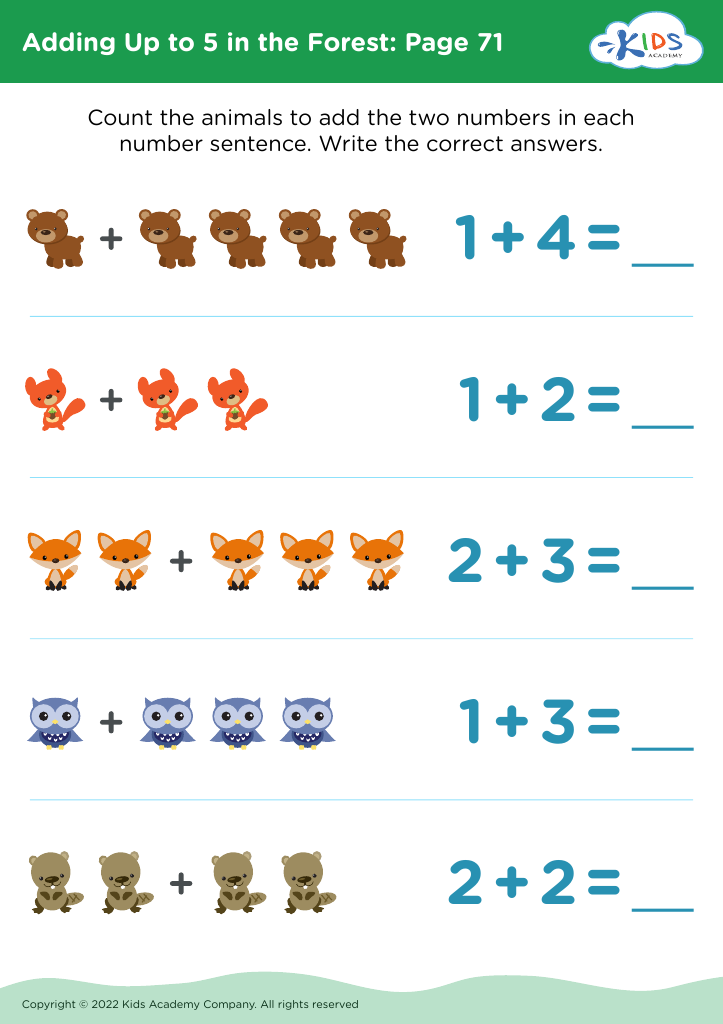
Adding Up to 5 in the Forest: Page 71
Worksheet
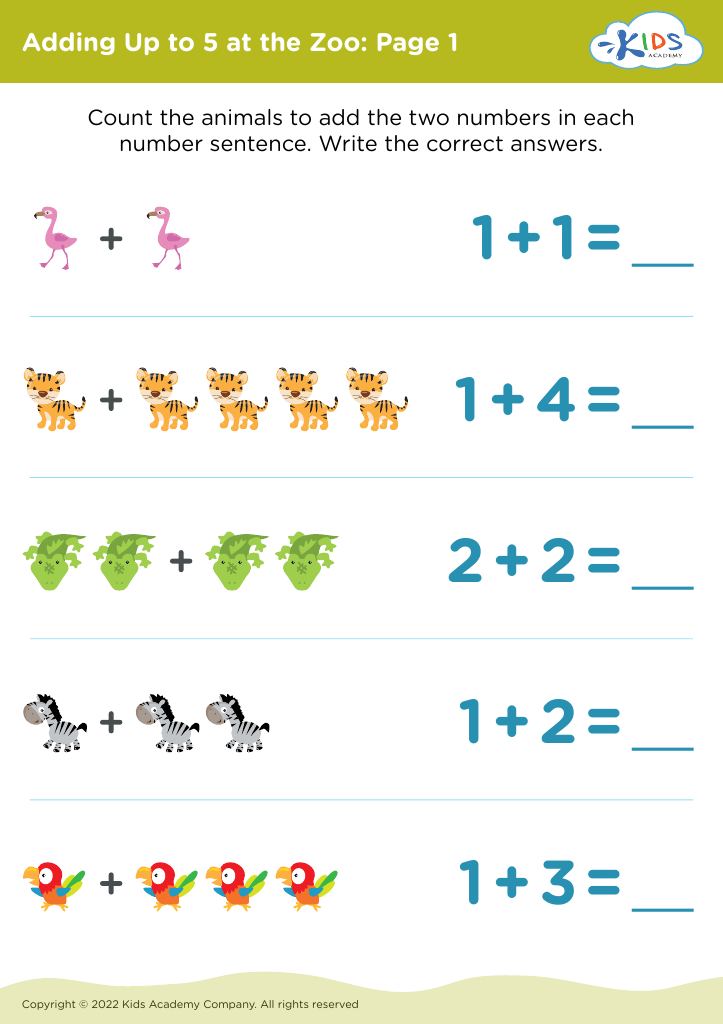
Adding Up to 5 at the Zoo: Page 1

Adding Up to 5 at the Zoo: Page 1

Adding Up to 5 at the Zoo: Page 1
Worksheet
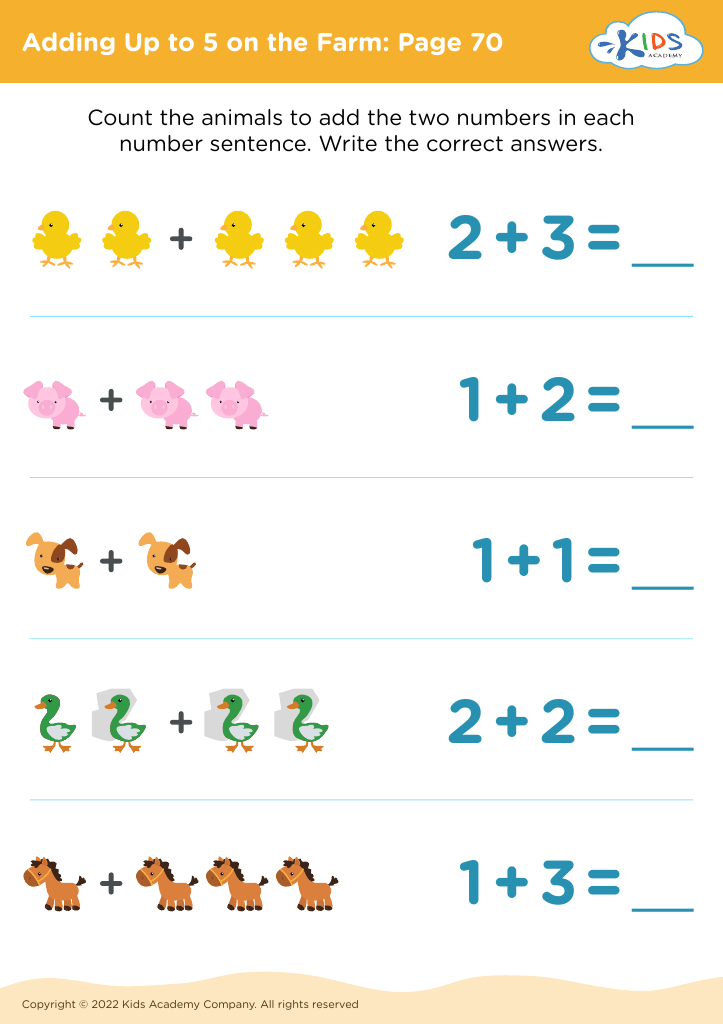
Adding Up to 5 on the Farm: Page 70
Worksheet
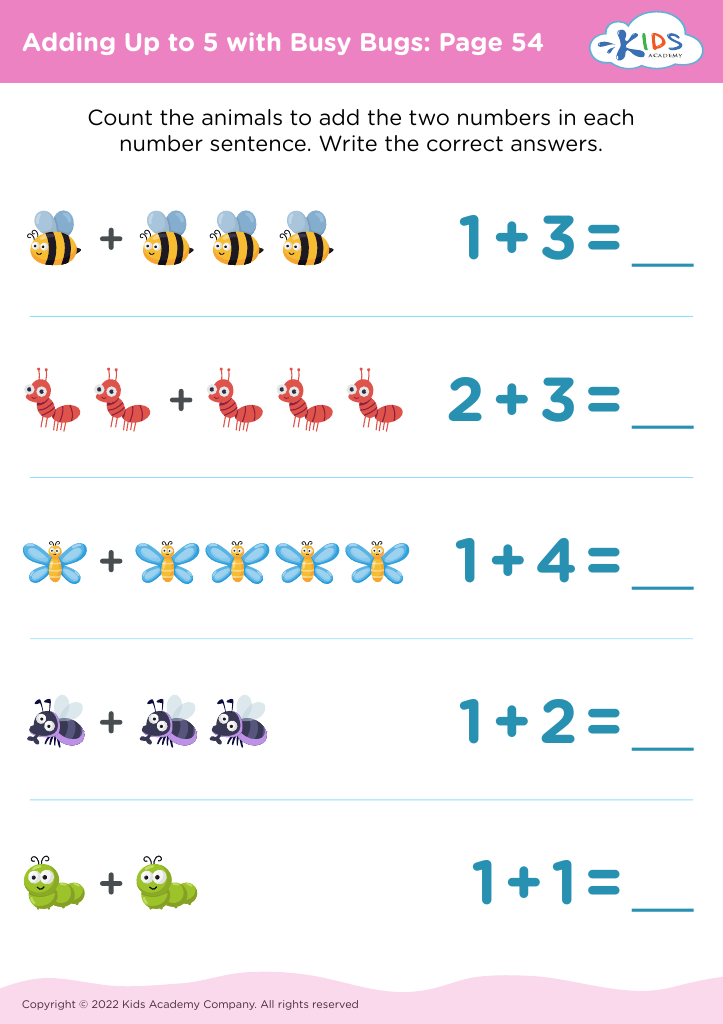
Adding Up to 5 with Busy Bugs: Page 54
Worksheet
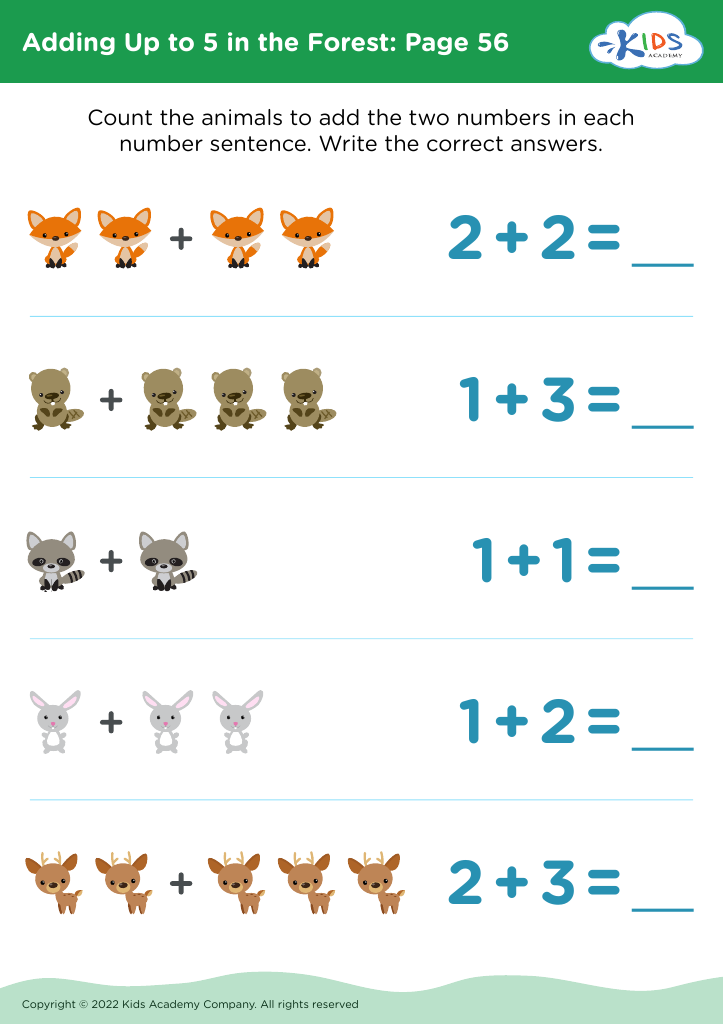
Adding Up to 5 in the Forest: Page 56
Worksheet
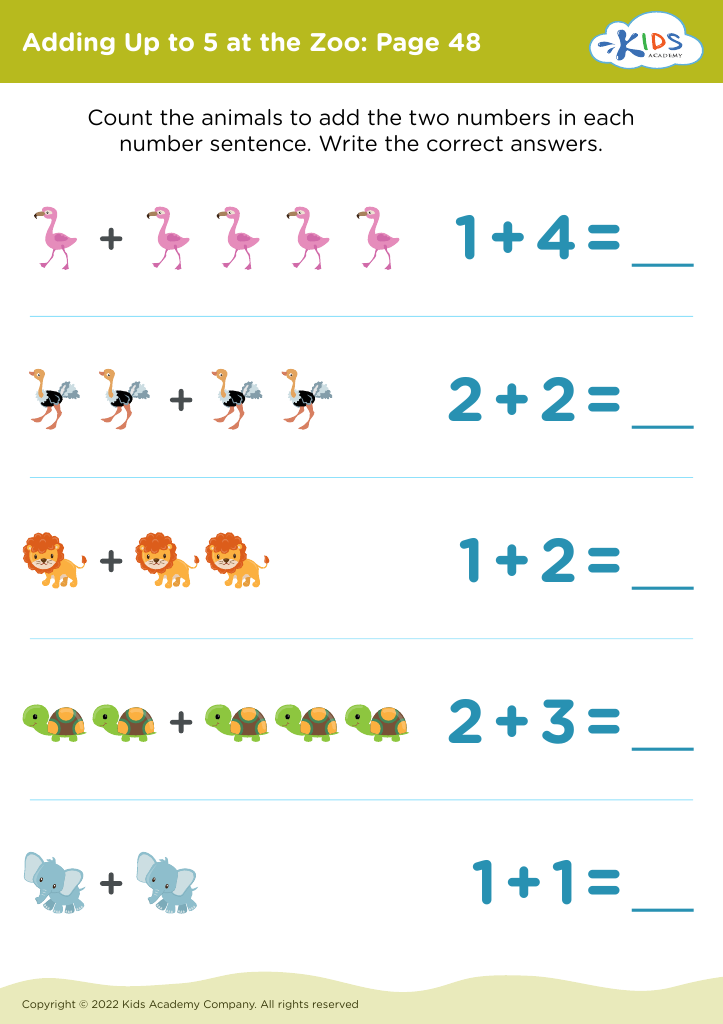
Adding Up to 5 at the Zoo: Page 48
Worksheet
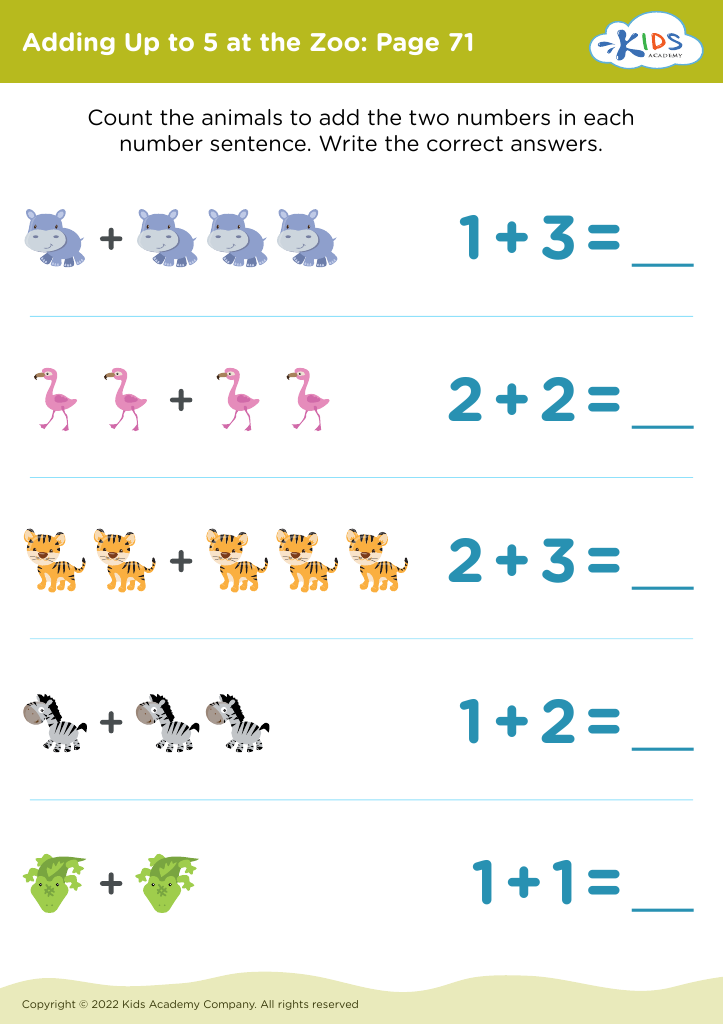
Adding Up to 5 at the Zoo: Page 71
Worksheet
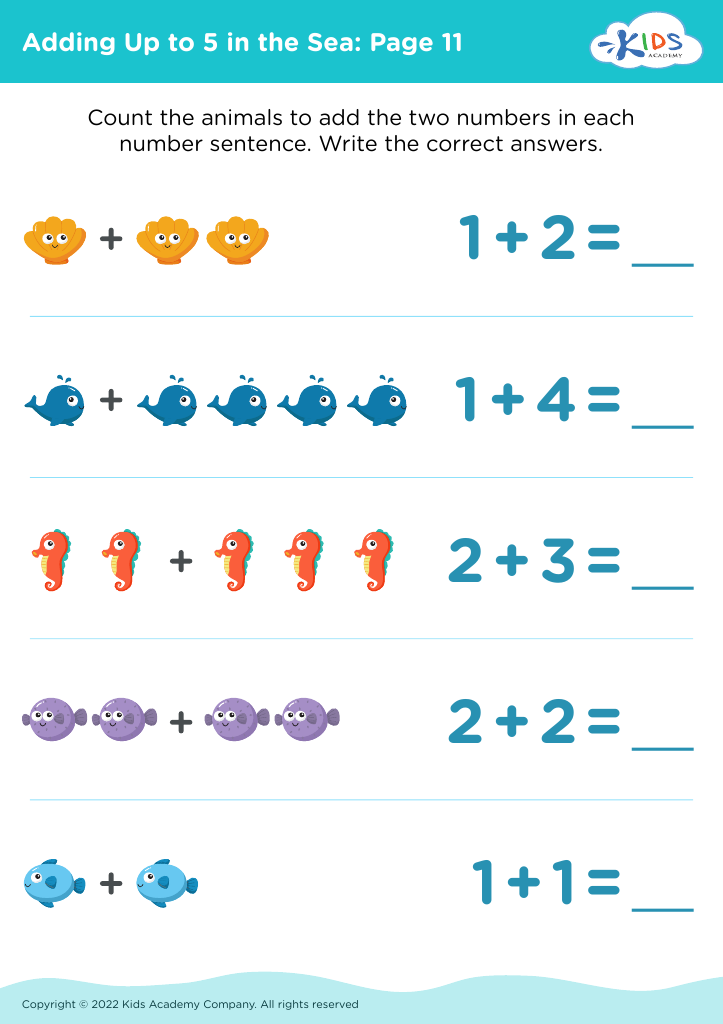
Adding Up to 5 in the Sea: Page 11
Worksheet
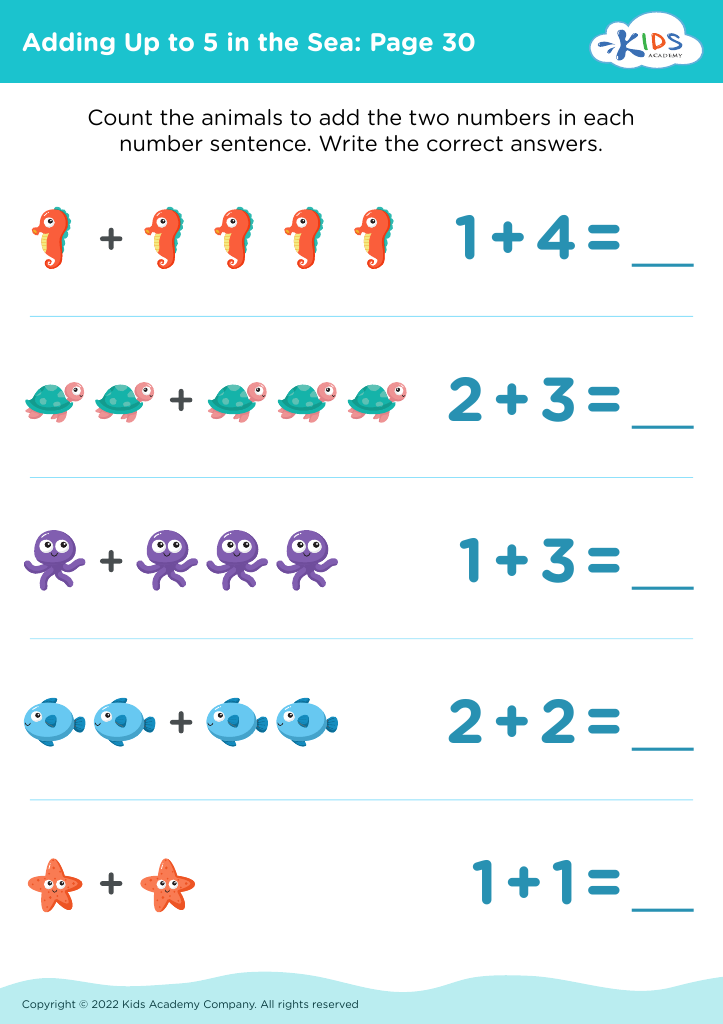
Adding Up to 5 in the Sea: Page 30
Worksheet
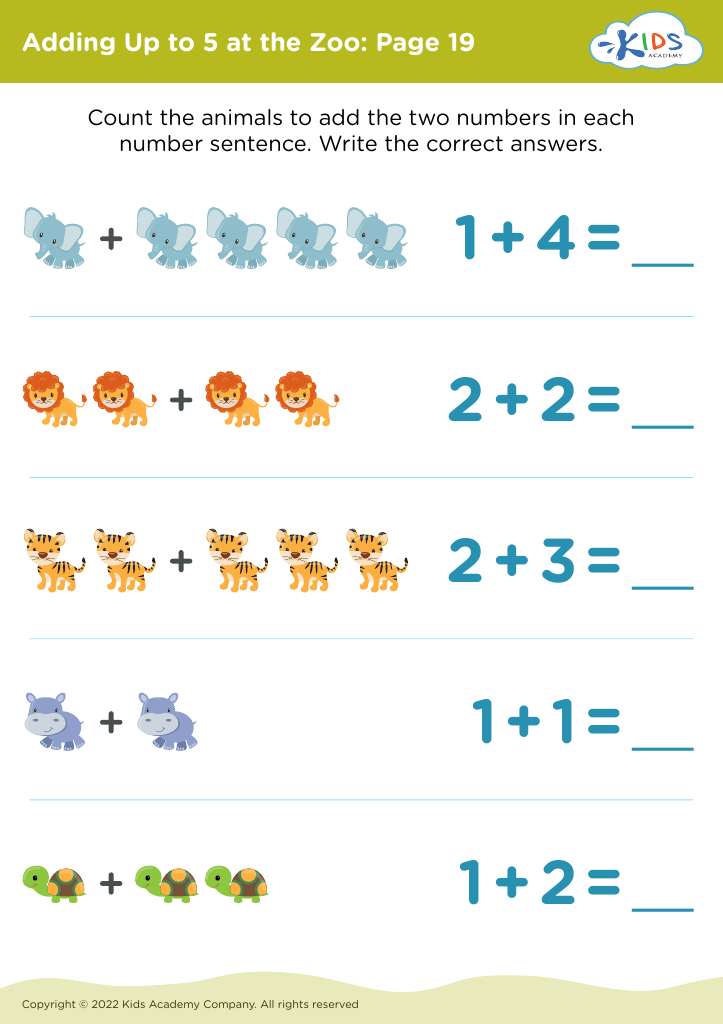
Adding Up to 5 at the Zoo: Page 19
Worksheet


Counting skills and early addition are fundamental building blocks for a child's mathematical development, and parents and teachers should prioritize these skills for several important reasons. For a 3-year-old, mastering basic counting helps with number recognition, which is crucial for understanding more complex math concepts later on. It also enhances their cognitive development by helping them grasp the concepts of quantities and numerical order.

Teaching early addition goes beyond just numbers; it fosters critical thinking and problem-solving skills. When children learn to add, they are not only learning how to calculate but also how to approach and solve problems methodically. This kind of thinking will benefit them across all areas of learning.

Moreover, counting and simple addition lay the groundwork for essential life skills. From making sense of daily routines to sharing toys and snacks evenly, numerical understanding plays a vital role. It helps in developing logical reasoning and the ability to recognize patterns, which are skills that transcend mathematics.

Finally, engaging young children in fun counting games and addition activities can build their confidence and enthusiasm for learning maths. Early success in these areas can set a positive attitude towards learning and academic achievement throughout their education journey. Therefore, cultivating these skills at an early age is crucial for both immediate and long-term educational success.