Developing Concentration Addition Worksheets for 3-Year-Olds
5 filtered results
-
From - To
Welcome to our "Developing Concentration Addition Worksheets for 3-Year-Olds" page! Here, you'll find engaging and thoughtfully crafted worksheets designed to help your little ones enhance their concentration skills while learning the fundamentals of addition. Our colorful and interactive activities are perfect for young learners, promoting active participation and keeping children focused. By combining fun visuals with essential math concepts, these worksheets make early math learning a delightful experience. Ideal for parents and educators, these resources support cognitive development and build a strong mathematical foundation. Start your child's mathematical journey today with our concentration-boosting addition worksheets!
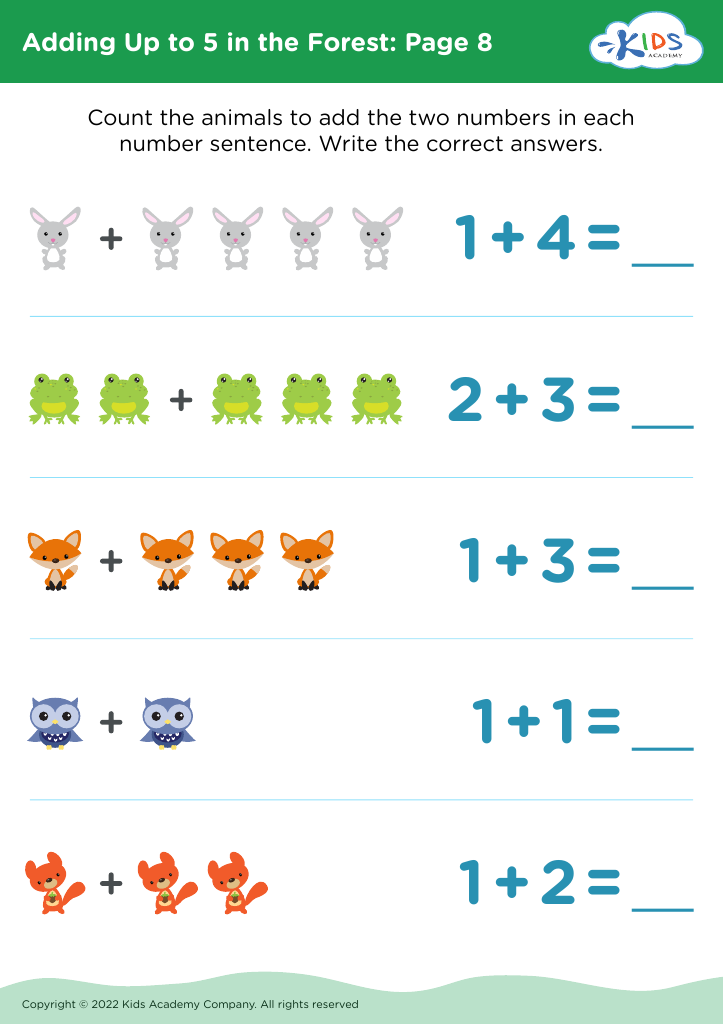
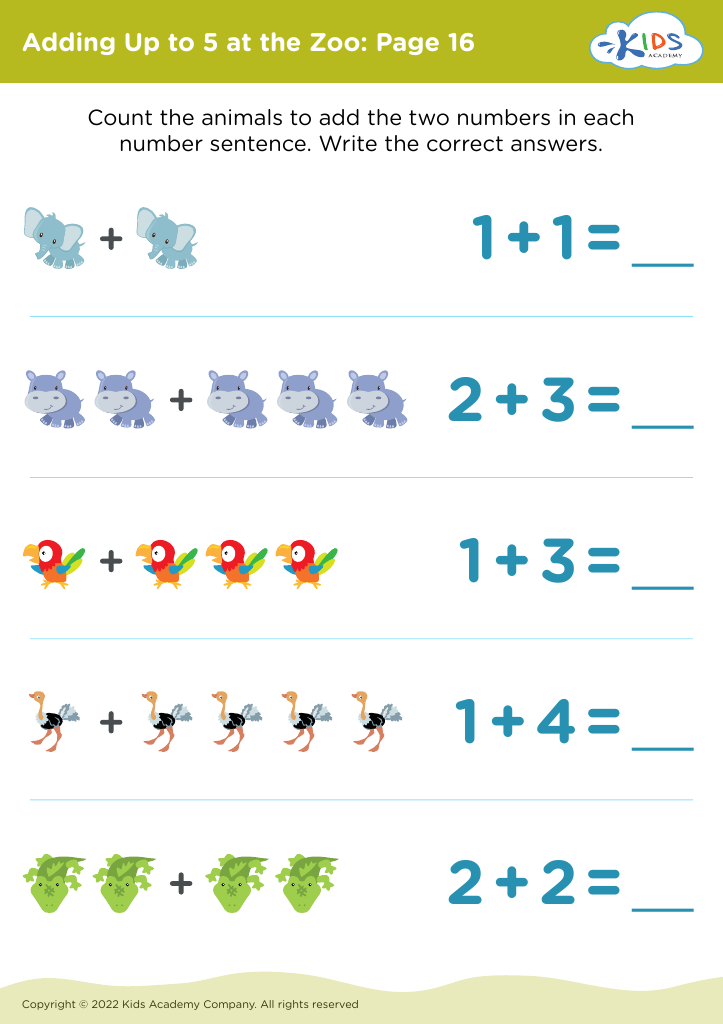
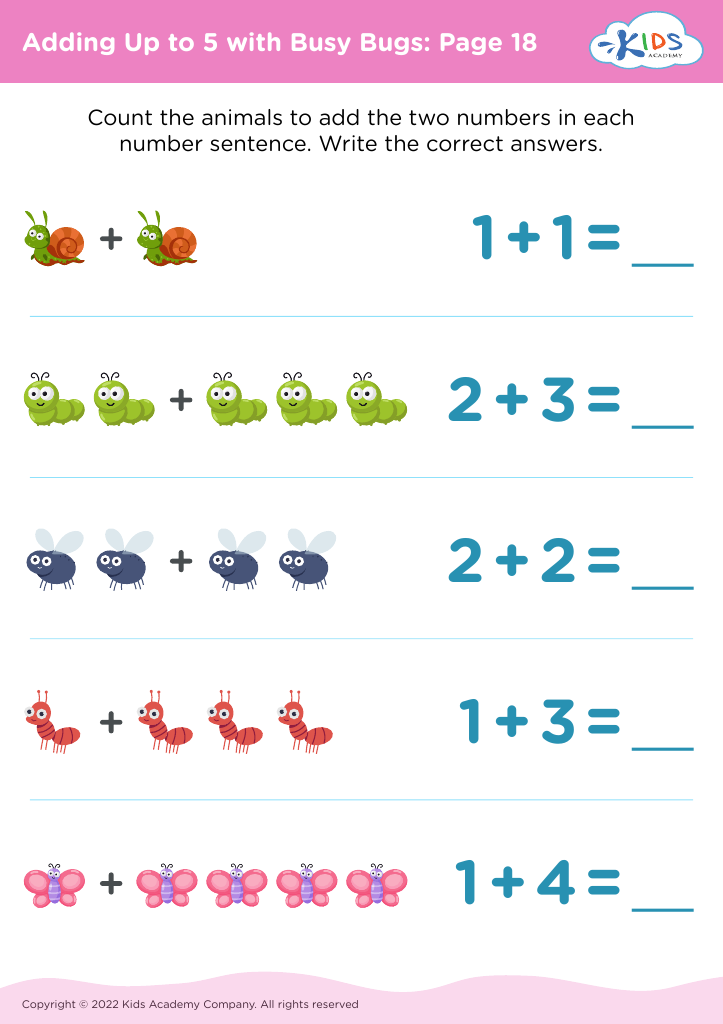
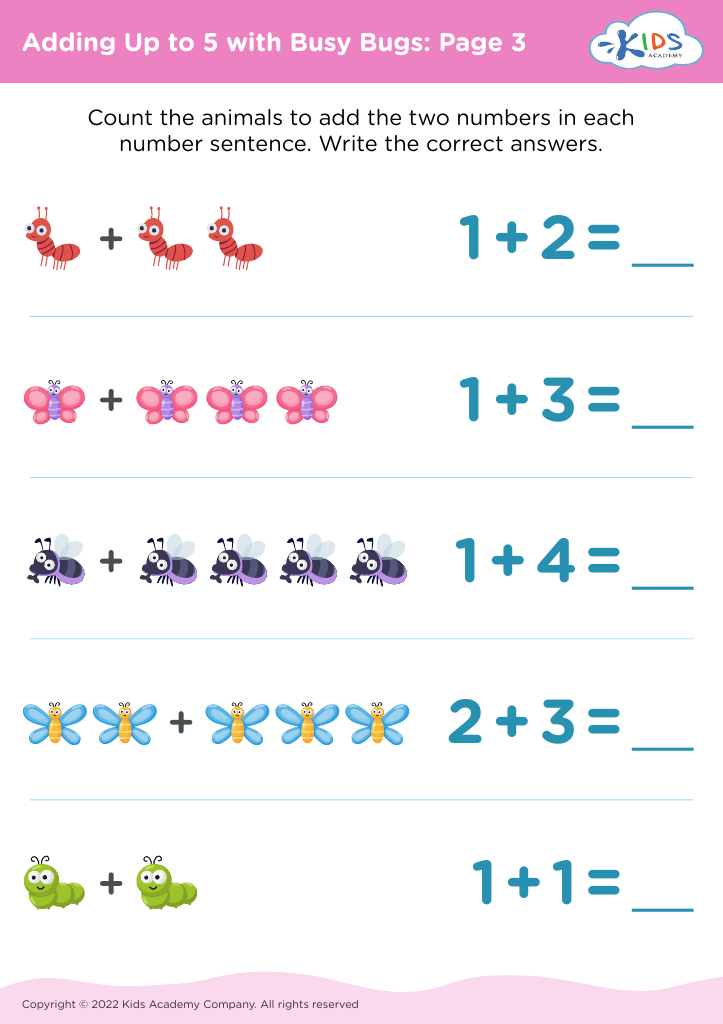
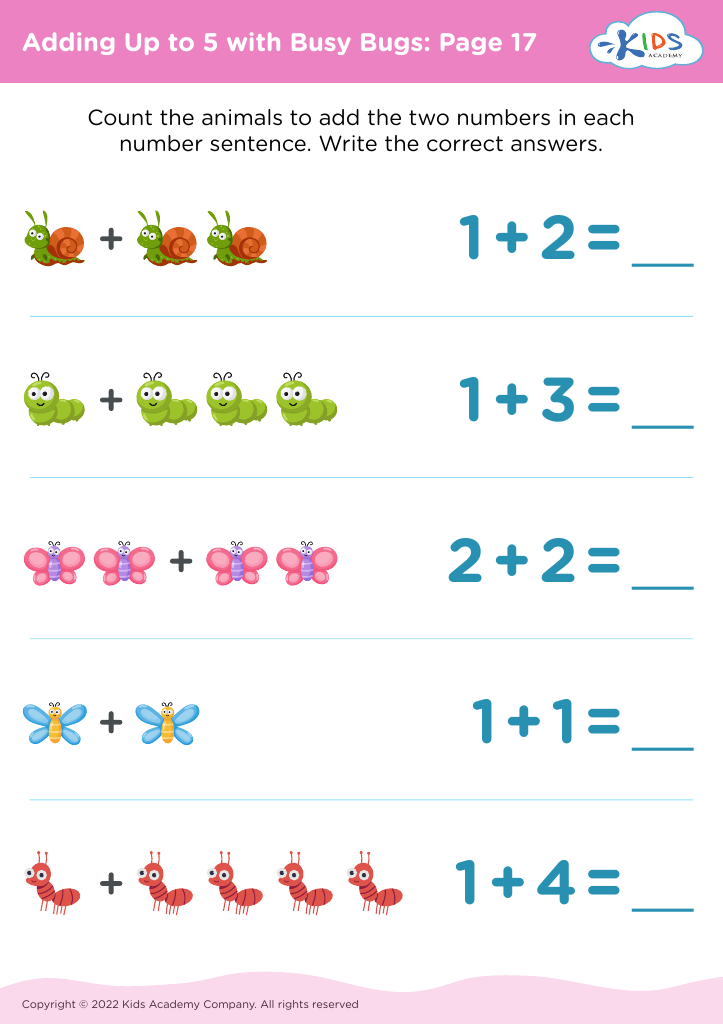








Developing concentration through activities like addition for 3-year-olds is essential for several reasons. Firstly, early cognitive skills lay the groundwork for lifelong learning. Engaging young children in simple addition tasks, such as counting objects or using fingers, fosters critical thinking and problem-solving abilities. These foundational skills are crucial as they transition into more complex mathematical concepts in later years.
Secondly, attention span and focus are vital components of a child’s development. Activities centered around fostering concentration, such as adding objects, encourage children to listen, follow instructions, and persist in tasks. This practice enhances their overall learning experience and prepares them for a structured school environment.
Moreover, demonstrating basic math skills helps build a child's confidence in handling numbers, setting a positive attitude towards math in the future. Engaging parents and teachers in these activities also promotes stronger ties between home and school, creating a supportive learning community.
Ultimately, nurturing concentration and early math skills in 3-year-olds is crucial not just for immediate learning, but also for establishing the habits and mindset that promote academic success throughout their educational journey.








