Enhances concentration Addition Worksheets for 3-Year-Olds
4 filtered results
-
From - To
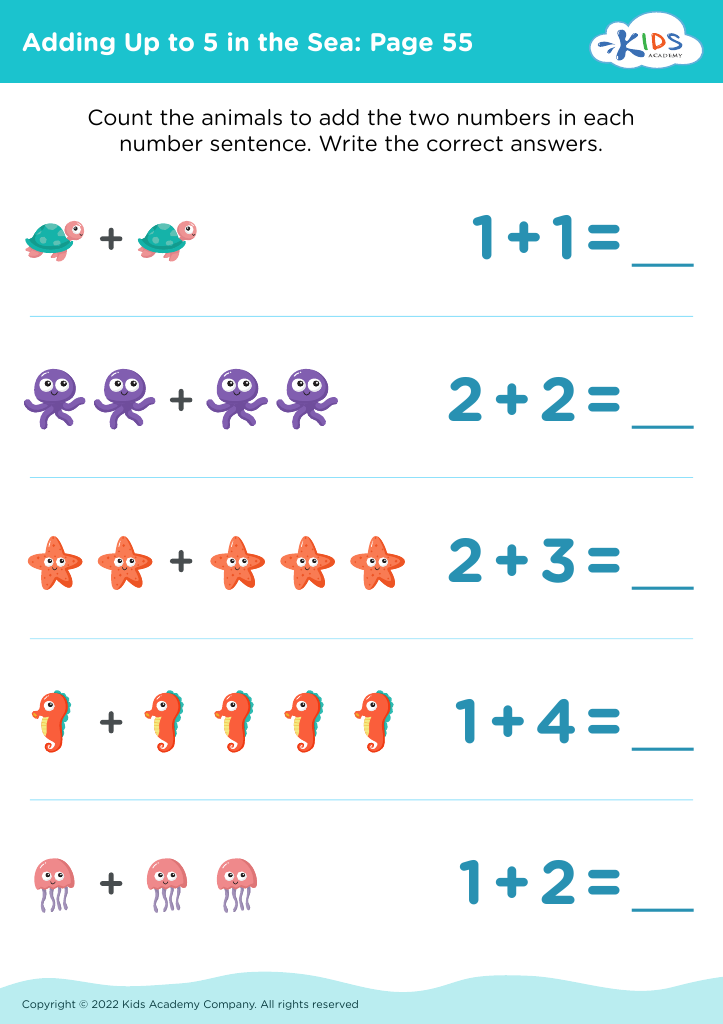
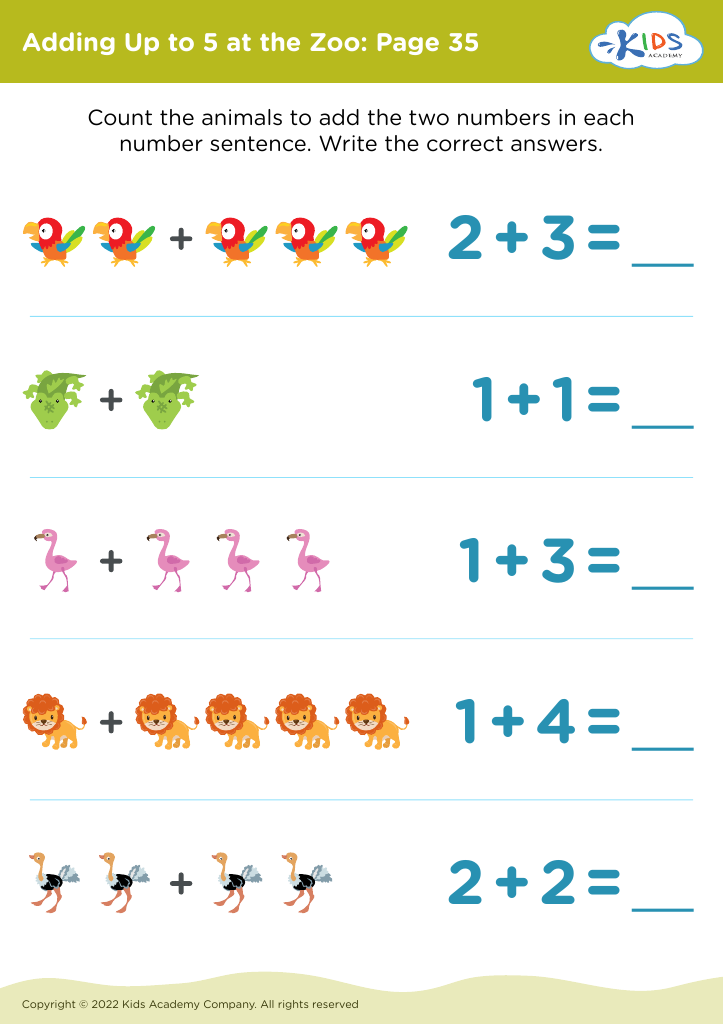
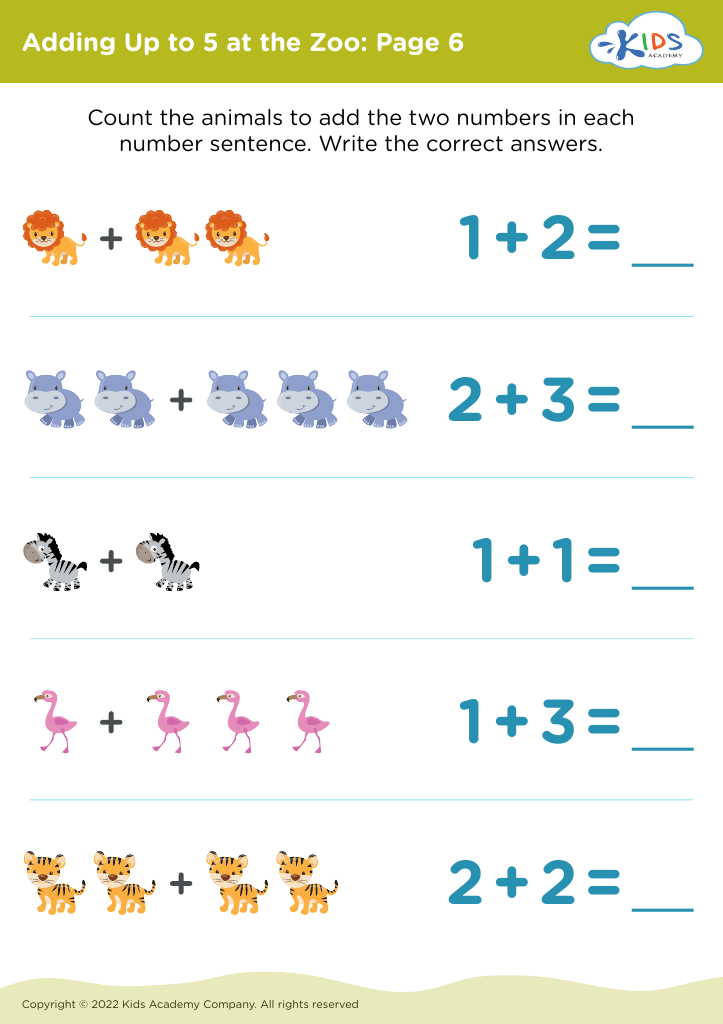
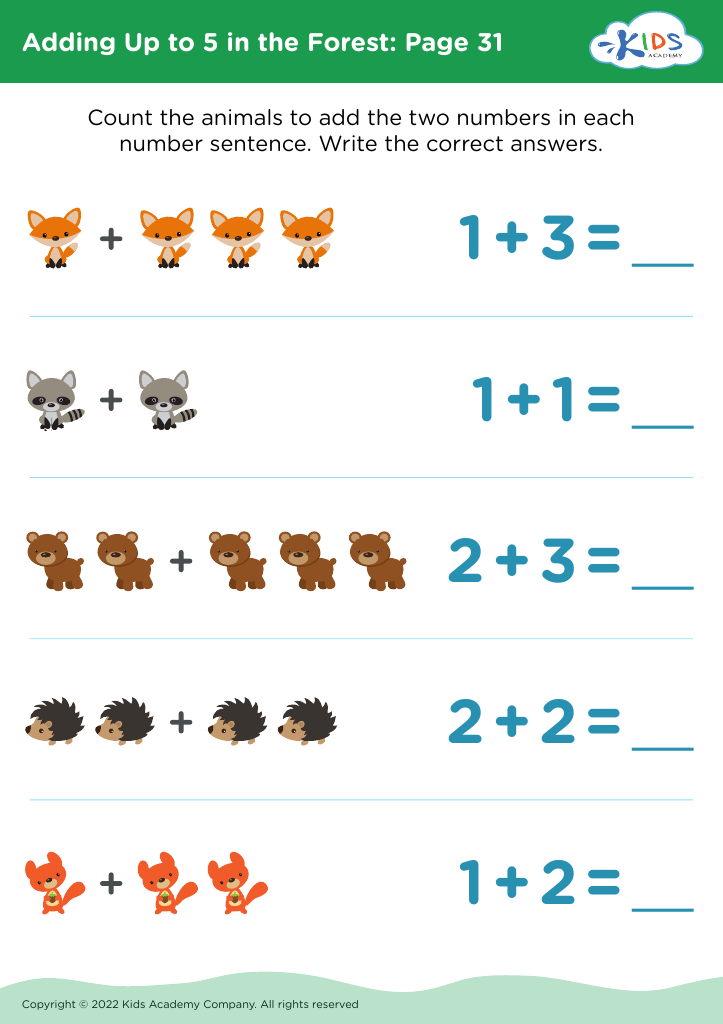
Boost your child's focus and mathematical skills with our "Enhances Concentration Addition Worksheets" designed for 3-year-olds. These engaging worksheets promote early addition concepts while providing activities that sharpen attention spans. With colorful illustrations and interactive exercises, your little one will not only learn how to add, but will also develop crucial concentration abilities essential for future learning. Tailored for preschoolers, our addition worksheets foster a love for math through fun and creativity, ensuring your child remains attentive and enthusiastic about learning. Discover the joy of numbers and strengthen concentration skills – perfect for little learners embarking on their educational journey!








Enhancing concentration in 3-year-olds is crucial for their overall development and lays the groundwork for future learning. At this age, children are naturally curious and eager to explore the world around them. By fostering their ability to focus, parents and teachers can significantly improve their cognitive skills, which are essential for successful learning in later years.
When young children engage in activities that boost concentration, they develop critical thinking and problem-solving abilities. This not only enriches their play experiences but also supports their language and social skills as they interact with peers and adults. Concentrated play allows them to tackle challenges, enhancing perseverance and resilience, qualities that are important in both academic and social settings.
Moreover, improved attention spans lead to better behavior, reducing frustration for both parents and educators. When children can focus, they are more likely to follow instructions, participate actively in group settings, and achieve independent play, which nurtures creativity. Ultimately, concentrating is a foundational skill that impacts a child's academic journey and lifelong learning. By prioritizing activities that promote concentration, caregivers can cultivate well-rounded, engaged, and successful individuals.








