Filters

16 filtered results

Clear all filters
Favorites
With answer key
Interactive

16 filtered results

Difficulty Level

Grade


Help your 3-year-old develop essential math and motor skills with our Hand-eye Coordination Addition Worksheets. Specifically designed for little learners, these fun and engaging worksheets combine the foundation of arithmetic with age-appropriate activities that boost hand-eye coordination. Kids will delight in colorful illustrations and simple tasks that make learning addition an enjoyable adventure. As they connect dots, match numbers, and complete puzzles, they'll build confidence and foundational math skills. Perfect for preschoolers, our worksheets provide an early start to a lifetime of learning success. Download now and give your child the tools they need to excel in both math and motor skills!
Check out this FREE Trial Lesson on Addition for age 3!

2 Step Addition Word Problems Using Drawings

Favorites
With answer key
Interactive
  • 3
  • Hand-eye Coordination
  • Addition
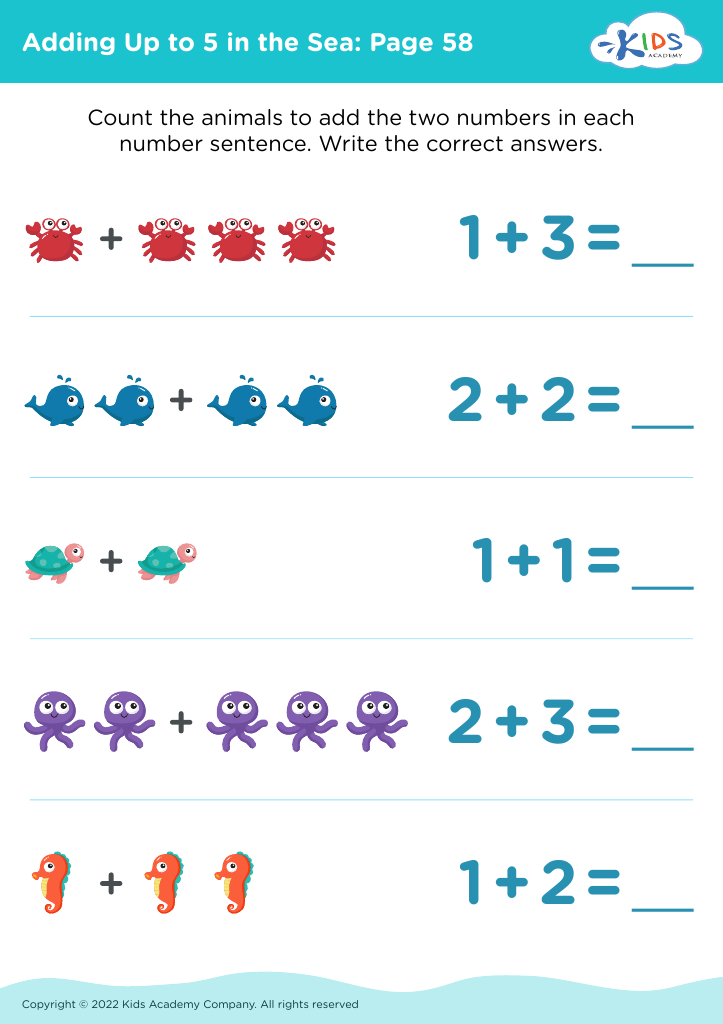
Adding Up to 5 in the Sea: Page 58
Worksheet
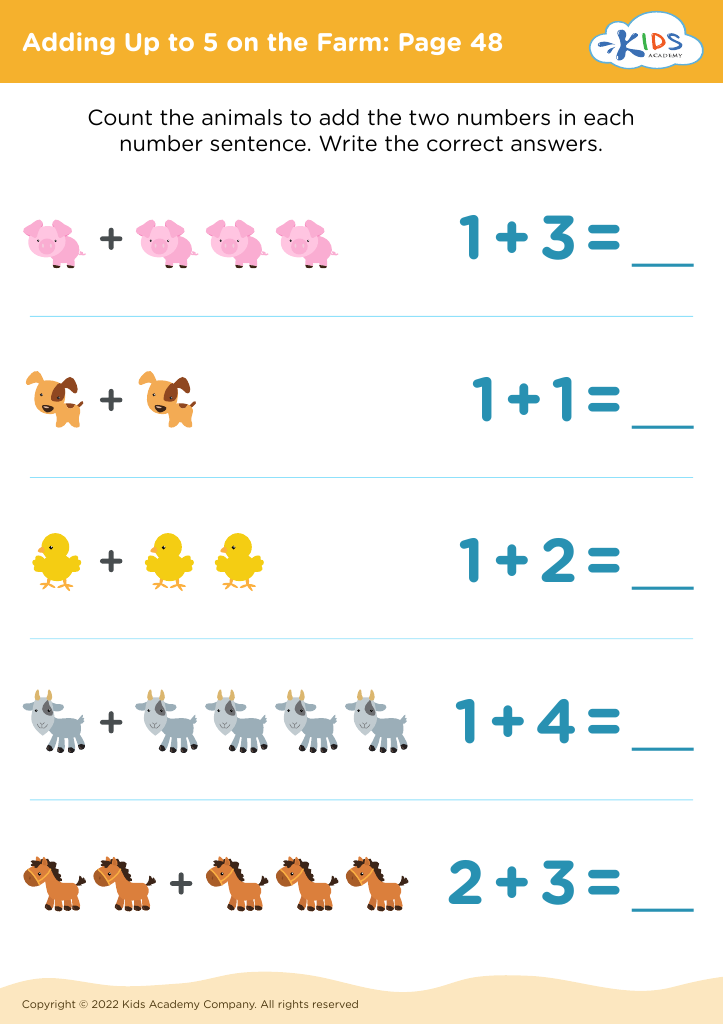
Adding Up to 5 on the Farm: Page 48
Worksheet
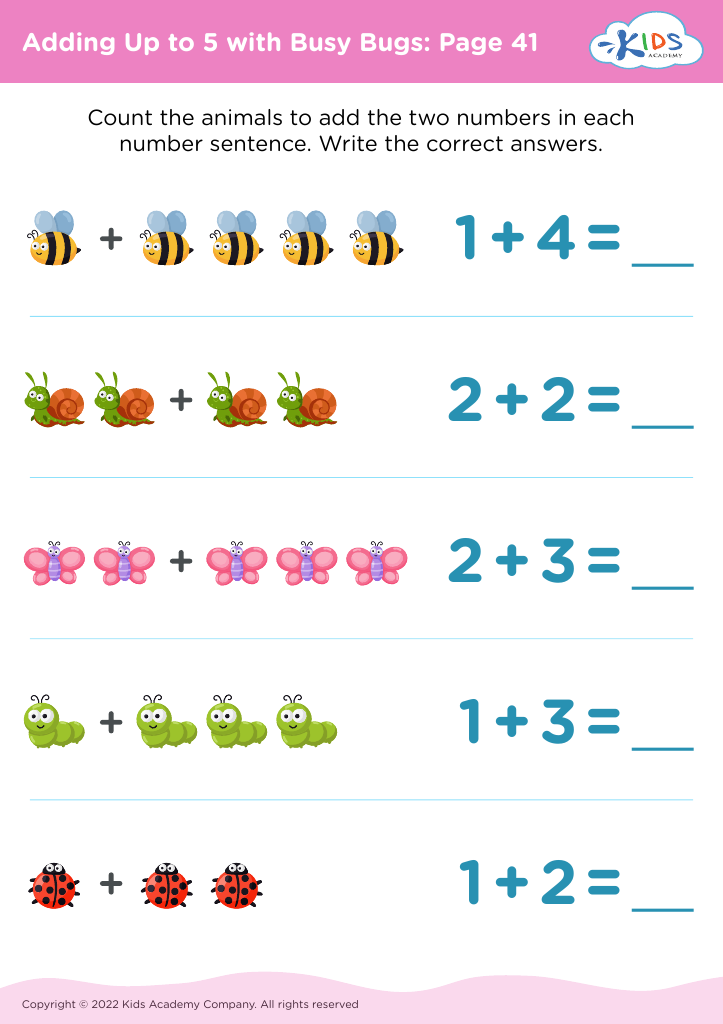
Adding Up to 5 with Busy Bugs: Page 41
Worksheet
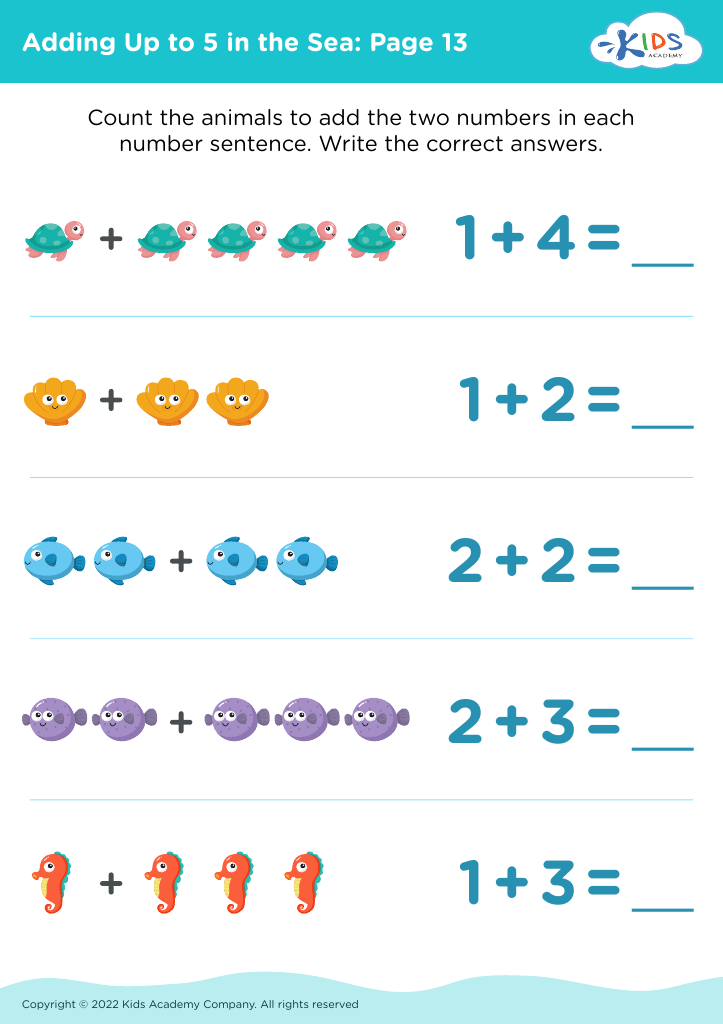
Adding Up to 5 in the Sea: Page 13
Worksheet
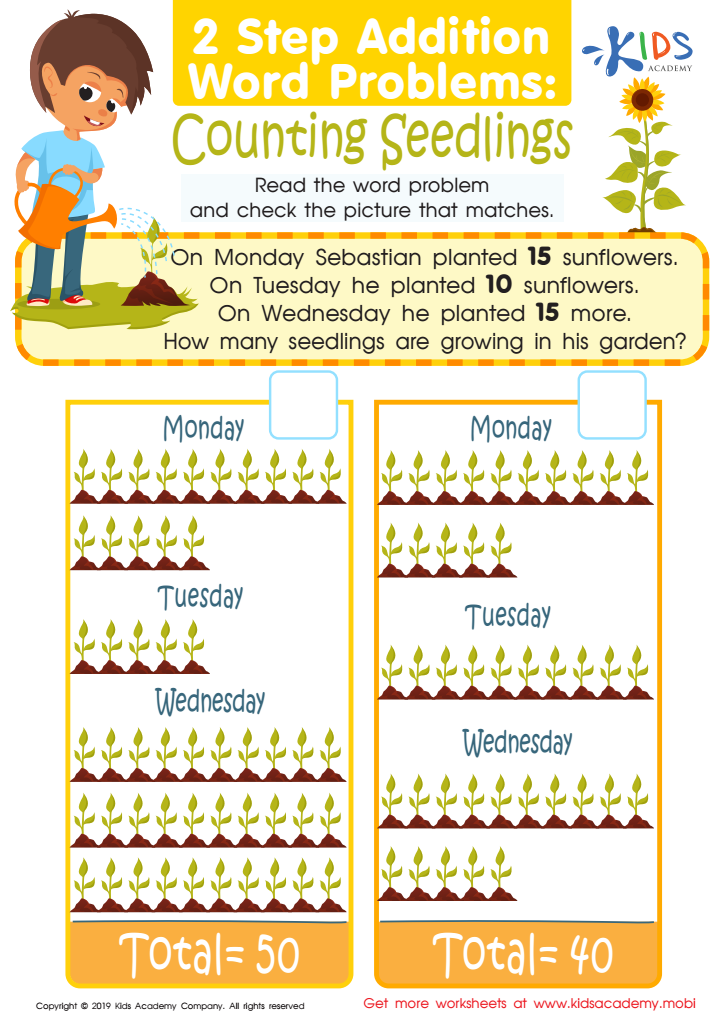
Counting Seedlings Worksheet

Counting Seedlings Worksheet

Understanding math word problems is key. Multiple steps can prove challenging - this free worksheet provides one-to-one picture representation to help kids solve multi-step addition word problems. Strengthen addition skills by choosing the matching picture to the answer.
Counting Seedlings Worksheet
Worksheet
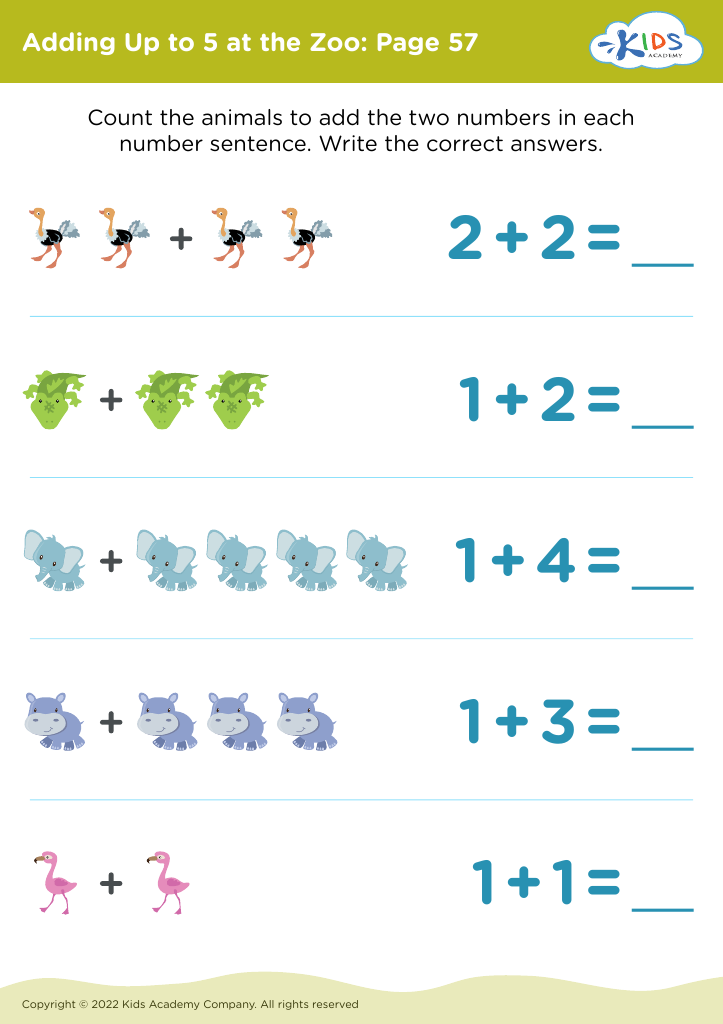
Adding Up to 5 at the Zoo: Page 57
Worksheet
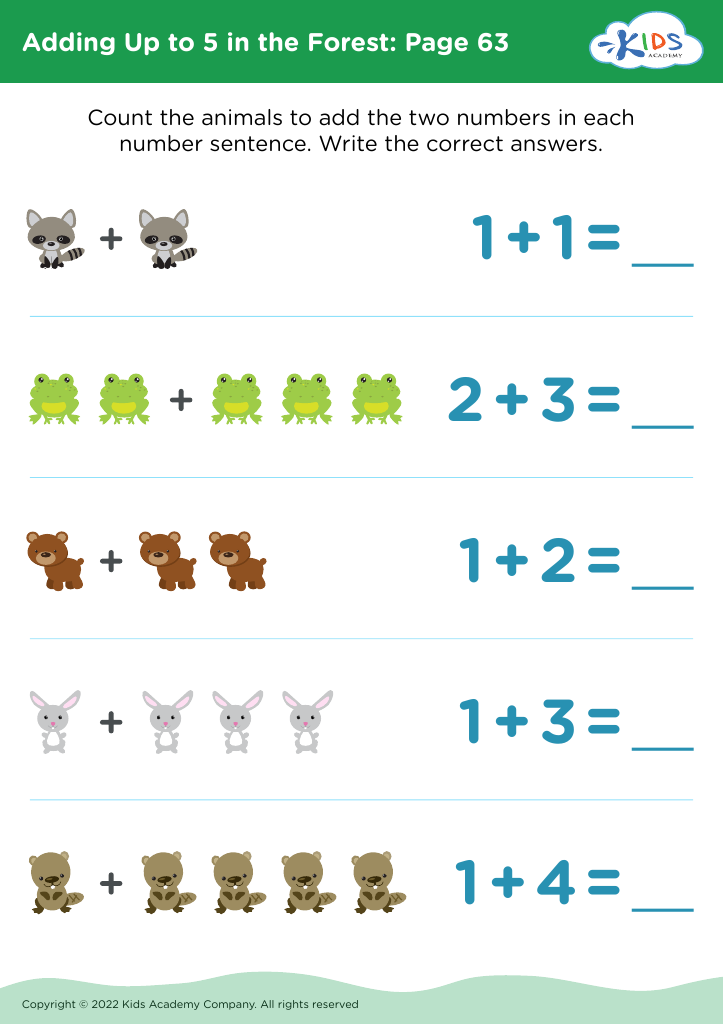
Adding Up to 5 in the Forest: Page 63
Worksheet
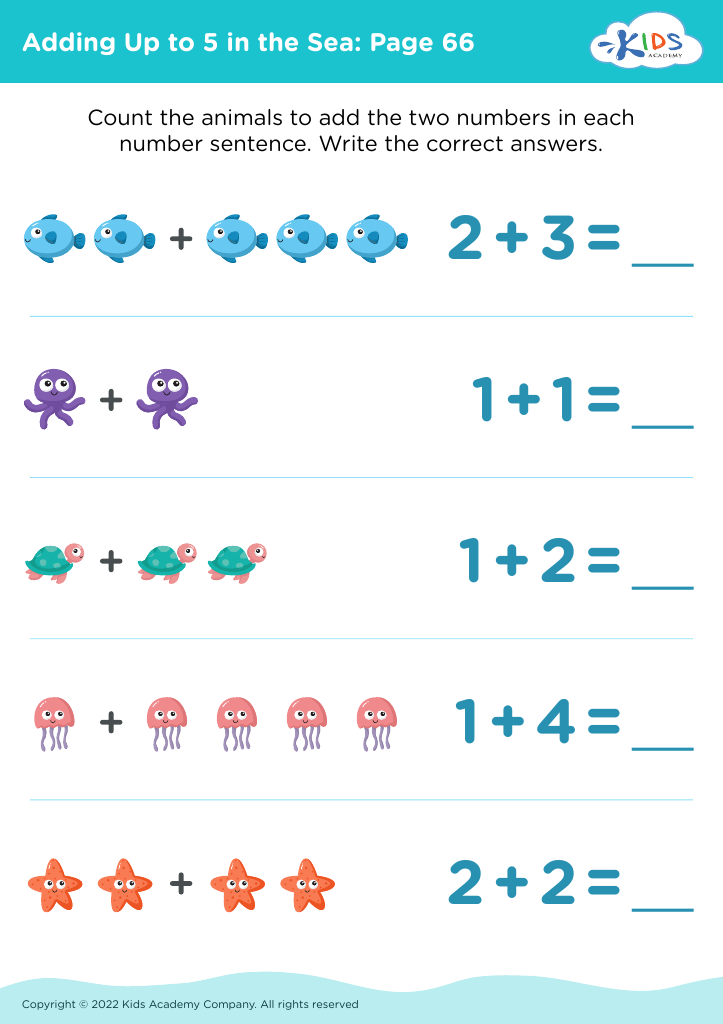
Adding Up to 5 in the Sea: Page 66
Worksheet
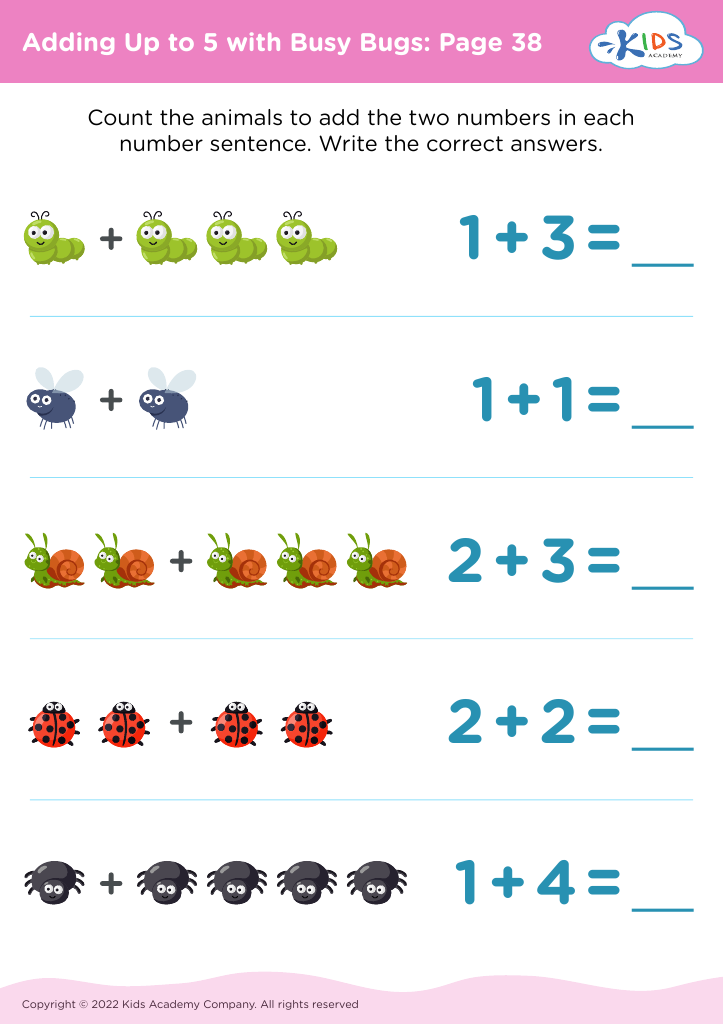
Adding Up to 5 with Busy Bugs: Page 38
Worksheet
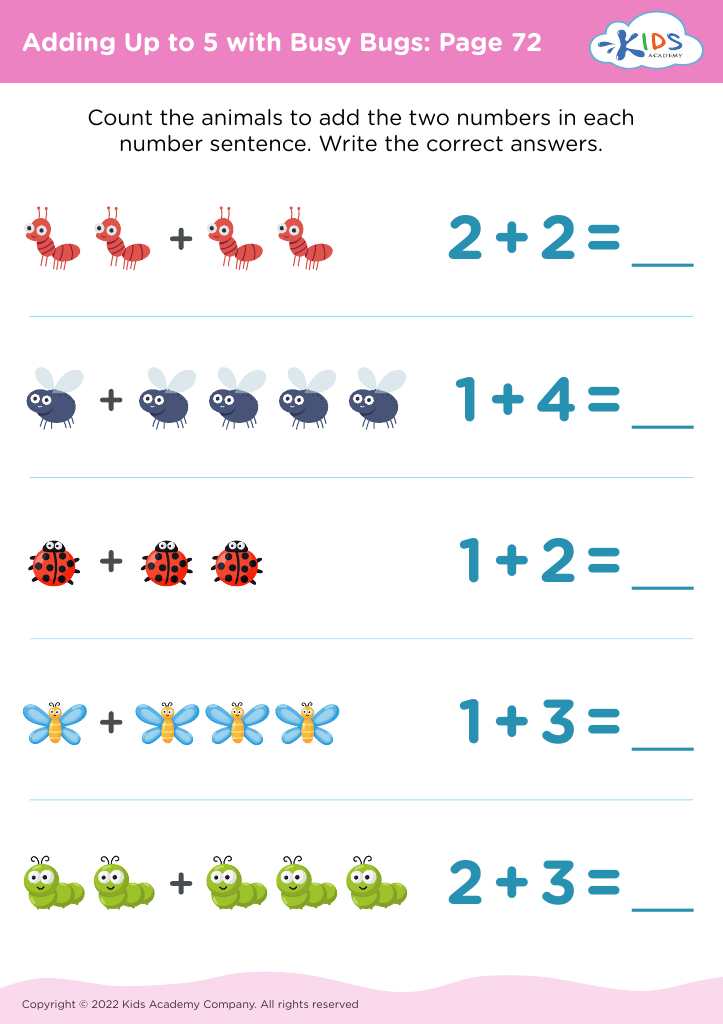
Adding Up to 5 with Busy Bugs: Page 72
Worksheet
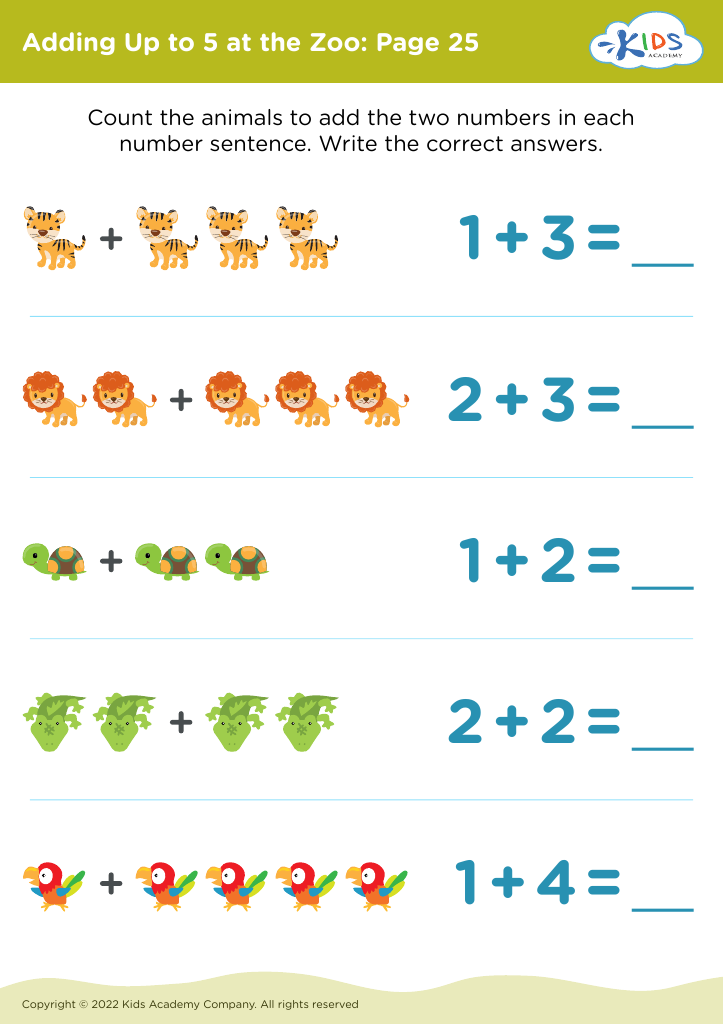
Adding Up to 5 at the Zoo: Page 25
Worksheet
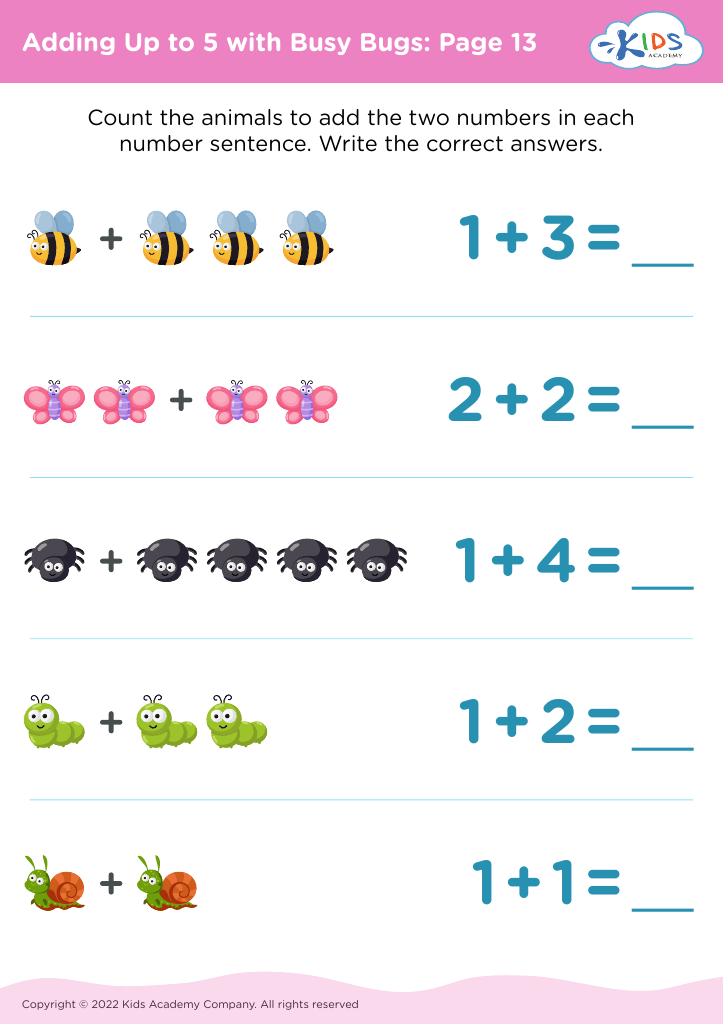
Adding Up to 5 with Busy Bugs: Page 13
Worksheet
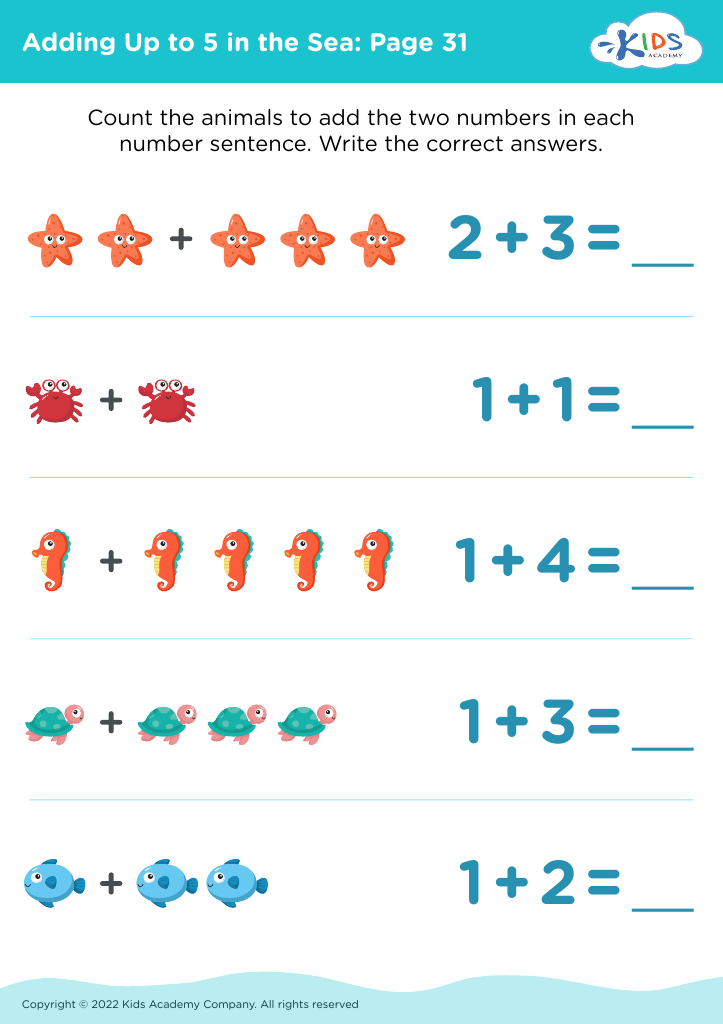
Adding Up to 5 in the Sea: Page 31
Worksheet
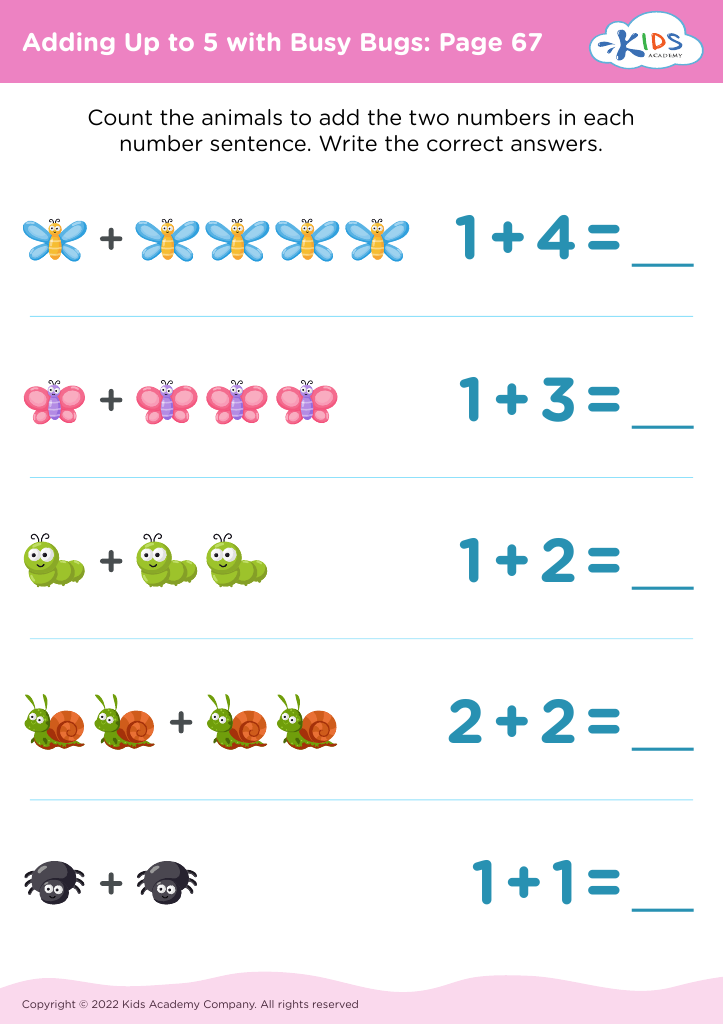
Adding Up to 5 with Busy Bugs: Page 67
Worksheet
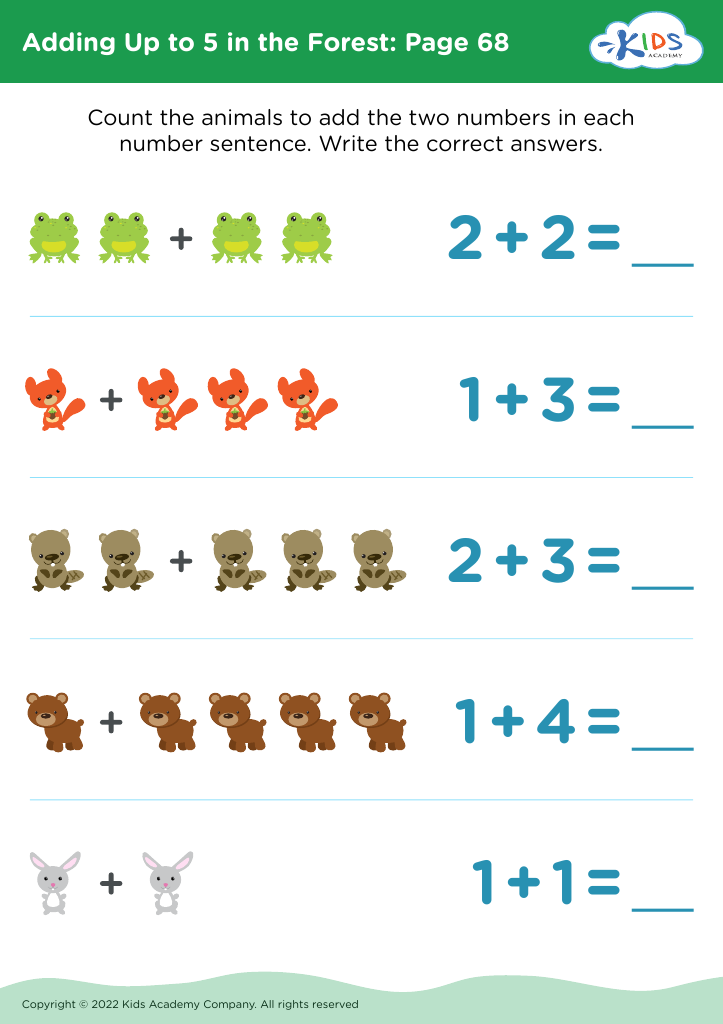
Adding Up to 5 in the Forest: Page 68
Worksheet
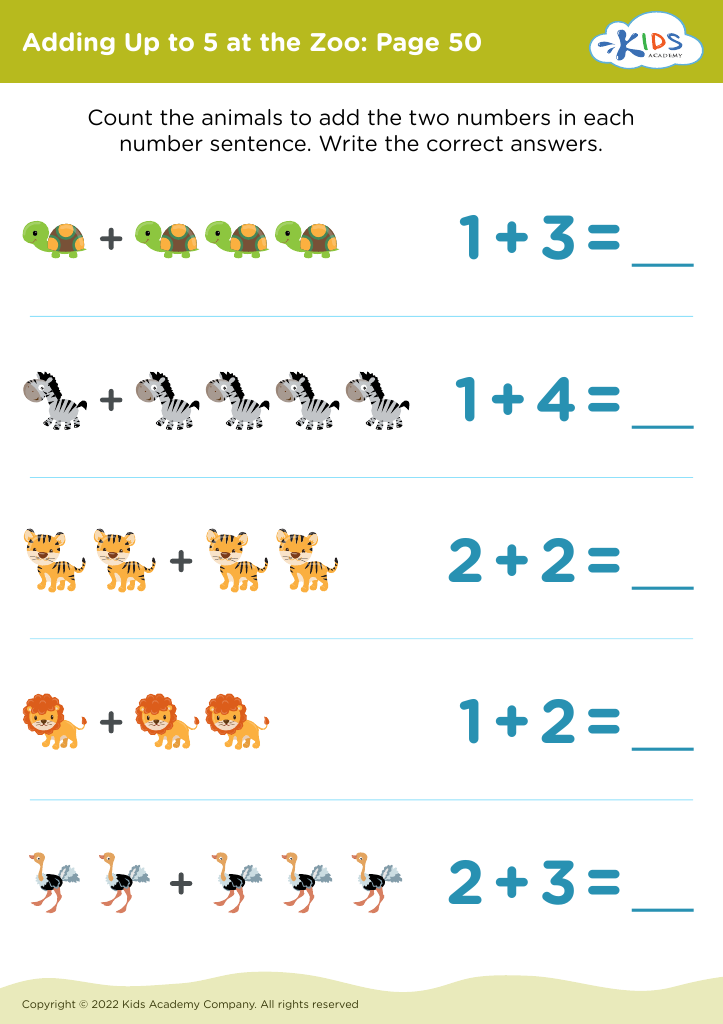
Adding Up to 5 at the Zoo: Page 50
Worksheet


Hand-eye coordination is crucial for the overall development of three-year-olds, serving as a building block for numerous daily activities and future skills. This coordinated control of eye movement with hand activity enhances motor skills, which are fundamental for tasks like eating, dressing, and play. For instance, being able to aim a spoonful of food to the mouth enhances independence and self-confidence in children.

Moreover, these early skills set the stage for later complex tasks such as writing and participating in sports. By engaging in activities that bolster hand-eye coordination, such as playing with building blocks or drawing, kids develop their spatial awareness and fine motor skills. This in turn can have a direct impact on academic success later in life; the ability to draw shapes or write letters is tied to a child's early experiences of hand-eye coordination.

For parents and teachers, focusing on hand-eye coordination activities supports cognitive development. These activities encourage problem-solving, focus, and perseverance. Games like catching a ball or simple puzzles teach young ones about cause and effect, enhancing their learning experience.

Caring about hand-eye coordination is not just about immediate benefits; it’s about laying a strong foundation for a child's future development across multiple domains—socially, academically, and physically.