Improve concentration Addition Worksheets for 3-Year-Olds
7 filtered results
-
From - To
Boost your child’s concentration and numeracy skills with our specially designed Addition Worksheets for 3-Year-Olds! These engaging, age-appropriate printable resources from Kids Academy feature colorful illustrations and simple addition problems to capture little ones' attention while enhancing their ability to focus. Each worksheet is crafted to support early math learning, making addition fun and accessible. Perfect for home or classroom use, these worksheets help preschoolers build a strong foundation in mathematics and improve their concentration through interactive, educational activities. Start your child's learning journey today with our expert-developed addition worksheets!
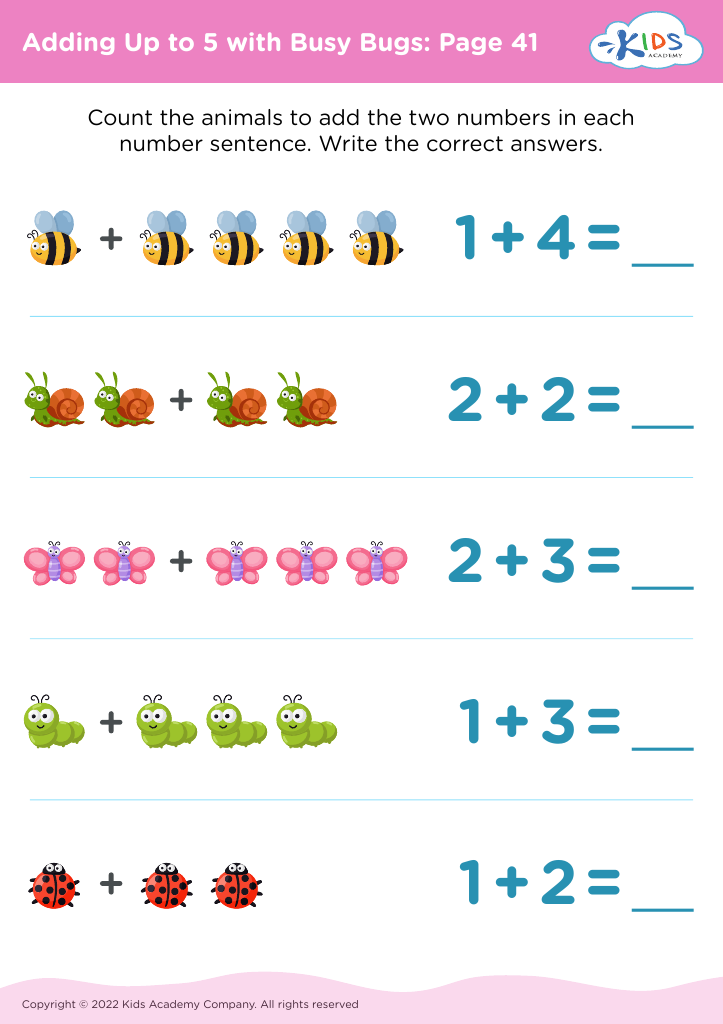
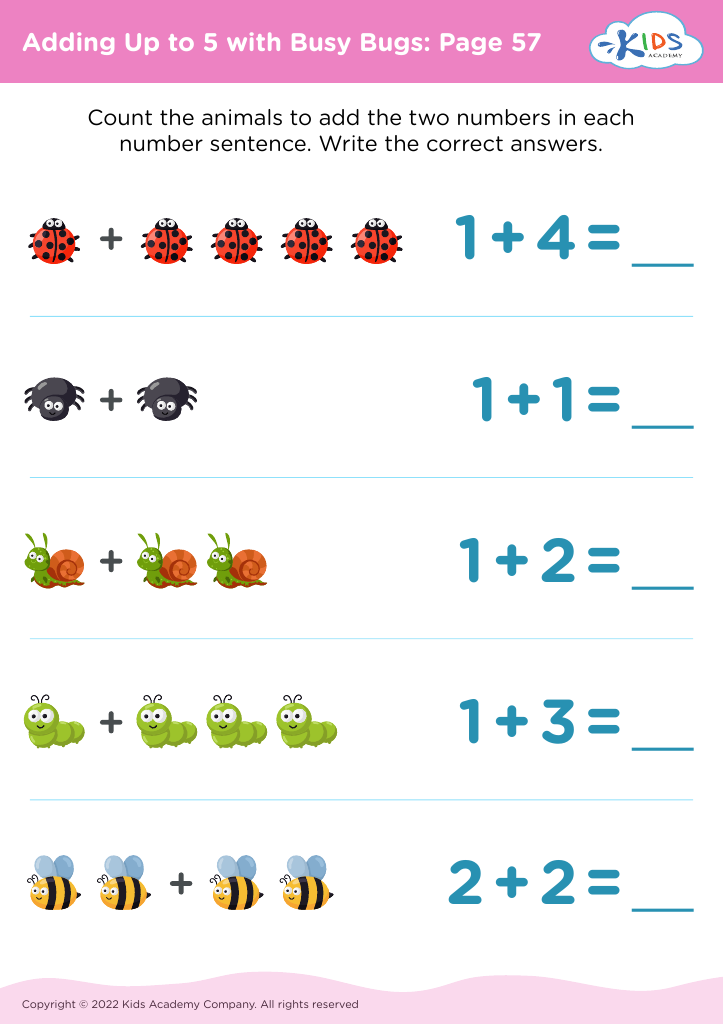
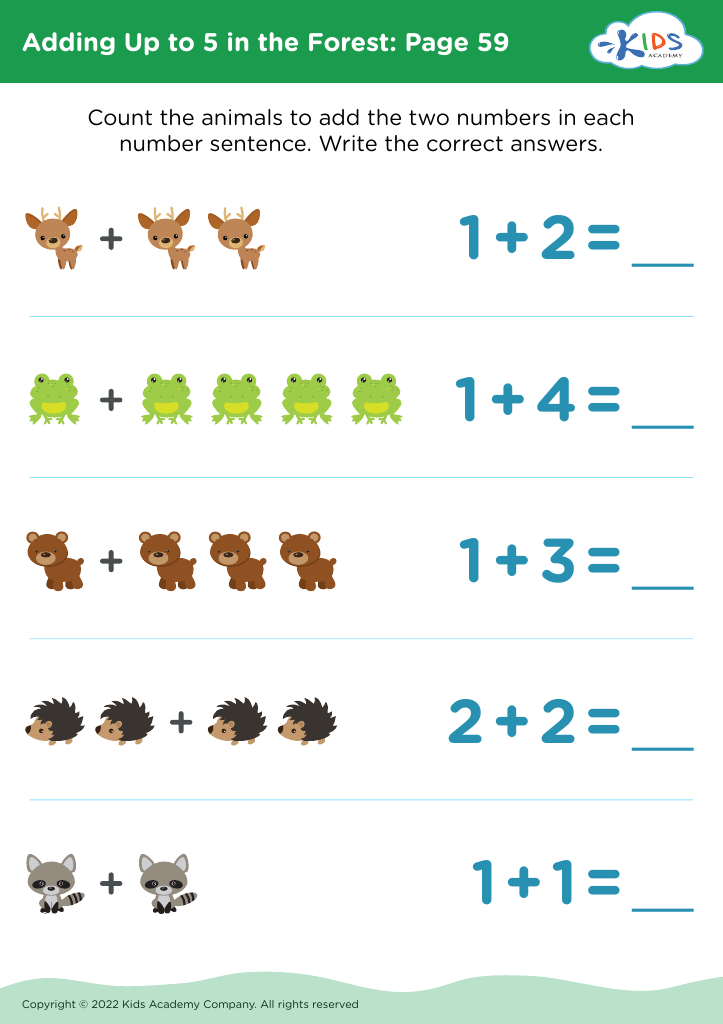
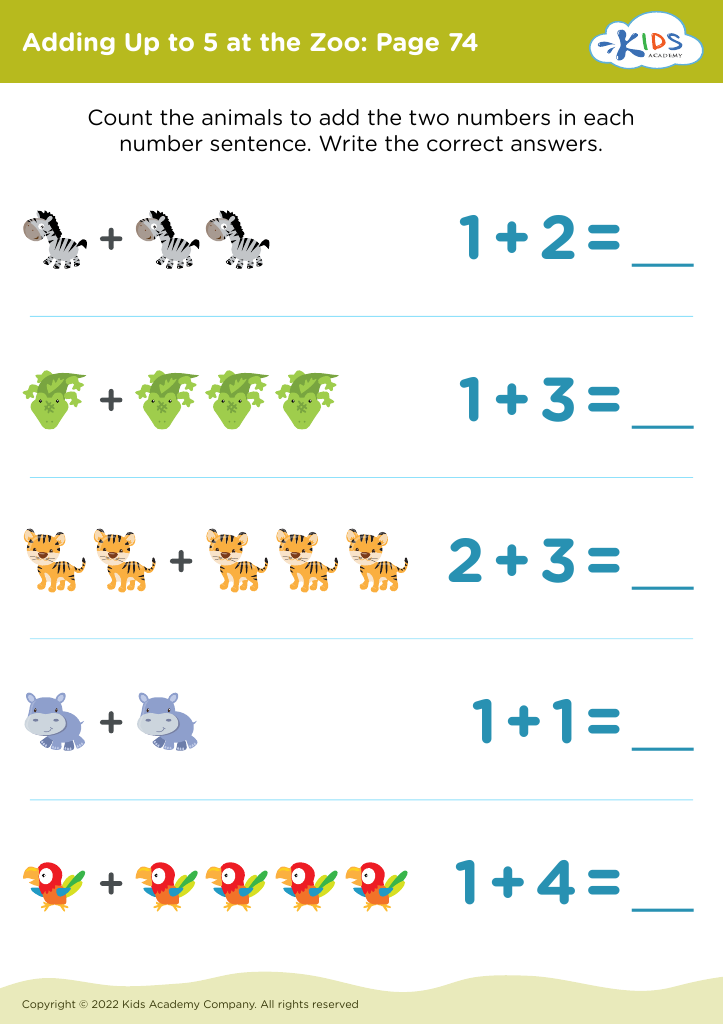
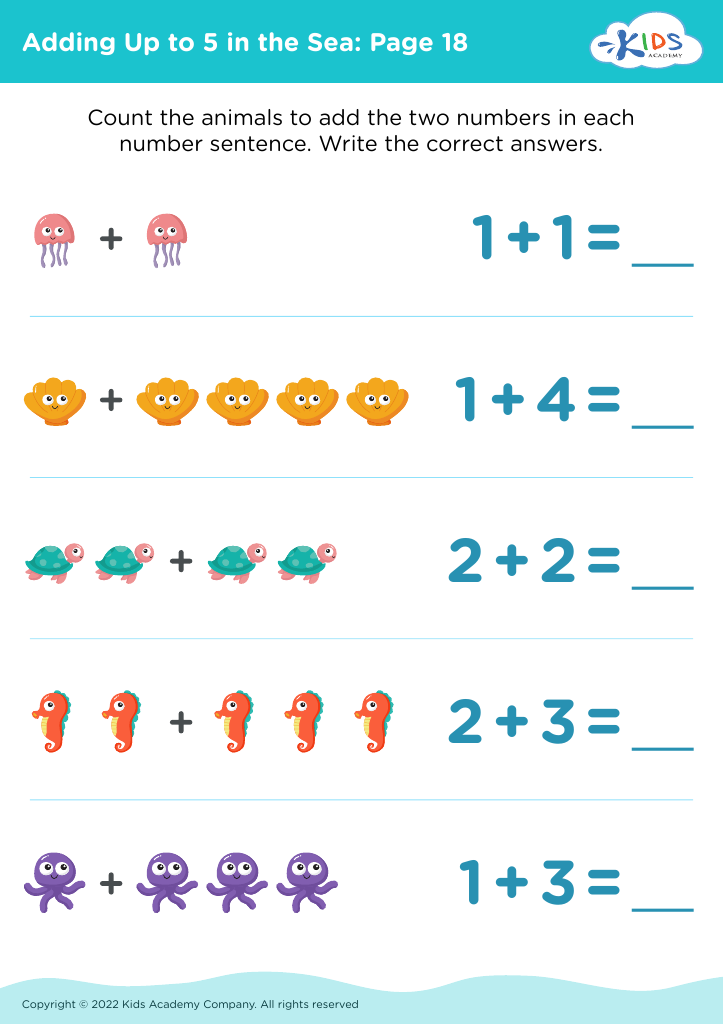
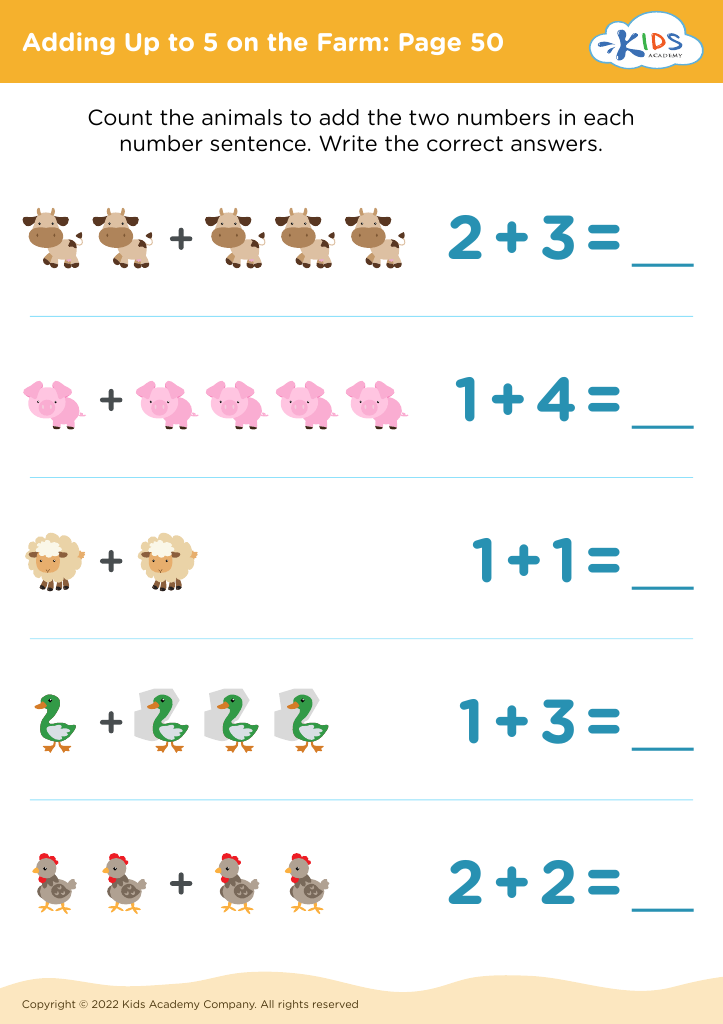
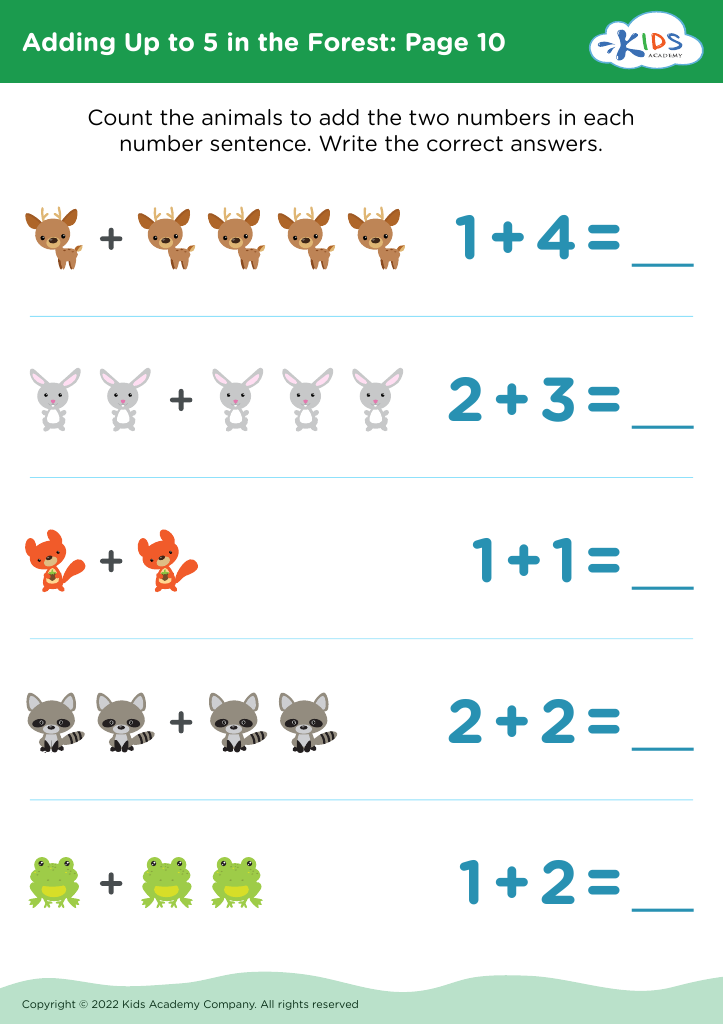








Parents and teachers should care about improving concentration and addition in 3-year-olds because these skills are foundational for a child's future academic success and overall development. At this age, children's brains are rapidly developing, and enhancing focus and basic math skills sets the stage for advanced learning. Concentration helps children regulate their thoughts and behaviors, contributing to better problem-solving abilities and emotional regulation. These skills can be cultivated through engaging activities that require attention and patience, such as puzzles and simple counting games.
Improving early math skills, like addition, primes young learners for more complex mathematical concepts. Early exposure to numbers and basic addition helps children develop number sense, which is crucial for understanding math in later years. Research shows that early math proficiency can predict later academic outcomes better than early literacy skills. When parents and teachers invest in these areas, they are not only helping children build specific competencies but also fostering a love for learning and confidence in their abilities. By providing a stimulating and supportive environment, adults can nurture these essential skills, paving the way for balanced cognitive and emotional development, and setting children on a path to lifelong educational achievement and success.








