Understanding number value Addition Worksheets for 3-Year-Olds
3 filtered results
-
From - To
Discover our engaging "Understanding Number Value Addition Worksheets for 3-Year-Olds," designed to introduce young learners to basic math concepts. These fun and interactive worksheets guide children through identifying and manipulating numbers, enhancing their comprehension of number values through engaging visuals and activities. Perfect for preschoolers, our resources encourage hands-on learning while building confidence in addition skills. By incorporating everyday objects and colorful illustrations, children grasp the fundamentals of number relationships in an enjoyable way. Help your little ones embark on their math journey with these essential worksheets, laying a strong foundation for future mathematical success!
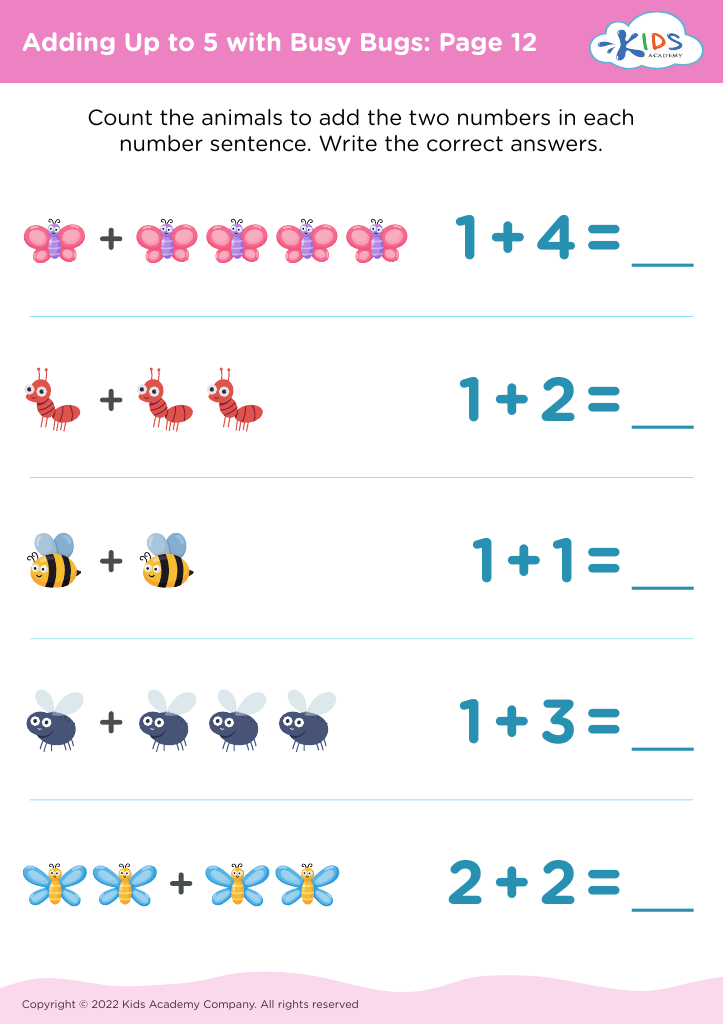
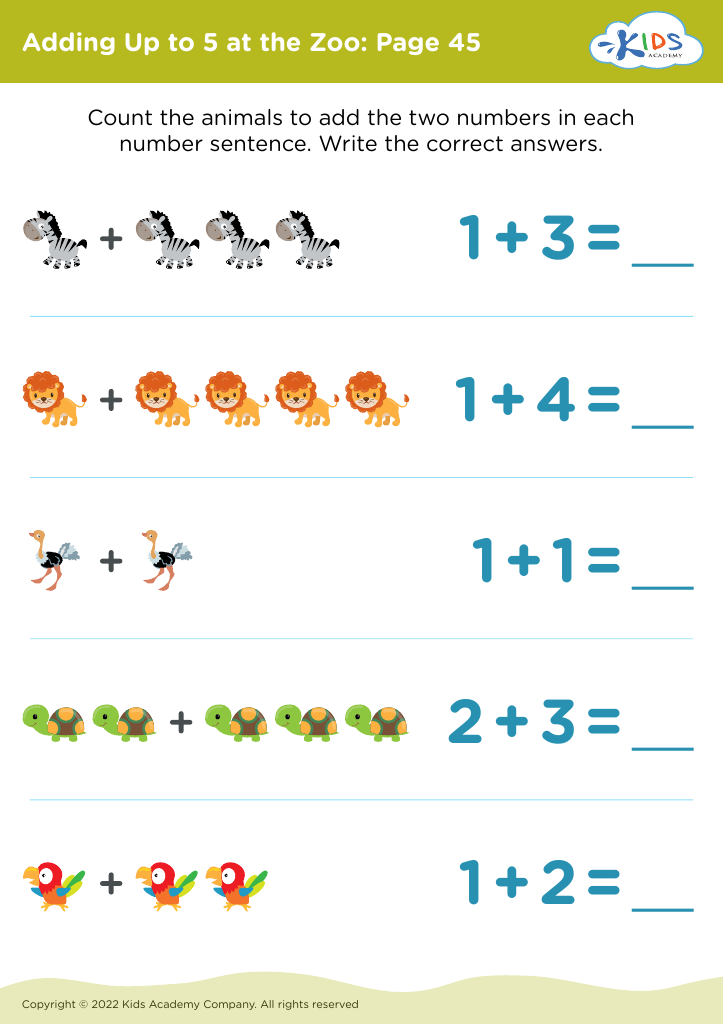
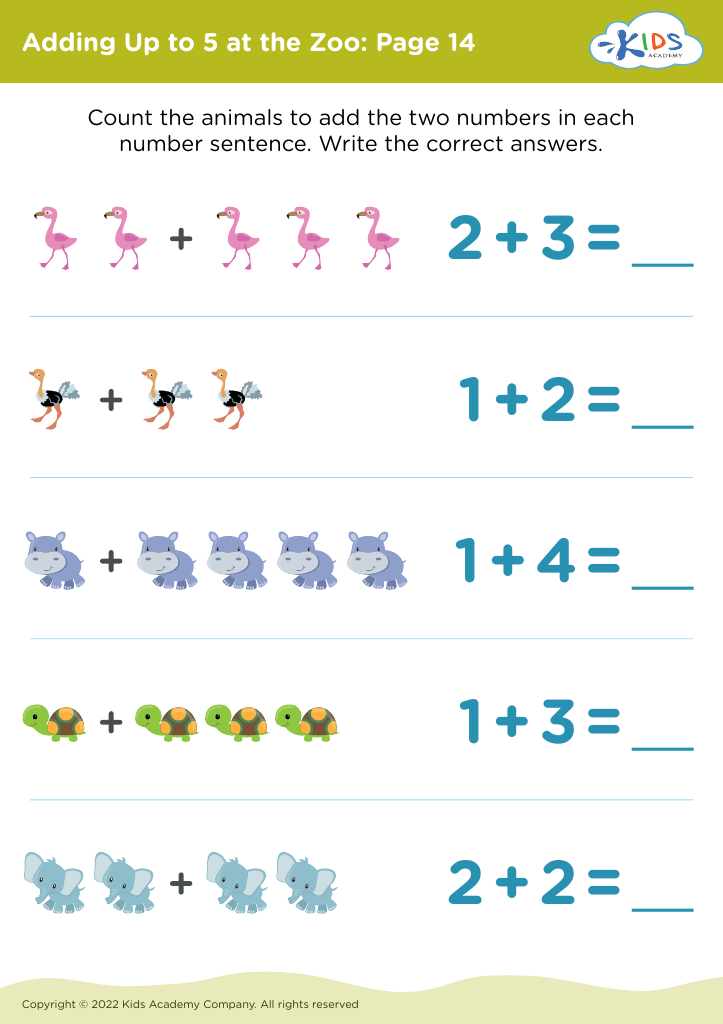








Understanding number value and addition is crucial for 3-year-olds as it lays the foundation for later mathematical skills and cognitive development. At this age, children are naturally curious and eager to learn, and introducing them to basic numerical concepts can enhance their critical thinking and problem-solving abilities.
First, learning about number value helps children grasp the idea that numbers represent quantities. This understanding is key as they begin to make connections between different numbers and their real-world applications. When children learn to count objects and understand that the number three signifies three items, it prompts them to explore the concept of sets and comparisons.
Incorporating addition into their learning allows these young learners to understand how quantities can change through combining groups. Activities that involve physical manipulation, like adding blocks or toys, can make the abstract concept of addition tangible and meaningful.
Furthermore, a strong early foundation in mathematics is linked to future academic success. Engaging with numbers and operations at an early age fosters a positive attitude towards math, promoting enthusiasm and readiness for more complex mathematical challenges in later years. By nurturing these skills early on, parents and teachers equip children with essential tools for lifelong learning.








