Understanding Quantities Addition Worksheets for 3-Year-Olds - Page 2
36 filtered results
-
From - To
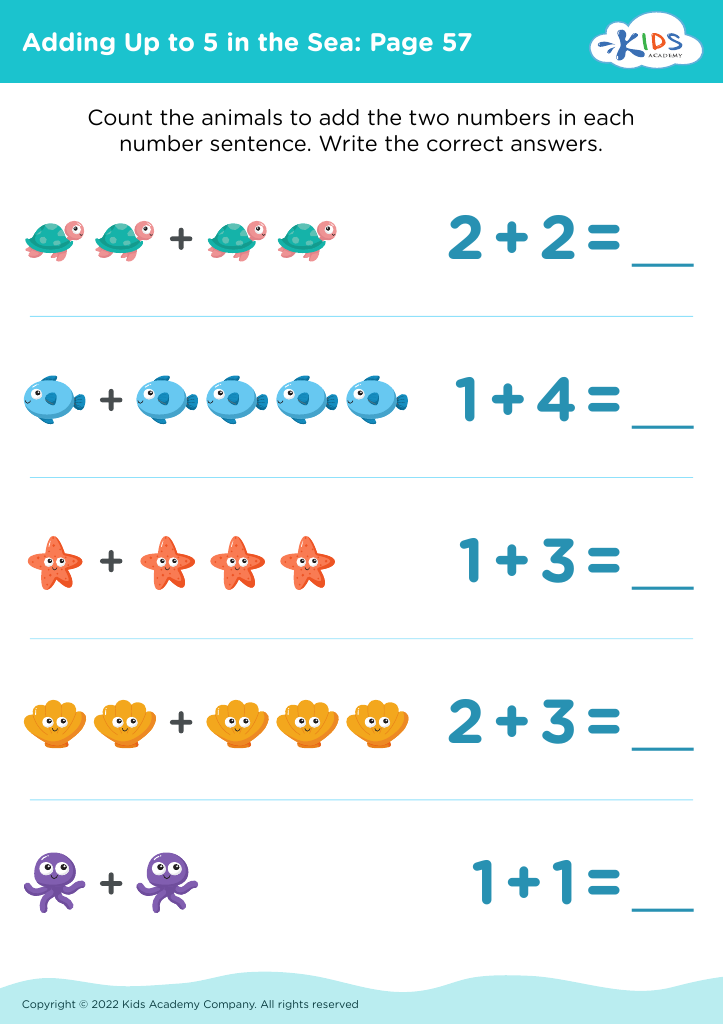
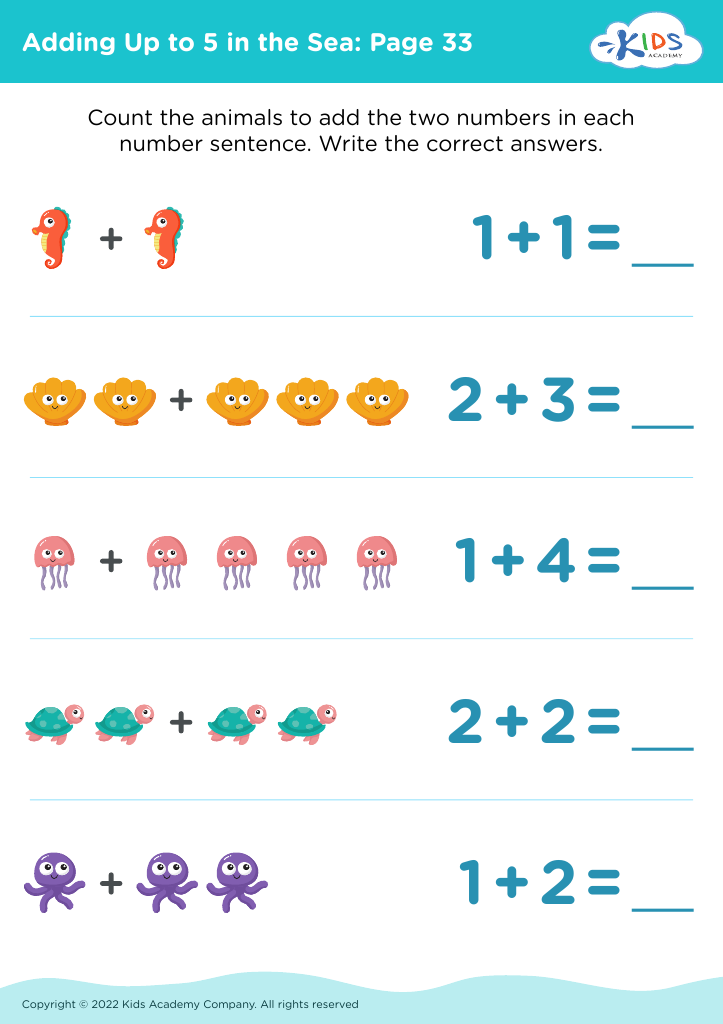
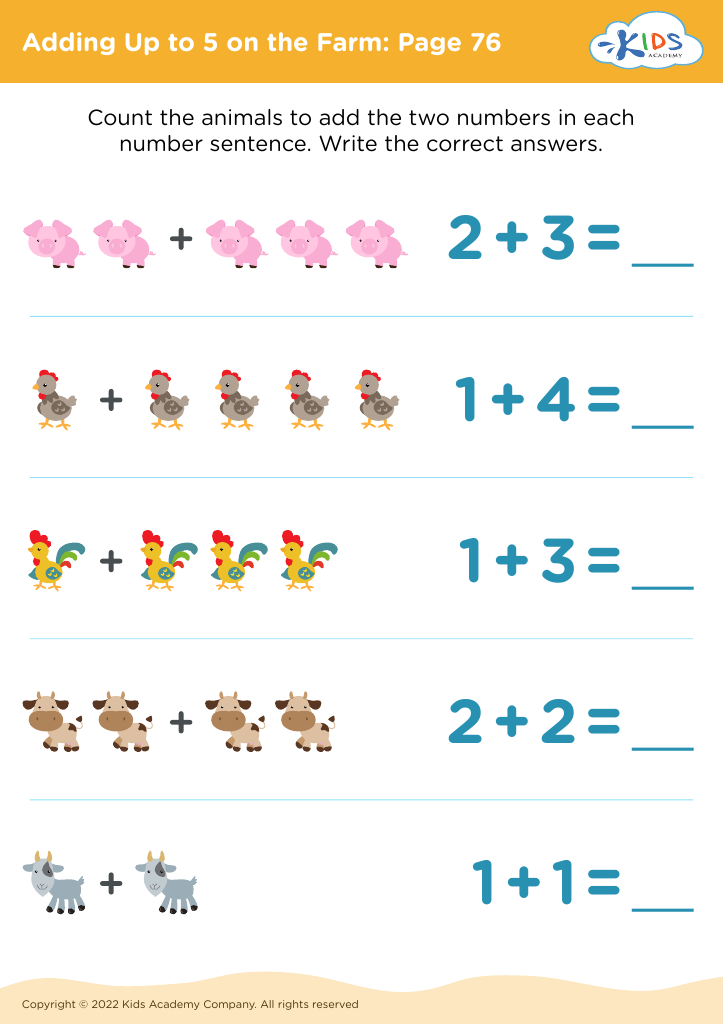
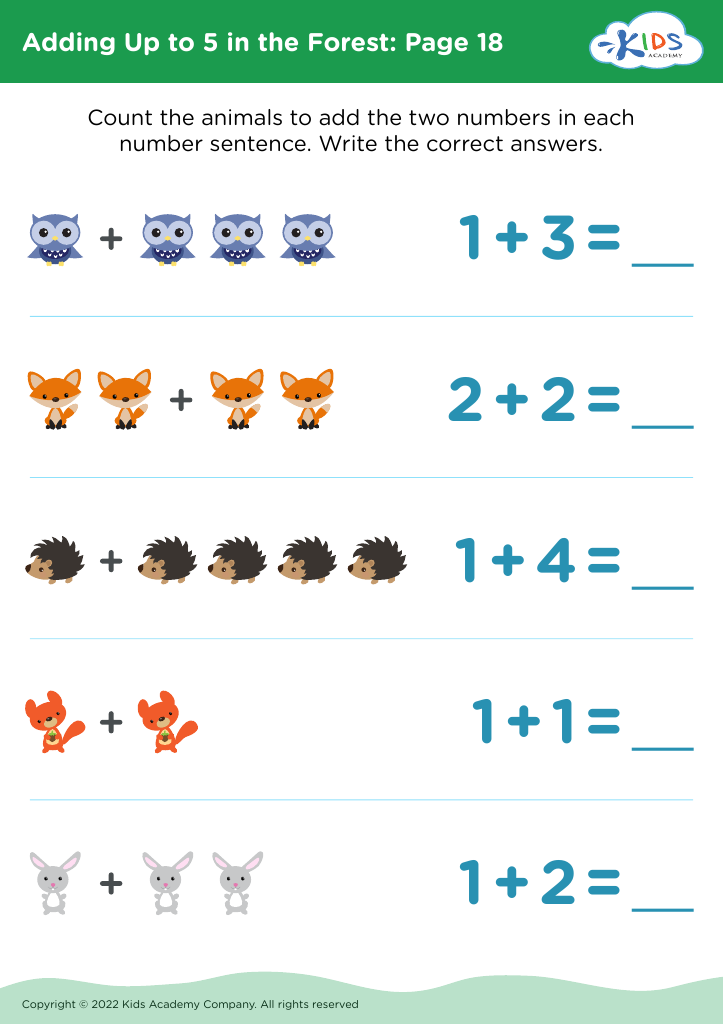
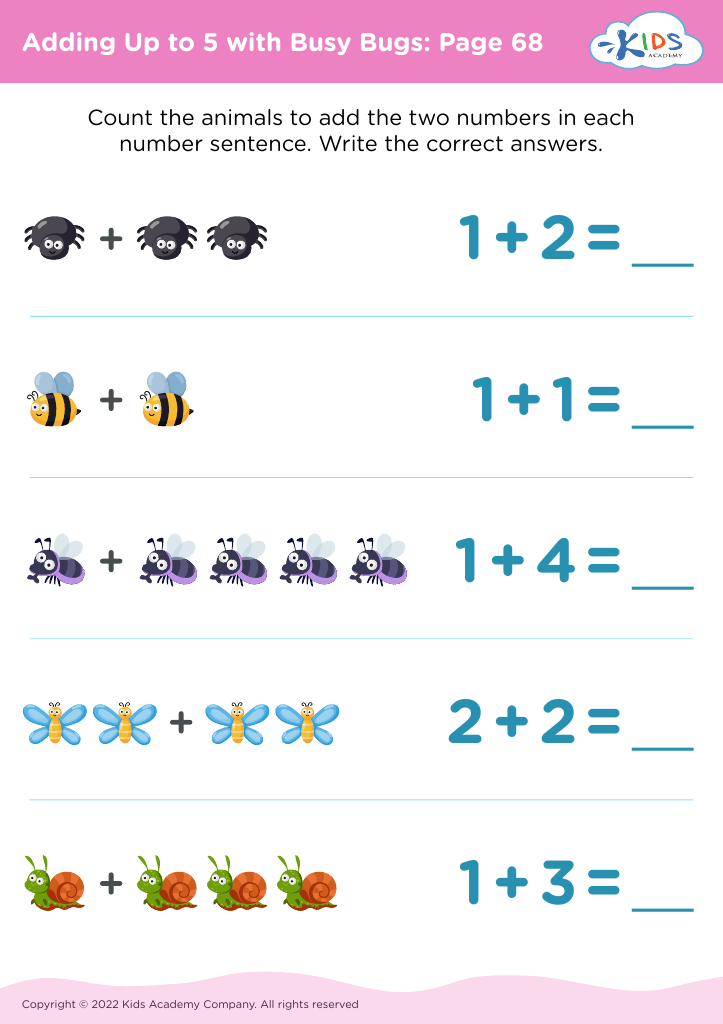
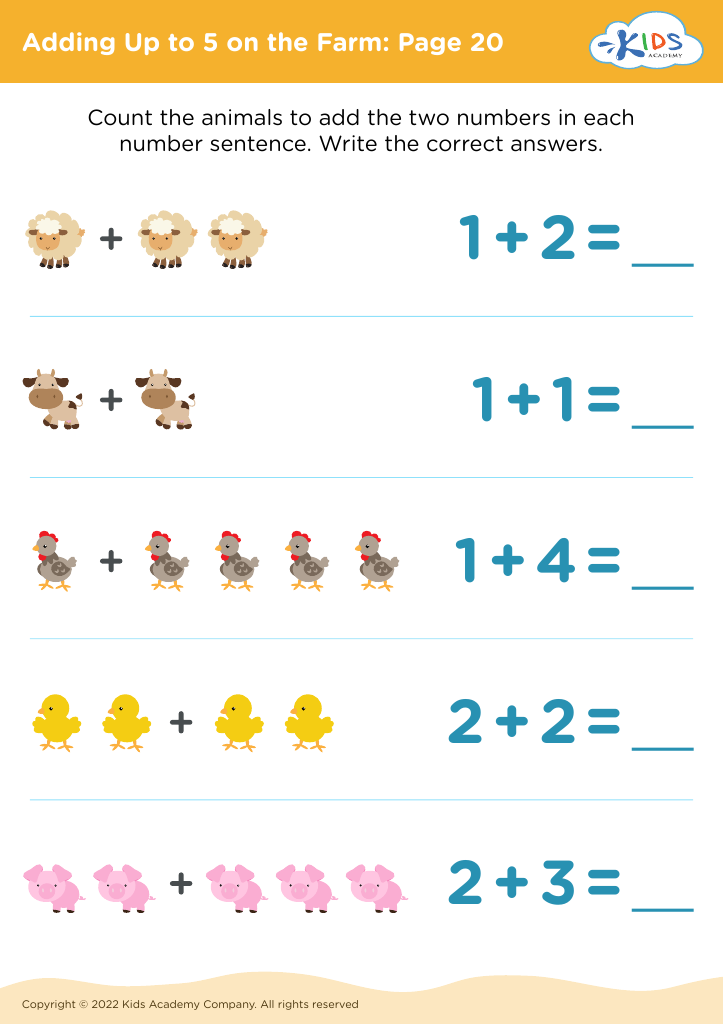
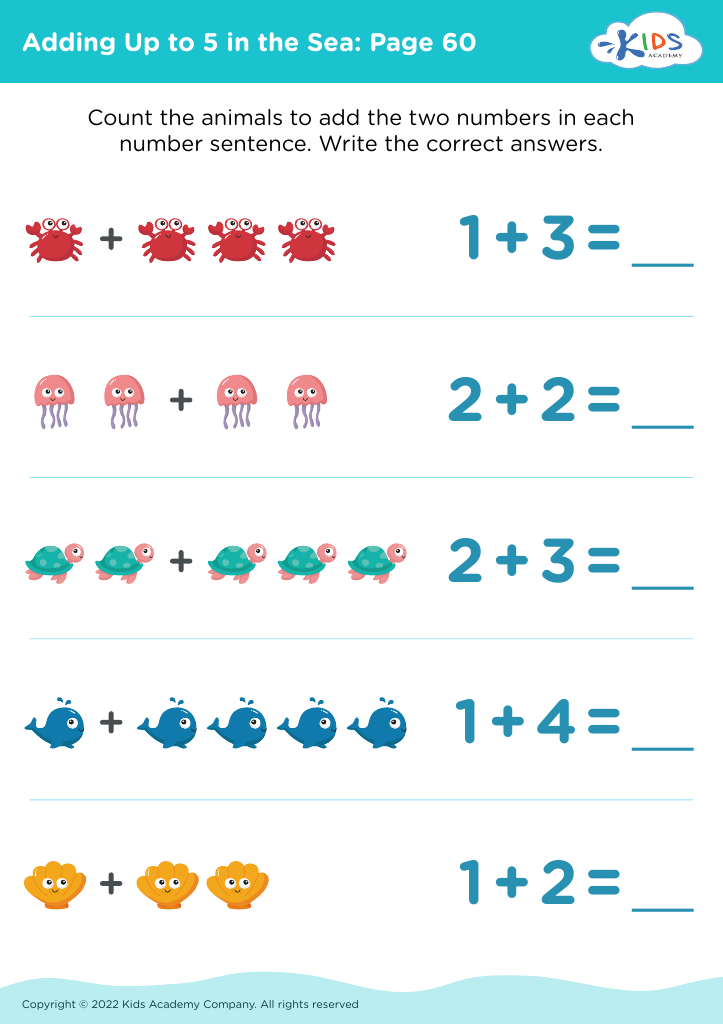
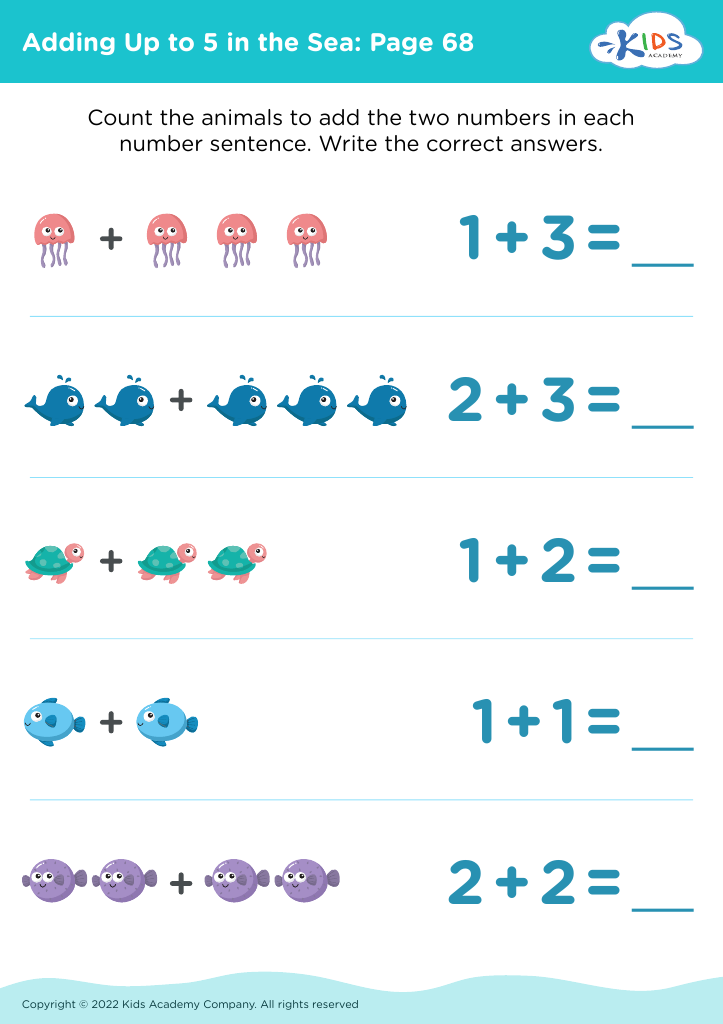
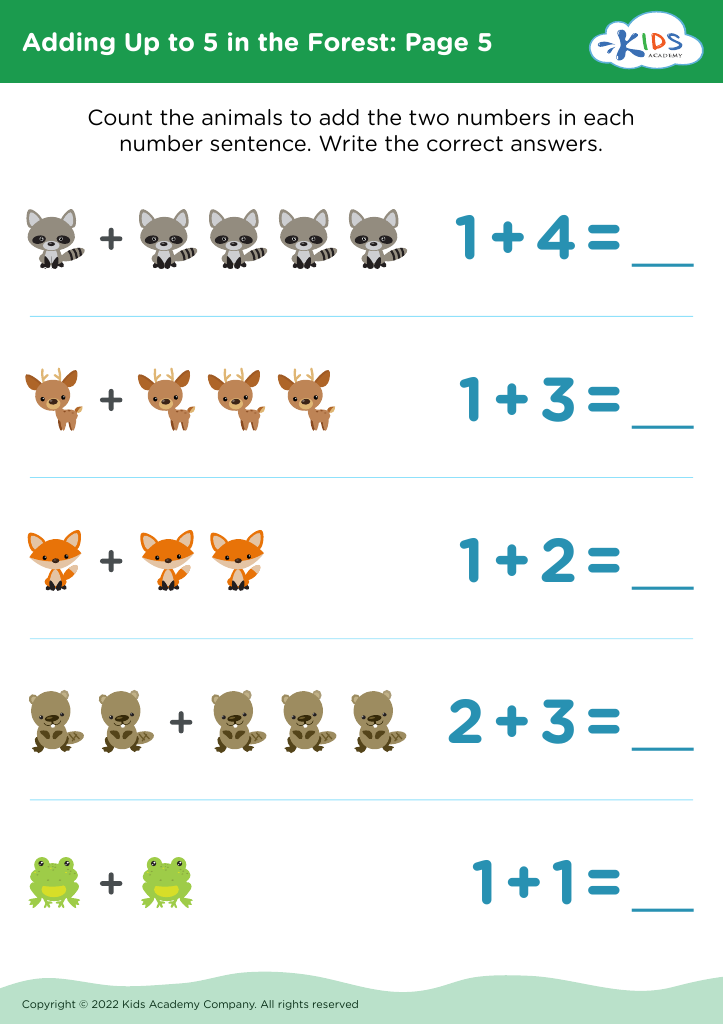
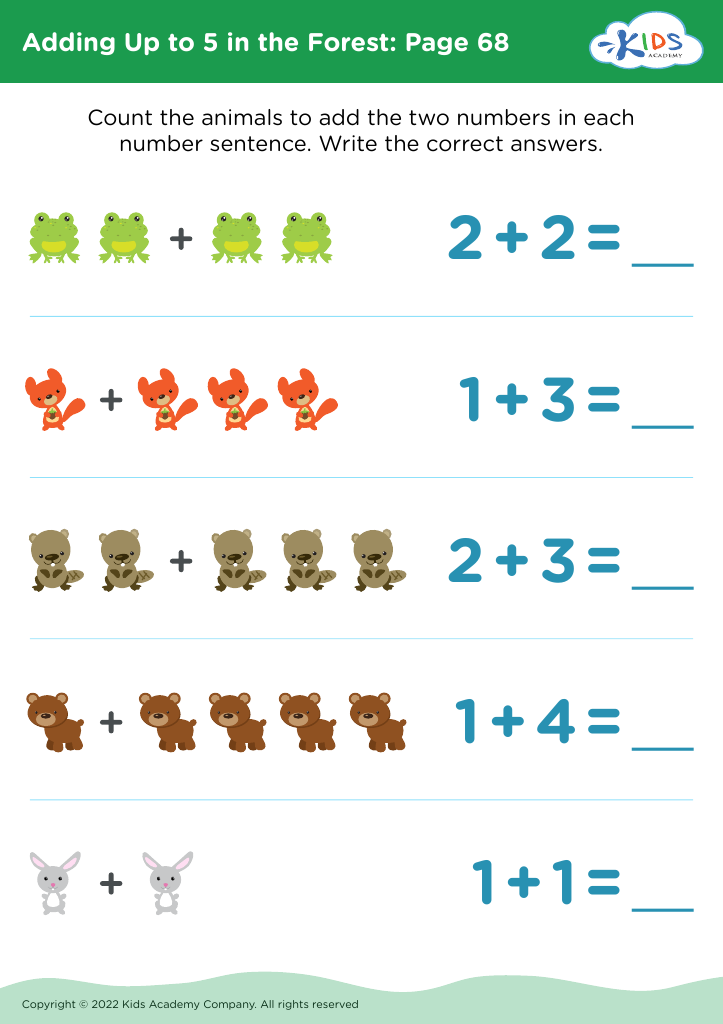
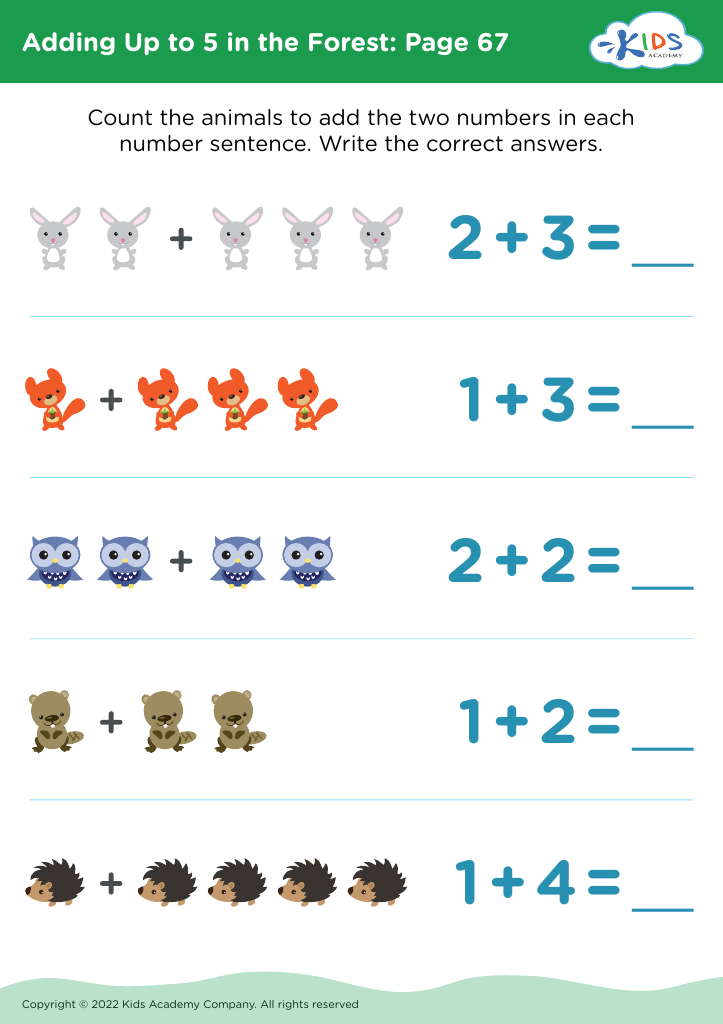
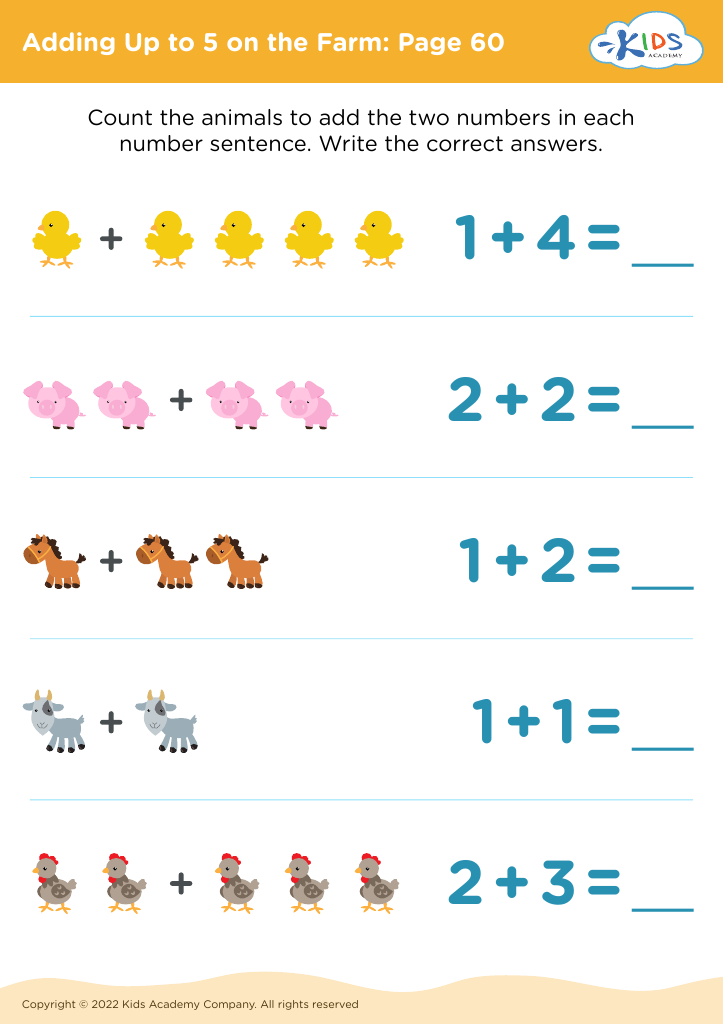








Understanding quantities and addition is crucial for 3-year-olds as it lays the foundation for future mathematical understanding and problem-solving skills. At this age, children are naturally curious and begin exploring their environment, making it an ideal time to introduce basic mathematical concepts.
First and foremost, grasping quantities helps children make sense of the world around them. When they learn to count objects, they can categorize and compare them, fostering critical thinking skills. Additionally, introducing basic addition at this stage ignites their interest in mathematics, showing them that math is not just about numbers but also about fun experiences like sharing toys or snacks.
Furthermore, these concepts support cognitive development and enhance language skills. As parents and teachers incorporate discussions about quantities and simple addition into play and daily activities, children expand their vocabulary and enhance their communication skills. This nurturing approach deepens their understanding of numbers in a context that feels relevant and engaging.
Ultimately, supporting young learners in understanding quantities and addition empowers them with essential skills that will benefit their academic journey, build their confidence, and encourage an enduring love for learning. By investing time and attention into these foundational concepts, adults can foster a strong mathematical groundwork for early learners.








