
Visual perception Addition Worksheets for 3-Year-Olds
13 filtered results
Difficulty Level
Grade
Age
-
From - To
Subject
Activity
Standards
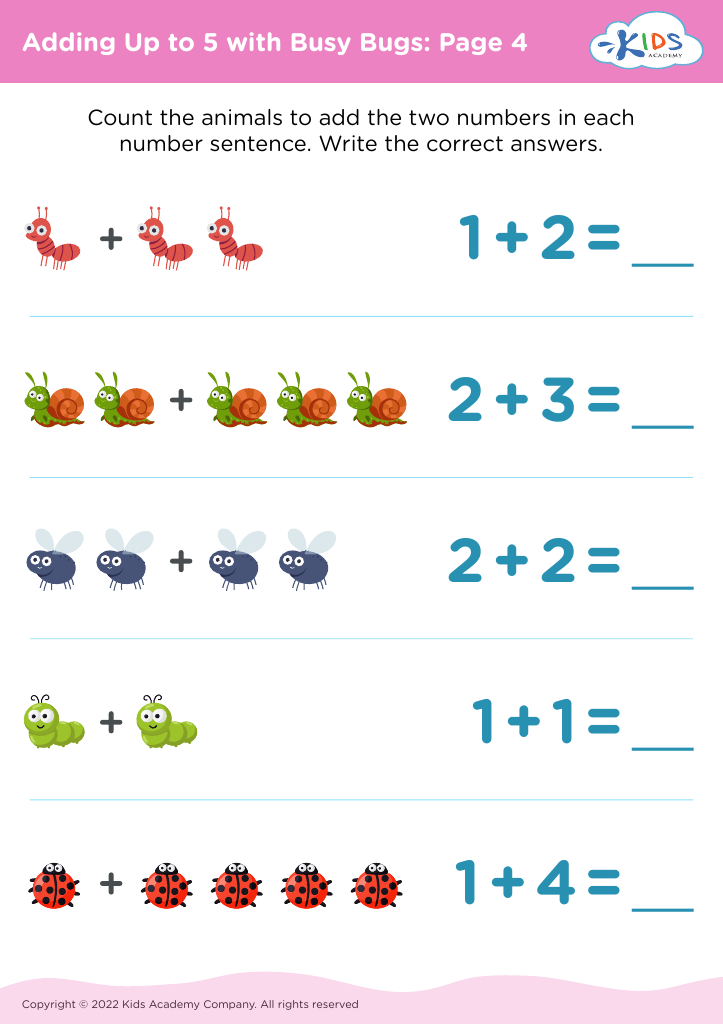
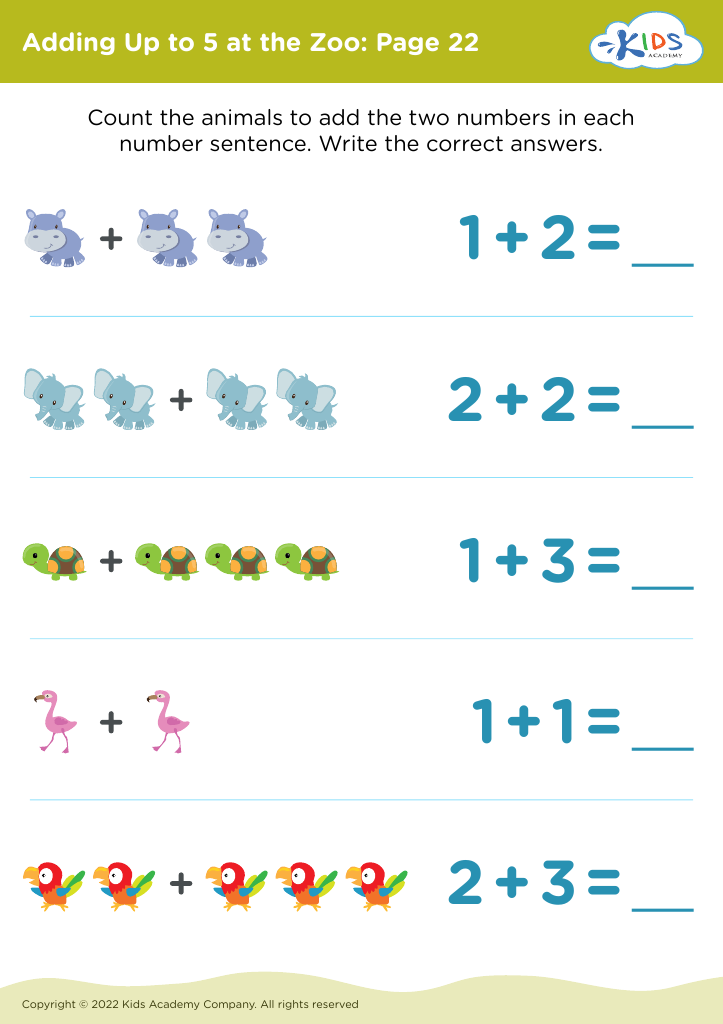
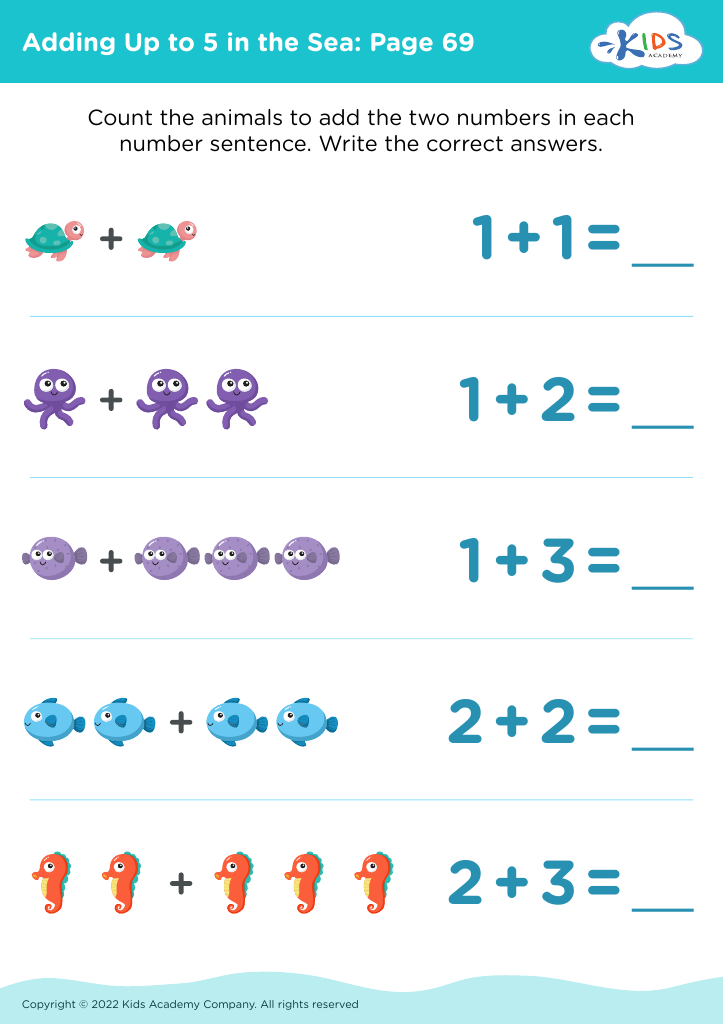
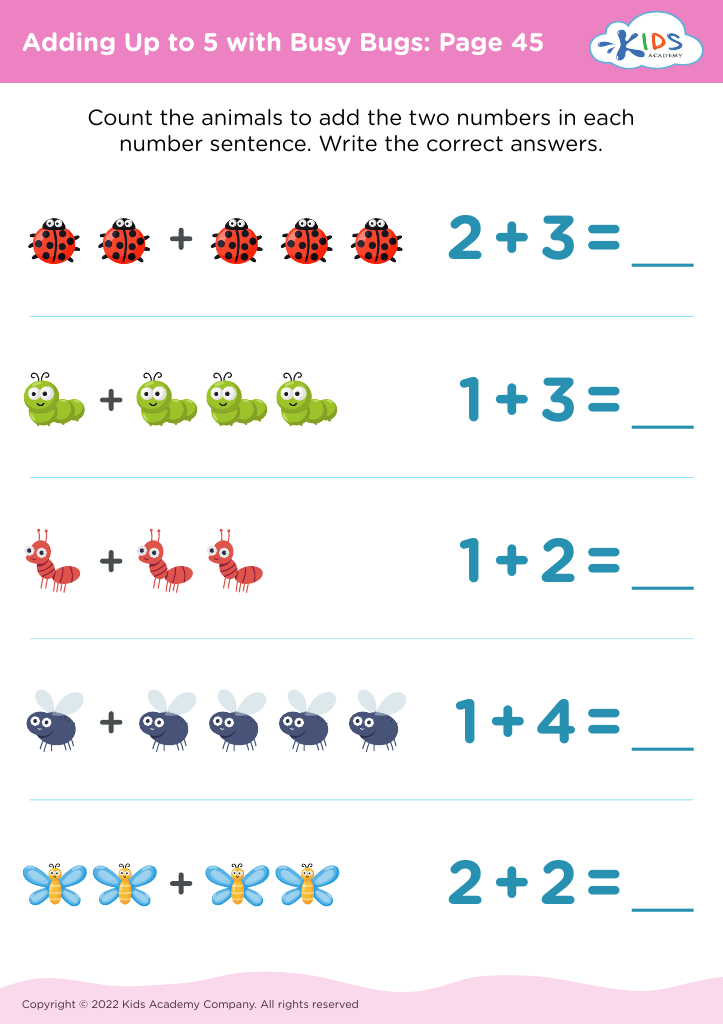
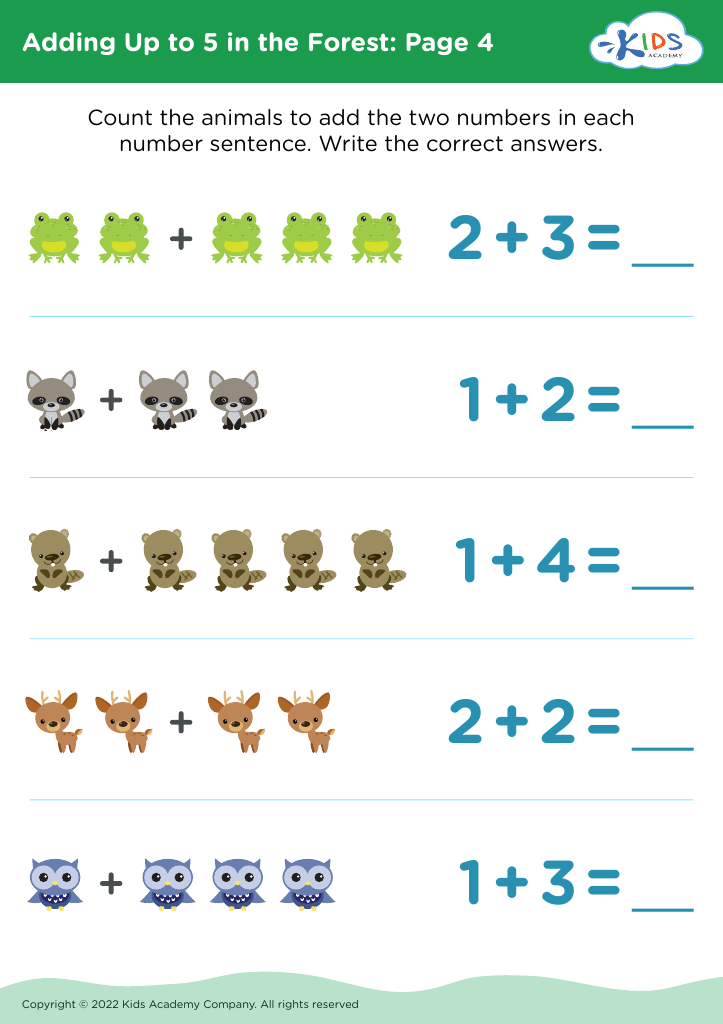
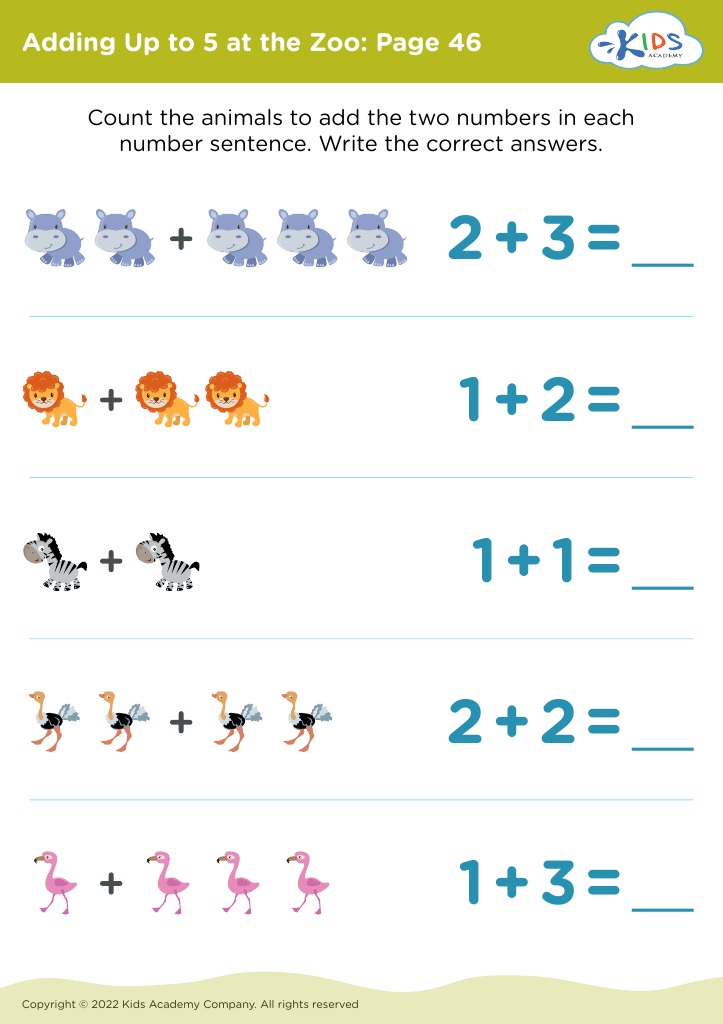
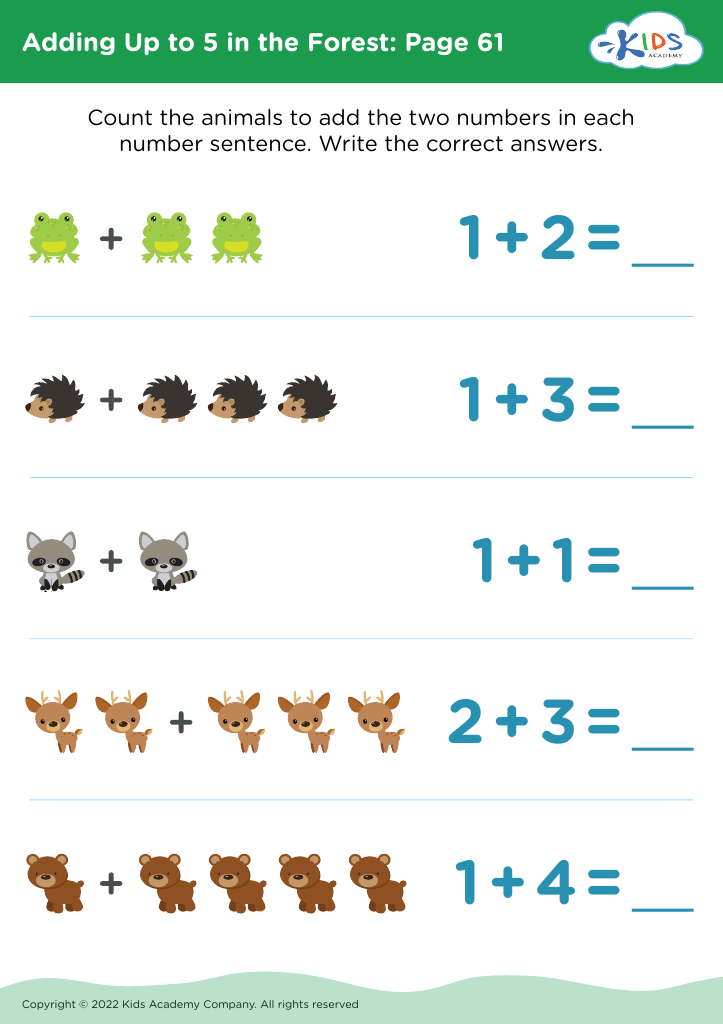
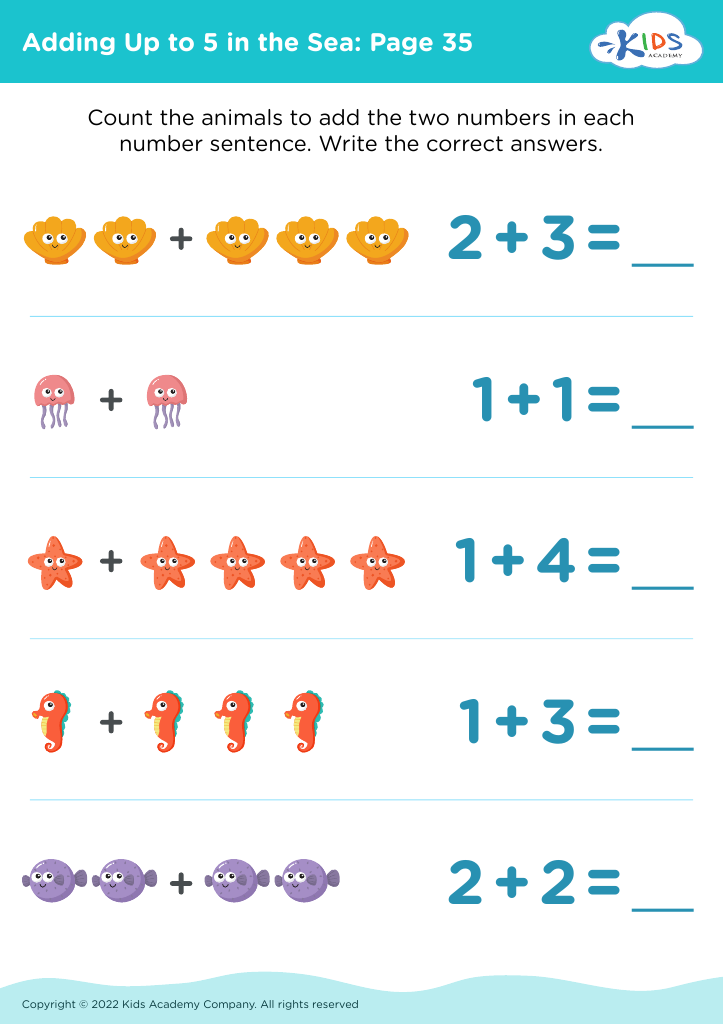
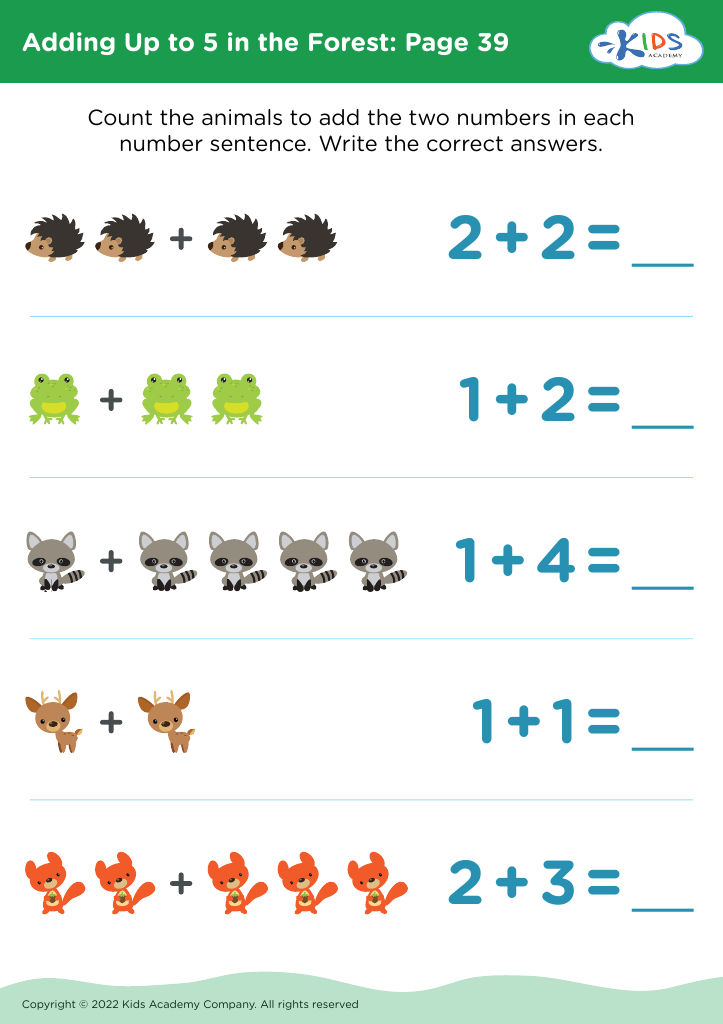
Help your 3-year-old develop early math skills with our engaging Visual Perception Addition Worksheets! Specifically designed for young learners, these worksheets incorporate colorful images and visual cues to make learning addition fun and intuitive. Each activity is crafted to enhance visual perception and cognitive development while introducing basic addition concepts. These printable resources are perfect for hands-on practice, providing an enjoyable and interactive way to build a strong foundation in math. Foster a love for learning and boost your child's confidence with our expertly designed worksheets tailored to their developmental needs.
Favorites
With answer key
Interactive
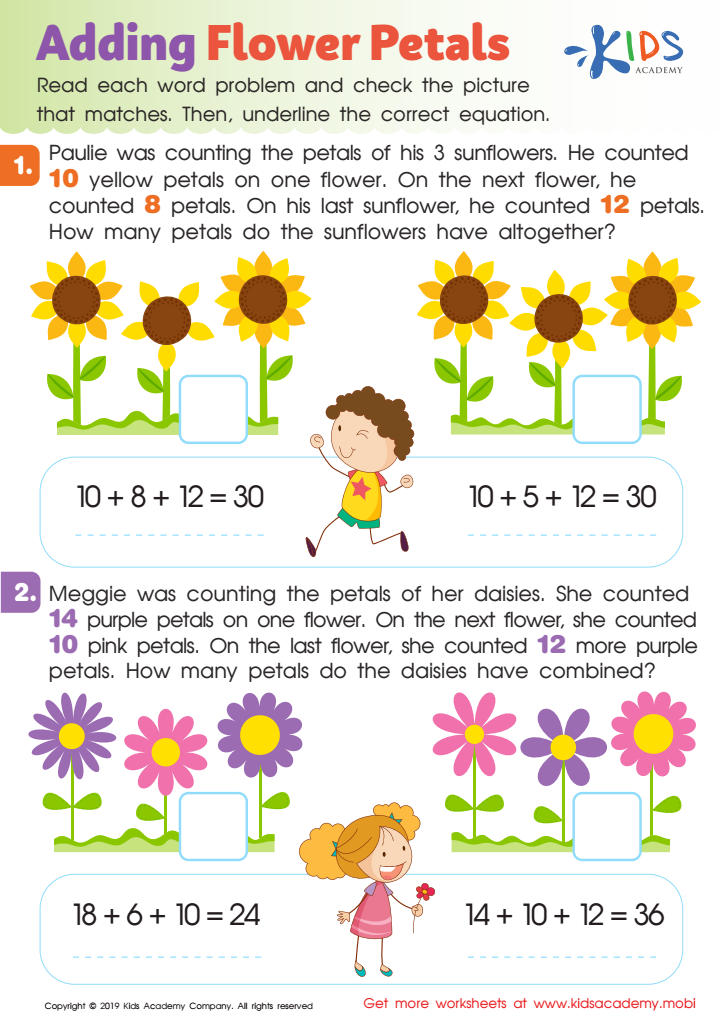
Adding Flower Petals Worksheet
This free worksheet helps little mathematicians learn to understand word problems. They'll read each one and match it to the corresponding picture. Important info is highlighted, teaching kids to look for key info when solving problems. Then they'll underline the correct number equation that matches the picture. A great way to practice problem-solving skills!
 Assign to My Students
Adding Flower Petals Worksheet
Worksheet
Join Kids Academy for Free
Who is primarily going to use this learning content?








Visual perception addition is the ability to identify, distinguish, and comprehend visual stimuli while performing an arithmetic operation such as addition. For 3-year-olds, this skill is crucial as it lays the foundation for future learning, particularly in mathematics and literacy.
Parents and teachers should care about developing visual perception addition skills in young children because it aids cognitive development. It enables kids to recognize numbers, patterns, and spatial relationships, which are essential for problem-solving and logical thinking. This skill fosters early numeracy, making abstract mathematical concepts more comprehensible as children grow older.
Moreover, visual perception skills are intertwined with other important developmental milestones, such as fine motor skills and hand-eye coordination. When children engage in activities that harness these skills—like using building blocks, matching games, or drawing—they also enhance their concentration and attention to detail.
Additionally, improving visual perception fosters a child’s ability to navigate their environment. Recognizing spatial relationships helps with everyday tasks like organizing toys, understanding directions, and personal space awareness.
Teachers and parents who nurture visual perception addition abilities through playful and educational activities contribute to a child's overall academic readiness and confidence. This effort not only supports immediate preschool learning goals but also sets the stage for long-term educational success.








