Visual Perception Skills Addition Worksheets for 3-Year-Olds
5 filtered results
-
From - To
Enhance your child's learning journey with our Visual Perception Skills Addition Worksheets tailored for 3-year-olds! These engaging worksheets combine fun activities with essential visual perception skills, laying the groundwork for mathematical understanding and problem-solving. Children will enjoy identifying patterns, recognizing shapes, and matching visuals, all while practicing basic addition concepts. Our resources are thoughtfully designed to keep little minds interested and eager to learn. Perfect for home and preschool settings, these worksheets not only support early math skills but also promote fine motor development. Start building a strong foundation in math today with our visually stimulating addition worksheets!
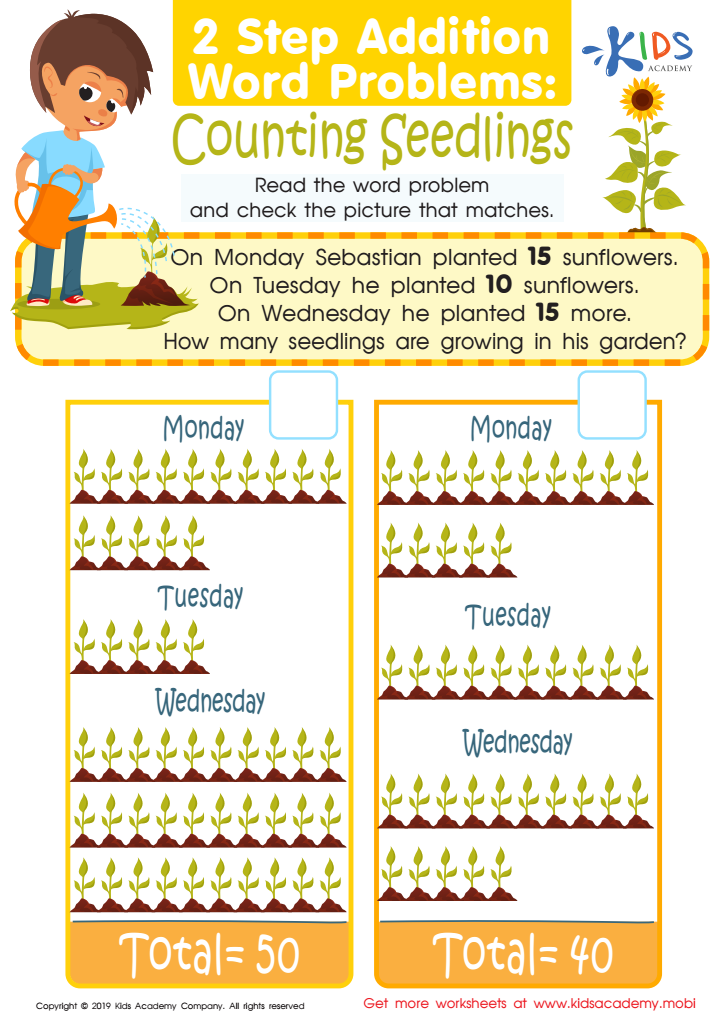
Counting Seedlings Worksheet
 Assign to My Students
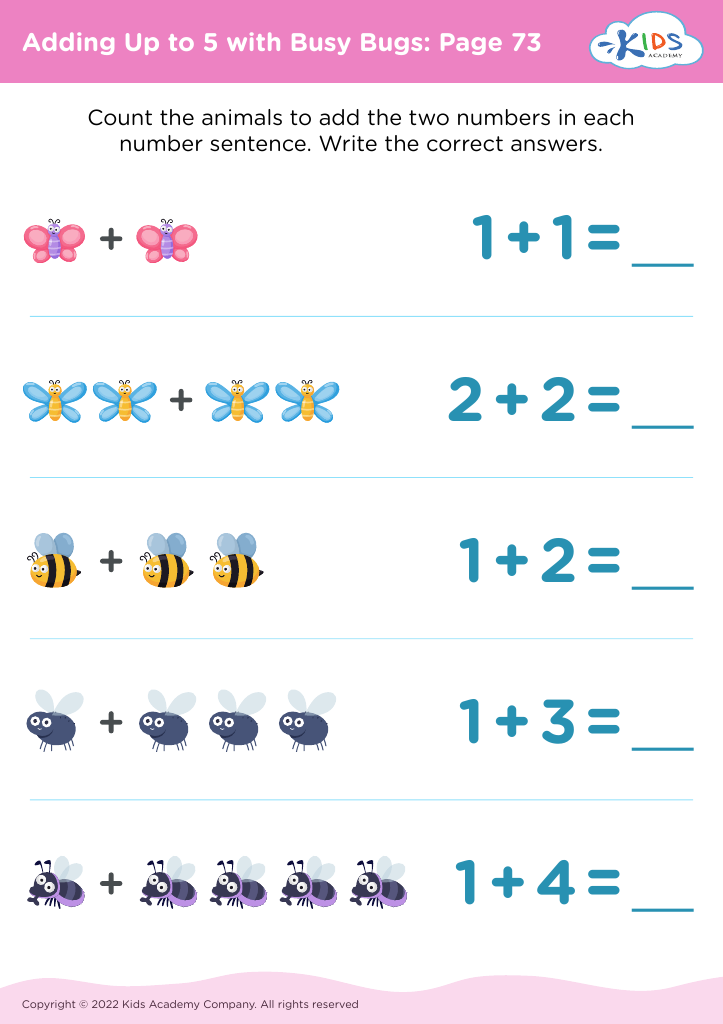
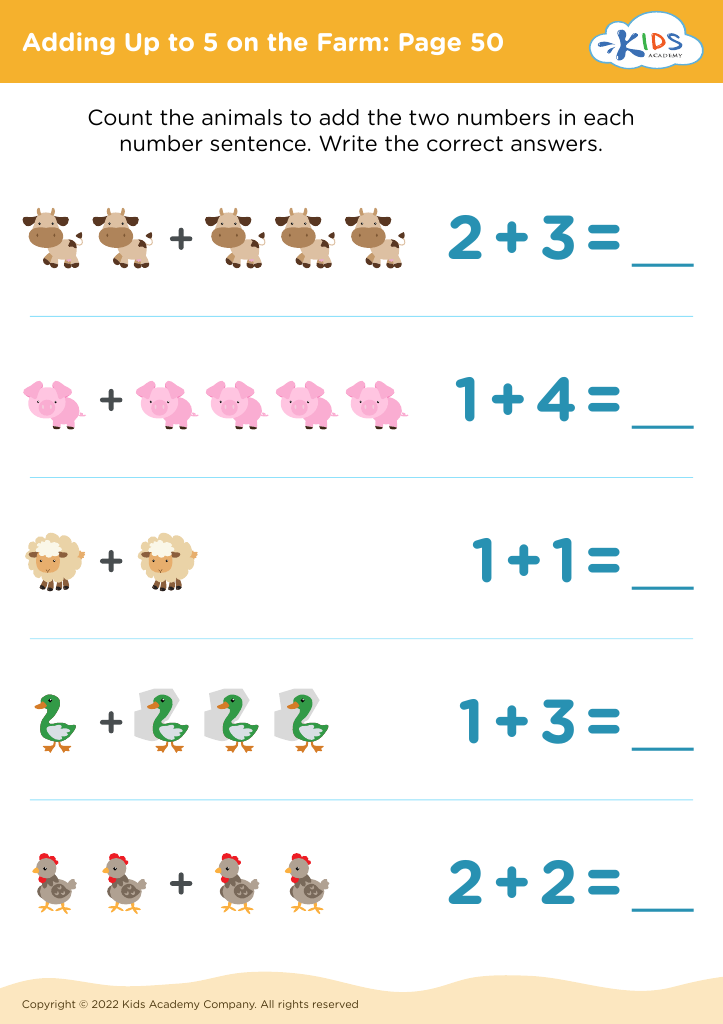
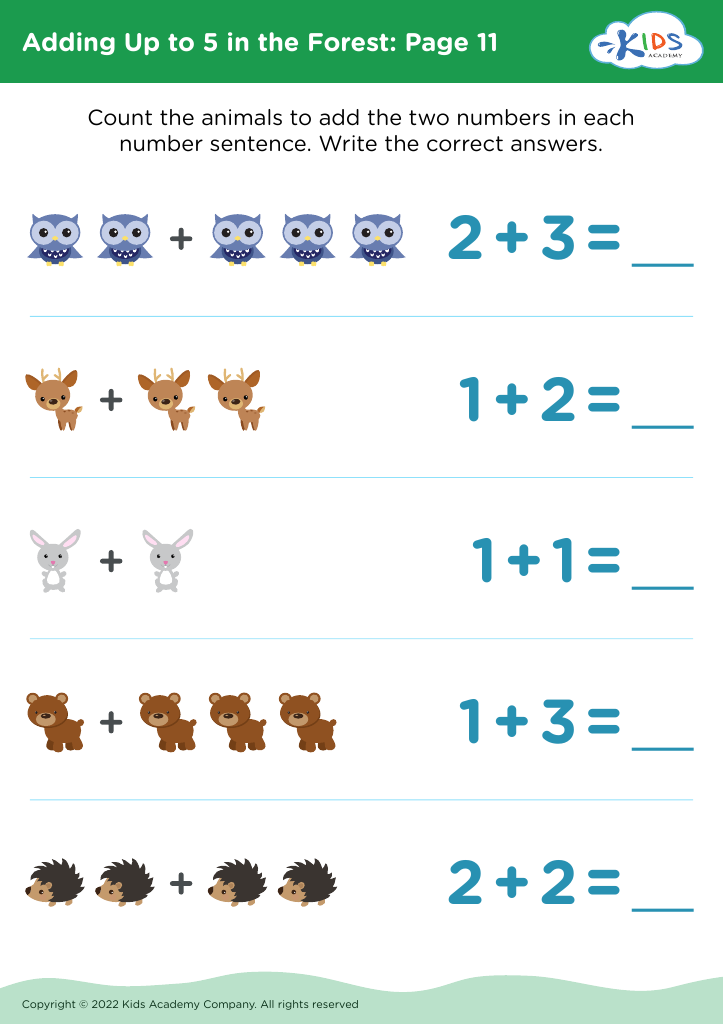
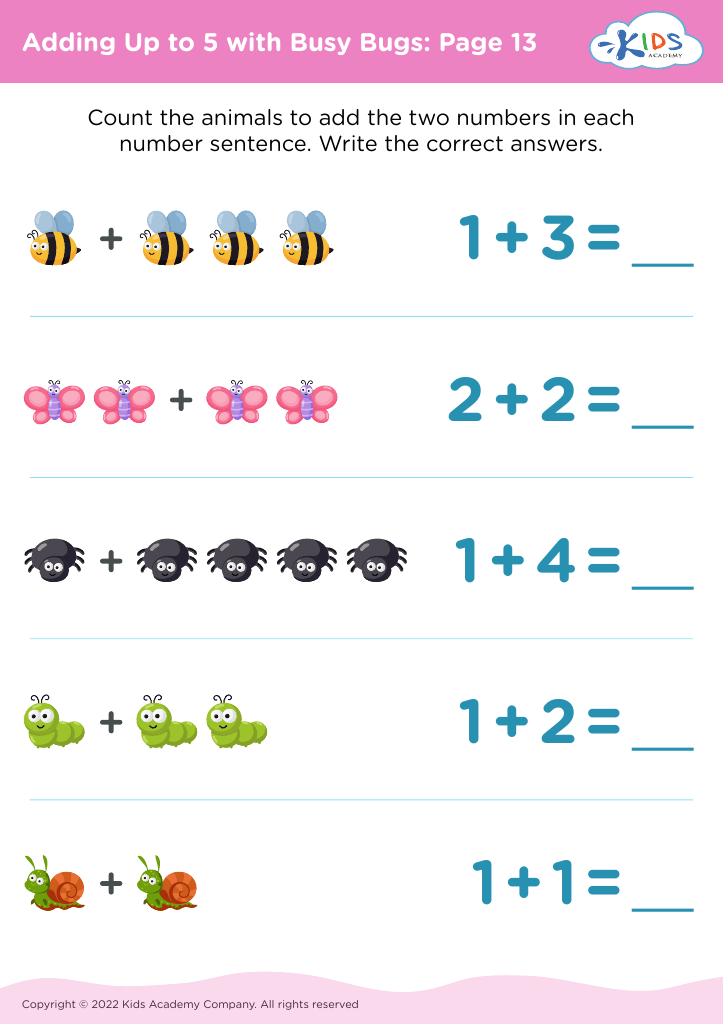








Visual perception skills are critical for 3-year-olds as they lay the foundation for effective learning and development. These skills encompass the ability to interpret and make sense of visual information, which includes recognizing shapes, colors, letters, and spatial relationships. For parents and teachers, fostering strong visual perception skills in young children is essential because these abilities directly impact readiness for preschool and kindergarten, where foundational literacy and numeracy skills begin to develop.
Improving visual perception helps children enhance their attention to detail, which is crucial for academic tasks like recognizing letters and numbers, following directions, and engaging in basic problem-solving. For instance, children who can distinguish between similar shapes and sizes are more equipped to tackle math challenges and reading tasks later on.
Additionally, strong visual perception skills promote confidence and independence, ensuring young learners can interact with their environment and communicate effectively. By nurturing these skills through games, activities, and varied experiences, parents and teachers play a pivotal role in preparing children for future educational success, setting them on a path for lifelong learning. Ultimately, prioritizing visual perception development enriches children's cognitive abilities, enabling them to navigate both academic and social landscapes successfully.








