Financial literacy Coins Worksheets for 3-Year-Olds
4 filtered results
-
From - To
Introduce your 3-year-old to the basic concepts of financial literacy with our engaging Coins Worksheets. Designed to build foundational skills, these age-appropriate worksheets from Kids Academy help your child recognize different coins, understand their values, and enhance counting abilities. Featuring colorful illustrations and interactive activities, our worksheets not only make learning fun but also practical as they provide early math skills critical for future money management. Start your child on the path to financial savvy and confidence with these expertly crafted tools, fostering early awareness and understanding of money in a playful and stimulating way.
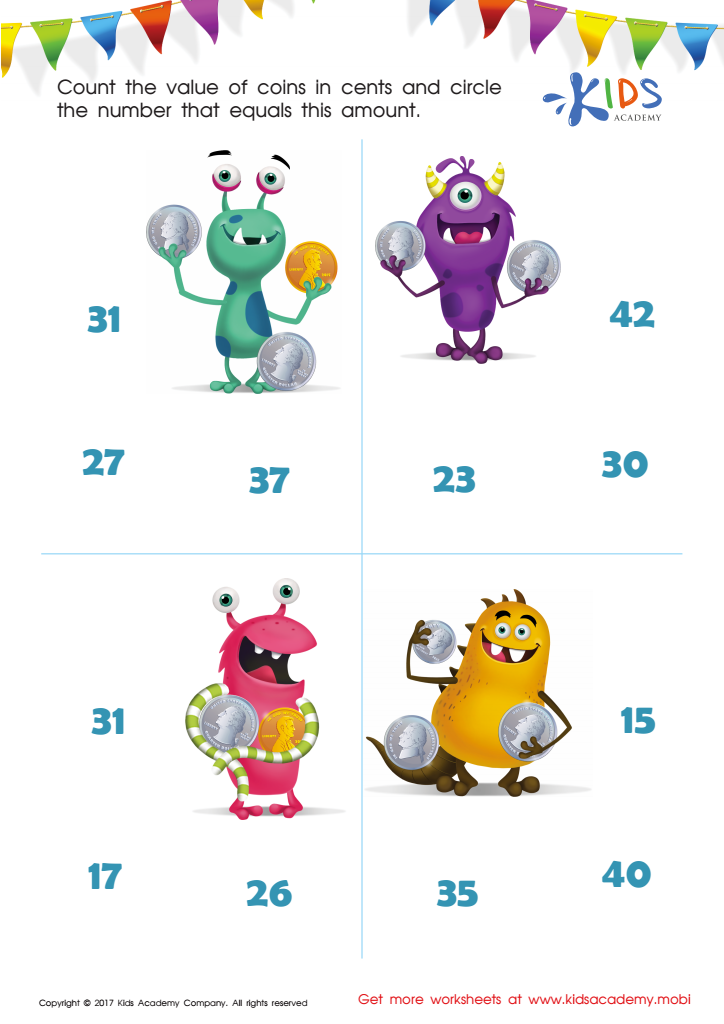
How Many Coins Money Worksheet
 Assign to My Students
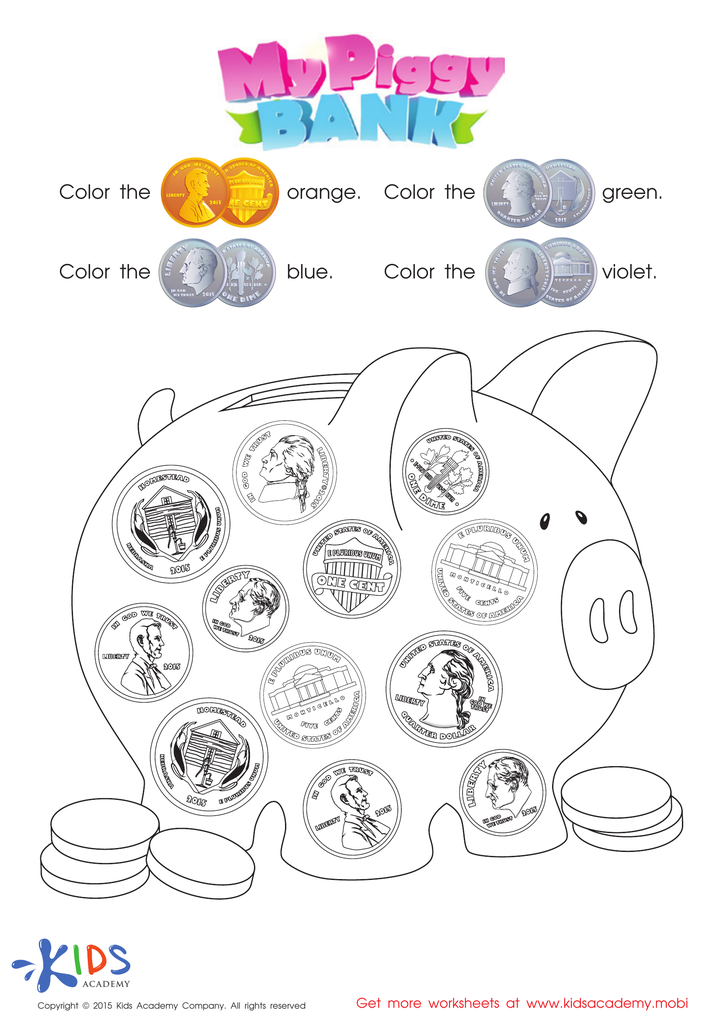
Recognizing Money Money Worksheet
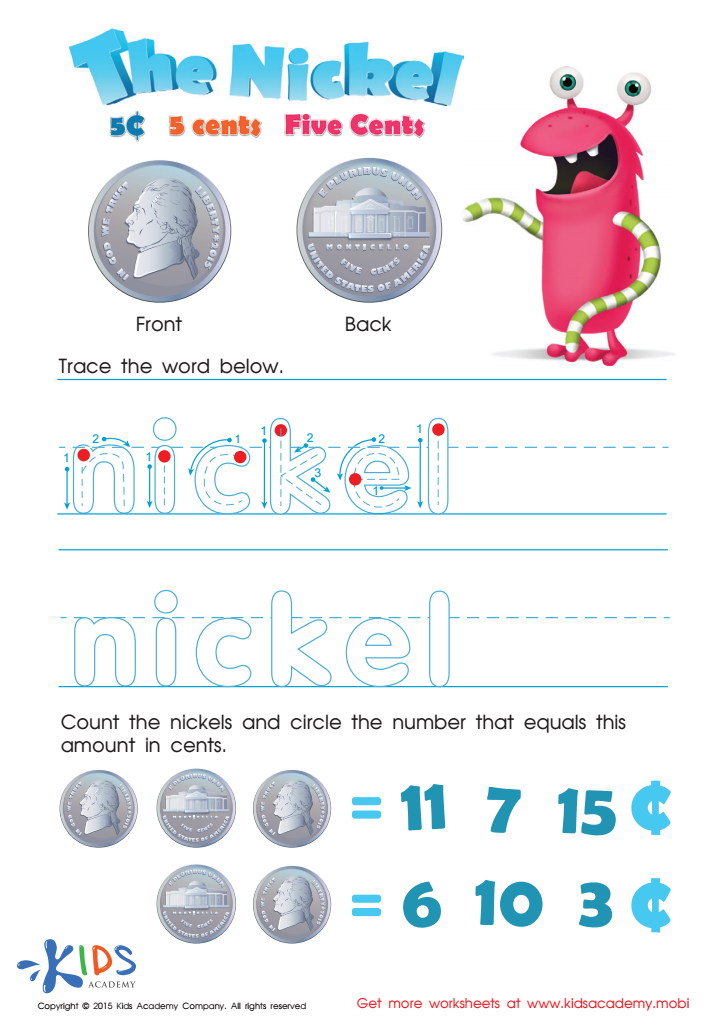
Five Cents or the Nickel Money Worksheet
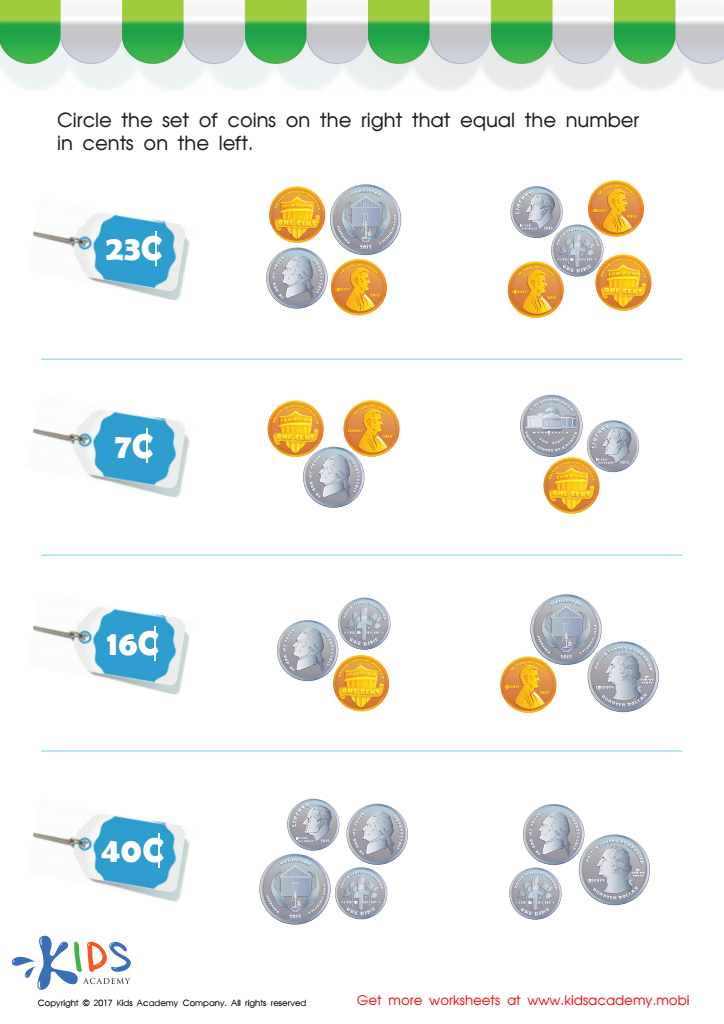
Picking the Coins You Need Money Worksheet








Understanding financial literacy, even at the age of three, builds a foundation for healthy money management habits in the future. Although three-year-olds are too young to grasp complex financial concepts, introducing them to money using coins can be extremely beneficial. Coins are tangible objects that children can touch, see, and count, making the abstract idea of money more concrete. This early exposure helps children recognize different coin values and begin developing essential math skills, such as counting and simple addition and subtraction.
Parents and teachers should care about financial literacy because it fosters a sense of responsibility and independence. When children learn about saving and spending wisely from an early age, they are more likely to develop a responsible attitude toward money as they grow older. Moreover, early financial literacy contributes to improved decision-making skills, enhanced problem-solving abilities, and better understanding of trade-offs, all of which are crucial life skills.
Establishing a strong financial foundation in young children also helps to bridge eventual gaps in financial understanding that many adults face today. By equipping children with essential money management skills early on, parents and teachers can contribute to creating a generation that is better prepared for the economic challenges and opportunities of the future.








