Money recognition Coins Worksheets for 3-Year-Olds
5 filtered results
-
From - To
Introduce your 3-year-old to the world of money with our engaging Coins Worksheets! Designed with little learners in mind, our printable activities make identifying and understanding coins fun and easy. Through vibrant images and simple exercises, kids will familiarize themselves with pennies, nickels, dimes, and quarters. These worksheets promote early math skills such as counting and recognizing different coin values. Perfect for preschoolers, our resources turn learning money recognition into an exciting adventure. Download now from Kids Academy to prepare your child for financial literacy and give them a strong foundation for future math success.
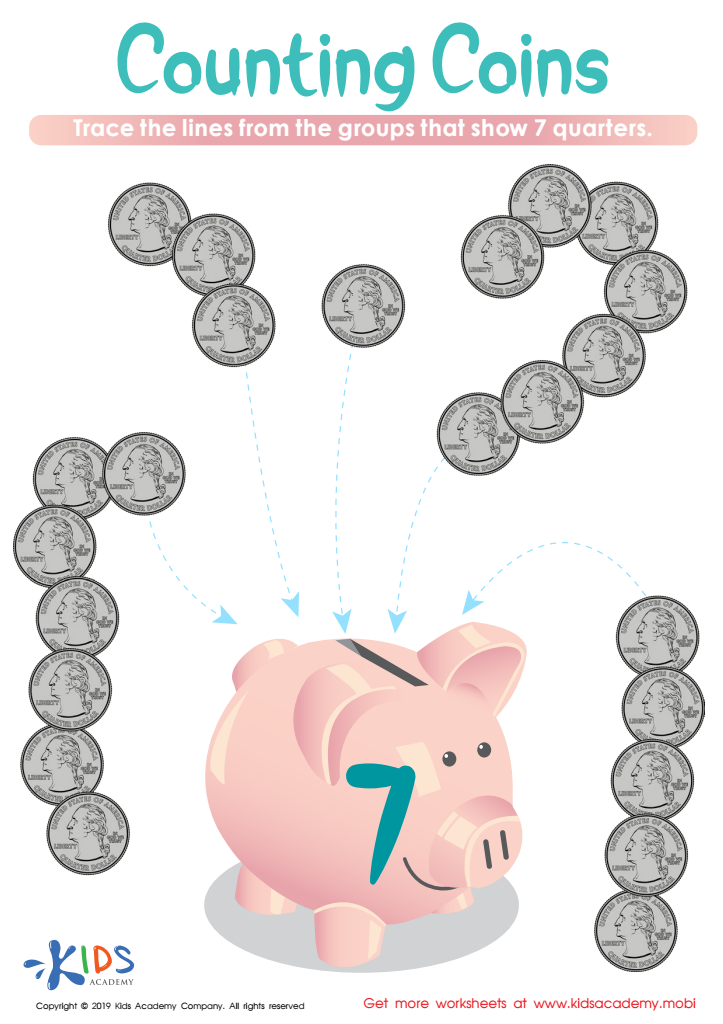
Counting Coins Worksheet
 Assign to My Students
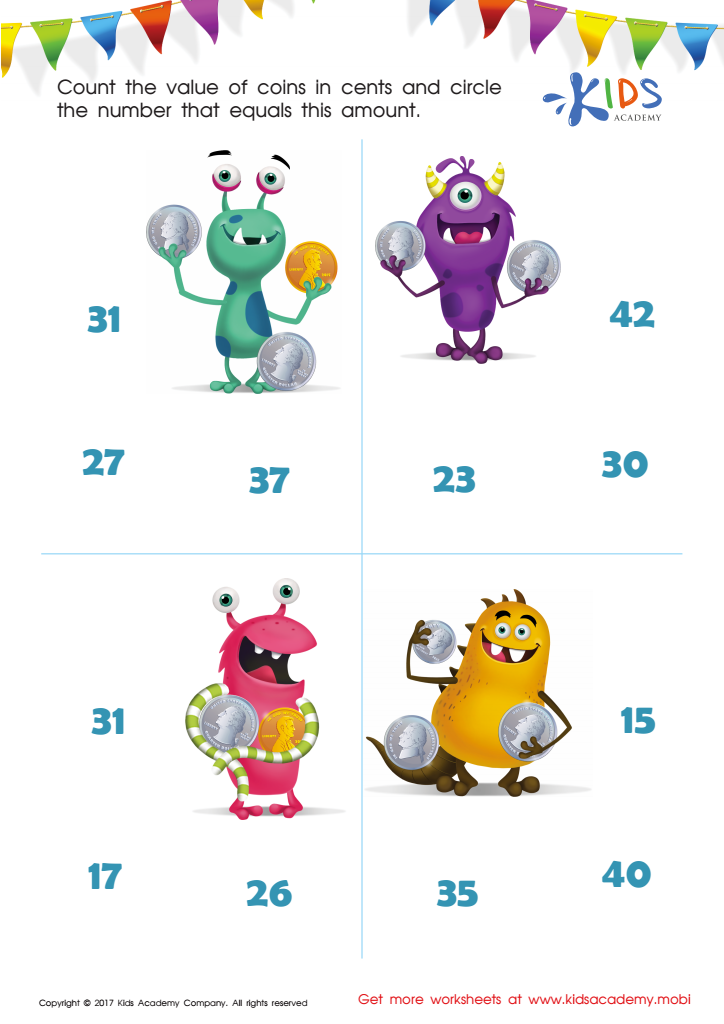
How Many Coins Money Worksheet
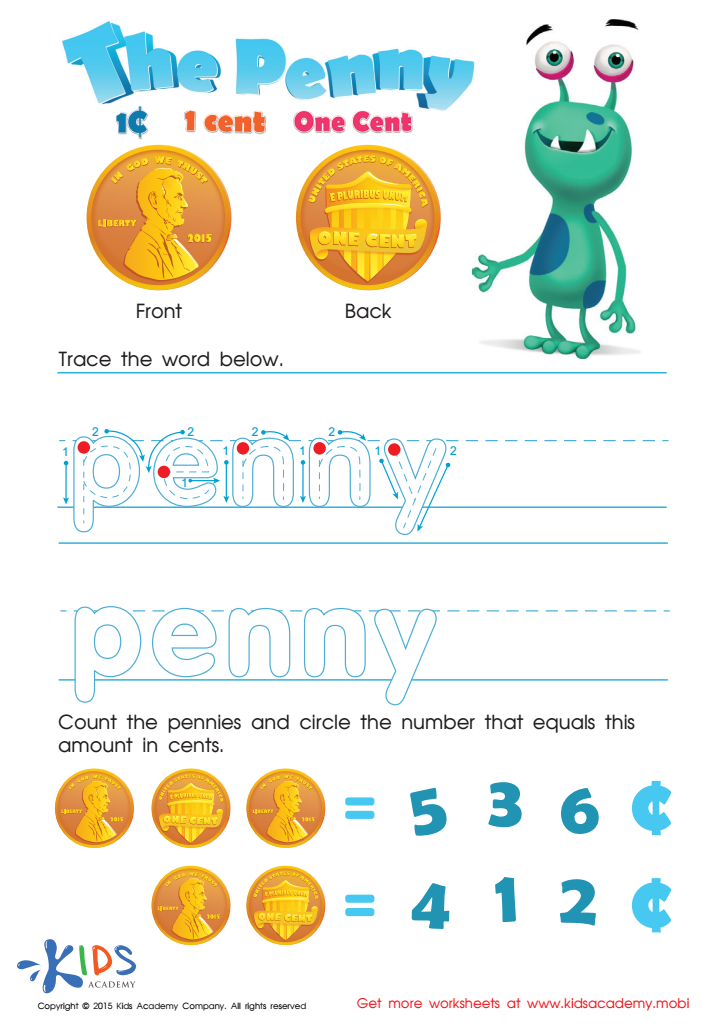
One Cent or the Penny Money Worksheet
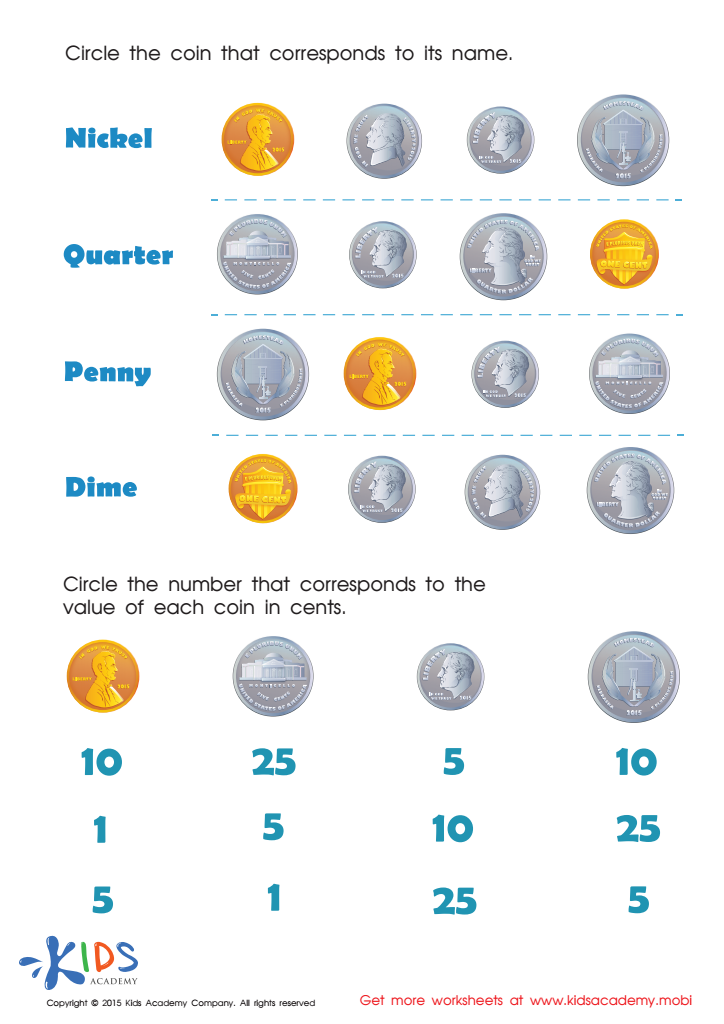
Coin Names and Values Money Worksheet
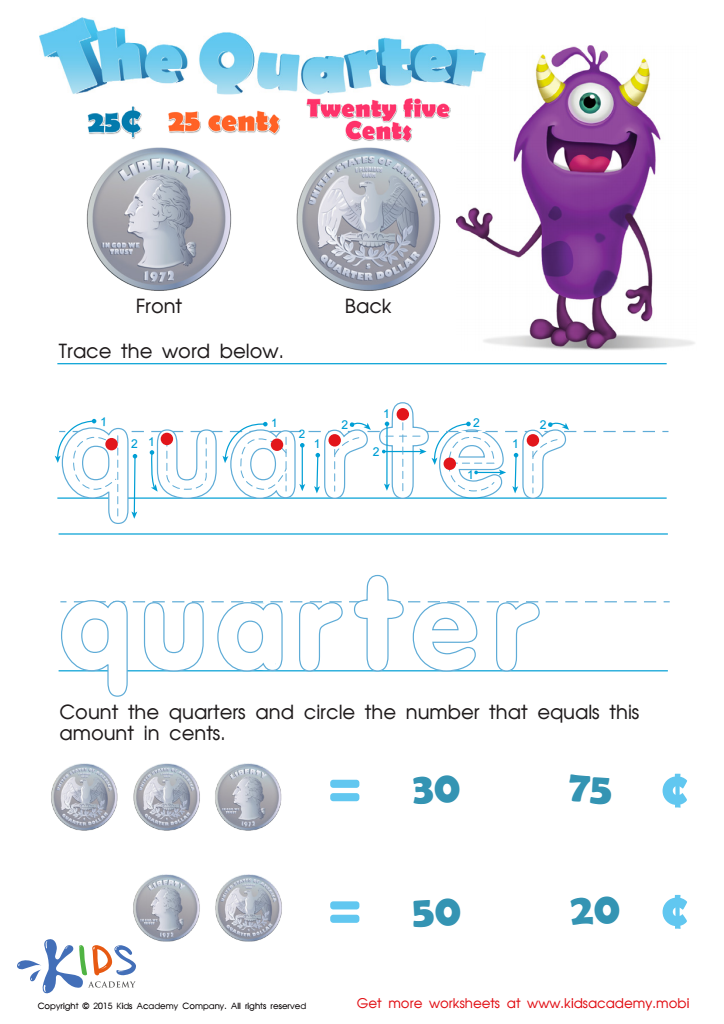
Twenty Five Cents or the Quarter Money Worksheet








Introducing money recognition, especially coins, to 3-year-olds can have numerous developmental benefits for their cognitive and practical understanding of the world. First, engaging with coins can enhance a child's fine motor skills. Sorting, handling, and even attempting to count coins involve using fingers and hands in ways that build dexterity and coordination.
Second, familiarizing young children with the concept of coins fosters cognitive skills including comparing, differentiating, and categorizing objects based on size, color, and value. Identifiable characteristics such as the shape, color, and images on the coins draw their curiosity and can serve as a fun learning tool for visual discrimination.
Basic money recognition also sets the foundation for later financial literacy. Children who recognize and understand the value of money early are more likely to develop strong math skills as they grow. They start learning basic math concepts such as addition and subtraction through playful activities involving coins.
Equally important, handling coins and understanding their basic purpose can impart early lessons in trade, savings, and the material value of things within their world. This precursory knowledge fosters a sense of responsibility and decision-making, equipping children to make choices based on limited resources even at a very young age.
Early engagement with money through playful interactions shapes a well-rounded, practical foundation that supports future educational and personal finance objectives.








