
Basic Math Skills Geometry Worksheets for 3-Year-Olds
3 filtered results
Difficulty Level
Grade
Age
-
From - To
Subject
Activity
Standards
Explore our engaging Basic Math Skills Geometry Worksheets designed especially for 3-year-olds! At Kids Academy, we focus on making early math learning fun and effective. Our printable worksheets introduce young learners to basic geometric shapes, patterns, and spatial understanding through playful activities like shape sorting and matching. These worksheets are crafted to boost fine motor skills, promote cognitive development, and build a strong math foundation. Perfect for both classroom and at-home learning, our resources ensure your child grasps essential geometry concepts in an enjoyable way. Start your child's early math journey with Kids Academy today!
Favorites
With answer key
Interactive
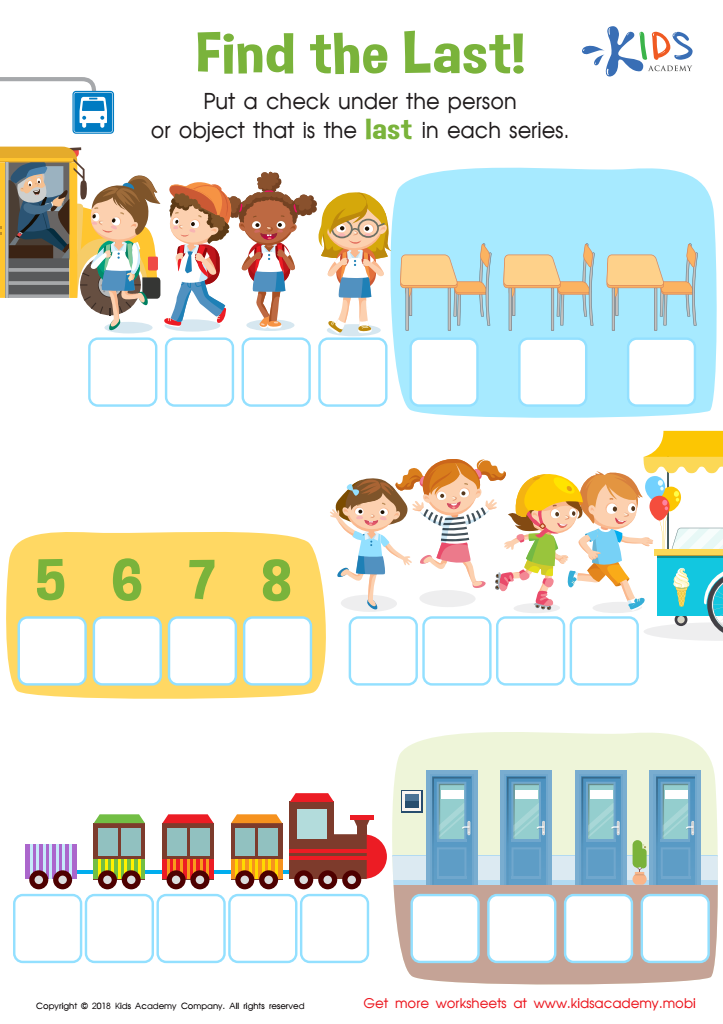
Find the Last! Worksheet
Teach young students about sequence words with this free worksheet. Have them look at sets of people or objects and choose the one that is last. Engage them further by having them describe or act out their day, and what happens last? Enjoy this printout and have fun!
 Assign to My Students
Find the Last! Worksheet
Worksheet











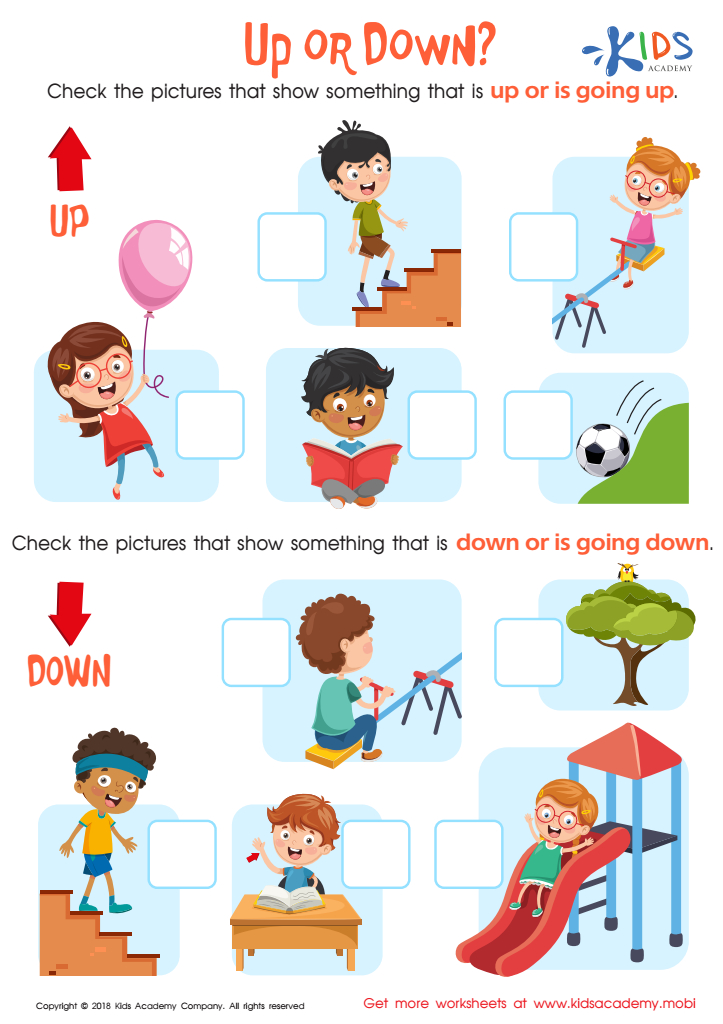
Up or Down Worksheet
Teach your toddlers the concepts of up and down with Kids Academy's vivid worksheet! Use the seesaw analogy to reinforce this language with them and build a strong foundation for future learning. Show them how a balloon can float up but must come back down too.
Up or Down Worksheet
Worksheet
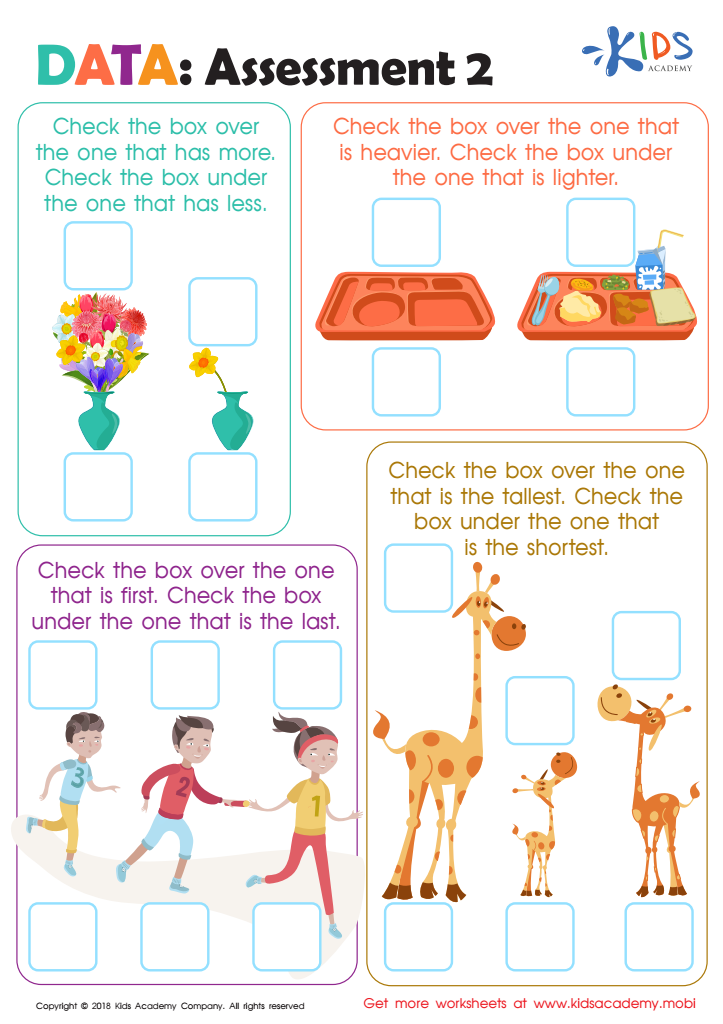
Data: Assessment 2 Worksheet
This printable worksheet tests students' understanding of words related to quantity and measurement, such as "more", "less", "heavy", "light", "first", "last", "tall", and "short". It helps children compare and contrast when solving measurement problems. Ideal for math classes, it encourages students to gain the essential skills needed in subjects like math, science, and reading.
Data: Assessment 2 Worksheet
Worksheet
Join Kids Academy for Free
Who is primarily going to use this learning content?








Parents and teachers should care about instilling basic math skills, including geometry, in 3-year-olds because early exposure to these concepts sets the foundation for future learning. Introducing geometry through simple activities such as recognizing shapes, sorting objects, or visual puzzles can greatly enhance a child's cognitive development and spatial reasoning skills. Recognizing shapes and understanding spatial relationships helps young children make sense of the world around them and fosters problem-solving abilities.
Engaging 3-year-olds with basic geometry can also enhance their vocabulary and communication skills. Talking about shapes, sizes, and positions adds new words to their language, enabling them to describe their environment more precisely. Improved communication leads to better social interactions, contributing to overall emotional and social development.
Additionally, early math skills are fundamental predictors of academic success in later years. By developing these skills at a young age, children build confidence and curiosity in learning, leading to a more positive attitude towards education. Teachers and parents who prioritize early geometry ensure that children develop a robust mathematical understanding, which is essential not only for math-related subjects but also for everyday tasks and other academic disciplines.
In sum, by embedding basic geometry into early learning, parents and teachers create a strong educational foundation, nurturing well-rounded, inquisitive, and capable learners.








