Counting practice Geometry Worksheets for 3-Year-Olds
3 filtered results
-
From - To
Welcome to our Counting Practice Geometry Worksheets for 3-Year-Olds! Designed specifically for young learners, these worksheets combine foundational counting skills and basic geometry concepts in a fun and engaging way. Each activity provides colorful visuals, encouraging children to identify shapes while practicing counting from 1 to 10. This interactive approach helps build essential skills in a playful manner, fostering a love for learning. Perfect for home or classroom use, our worksheets promote cognitive development and prepare your child for future math concepts. Dive in today and watch your little one grow as they combine numbers and shapes through enjoyable activities!
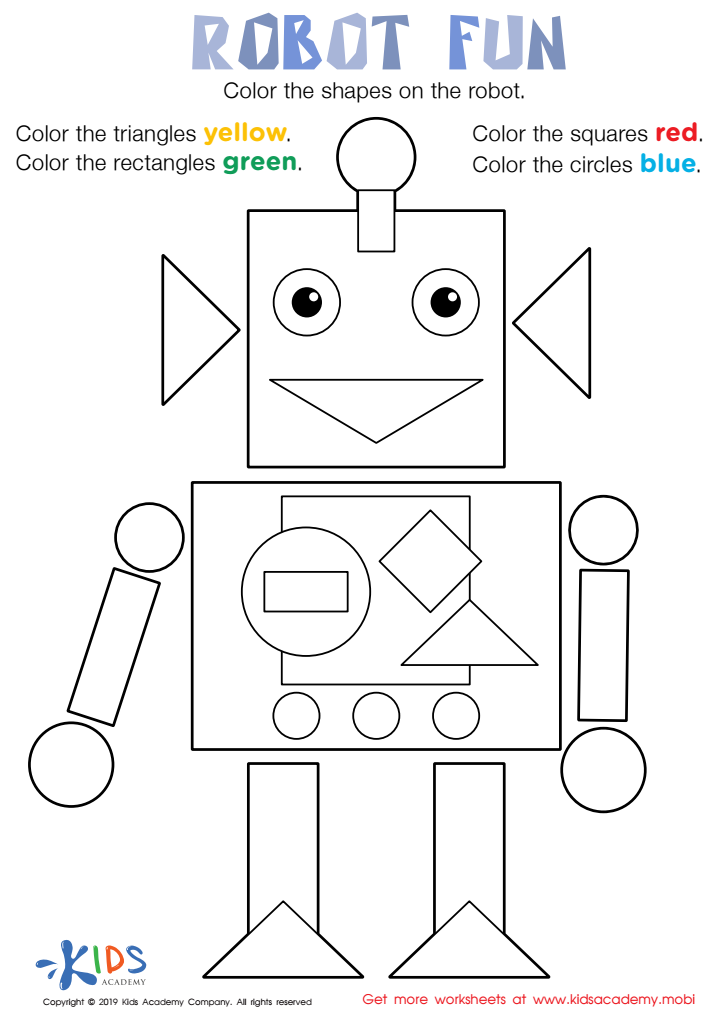
Robot Fun Worksheet
 Assign to My Students











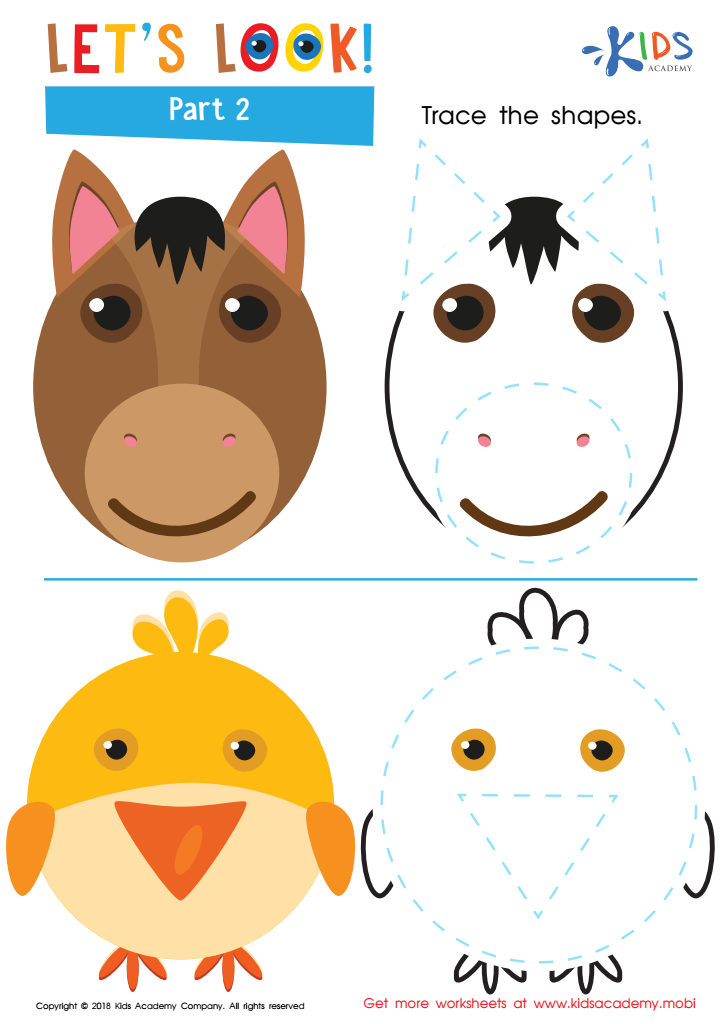
Let's Look! Part 2 Worksheet
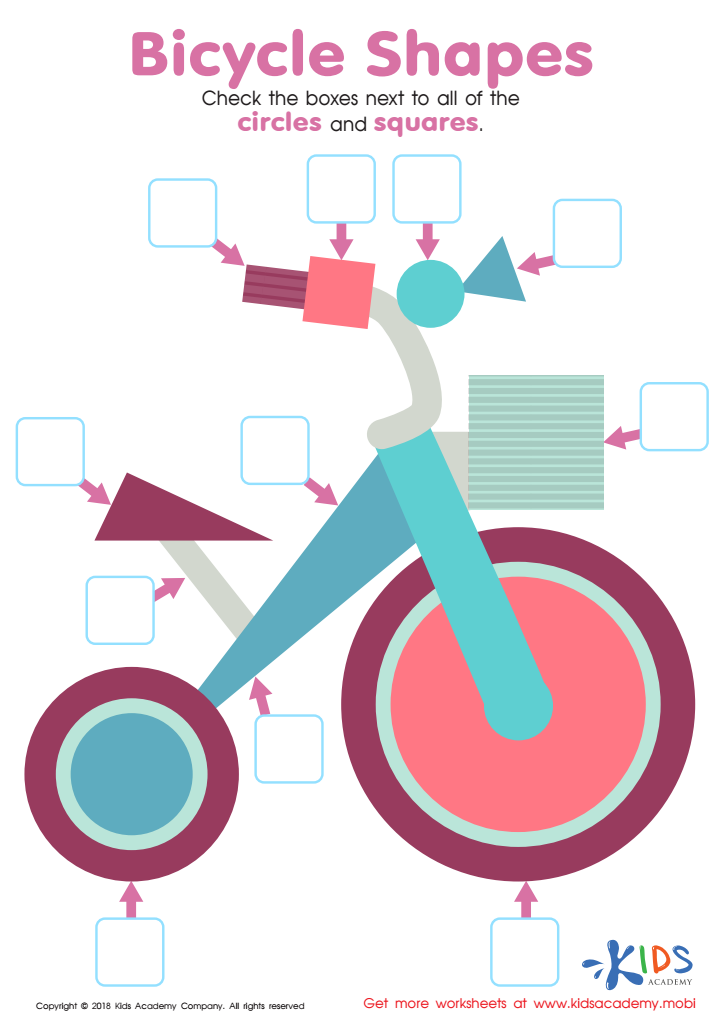
Bicycle Shapes Worksheet








Counting practice and basic geometry are fundamental skills that lay the groundwork for a child's mathematical understanding. For 3-year-olds, engaging in counting activities fosters number recognition, one-to-one correspondence, and the beginnings of arithmetic skills. These early experiences with numbers help develop a child's ability to think abstractly and solve problems, which are critical cognitive skills.
Simultaneously, introducing basic geometric concepts—shapes, spatial awareness, and patterns—enhances a child's analytical skills. Recognizing and describing shapes helps children become more observant as they encounter various forms in their environment. This spatial reasoning is essential for later success in mathematics, science, and everyday problem-solving.
Moreover, incorporating these subjects into playful activities makes learning enjoyable and effective. Parents and teachers can construct games that involve counting objects, identifying shapes, and exploring their relationships. Collaboratively engaging in counting and geometry promotes language development and boosts confidence in expressing thoughts and observations.
Ultimately, fostering counting and geometry skills at this young age not only bolsters academic readiness but also prepares children for a lifetime of critical thinking and reasoning, making it a vital focus for both parents and educators. By nurturing these foundational skills, we contribute to children's overall cognitive and developmental growth.








