
Matching skills Geometry Worksheets for 3-Year-Olds
4 filtered results
Difficulty Level
Grade
Age
-
From - To
Subject
Activity
Standards
Discover our engaging Matching Skills Geometry Worksheets designed specifically for 3-year-olds! These interactive and colorful activities help young learners develop essential geometry concepts while honing their matching skills. Children will delight in identifying shapes, patterns, and spatial relationships as they complete fun exercises that promote fine motor development and cognitive growth. Our carefully crafted worksheets encourage curiosity and creativity, making learning enjoyable for toddlers. Perfect for both classroom and home settings, these worksheets support early math proficiency and lay a strong foundation for future learning. Download today and inspire your child's discovery of the wonderful world of geometry through play!
Favorites
With answer key
Interactive
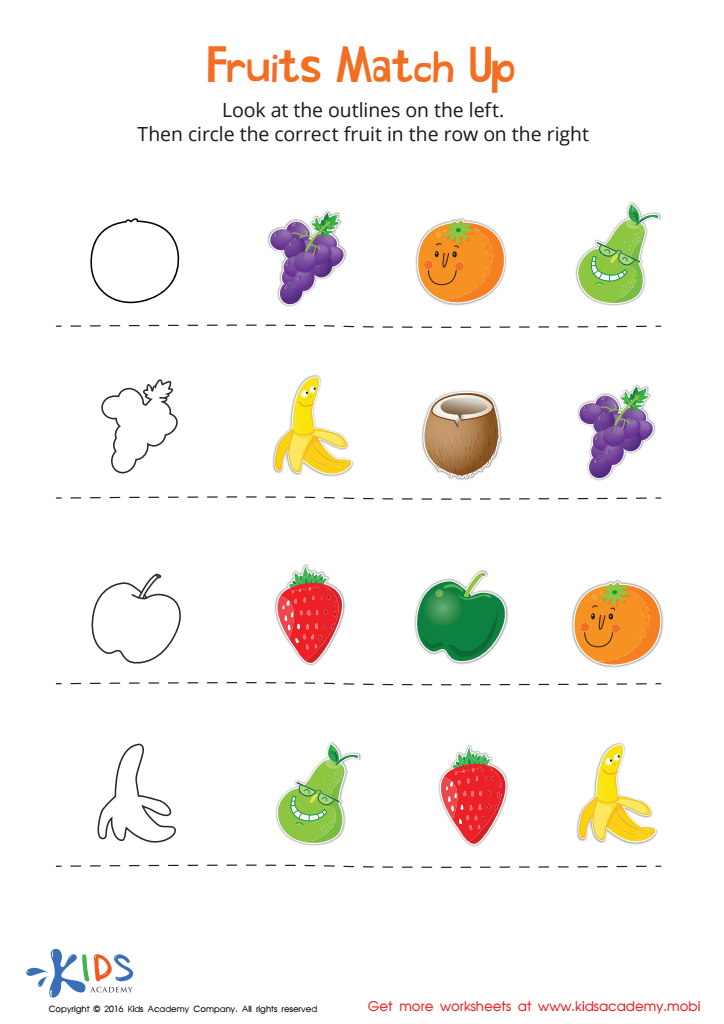
Fruits Match Up Worksheet
Motivate your child to count and sharpen their spatial reasoning skills with this vivid fruit worksheet.
 Assign to My Students
Fruits Match Up Worksheet
Worksheet











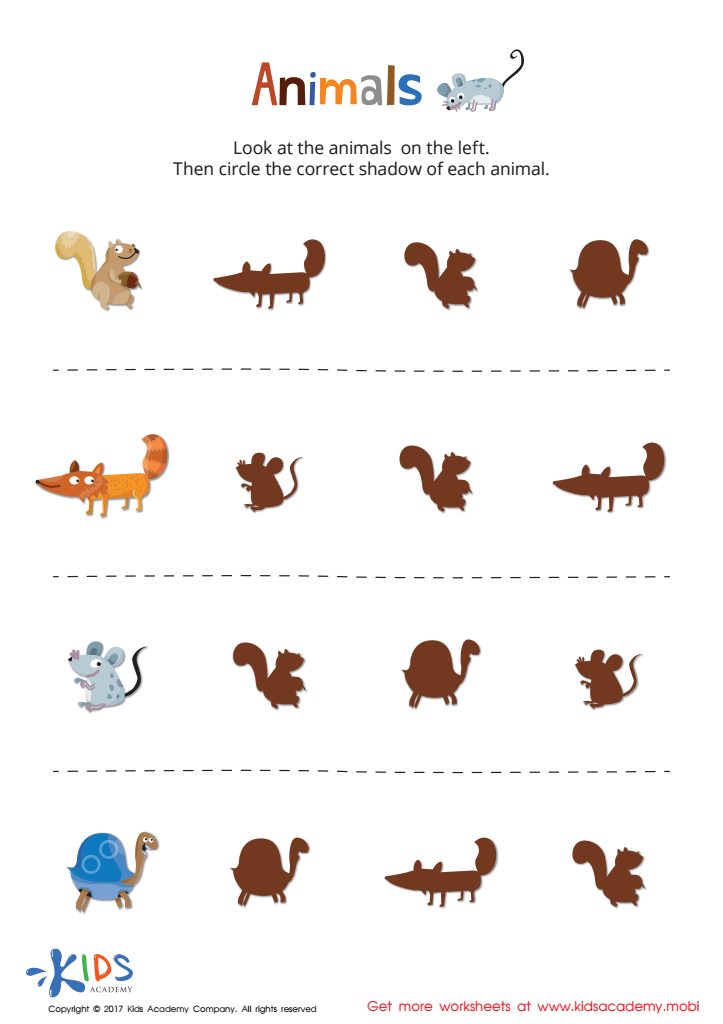
Animal Shadows Sorting Worksheet
This fun worksheet helps your child sharpen many skills. It features animals to match shapes and practice relative directions. Your child will sort animal features, practice spatial recognition, and recognize right/left. Plus, you can use it to start conversations about the animals. And try it also with fruits and veggies to boost sorting skills.
Animal Shadows Sorting Worksheet
Worksheet
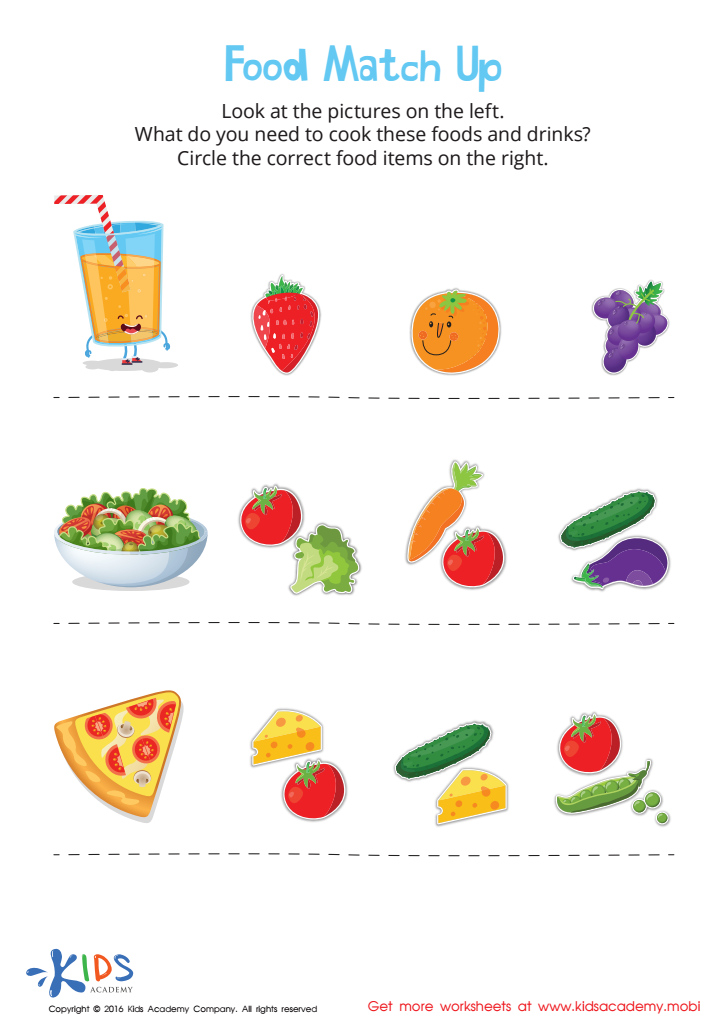
Food Match Up Worksheet
This worksheet will help your preschooler develop early math and cognitive skills. It challenges them to pay attention to details, understand how smaller parts make a whole, and increase important matching skills. Use it to give them a hands-on learning experience in the kitchen, and watch them understand how ingredients come together to make something delicious!
Food Match Up Worksheet
Worksheet
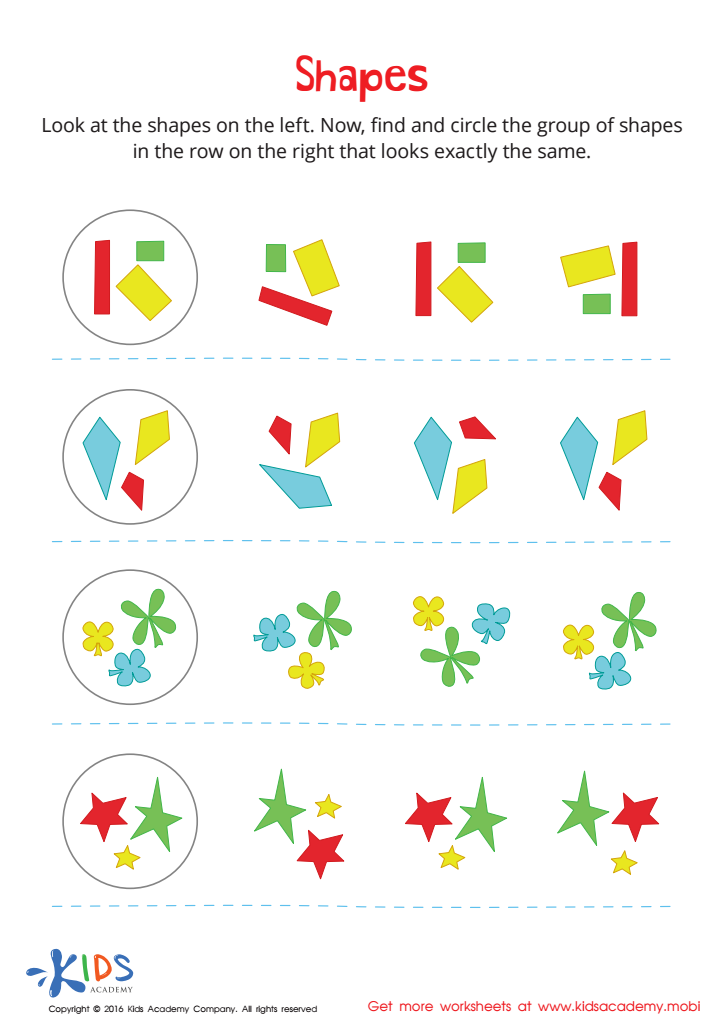
Shapes Worksheet
This fun worksheet will challenge your child to recognize tricky patterns, sort through similar ones, and create strategies to get the right answer. It'll also help them to strengthen problem-solving skills and build confidence. With more challenging tasks, your child will be ready to tackle higher level math and sequencing skills.
Shapes Worksheet
Worksheet
Join Kids Academy for Free
Who is primarily going to use this learning content?








Matching skills in geometry for 3-year-olds play a vital role in early childhood development and set the foundation for future learning in mathematics and spatial reasoning. At this age, children are naturally curious about shapes, sizes, and spatial relationships, and engaging them in activities that promote geometric matching encourages exploration and cognitive growth.
Firstly, developing matching skills boosts visual discrimination, enabling children to identify similarities and differences among shapes—a crucial skill for problem-solving and critical thinking. Additionally, these foundational skills enhance fine motor coordination as children manipulate shapes and engage in hands-on activities.
Moreover, geometry serves as an introduction to more complex mathematical concepts. Recognizing shapes and their attributes at an early age fosters an understanding of patterns, measurement, and eventually, the basics of geometry. Therefore, matching skills lay the groundwork for a structured approach to mathematics in later years.
Lastly, engaging in these activities together creates opportunities for bonding, as parents and teachers can approach learning playfully, reinforcing positive attitudes toward math. In essence, fostering matching skills in geometry among young children can lead to enhanced cognitive abilities, a solid mathematical foundation, and joyful learning experiences that resonate well into their academic journey.








