Check out this FREE Trial Lesson on Math for age 3!

Match Exactly the Same

Favorites
With answer key
Interactive
  • 3
  • Addition Practice
  • Math
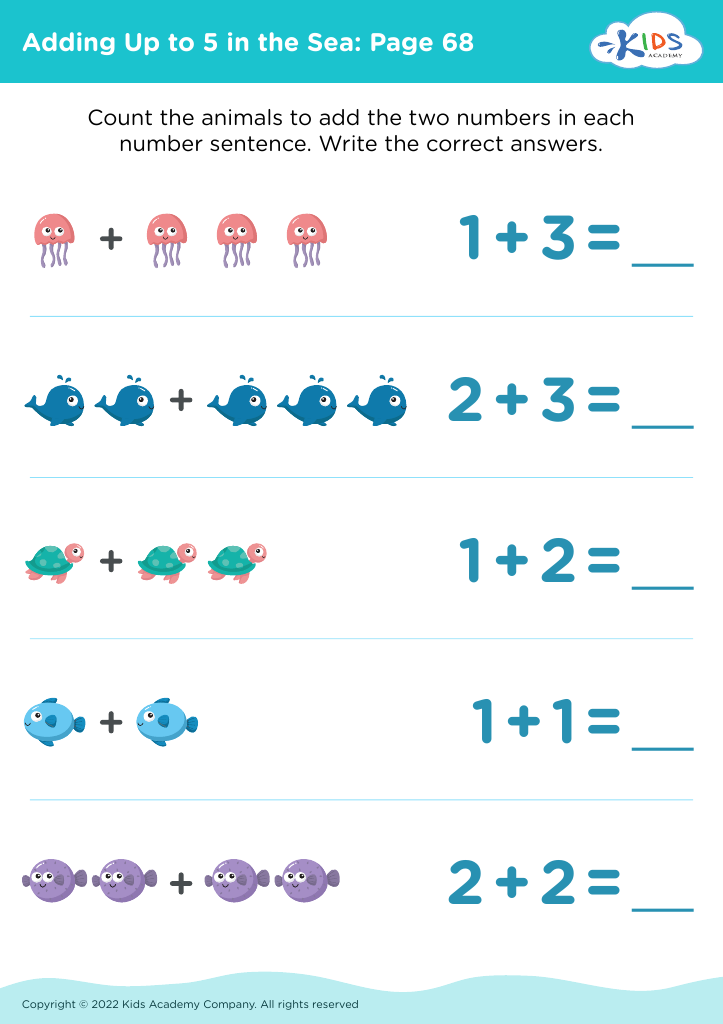
Adding Up to 5 in the Sea: Page 68
Worksheet
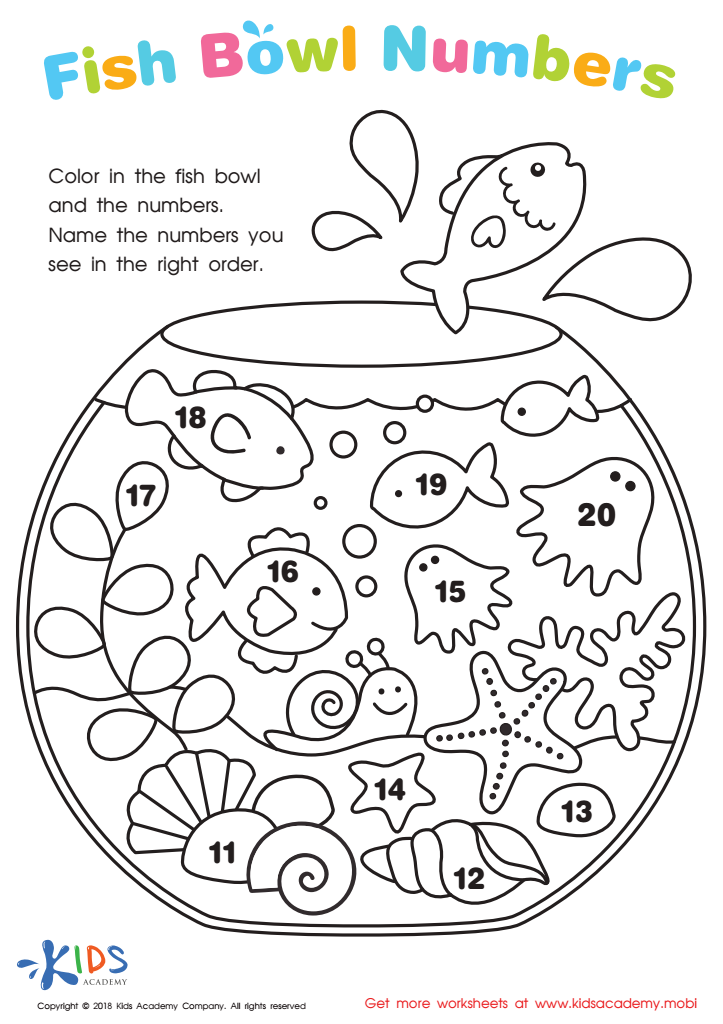
Fish Bowl Numbers Worksheet

Fish Bowl Numbers Worksheet

Let your kids count and color with this fun exercise! Ask them to read out the numbers in the fish bowl in order, then help them pick out colors for the fish bowl and numbers. An easy-peasy activity for kids who can count - they'll have lots of fun!
Download (PDF)
Assign to My Students
Fish Bowl Numbers Worksheet
Worksheet
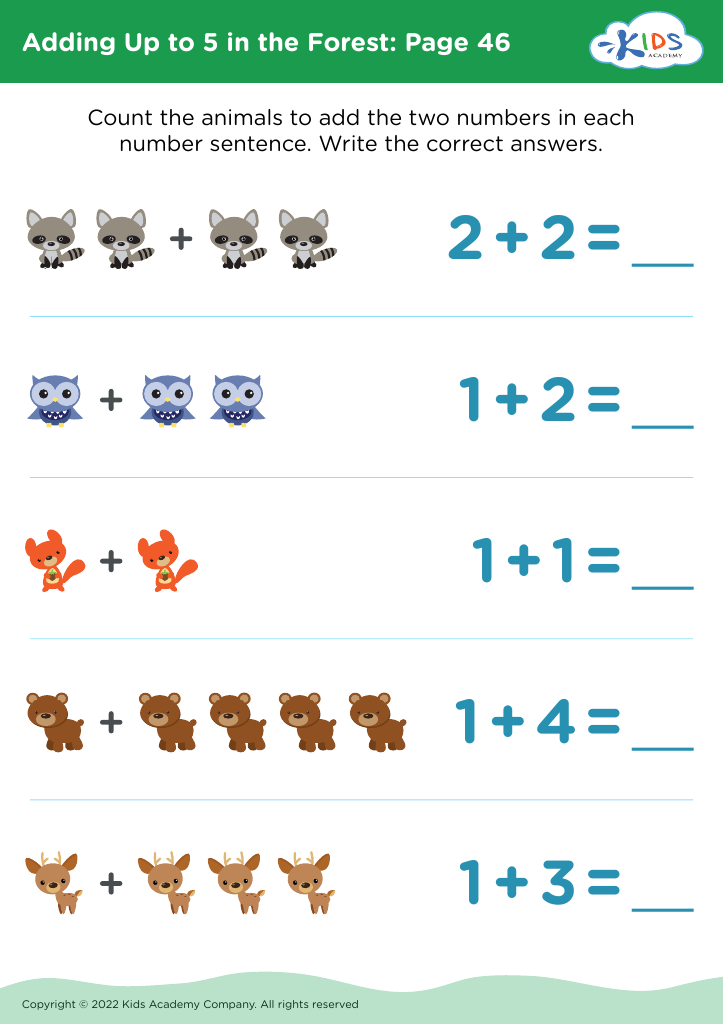
Adding Up to 5 in the Forest: Page 46
Worksheet
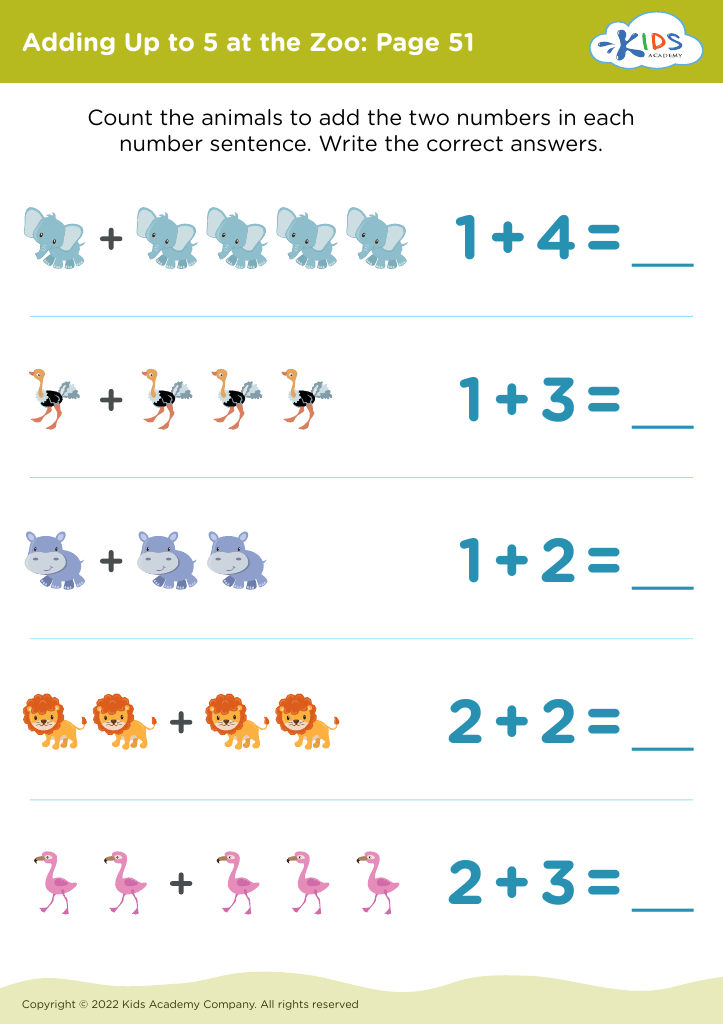
Adding Up to 5 at the Zoo: Page 51
Worksheet
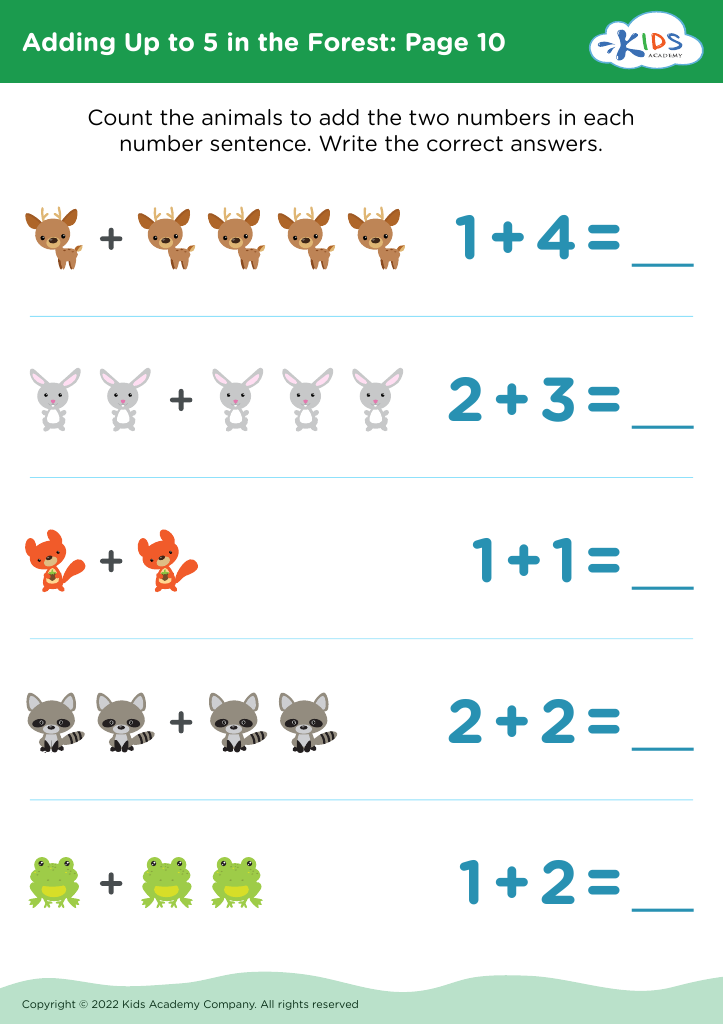
Adding Up to 5 in the Forest: Page 10
Worksheet
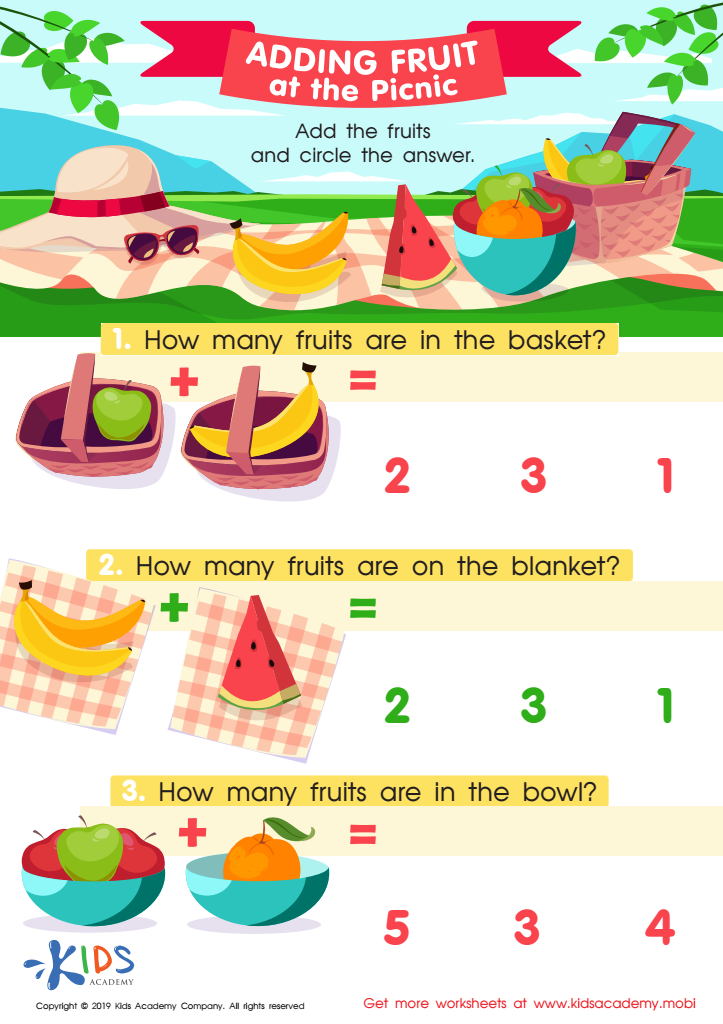
Adding Fruit at the Picnic Worksheet
Adding Fruit at the Picnic Worksheet
Picnics are a great way for the family to enjoy a fun day in the sun! Get your kids involved by having them help load the picnic basket and do this worksheet to practice their math skills while they get ready. Identify the fruits in the picture, add them up, and circle the correct answer.
Adding Fruit at the Picnic Worksheet

Worksheet
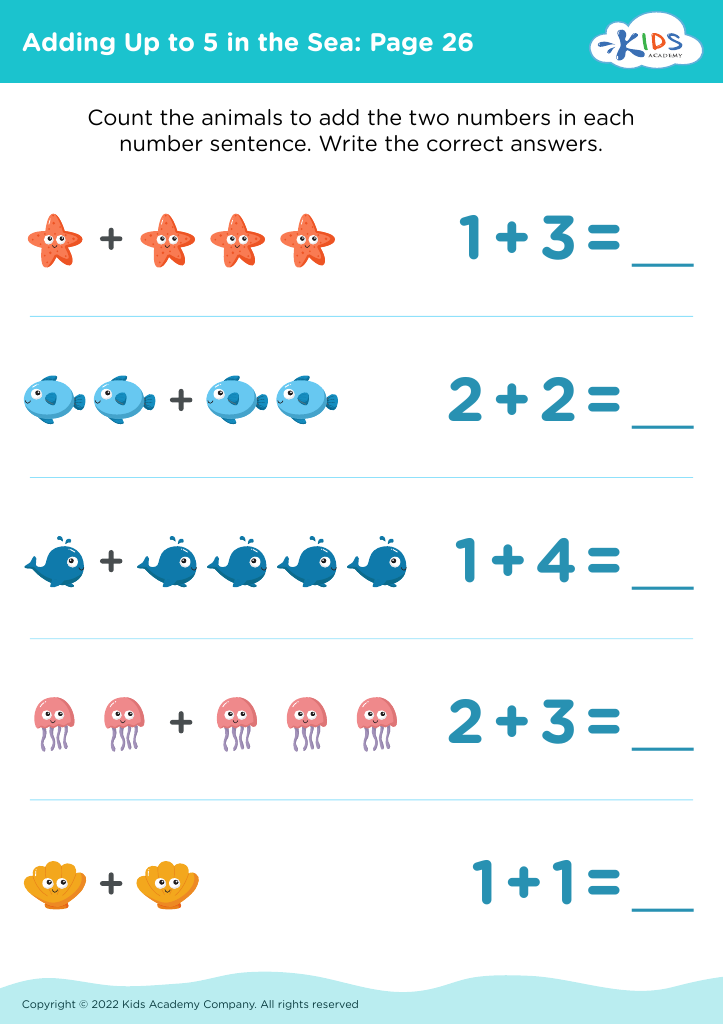
Adding Up to 5 in the Sea: Page 26
Worksheet
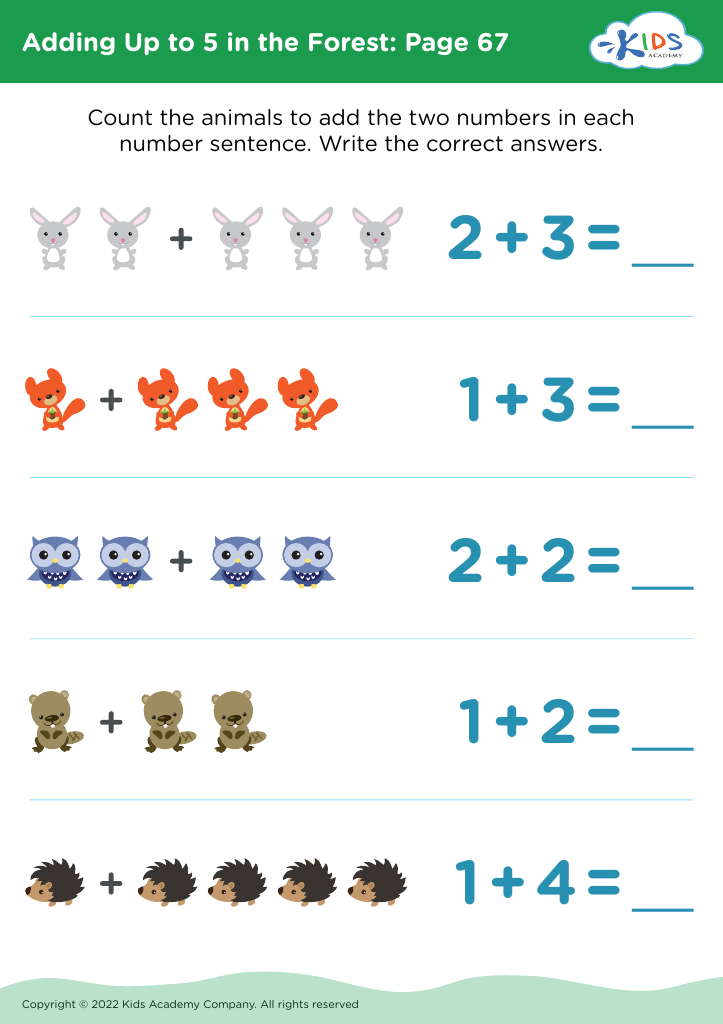
Adding Up to 5 in the Forest: Page 67
Worksheet
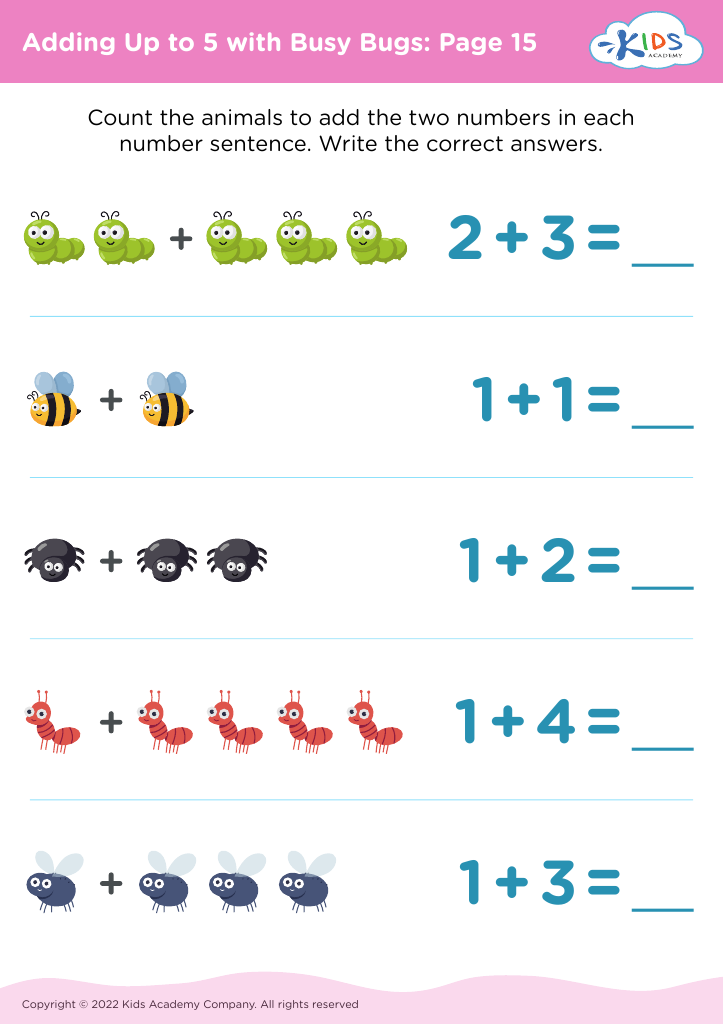
Adding Up to 5 with Busy Bugs: Page 15
Worksheet


... 3 4

Introducing addition practice to 3-year-olds might seem premature, but it plays a crucial role in early development and sets the foundation for future academic success. Engaging young children in basic math activities enhances cognitive skills such as problem-solving, critical thinking, and pattern recognition. At this tender age, their brains are highly receptive to new information, making it an ideal time to introduce foundational concepts.

Incorporating fun, simple addition games can significantly boost a child's interest and enthusiasm for learning mathematics. Activities like counting toys, adding parts of a drawing, or singing number songs can make learning feel like play, reducing any potential anxiety around math. These early experiences help children develop numerical fluency and accuracy, important skills in elementary school and beyond.

Math practice for 3-year-olds also prepares them for a structured school environment by fostering patience, concentration, and the ability to follow instructions. For parents and teachers, emphasizing addition at an early age helps identify and support a child’s learning style and pace, ensuring that they build a strong mathematical mindset. Importantly, it offers an opportunity to bond and engage in meaningful learning experiences, positively influencing a child's academic trajectory and self-confidence in tackling new challenges.