Comparison Skills Math Worksheets for 3-Year-Olds
3 filtered results
-
From - To
Discover our engaging comparison skills math worksheets designed specifically for 3-year-olds! These fun activities help young learners develop essential mathematical concepts through hands-on comparisons. Your child will explore greater than, less than, and equal to by comparing objects, numbers, and pictures. Each worksheet is crafted to stimulate critical thinking and improve cognitive abilities, featuring vibrant illustrations to keep little ones motivated. Perfect for home or classroom use, these worksheets foster early math skills while encouraging a love for learning. Download today and give your child the foundation they need for future success in mathematics!
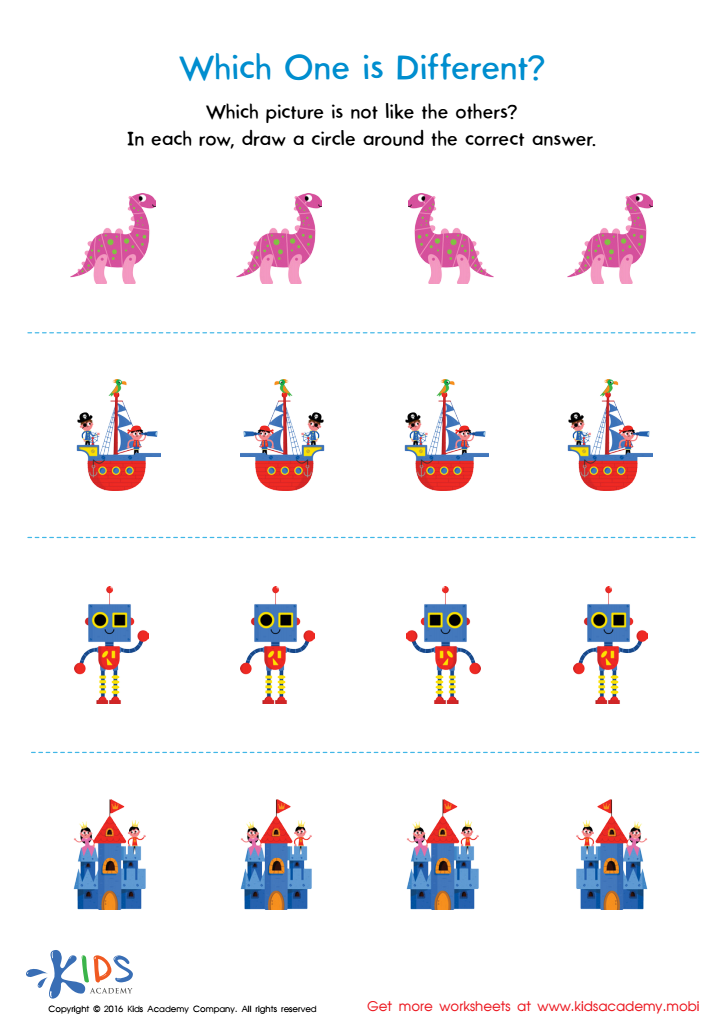
Which One Is Different Worksheet
 Assign to My Students
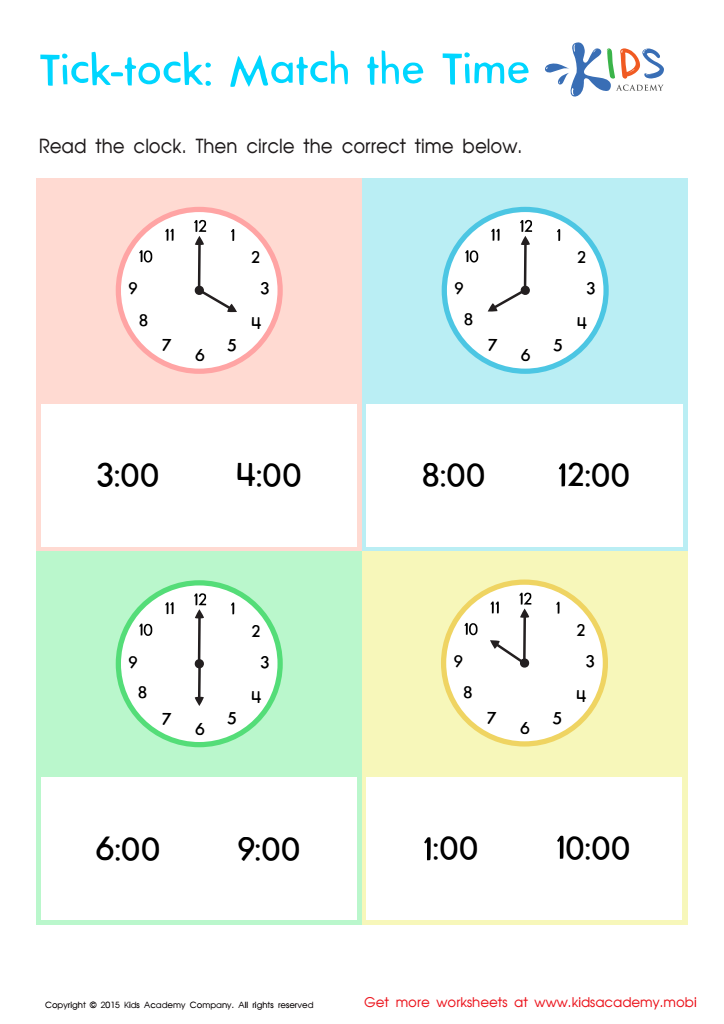
Telling The Time Worksheet: Part 4
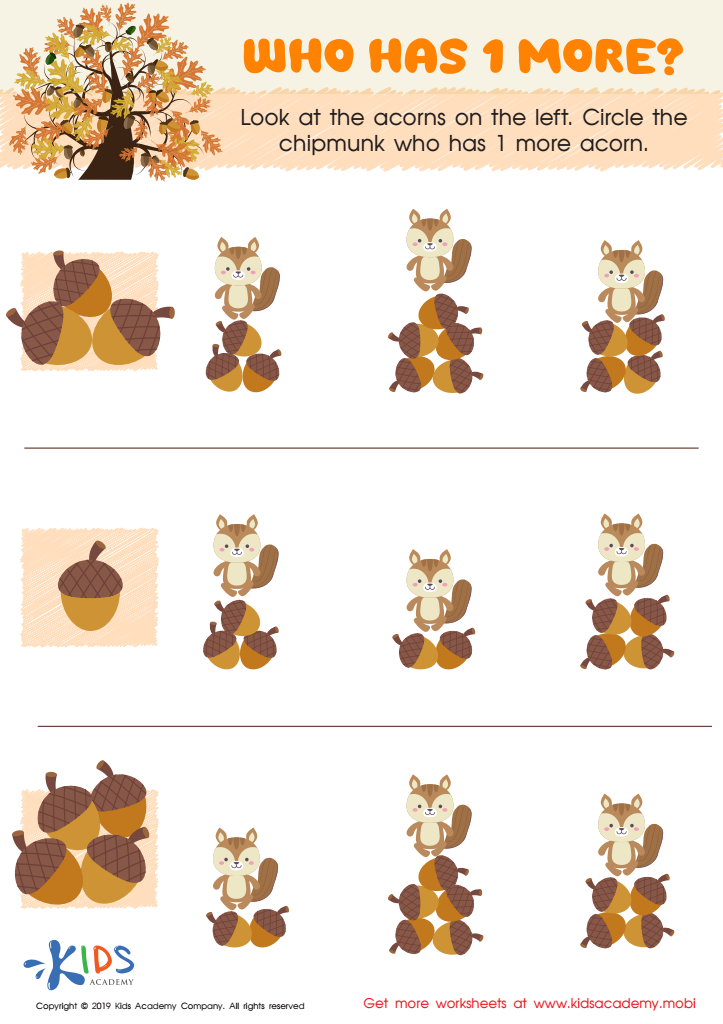
Who Has 1 More? Worksheet



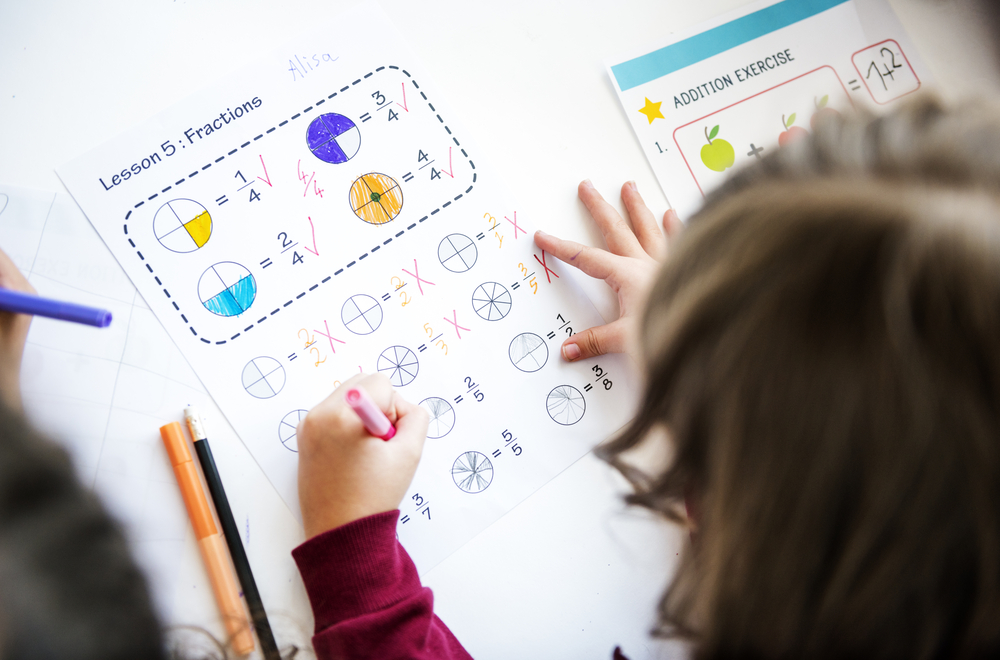


Parents and teachers should prioritize comparison skills in math for 3-year-olds as these foundational abilities play a crucial role in their cognitive development. At this age, children naturally begin to categorize, sort, and compare objects, which lays the groundwork for more complex mathematical concepts in the future. By encouraging comparison skills, we foster problem-solving and critical thinking abilities that are essential for academic success.
Comparison skills help children understand relationships such as "more than," "less than," and "equal to," which are fundamental to grasping numbers and quantities. When toddlers engage in activities that promote these skills, they also develop vocabulary and language abilities, enhancing their communication skills. Furthermore, instilling a love for math through playful comparisons makes learning enjoyable, setting a positive tone for future educational experiences.
By nurturing these skills early, parents and teachers can also identify individual learning styles and areas where a child may need additional support. Ultimately, fostering comparison skills in math not only prepares children for future math-learning challenges but also equips them with important life skills, boosting their confidence and encouraging a lifelong love for learning.








