
Decision making skills Math Worksheets for 3-Year-Olds
3 filtered results
Difficulty Level
Grade
Age
-
From - To
Subject
Activity
Standards
Our "Decision Making Skills Math Worksheets for 3-Year-Olds" are expertly designed to nurture young children's critical thinking and problem-solving abilities. Engaging and age-appropriate exercises help kids identify patterns, make choices, and understand basic math concepts while having fun. These activities support cognitive development and enhance decision-making capabilities essential for future learning. Created by education experts, our printable worksheets offer captivating graphics and interactive tasks to keep your little one engaged and excited about learning math. Perfect for parents and educators seeking to provide a foundation for success in a playful and educational manner.
Favorites
With answer key
Interactive
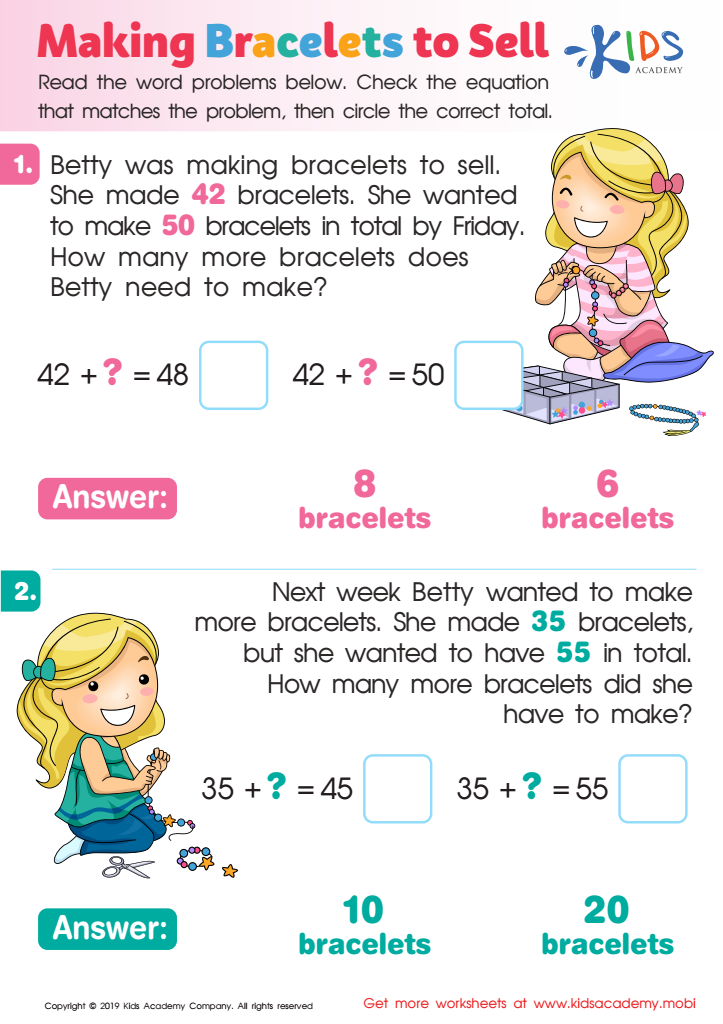
Making Bracelets to Sell Worksheet
Got kids who love crafting? This worksheet will be right up their alley! Let them use their creative and problem-solving skills to check equations and decide the correct total. It's just like making beads into a bracelet but on paper! Print out this downloadable PDF and get ready for a fun craft session.
 Assign to My Students
Making Bracelets to Sell Worksheet
Worksheet
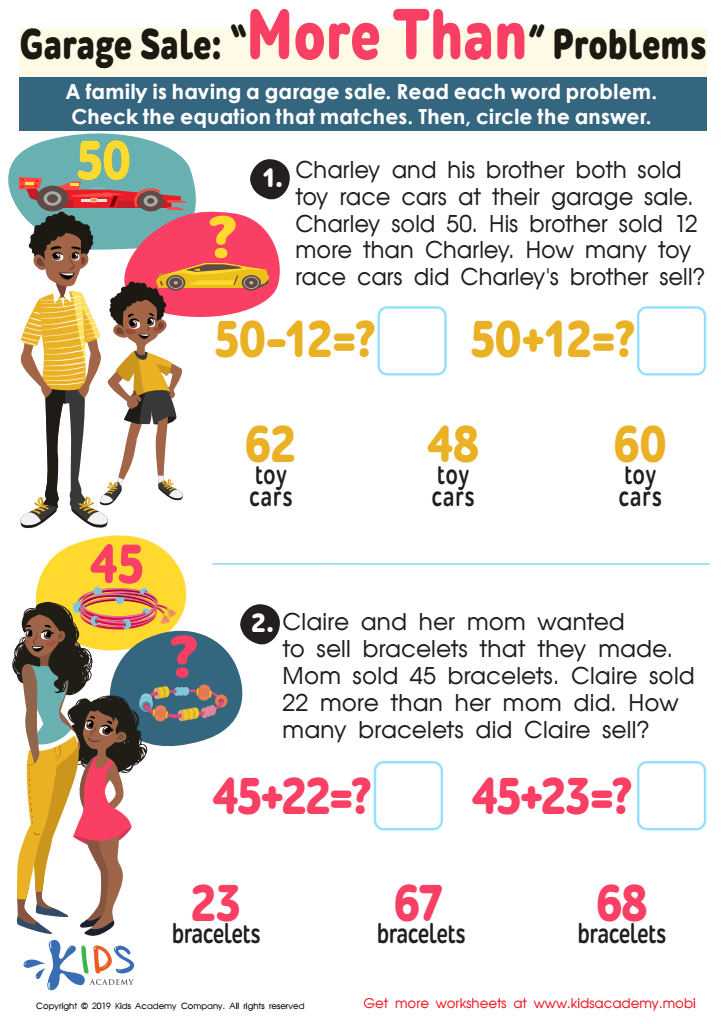
Garage Sale - More yhan Worksheet
The whole family can join in on the fun with this free worksheet! It helps kids practice math word problems while assisting their friends with a garage sale. Kids learn to identify "More Than" key words and pick the right equation, improving their order of operations skills. Download the PDF and get started!
Garage Sale - More yhan Worksheet
Worksheet
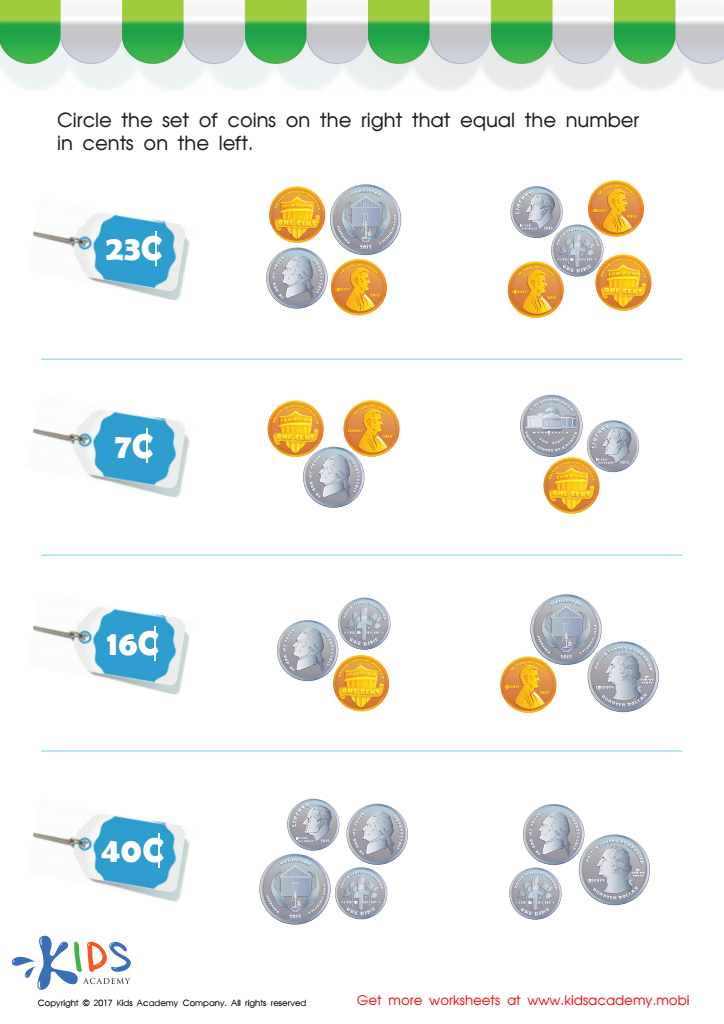
Picking the Coins You Need Money Worksheet
Let's learn to count money with Parents and Kids Academy! Investigate a real shop together: buy a globe, pencils, books, and a school bag using coins. Then, circle the coins you'll need. Visit our website for more free and fun money games for kids!
Picking the Coins You Need Money Worksheet
Worksheet
Join Kids Academy for Free
Who is primarily going to use this learning content?





%20(1).jpg)

Parents and teachers should care about decision-making skills in math for 3-year-olds because these foundational abilities are crucial for a child's cognitive and social development. At this formative stage, kids' brains are extremely receptive, and engaging them in mathematical thinking activates neural pathways that influence future learning and problem-solving abilities. Developing these skills early equips children to approach numerical and logical problems with confidence, which benefits their academic growth down the line.
Moreover, decision-making in math helps young children build critical life skills. For instance, when a child decides which shape to use to complete a puzzle or how many blocks are needed to match a given pattern, they are practicing focus, planning, and analytical thinking. These exercises also teach them about consequences and improve their capacity to make thoughtful choices.
Additionally, early exposure to math concepts fosters a positive attitude towards the subject, reducing math-related anxiety later in life. When children interact with numbers, shapes, and patterns in a playful, engaging manner, they are more likely to perceive math as approachable and enjoyable, setting a strong foundation for future learning.
By nurturing decision-making skills in math, parents and teachers support holistic development, preparing children not only academically but also for everyday problem-solving and decision-making situations.








