
Develop problem-solving skills Math Worksheets for 3-Year-Olds
3 filtered results
Difficulty Level
Grade
Age
-
From - To
Subject
Activity
Standards
Enhance your child's learning journey with our "Develop Problem-Solving Skills Math Worksheets for 3-Year-Olds." Designed specifically for early learners, these worksheets engage young minds in enjoyable math activities that encourage critical thinking and problem-solving abilities. Each worksheet features age-appropriate exercises that foster curiosity while introducing foundational math concepts. As children navigate puzzles and challenges, they'll develop essential skills like pattern recognition, counting, and logic thinking—all essential for future academic success. Dive into our collection and empower your little ones to explore math in a fun, interactive way, setting the stage for a confident and enthusiastic approach to learning!
Favorites
With answer key
Interactive
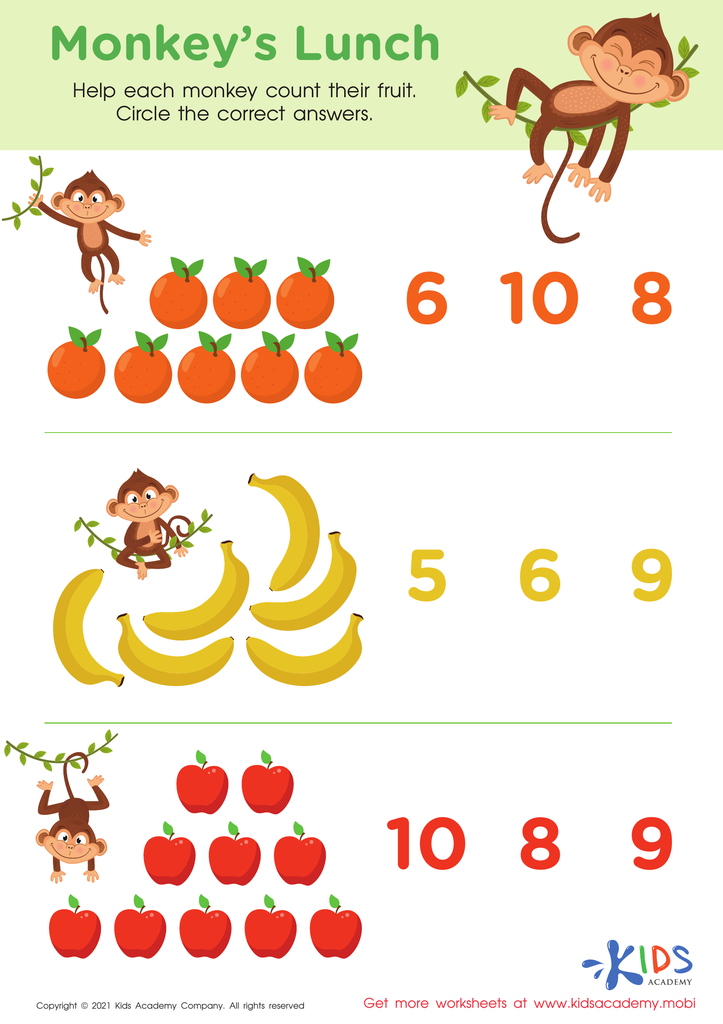
Monkey’s Lunch Worksheet
Download this free worksheet to help your kindergartner perfect their counting skills! Have your child circle the correct answers and count the fruits for the monkeys. It'll seem like fun, but your child is really learning how to count, group objects, and identify numbers.
Monkey’s Lunch Worksheet
Worksheet
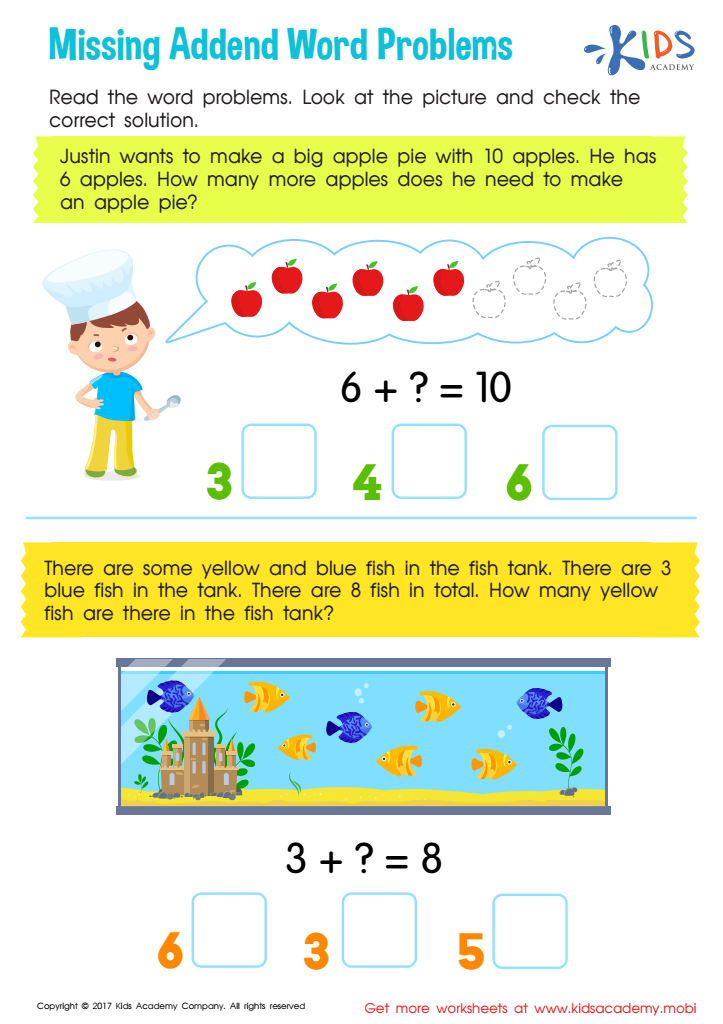
Missing Addend Word Problems Worksheet
Doing many addition and subtraction problems is key for fluency and mastery. Word problems can help kids understand how math works in everyday life. Our math worksheet uses fun scenarios and pictures to teach how to find the missing addend. It's the perfect tool to help kids understand math better!
 Assign to My Students
Missing Addend Word Problems Worksheet
Worksheet
Join Kids Academy for Free
Who is primarily going to use this learning content?







Developing problem-solving skills in math at an early age, especially for 3-year-olds, lays the foundation for future academic success and critical thinking. At this young stage, children are naturally curious and eager to explore their environment, making it an ideal time to introduce basic math concepts through playful activities. By engaging in simple math-related problems, such as counting objects, sorting shapes, or understanding patterns, children not only improve their cognitive abilities but also enhance their logical reasoning and decision-making skills.
Parents and teachers should care about fostering these skills because they are essential for children's overall development. Problem-solving encourages independence and creativity, enabling children to approach challenges with confidence. Additionally, math is a universal language that builds skills transferable to various disciplines like science and technology. Engaging children in fun, math-related games reinforces positive attitudes toward learning and helps them view challenges as opportunities to grow.
Recognizing that early math skills can lead to improved performance later in school, parents and educators can play a pivotal role in nurturing children's interests and abilities. By fostering a solid grounding in problem-solving at this stage, we equip children with tools they'll carry through life.








