Introduce your little one to the fun world of numbers with our engaging Fine Motor Skills (Writing Numbers) Math Worksheets, specially designed for 3-year-olds. These interactive worksheets help children develop crucial fine motor skills necessary for writing and number recognition through traceable patterns and playful exercises. Each activity is thoughtfully crafted to keep toddlers entertained while subtly enhancing their mathematical foundation and hand-eye coordination. With vibrant illustrations and child-friendly instructions, our worksheets transform learning into an enjoyable adventure. Perfect for both at-home practice and early classroom settings, set the stage for your child's lifelong love for numbers today!

Check out this FREE Trial Lesson on Math for age 3!

Match Objects that Fit Together

Favorites
With answer key
Interactive
  • 3
  • Fine motor skills (writing numbers)
  • Math
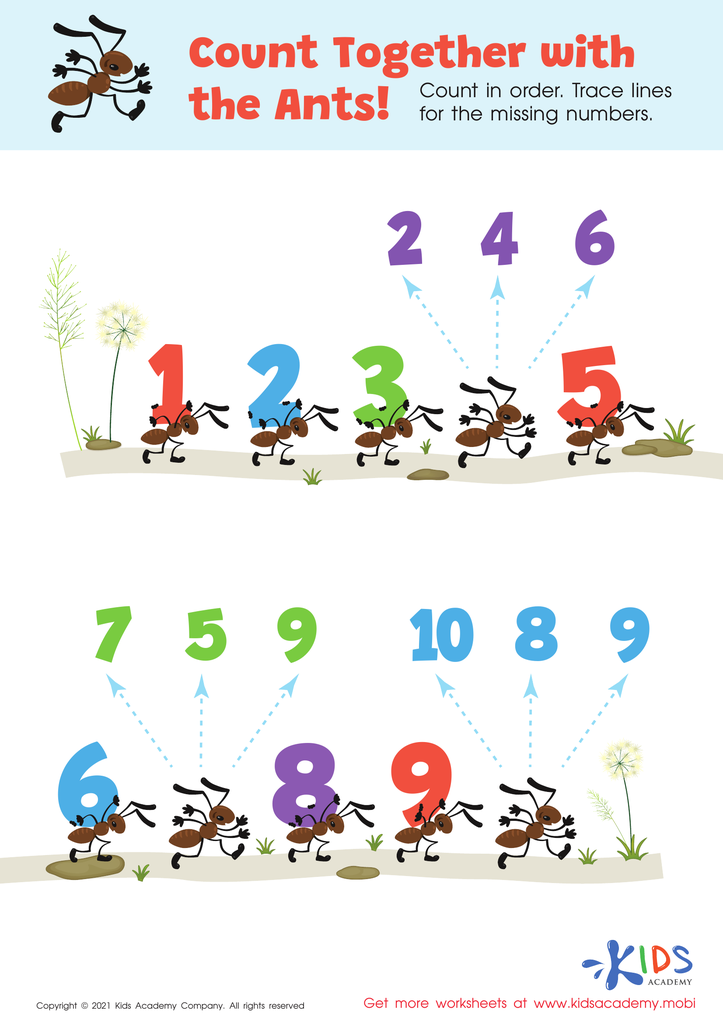
Count Together with the Ants Worksheet
Count Together with the Ants Worksheet
Rather than letting kids get too deep in online games, keep them engaged with learning worksheets. Ask them to identify the insect in the picture, then count the ants. Help them trace lines to the missing numbers. It's simple and straightforward for young children to comprehend.
Count Together with the Ants Worksheet
Worksheet
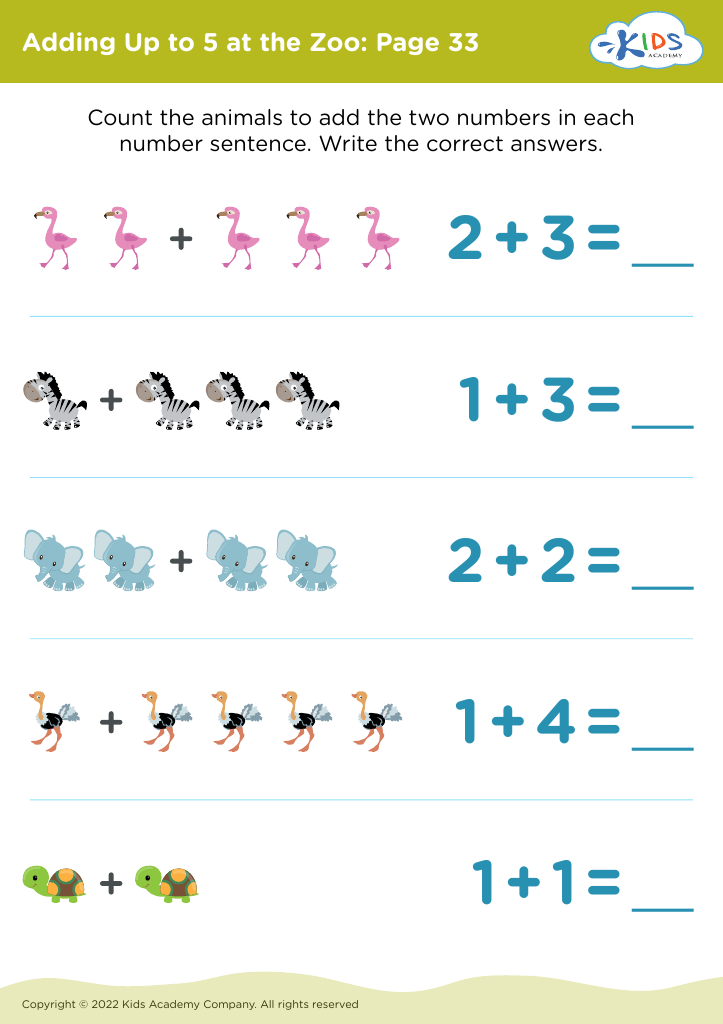
Adding Up to 5 at the Zoo: Page 33
Worksheet
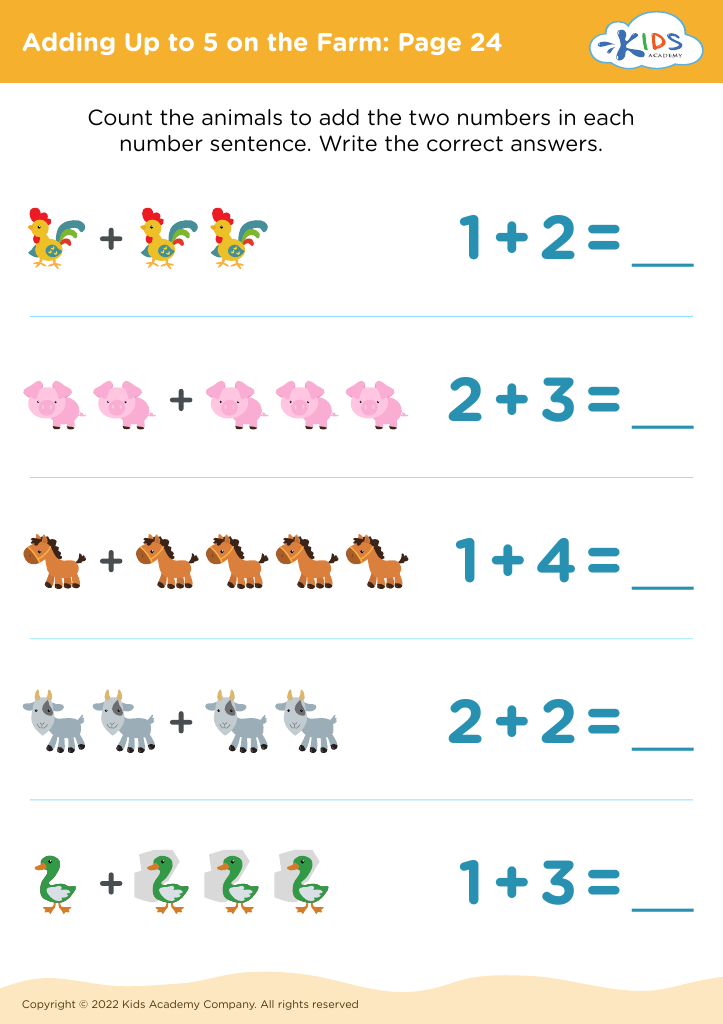
Adding Up to 5 on the Farm: Page 24
Worksheet
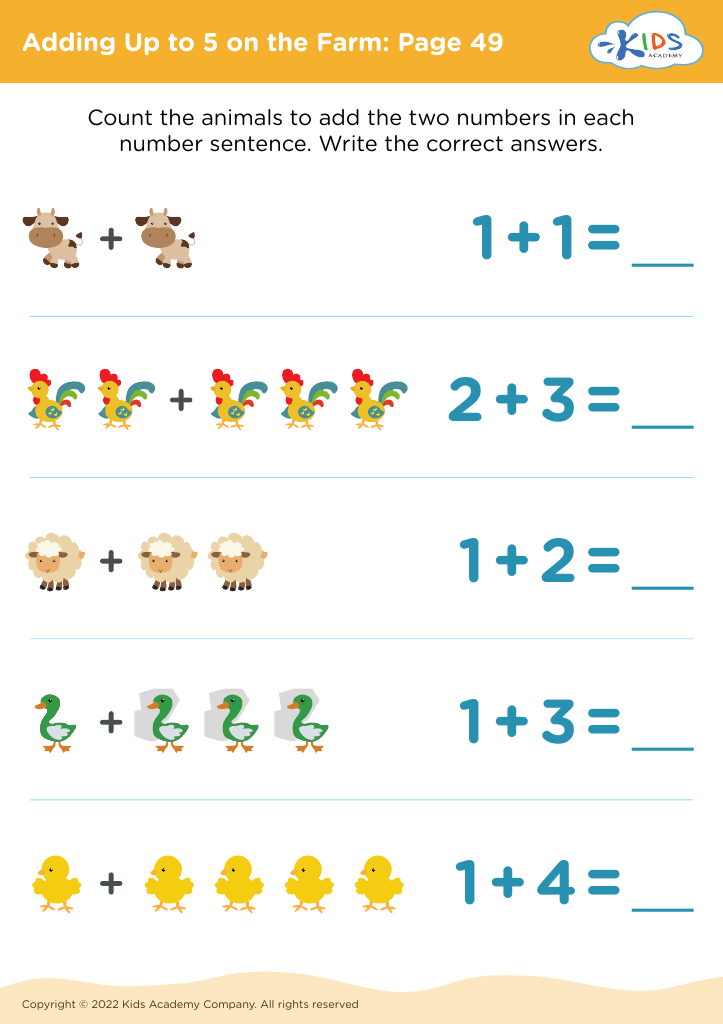
Adding Up to 5 on the Farm: Page 49
Worksheet
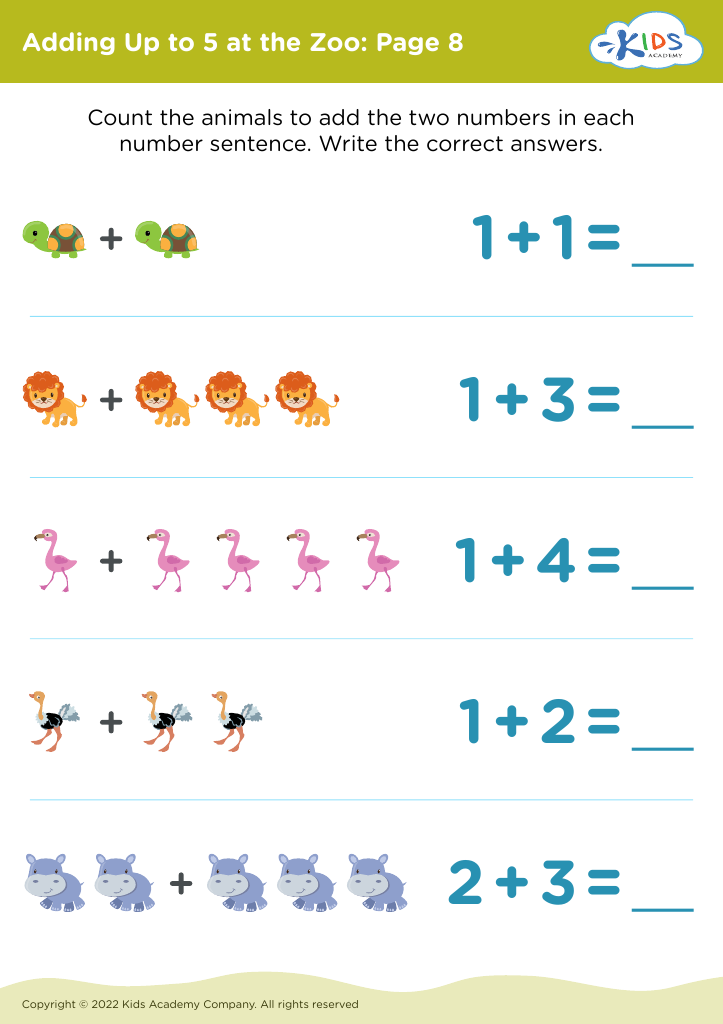
Adding Up to 5 at the Zoo: Page 8

Adding Up to 5 at the Zoo: Page 8

Adding Up to 5 at the Zoo: Page 8
Worksheet
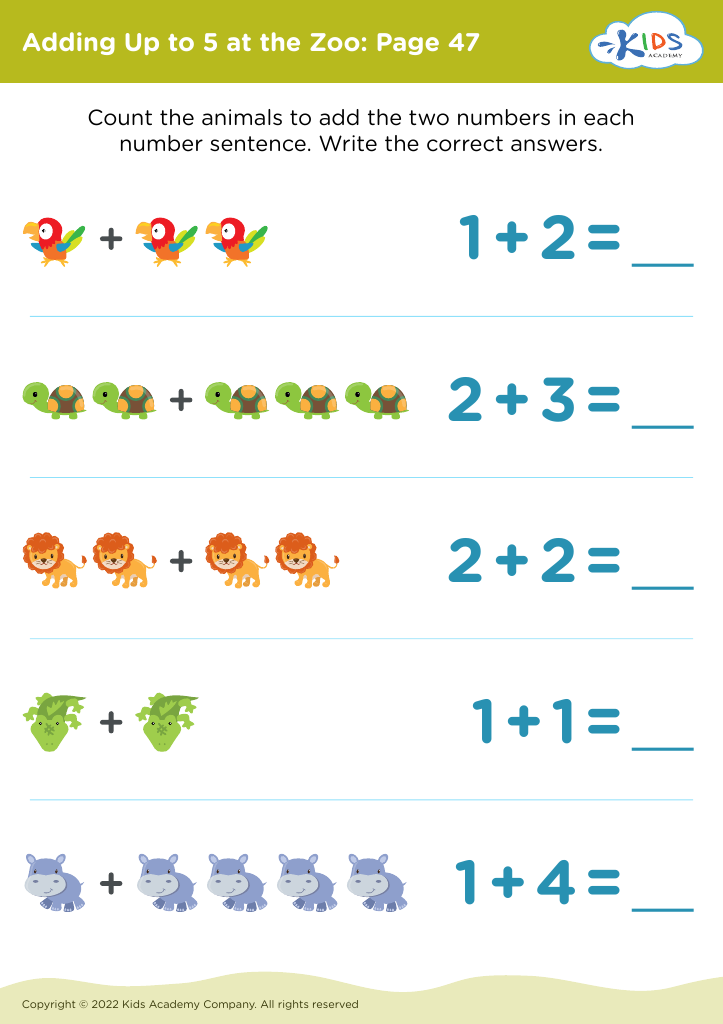
Adding Up to 5 at the Zoo: Page 47
Worksheet
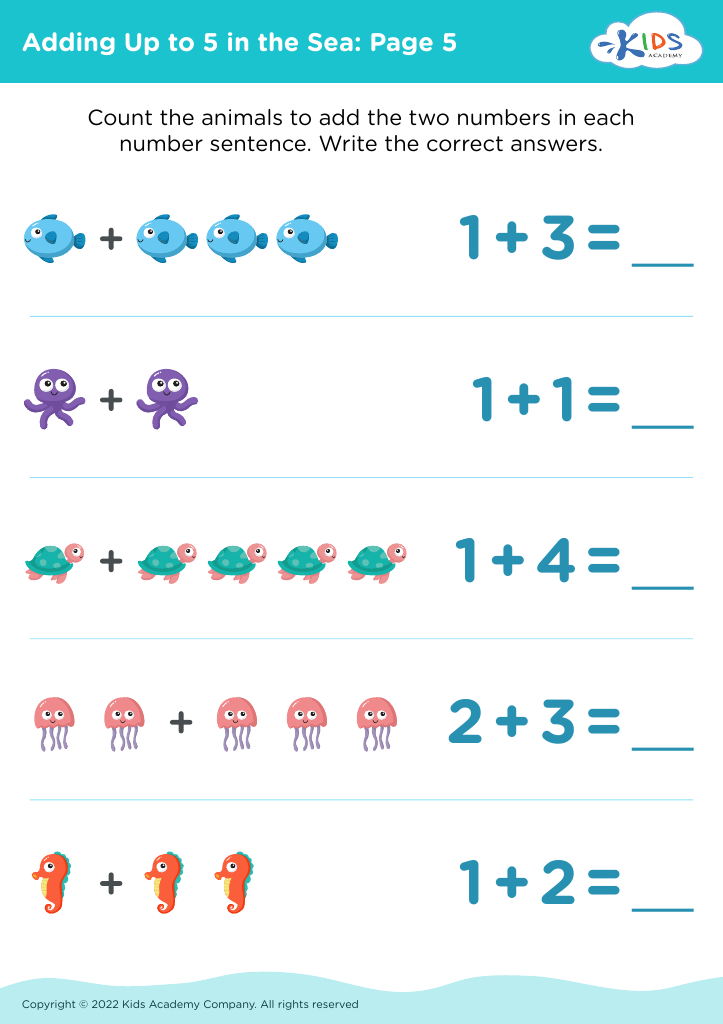
Adding Up to 5 in the Sea: Page 5

Adding Up to 5 in the Sea: Page 5

Adding Up to 5 in the Sea: Page 5
Worksheet
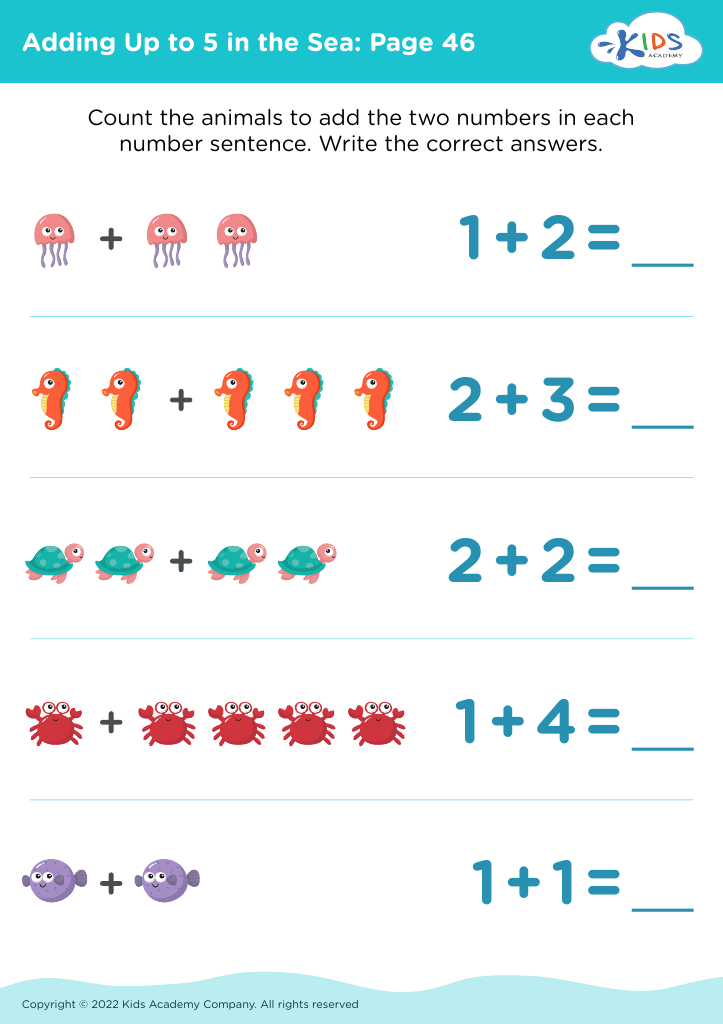
Adding Up to 5 in the Sea: Page 46
Worksheet
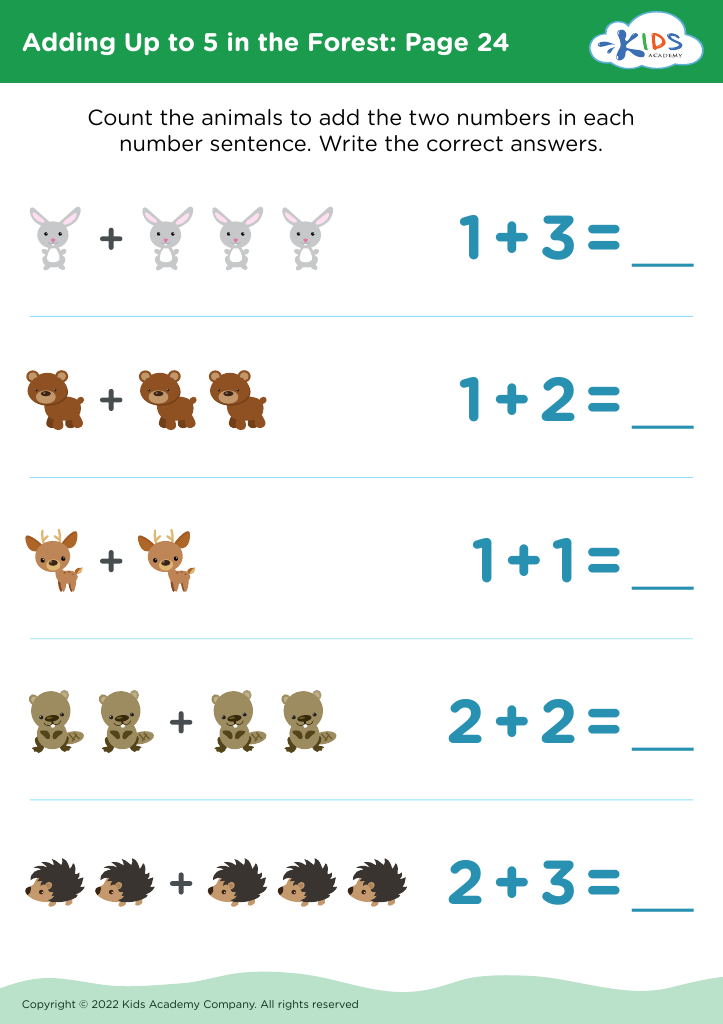
Adding Up to 5 in the Forest: Page 24
Worksheet
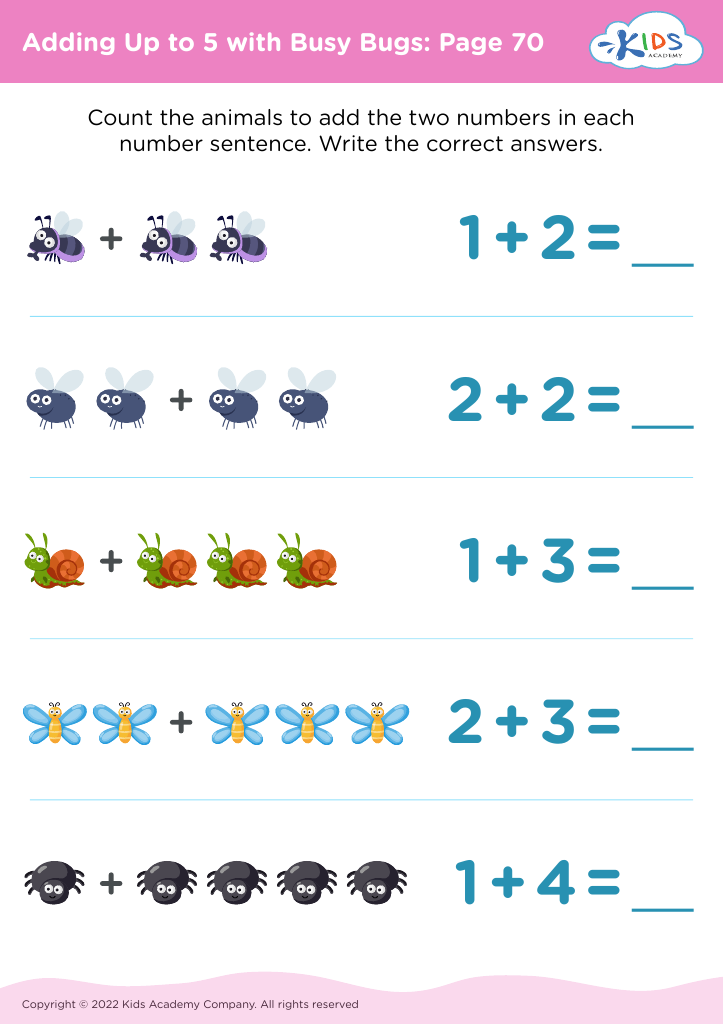
Adding Up to 5 with Busy Bugs: Page 70
Worksheet
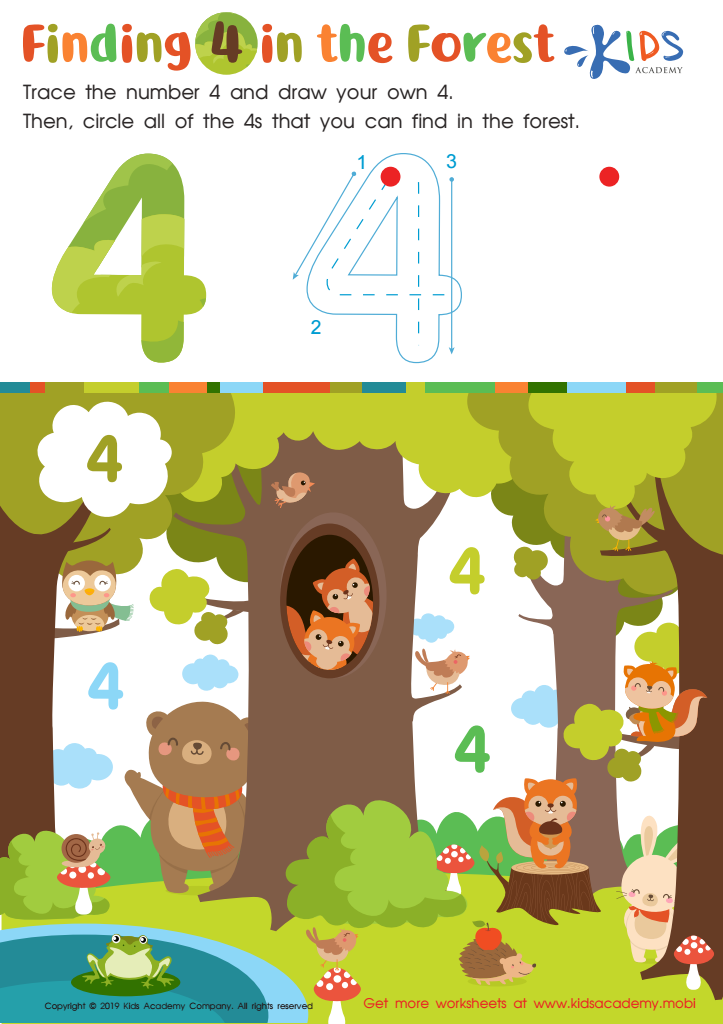
Finding 4 in the Forest Worksheet

Finding 4 in the Forest Worksheet

Before starting, have your kids count as high as they can. Ask them to identify the setting and point out the 4s. Trace 4 and draw your own. Help your kids circle all the 4s they can find in the forest. How far can they count? How well did they find the hidden 4s?
Finding 4 in the Forest Worksheet
Worksheet
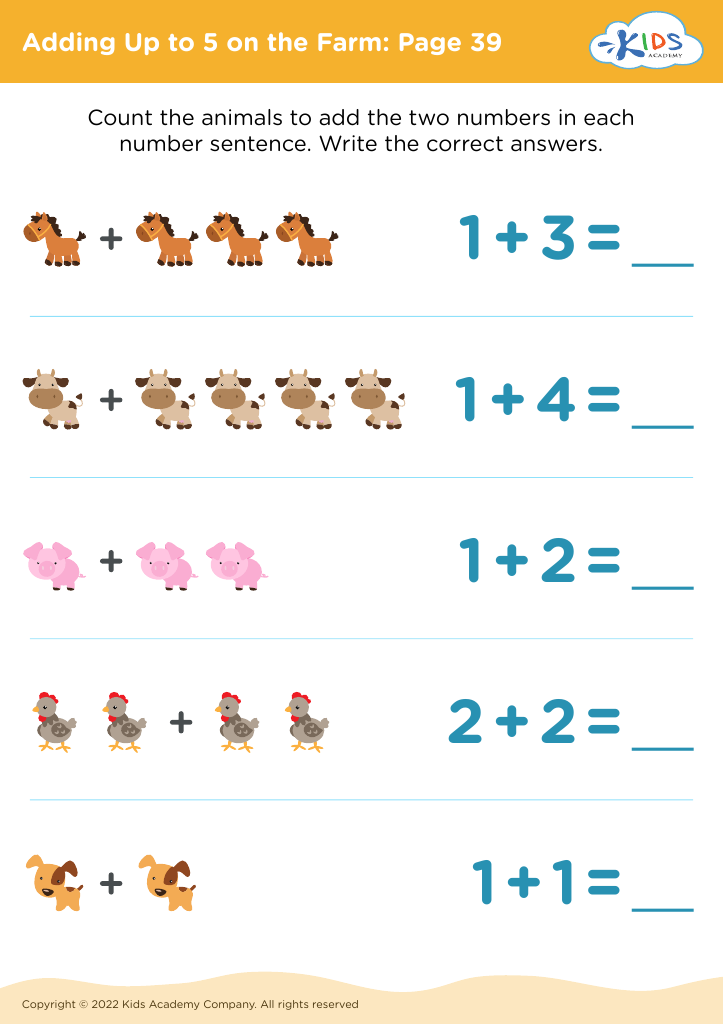
Adding Up to 5 on the Farm: Page 39
Worksheet
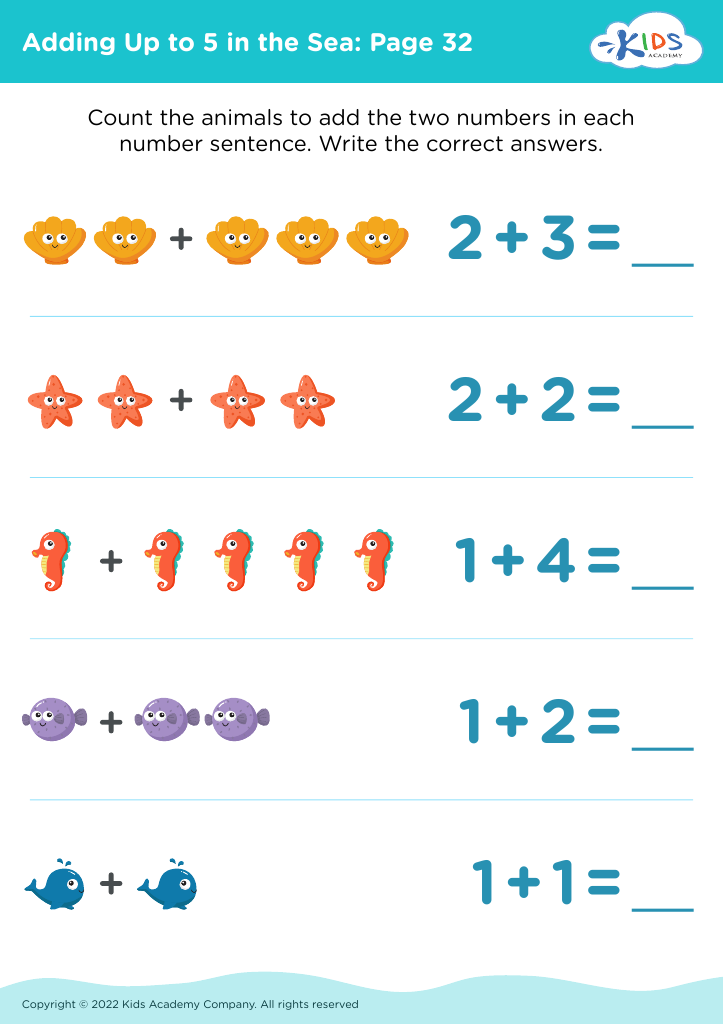
Adding Up to 5 in the Sea: Page 32
Worksheet
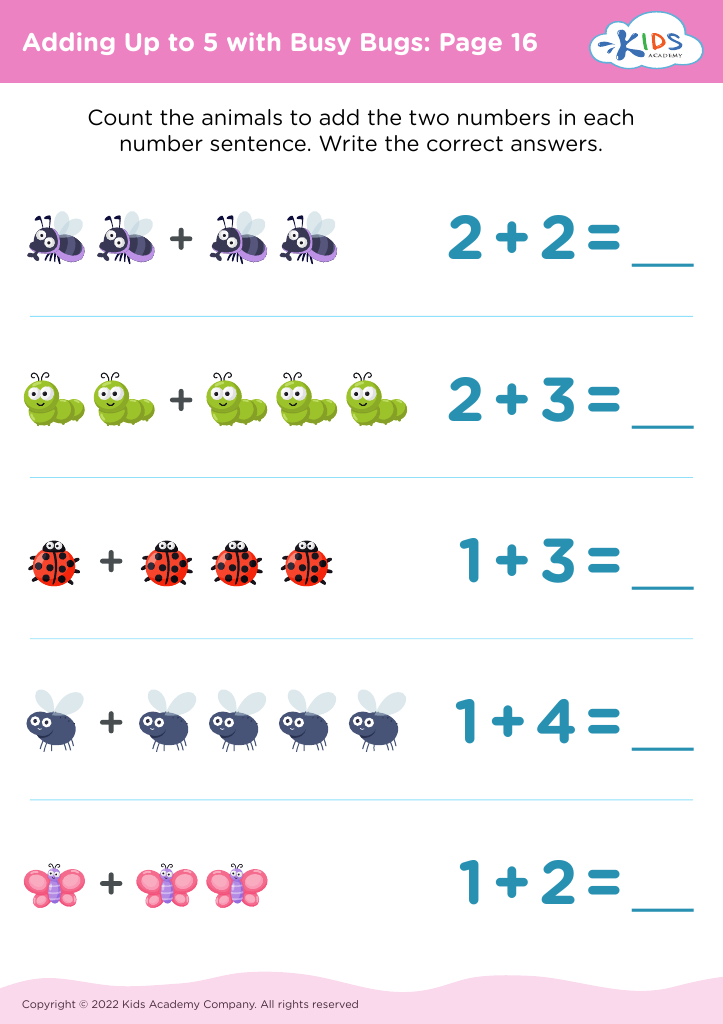
Adding Up to 5 with Busy Bugs: Page 16
Worksheet
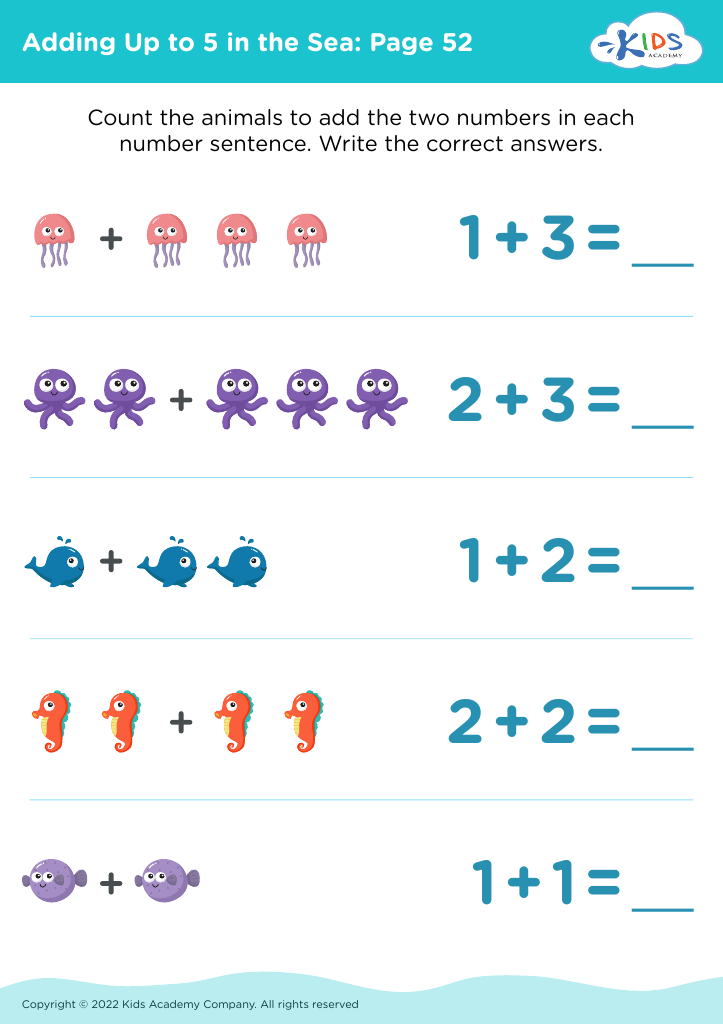
Adding Up to 5 in the Sea: Page 52
Worksheet


Fine motor skills, which involve the coordination of small muscles like those in the hands and fingers, are crucial for young children, particularly when writing numbers at the age of three. These skills are the building blocks for essential activities in later life, such as writing, typing, and self-care tasks like buttoning a shirt or tying shoes.

When children work on fine motor skills through writing numbers, they develop hand-eye coordination, attention to detail, and precision. They're not just learning to jot down numerals; they're getting hands-on experience with the early forms of structure and order, which are foundations of mathematical thinking. This activity ingrains core skills such as grip strength, pencil control, and the ability to hold and manipulate tools, which are essential for their academic journey.

Teachers and parents who foster fine motor skill activities foster a child’s confidence and independence. When children can perform these activities with ease, they are more likely to engage comfortably and successfully in other learning experiences, leading to a more positive attitude toward school and learning in general. The earlier these skills are developed, the more advantageous it is for the child’s future educational outcomes, making fine motor skills a vital focus of early childhood education.