Mathematical problem-solving Math Worksheets for 3-Year-Olds
3 filtered results
-
From - To
Inspire young minds with our engaging Mathematical Problem-solving worksheets specifically designed for 3-year-olds! These interactive resources help little learners develop critical thinking and early math skills through fun activities tailored for their age group. Each worksheet features colorful illustrations and age-appropriate problem-solving challenges that encourage children to explore basic concepts like numbers, shapes, and counting. Ideal for at-home learning or classroom use, our worksheets promote cognitive development while fostering a love for math in a playful, stress-free environment. Download our free worksheets today and watch your child embark on an exciting math adventure full of discovery and learning!
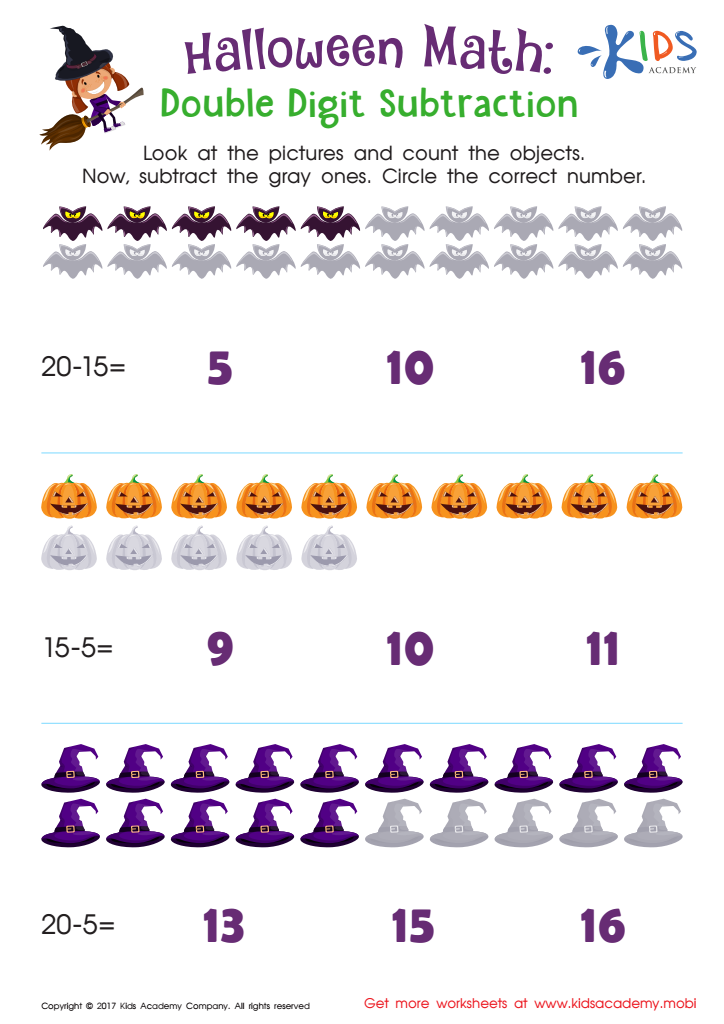
Halloween Math Subtraction Worksheet
 Assign to My Students
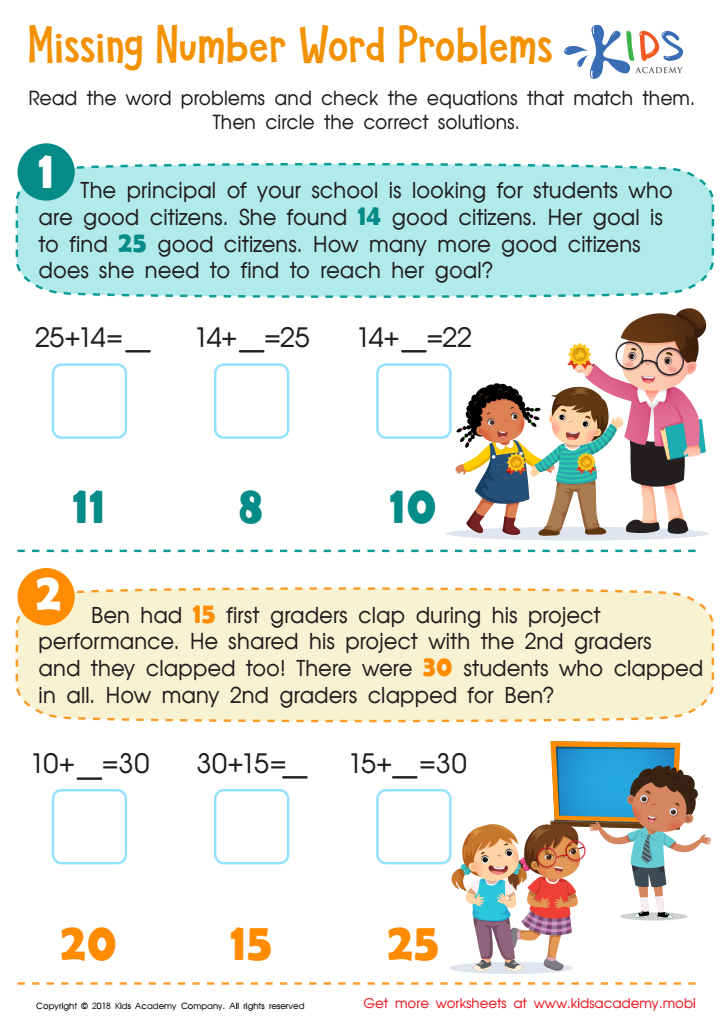
Missing Number Word Problems Worksheet
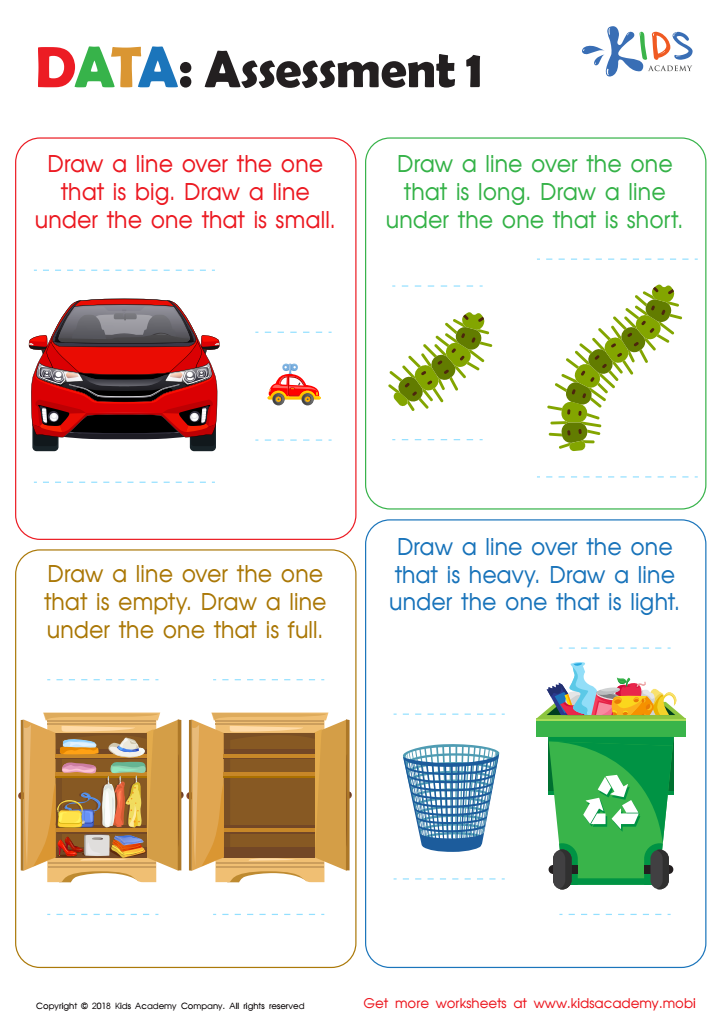
Data: Assessment 1 Worksheet



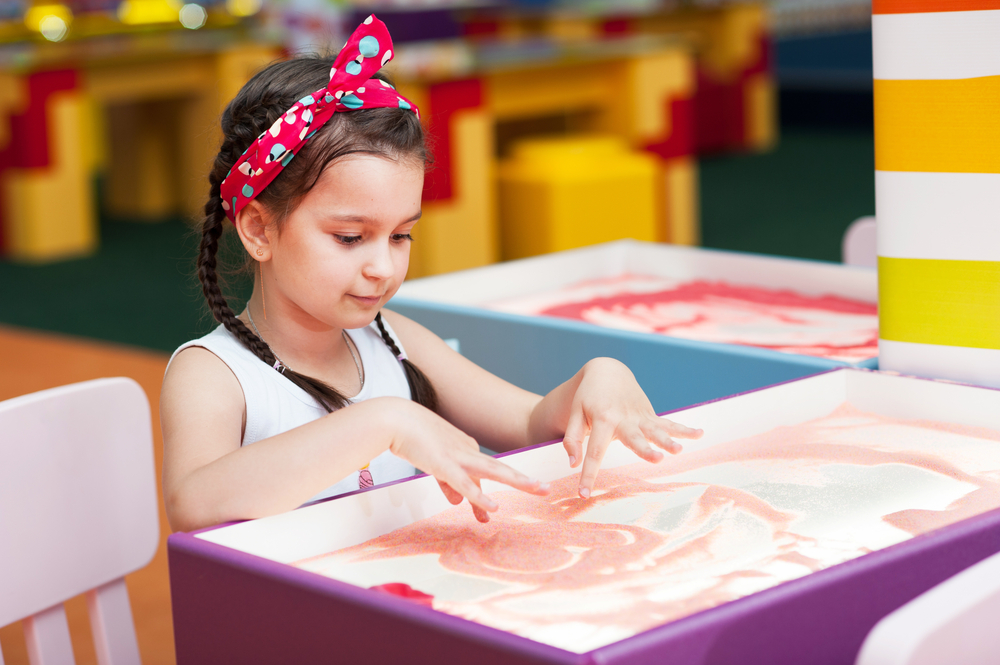




Mathematical problem-solving is crucial for 3-year-olds as it lays the foundation for lifelong learning and cognitive development. At this stage, children are naturally curious and eager to explore their environment, making it an ideal time to introduce mathematical concepts through play and everyday experiences. Engaging in problem-solving helps young children develop critical thinking skills, enhance their ability to reason, and fosters an awareness of patterns and relationships.
Parents and teachers should care because early exposure to math promotes a positive attitude towards the subject, reducing the likelihood of math anxiety later in life. Incorporating activities like sorting objects, counting toys, and simple puzzles not only reinforces fundamental skills but also builds vocabulary and communication abilities. Moreover, these activities can be fun and interactive, creating a strong bond between adults and children while allowing for observation of developmental milestones.
By nurturing early math skills, parents and teachers equip children with the tools necessary for future academic success. This foundation supports their readiness for school challenges, enhances problem-solving abilities, and cultivates a sense of confidence in tackling various tasks. Ultimately, fostering a love for math at an early age contributes to the holistic development of children, preparing them for a lifetime of learning and exploration.








