Comparing sizes Measurement Worksheets for 3-Year-Olds
3 filtered results
-
From - To
Discover engaging and educational "Comparing Sizes Measurement Worksheets" designed specifically for 3-year-olds! These worksheets introduce young learners to essential math concepts through fun, interactive activities. Children will explore different sizes, learning to identify which objects are larger or smaller. Suitable for home or classroom use, these worksheets feature colorful illustrations that capture children's attention while making learning enjoyable. As kids practice comparing sizes, they enhance their critical thinking and visual discrimination skills. Perfect for early childhood education, these resources help lay a strong foundation for future math learning. Download now and watch your little ones thrive in their measurement skills!
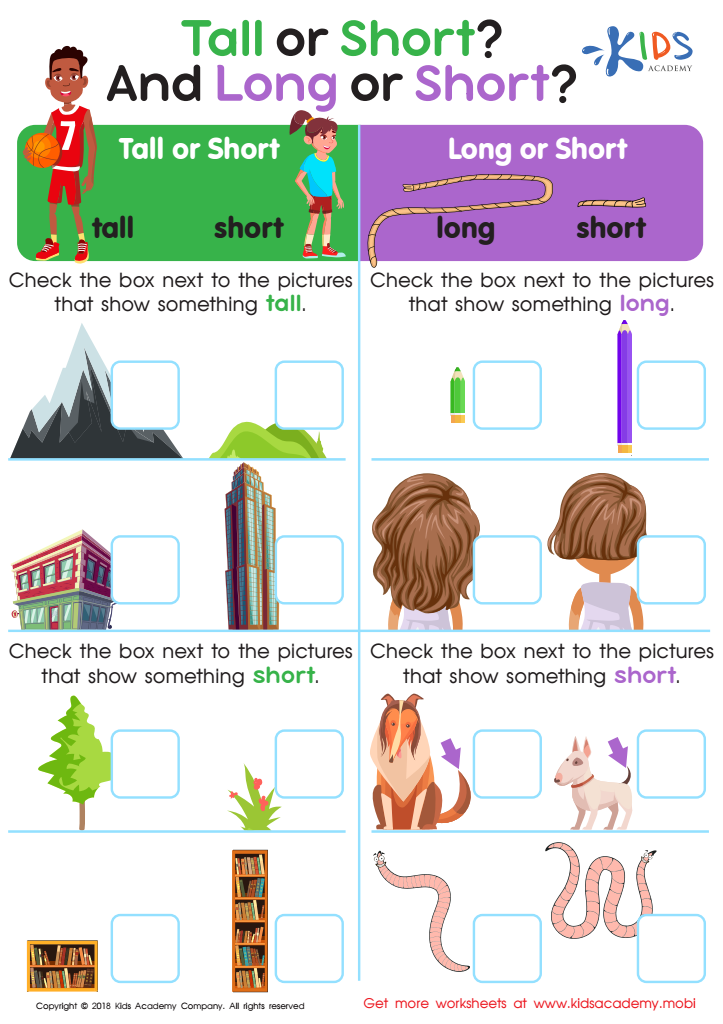
Tall or Short and Long or Short? Worksheet
 Assign to My Students
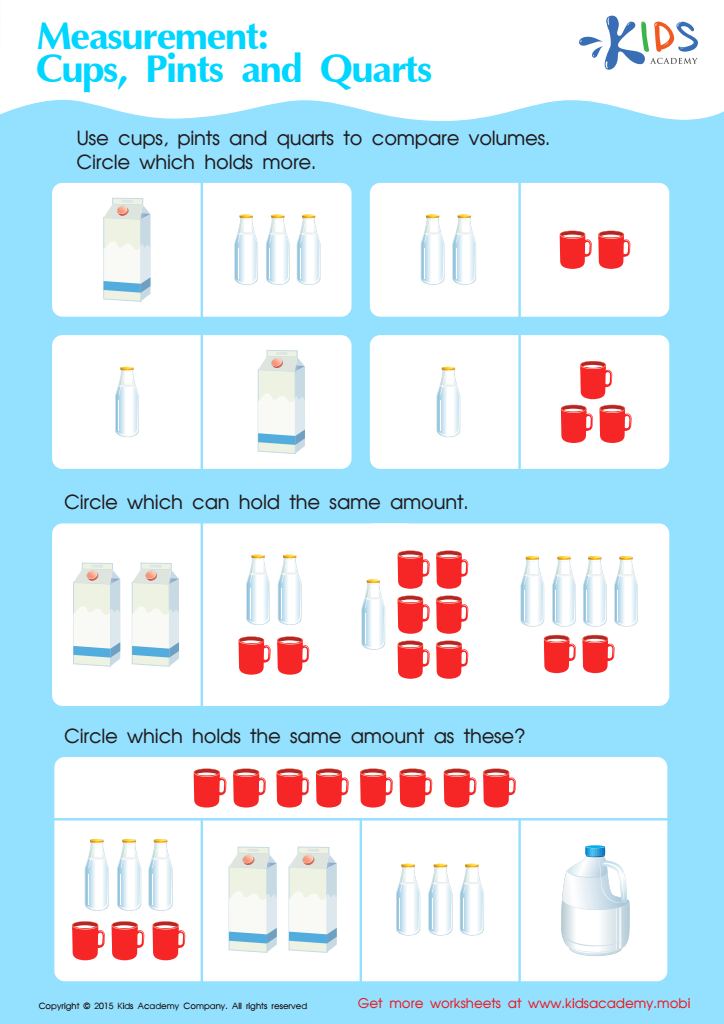
Measurement: Compare Volumes Worksheet
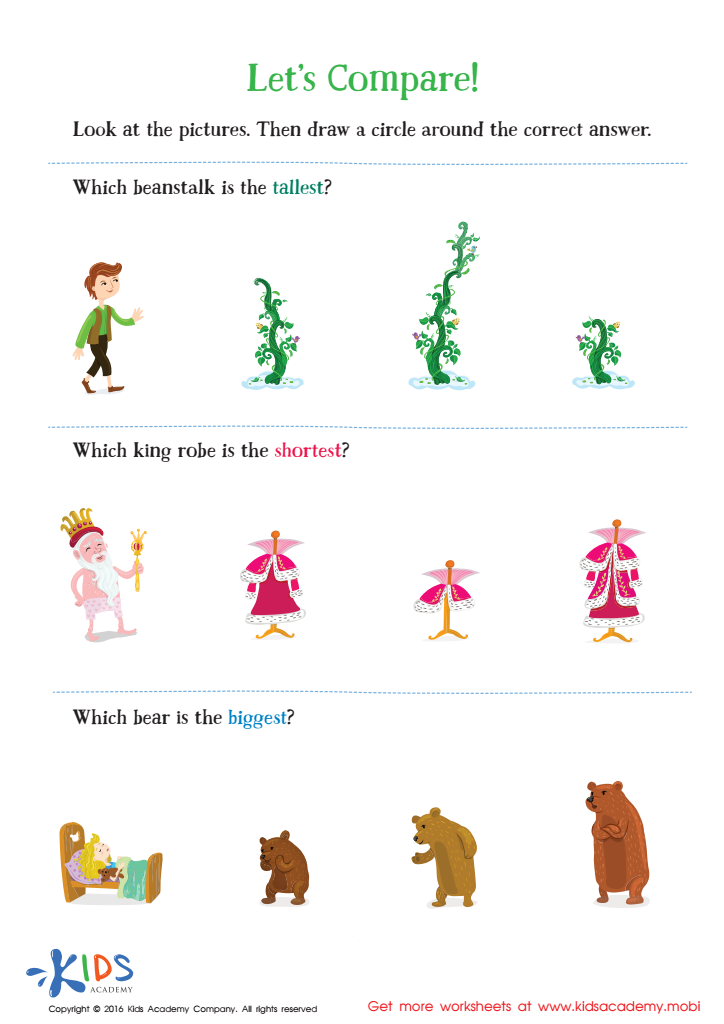
Fairy Tale Worksheet: Let's Compare








Parents and teachers should care about teaching 3-year-olds to compare sizes and measurements because it lays the foundation for essential math skills and critical thinking. This stage of development is crucial for cognitive growth, as young children are naturally curious about their world and eager to explore concepts related to size, length, and volume. Engaging in measurement activities helps enhance their understanding of comparisons, concepts like "bigger," "smaller," "taller," or "shorter."
Furthermore, comparing sizes fosters language development, as children learn to articulate their observations and use specific vocabulary related to dimensions. Hands-on experiences that involve sorting, stacking, or using everyday objects, like toys or food items, not only make learning enjoyable but also reinforce concepts through play.
Early exposure to measurement also builds problem-solving skills. Children learn to make estimations, develop spatial awareness, and connect mathematical ideas to real-world contexts. By nurturing these skills at this age, parents and teachers help enable a lifelong love of learning and prepare children for future academic success in science, technology, engineering, and mathematics (STEM) fields. In short, instilling a sense of measurement encourages exploration, promotes logical thinking, and cultivates curiosity in young learners.








