Basic counting skills Numbers 0–10 Worksheets for 3-Year-Olds
5 filtered results
Difficulty Level
Grade
Age
-
From - To
Subject
Activity
Standards
Discover our engaging "Basic Counting Skills: Numbers 0–10 Worksheets" tailored for 3-year-olds! These fun and colorful worksheets will help your little ones learn to recognize and count numbers from 0 to 10. With a variety of interactive activities, children will develop essential counting skills through tracing, matching, and visual recognition. Each worksheet is designed to promote a love for learning while enhancing fine motor skills and number familiarity. Ideal for home or classroom use, our worksheets create a playful learning environment that ensures your child builds a strong foundation in math. Start counting and have fun today!
Favorites
With answer key
Interactive
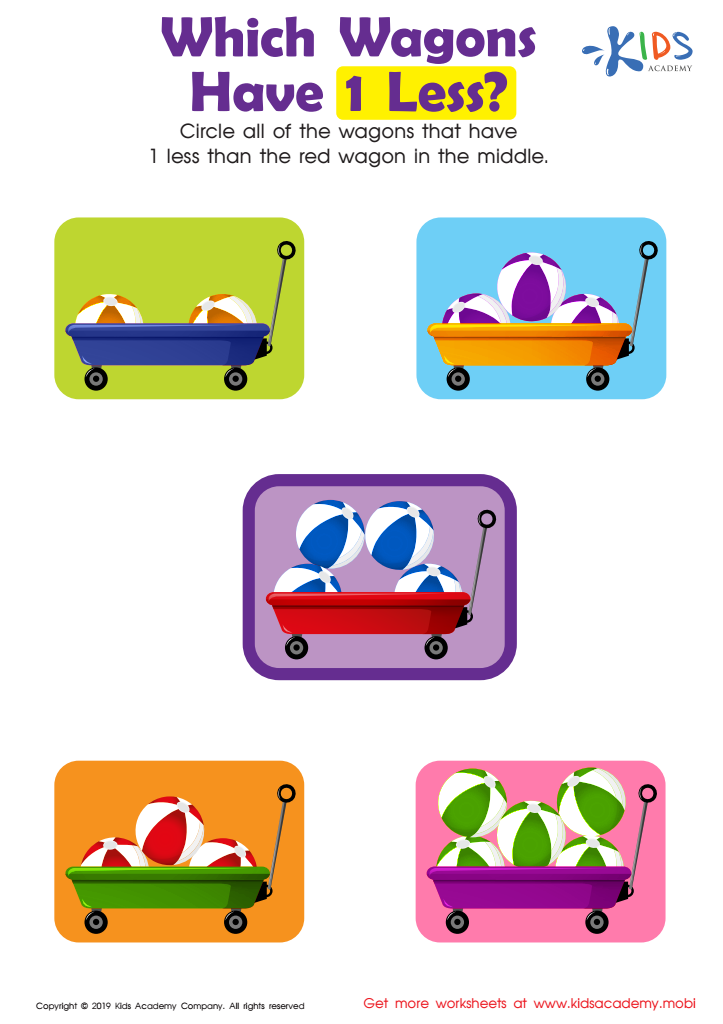
Which Wagons Have 1 Less? Worksheet
Test your kid's counting skills with a simple exercise. Ask them to count the balls in the five wagons shown and to circle the wagons with one less than the red wagon in the middle. This will give their brains a simple task that tests their knowledge of numbers.
 Assign to My Students
Which Wagons Have 1 Less? Worksheet
Worksheet
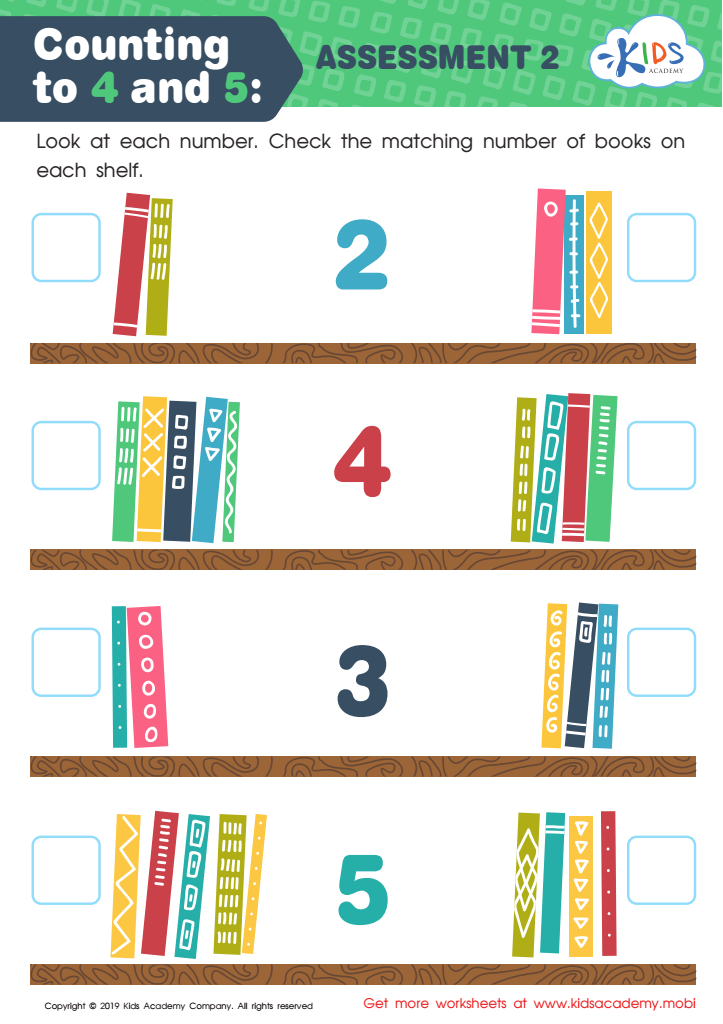
Counting to 4 and 5: Assessment 2 Worksheet
Counting is a key skill for math success. Help your kids get off to a good start by counting the books on each shelf in the pictured printout. Point to each set of books, counting aloud, and then look for the matching number in the centre. With this simple worksheet, your kids can get the practice they need before taking on more advanced math skills.
Counting to 4 and 5: Assessment 2 Worksheet
Worksheet
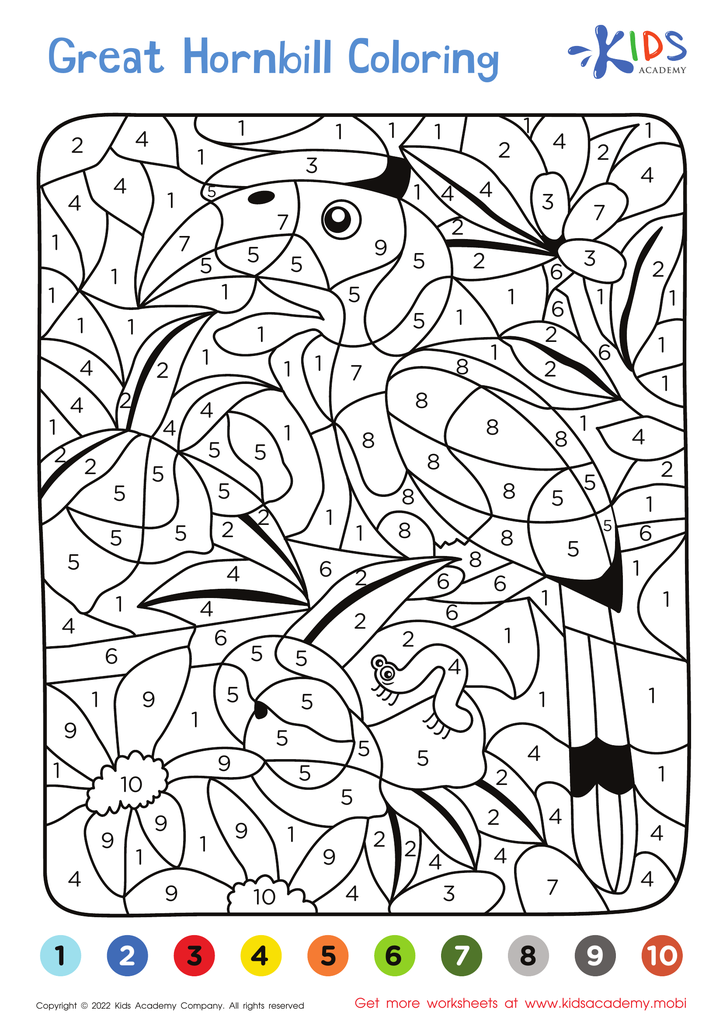
Great Hornbill – Coloring by Numbers
Download our free PDF page, featuring a hornbill for you to color in! Numbers are provided so you can follow along, making the picture come to life. Fun for all ages!
Download our free PDF page and have fun coloring a hornbill according to the numbers! You'll bring the picture to life with every stroke of your creativity. Perfect for all ages!
Great Hornbill – Coloring by Numbers
Worksheet
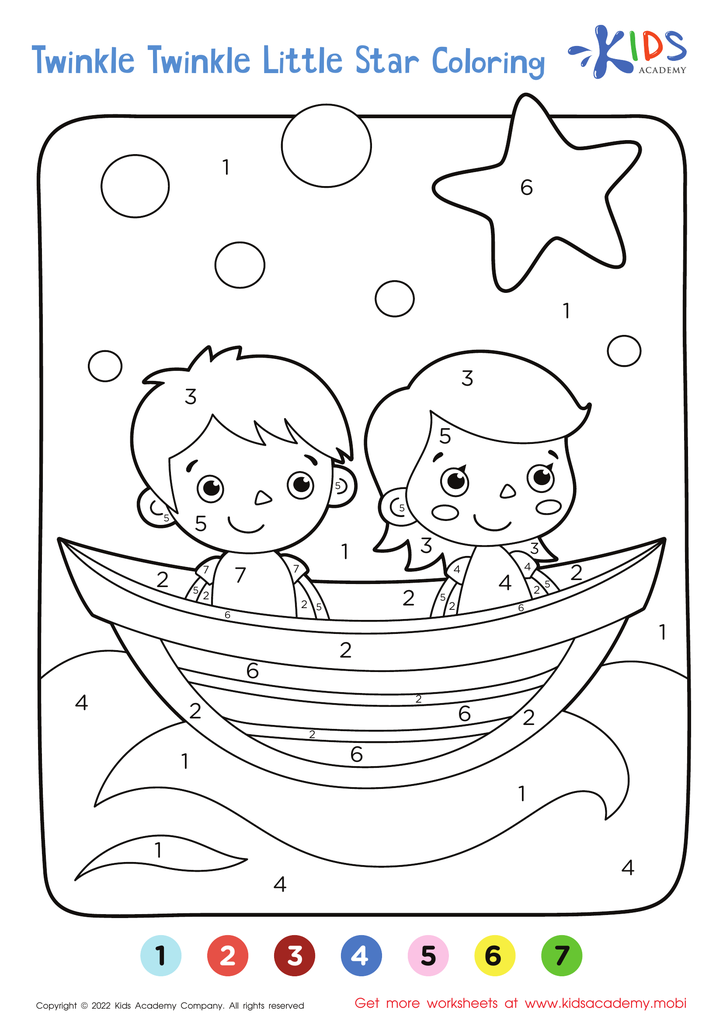
Twinkle, Twinkle, Little Star – Coloring by Numbers
Color a scene from Twinkle Twinkle Little Star with our free coloring page. Download the PDF and use the numbers to bring the nursery rhyme to life. Have fun! (80 words)
Twinkle, Twinkle, Little Star – Coloring by Numbers
Worksheet
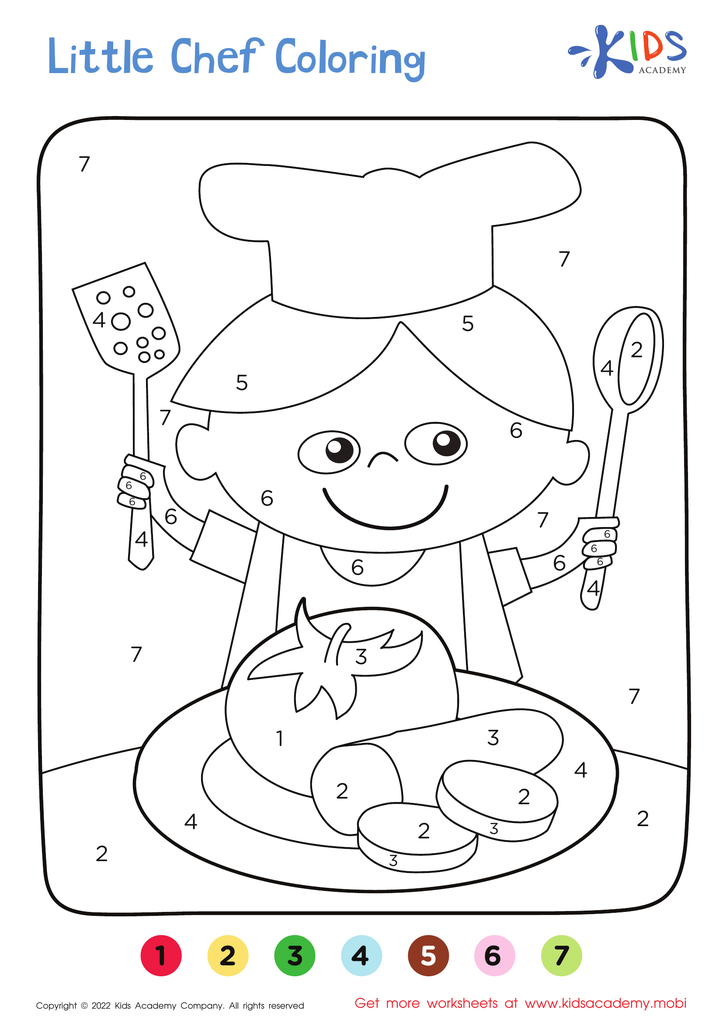
Little Chef – Coloring by Numbers
This PDF page lets you color in a cute little chef! Download it for free and explore your artistic side by using numbers to color in the picture. Let your creativity flow and have some fun!
Little Chef – Coloring by Numbers
Worksheet
Join Kids Academy for Free
Who is primarily going to use this learning content?








Basic counting skills, particularly for numbers 0–10, are foundational for early childhood development. At age three, children are naturally curious and eager to learn, making this an ideal time to introduce counting. Understanding numbers lays the groundwork for future mathematical concepts, enhancing a child's ability to problem solve and make sense of the world around them.
Parents and teachers should care about fostering these skills because early numeracy impacts cognitive and academic success across subjects. Counting helps develop critical thinking and cognitive abilities, improving memory and attention span. Additionally, incorporating counting into daily activities, such as counting toys or snacks, promotes practical application, making learning more engaging and relatable.
Moreover, building counting skills aids in social interactions, where children learn to share, take turns, and follow directions. This can boost their self-confidence and communication abilities. By nurturing early counting skills, adults lay the foundation for a positive attitude toward math, helping to reduce anxiety around the subject as they grow. Ultimately, addressing numerical skills early creates well-rounded learners equipped for school challenges and fosters a lifelong love of learning.