Counting skills Subtraction Worksheets for 3-Year-Olds
3 filtered results
-
From - To
Introduce your little mathematician to subtraction with our engaging "Counting Skills Subtraction Worksheets" specifically designed for 3-year-olds! These fun, printable worksheets help preschoolers build a strong foundation in counting and basic arithmetic, using colorful illustrations and simple exercises. Through playful activities, children learn to subtract numbers up to 5, enhance their cognitive abilities, and develop critical problem-solving skills. Perfect for early learners, these worksheets make math exciting and accessible, ensuring your child gains confidence and a positive attitude towards learning. Start your child's mathematical journey today with our expertly crafted subtraction worksheets!
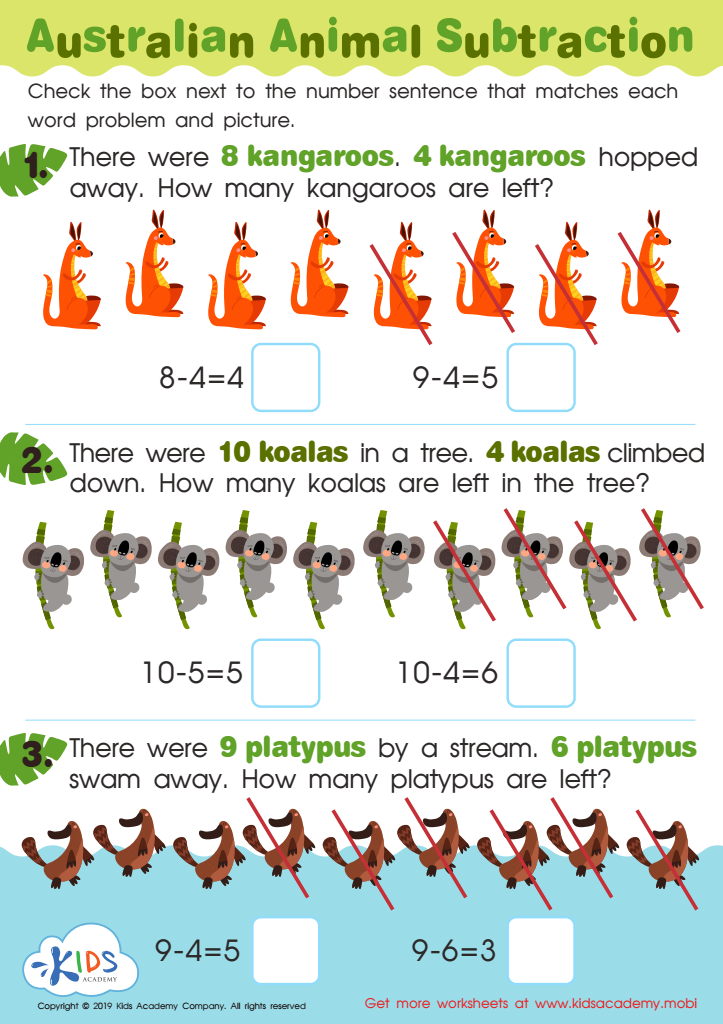
Australian Animal Subtraction Worksheet
 Assign to My Students
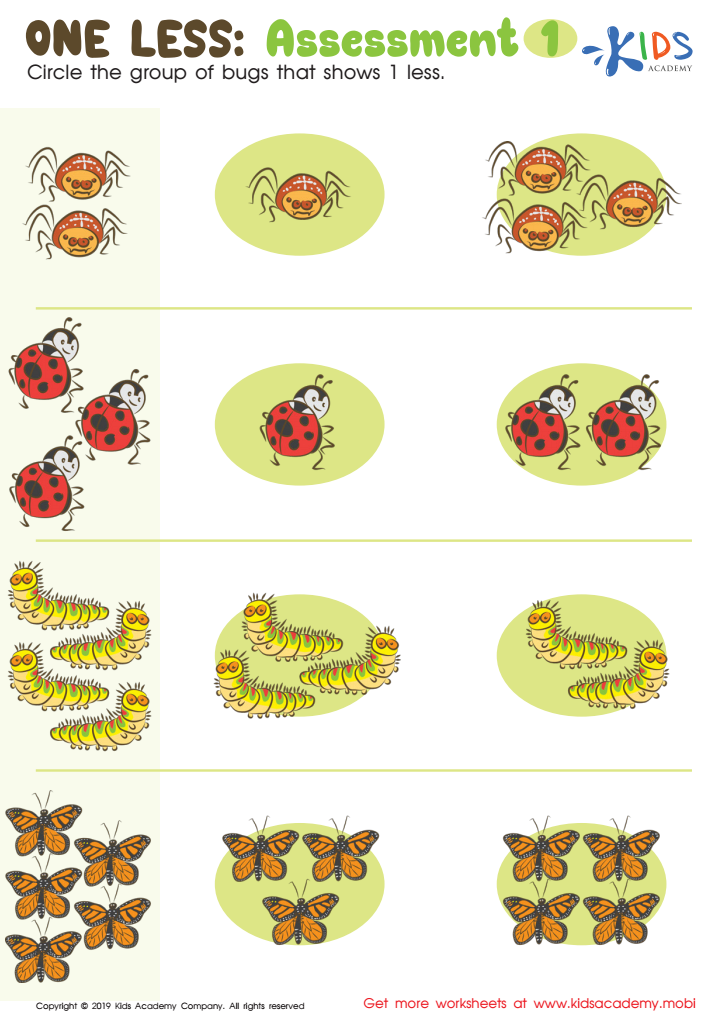
One Less: Assessment 1 Worksheet
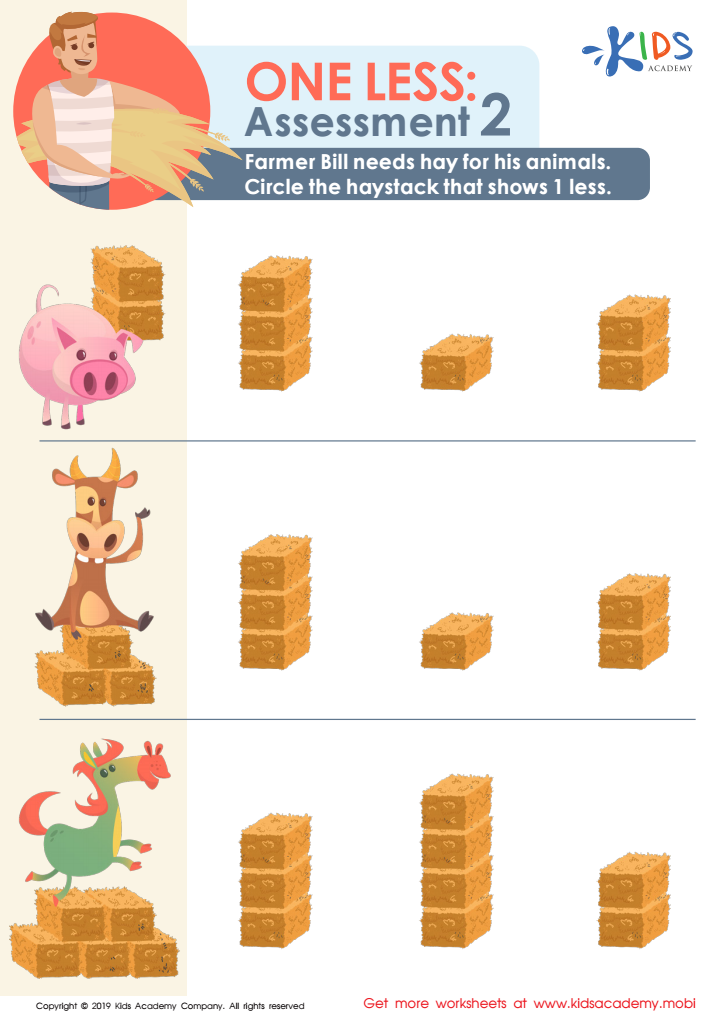
One Less: Assessment 2 Worksheet








Counting skills and subtraction are foundational elements in early childhood education that pave the way for later academic success and everyday problem-solving abilities. For 3-year-olds, learning to count and understand subtraction nurtures both cognitive and fine motor skills. Parents and teachers should care about these skills for several compelling reasons:
-
Cognitive Development: Practicing counting and simple subtraction enhances a child's numerical comprehension and logical thinking. It helps them recognize patterns, understand sequences, and develop a basic sense of numbers which is crucial for more complex math skills.
-
Confidence Building: Early success in math-related activities boosts a child's confidence and fosters a positive attitude toward learning. Approaching subtraction in a fun, engaging manner can make children more willing to tackle new and more challenging tasks.
-
Problem-solving Skills: Subtraction introduces children to basic problem-solving techniques. They learn to make decisions, test hypotheses, and derive solutions, which are essential skills both inside and outside the classroom.
-
Everyday Application: Basic subtraction is part of everyday life, from sharing toys to distributing snacks. If children can understand and apply these skills early on, they navigate daily activities more effectively.
Therefore, both parents and teachers play crucial roles in encouraging these early math skills to ensure children are well-equipped for future educational milestones and practical life situations.








