Number comprehension Subtraction Worksheets for 3-Year-Olds
6 filtered results
-
From - To
Unlock the world of numbers for your 3-year-old with our engaging Number Comprehension Subtraction Worksheets! Designed to build foundational math skills, these worksheets introduce young learners to the concept of subtraction through fun, interactive activities. Kids will explore visual aids, recognize numbers, and understand simple subtraction through engaging illustrations and guided exercises. Ideal for early learners, these worksheets promote cognitive development while making math enjoyable. Foster your child's confidence and number sense as they solve age-appropriate subtraction problems. Perfect for use at home or in the classroom, our resources are a fantastic way to nurture early math skills in your little one!
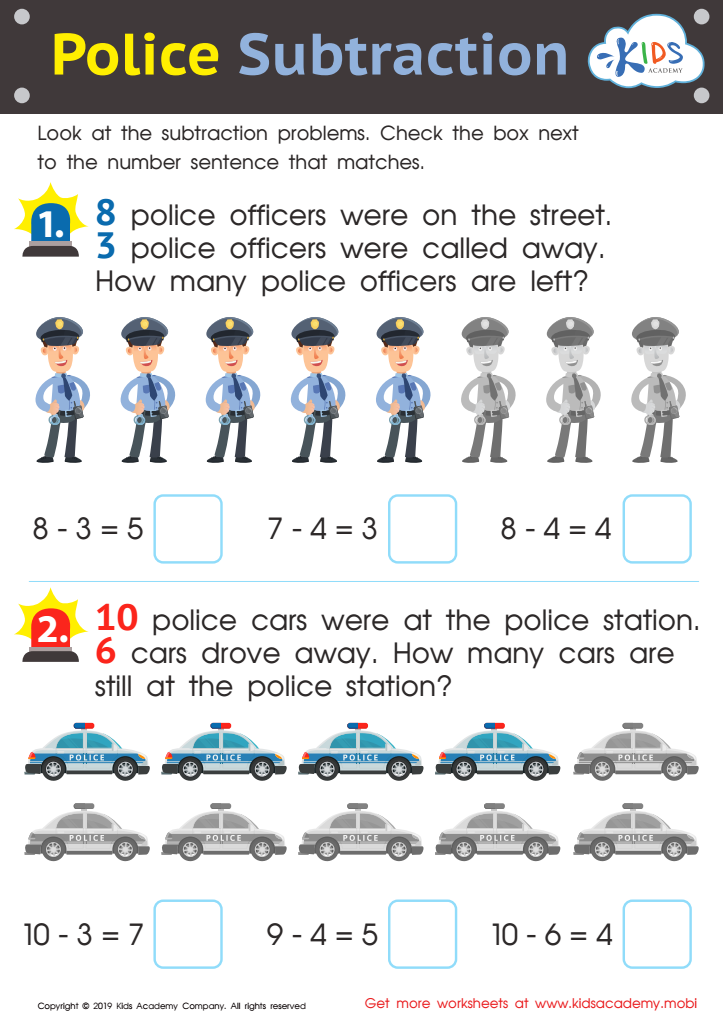
Police Subtraction Worksheet
 Assign to My Students
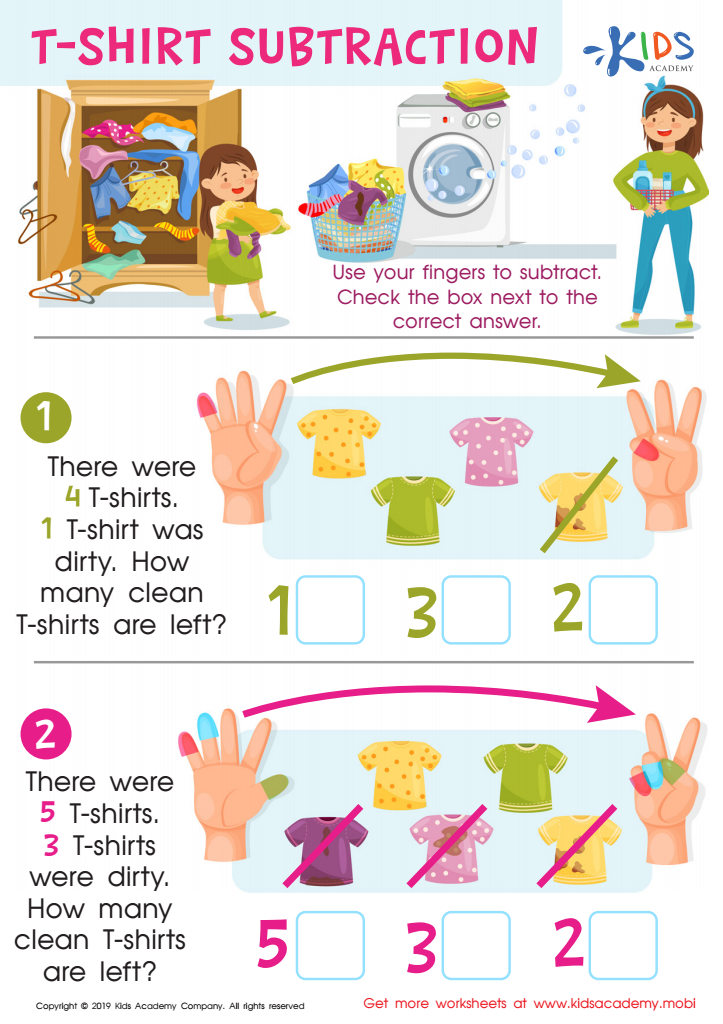
T-shirt Subtraction Worksheet
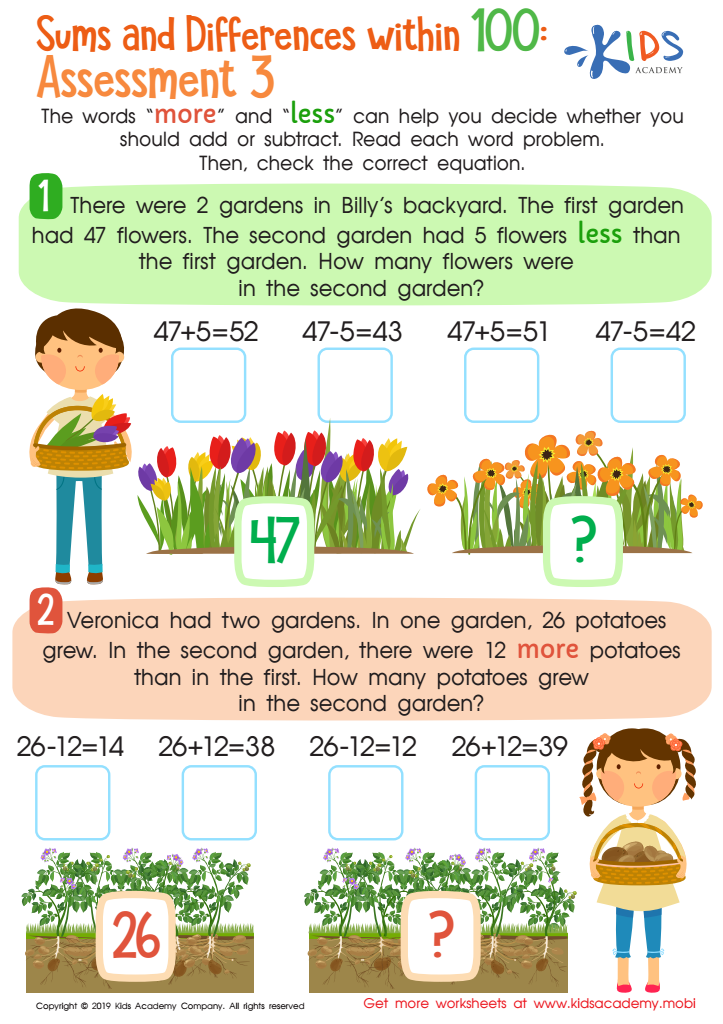
Sums and Differences Within 1 - Assessment 1 Worksheet
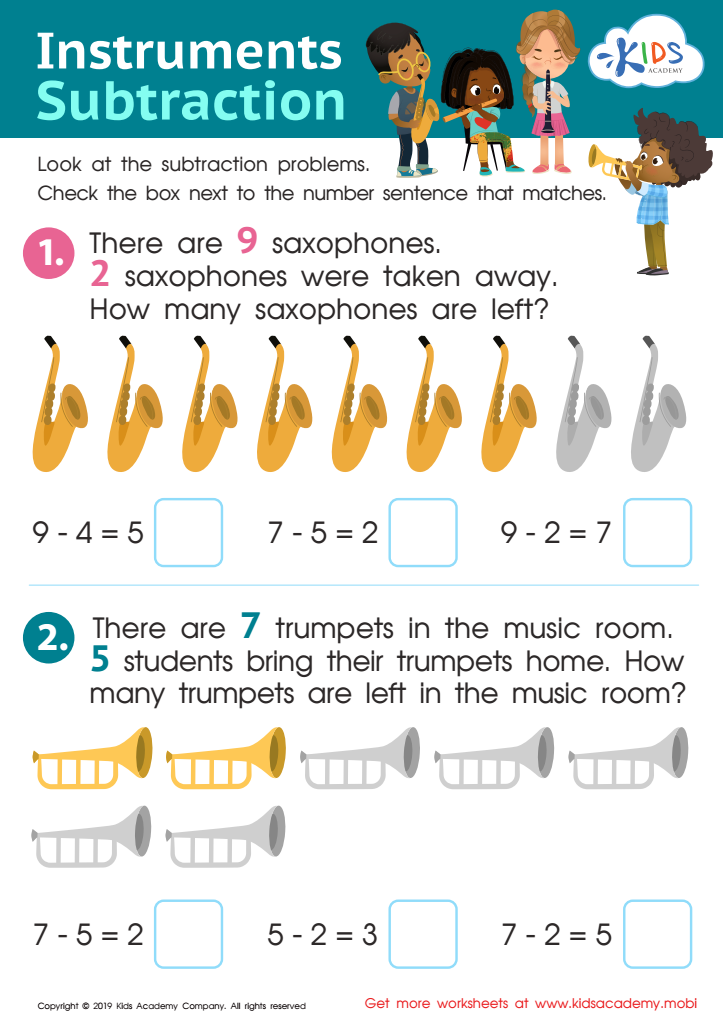
Instrument Subtraction Worksheet
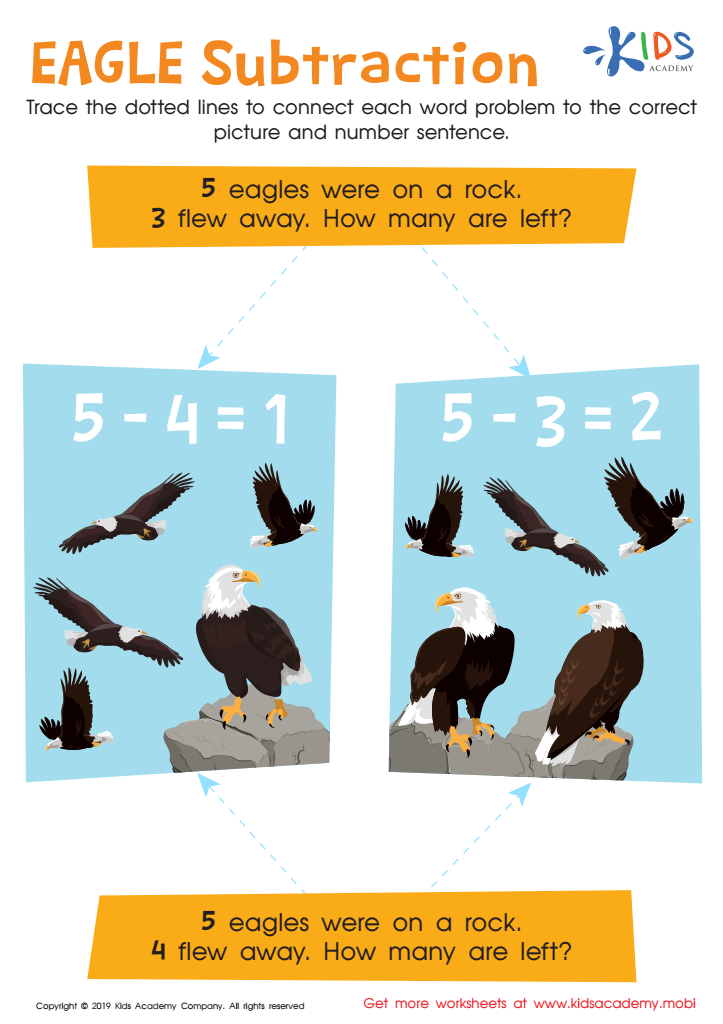
Eagle Subtraction Worksheet
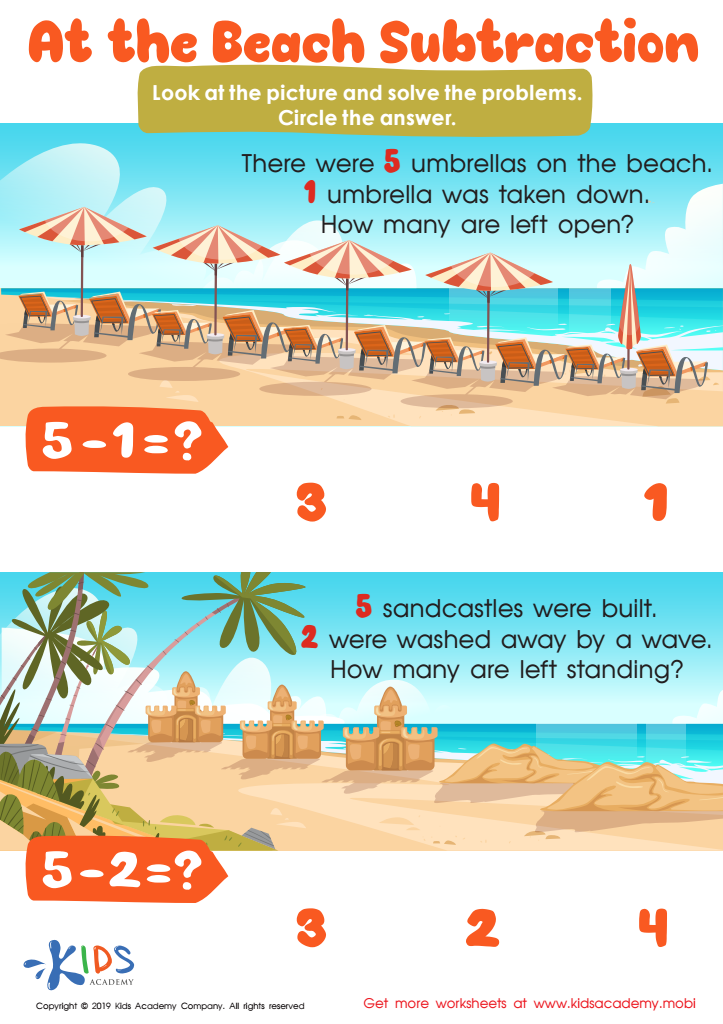
At the Beach Subtraction Worksheet








Number comprehension and subtraction are foundational skills that significantly influence a child's future academic success. For 3-year-olds, understanding these concepts builds a strong mathematical base. During this developmental stage, children are naturally curious and eager to learn, making it an ideal time for parents and teachers to introduce basic number concepts, including subtraction.
Fostering number comprehension helps children recognize and use numbers in their daily lives, enhancing their problem-solving abilities. When kids grasp subtraction, they begin to understand quantities and how they can be manipulated. For example, subtracting objects during play or counting items during snack time promotes practical application, making learning engaging and relevant.
Furthermore, developing these skills at an early age nurtures critical thinking and fosters a positive attitude towards math. Children are more likely to overcome math anxiety if they have a solid foundation. Additionally, parents and teachers play crucial roles in modeling mathematical thinking and language, reinforcing these concepts through everyday interactions.
Ultimately, investing in young children's number comprehension and subtraction skills not only enhances their cognitive development but also prepares them to tackle more complex mathematical concepts in the future, setting the stage for lifelong learning and confidence in numeracy.








