Hand-eye Coordination Tracing Numbers Worksheets for 3-Year-Olds
4 filtered results
-
From - To
Enhance your 3-year-old's fine motor skills and number recognition with our Hand-eye Coordination Tracing Numbers Worksheets. Designed with charming illustrations and easy-to-follow tracing paths, these worksheets help young learners develop crucial hand-eye coordination. Each activity sheet encourages children to trace numbers, refining their precision and control while making learning fun and engaging. Perfect for preschoolers, these tracing exercises pave the way for future writing skills and mathematical understanding. Ideal for both classroom and home use, our worksheets are an excellent resource for parents and teachers aiming to nurture early numeracy skills in an enjoyable way.
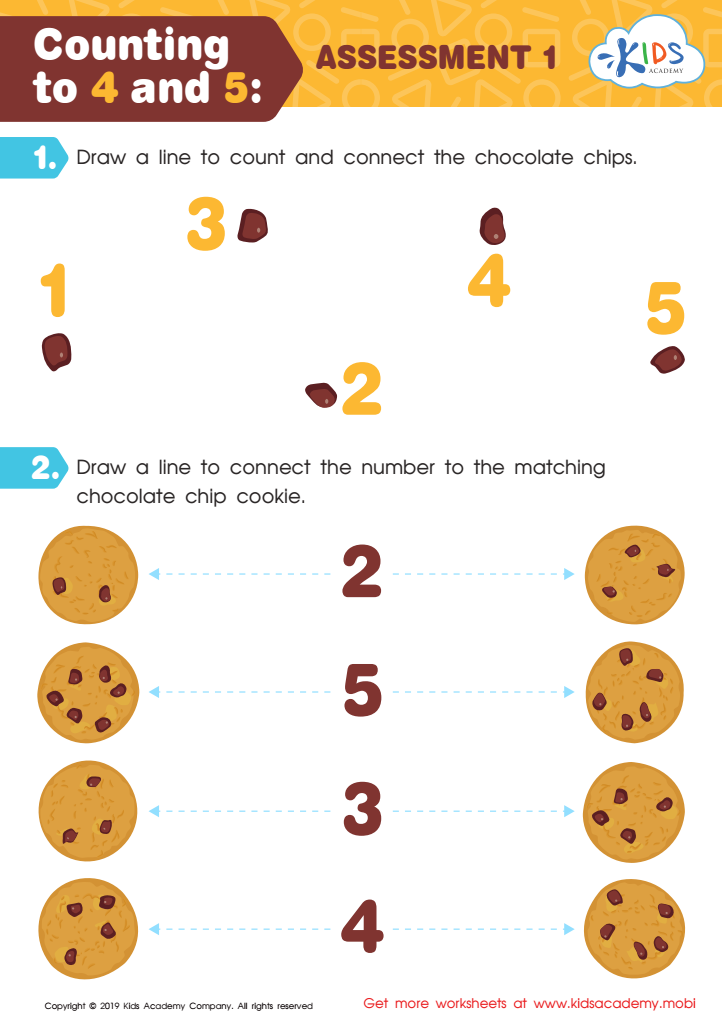
Counting to 4 and 5: Assessment 1 Worksheet
 Assign to My Students
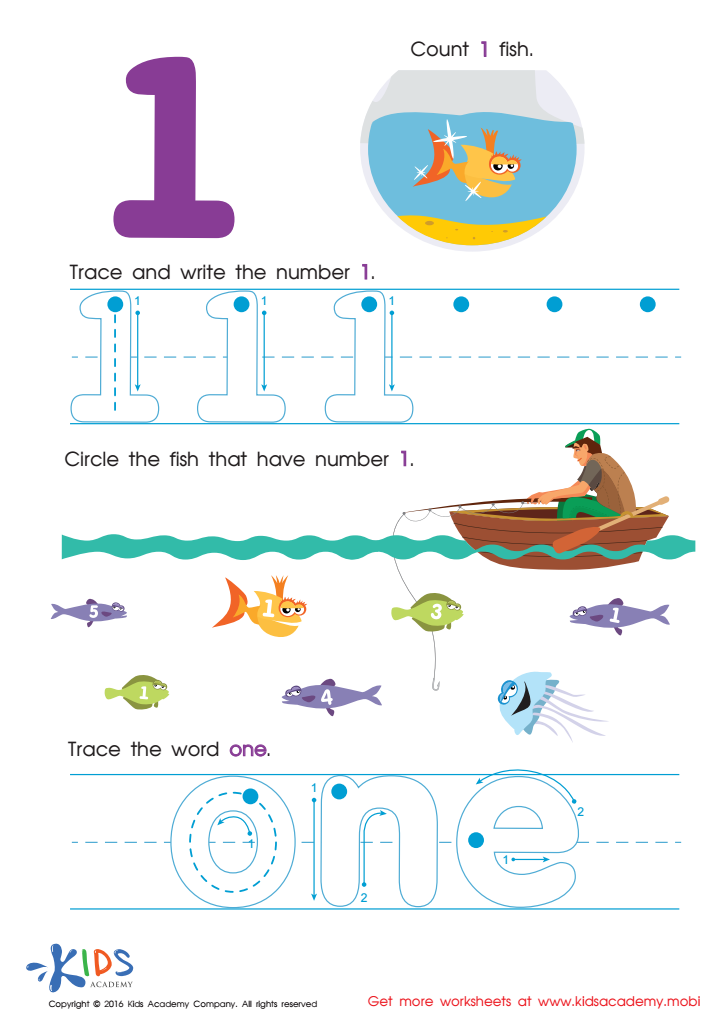
Learning to Write 1 Worksheet
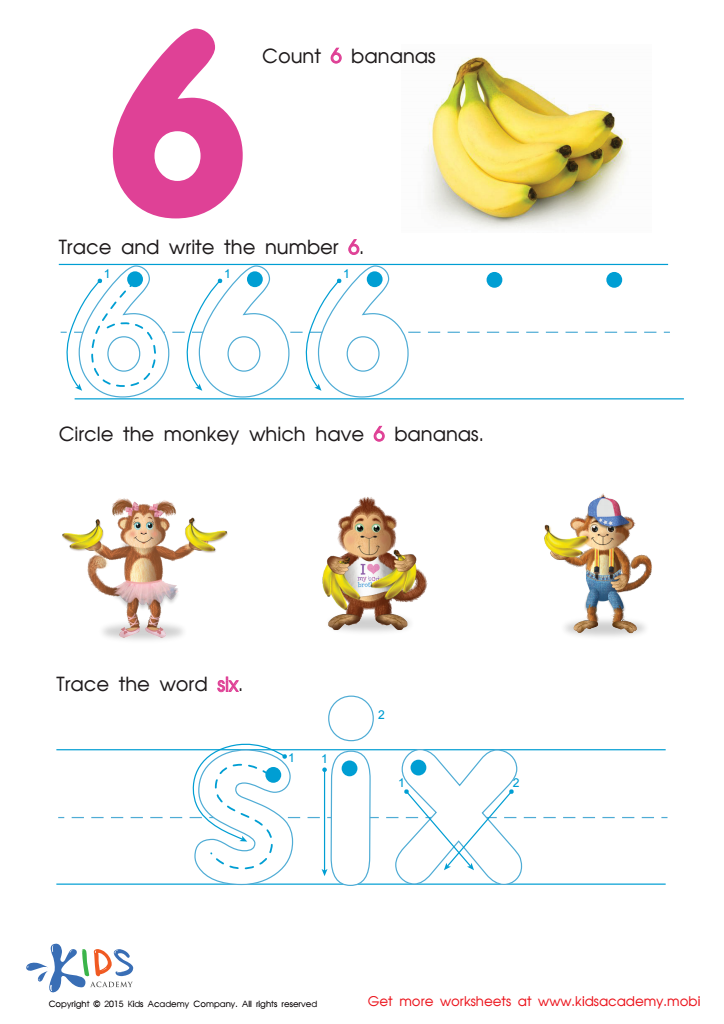
Tracing And Writing Number 6 Worksheet
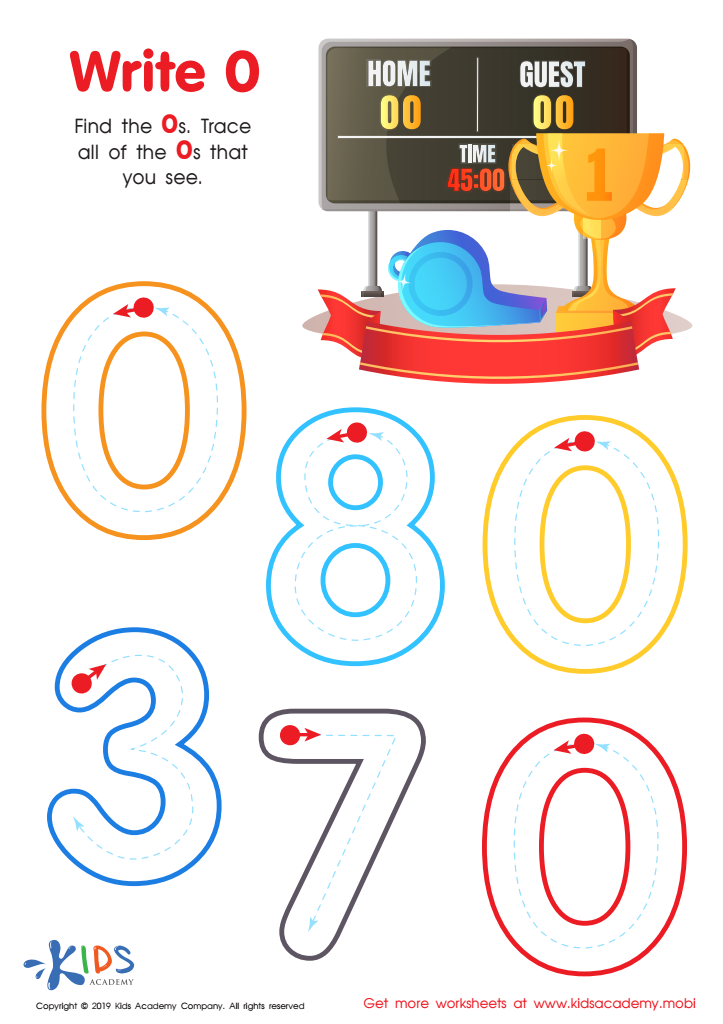
Write 0 Worksheet








Hand-eye coordination tracing numbers is a critical activity for 3-year-olds, playing an essential role in their early developmental stages. This skill involves the brain guiding the hand to trace or draw, requiring both cognitive function and motor skill integration. Here’s why parents and teachers should prioritize it:
Tracing numbers enhances fine motor skills, crucial for everyday tasks like buttoning shirts, tying shoelaces, and later, for writing. Engaging in this activity strengthens the small muscles in children’s hands and fingers, preparing them for more complex tasks requiring precision and control.
Moreover, tracing numbers lays the groundwork for math literacy. Early exposure to numbers through a hands-on approach helps children recognize and familiarize themselves with numerical shapes and forms, underpinning their future numeracy skills. It also fosters concentration, attention to detail, and encourages persistence and patience—all vital for their academic journey.
Furthermore, it nurtures hand-eye coordination, a fundamental skill that supports other areas such as reading, sports, and even using technology effectively. By coordinating visual input with hand movement, children improve their spatial awareness and dexterity.
Ultimately, spending time on hand-eye coordination tracing activities ensures a well-rounded developmental foundation, setting the stage for academic success and essential life skills. Parents and teachers should embrace and encourage these exercises to support balanced and holistic early childhood growth.