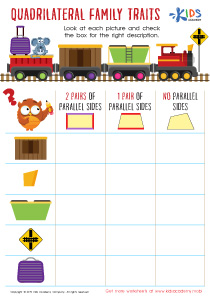
Shape identification Tracing Shapes Worksheets for 3-Year-Olds
3 filtered results
-
From - To
Discover our engaging Shape Identification Tracing Shapes Worksheets designed specifically for 3-year-olds! These interactive resources aid young learners in recognizing and tracing various shapes while developing fine motor skills and hand-eye coordination. Perfect for at-home learning or classroom activities, our worksheets feature colorful illustrations and simple instructions that captivate young minds. Children will enjoy exploring essential shapes such as circles, squares, and triangles, fostering early math skills in a fun and playful way. Strengthen shape recognition and tracing abilities with our thoughtfully crafted worksheets, setting a solid foundation for future learning. Download and print today to get started on an exciting learning journey!
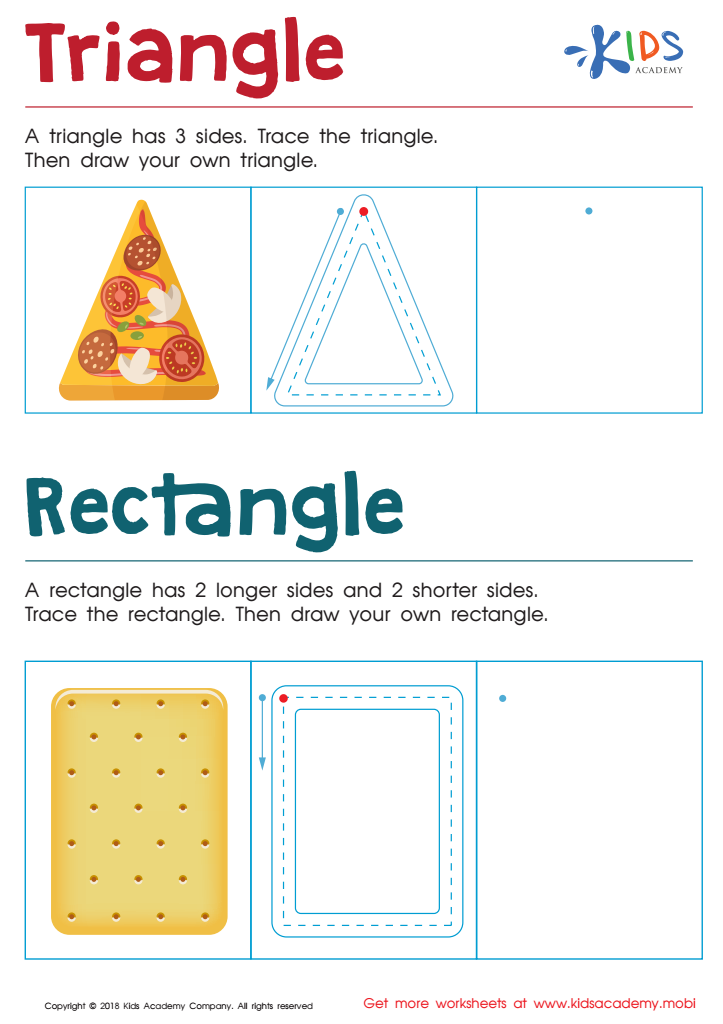
Triangle Rectangle Worksheet
 Assign to My Students
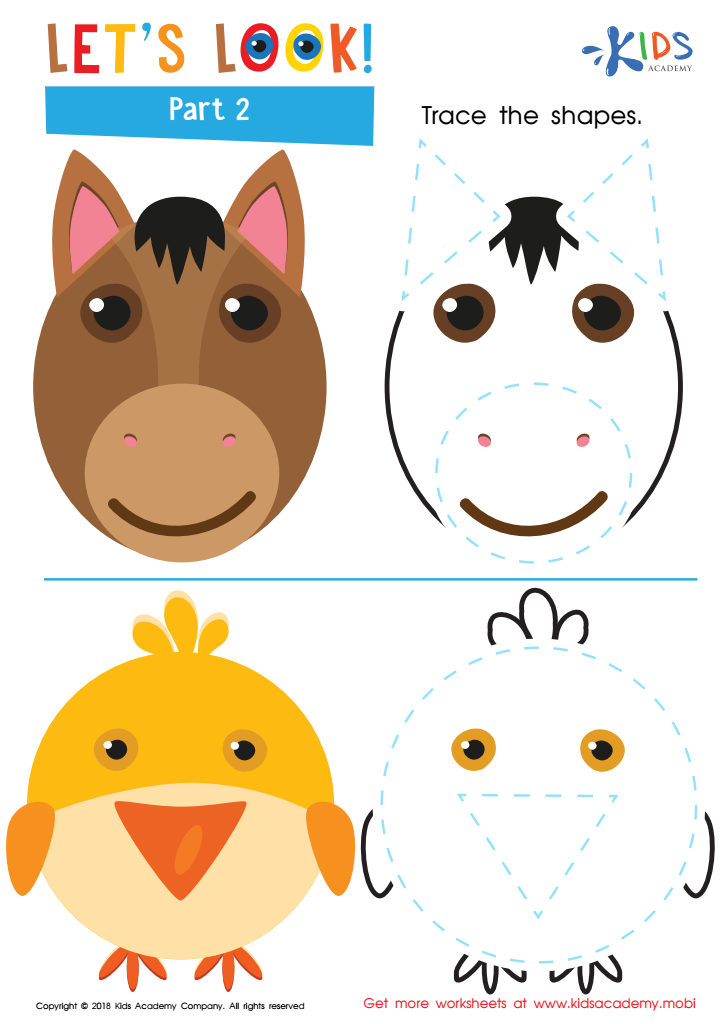
Let's Look! Part 2 Worksheet
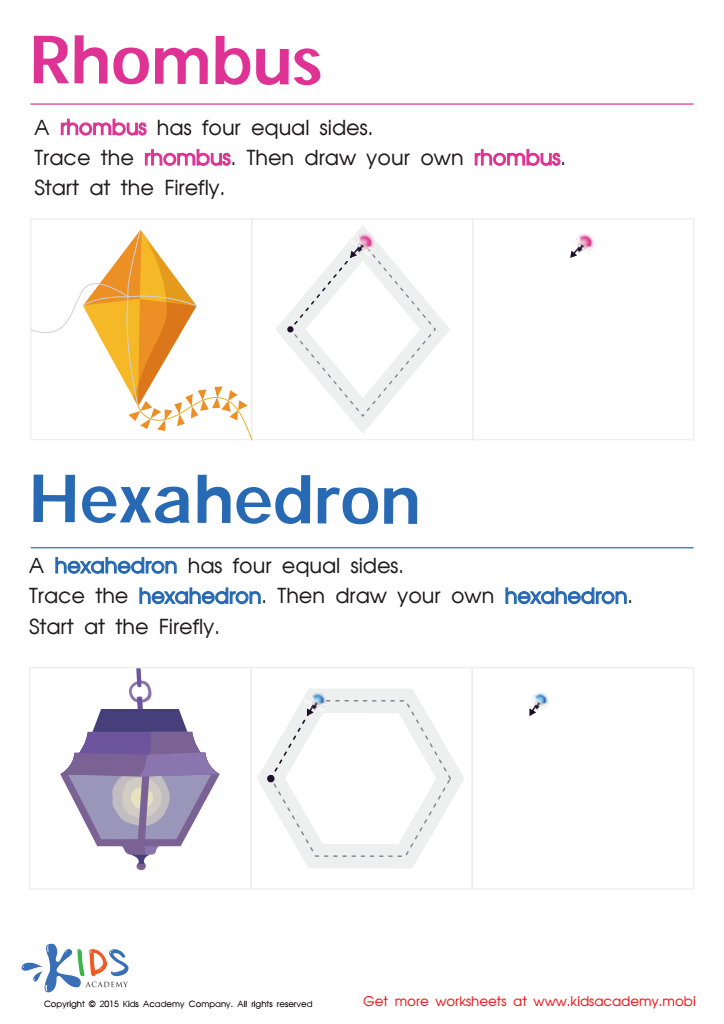
Draw a Rhombus And a Hexahedron Printable








Shape identification and tracing shapes are fundamental activities for 3-year-olds that support early childhood development in multiple ways. Primarily, engaging in these activities enhances critical cognitive skills, including visual perception and spatial awareness. As young children learn to recognize and name various shapes—such as circles, squares, and triangles—they begin to understand their characteristics and how they relate to the world around them.
Tracing shapes contributes to fine motor development, as it helps children improve their hand-eye coordination and dexterity. This skill is essential for tasks like writing, drawing, and daily activities. Practicing shapes also serves as a gateway to math skills, laying the groundwork for understanding geometry and algebra later on.
Furthermore, these activities offer socialization opportunities when conducted in group settings, teaching children about cooperation and reinforcement through positive interactions with peers. Parents and teachers should recognize that reinforcing these skills fosters a love of learning and exploration, which is crucial during these formative years. By prioritizing shape identification and tracing, they are nurturing foundational skills that shape not only academic readiness but also overall confidence and independence in young learners.