Hand-eye Coordination Building Vocabulary Coloring Pages Worksheets for 3-Year-Olds
3 filtered results
-
From - To
Enhance your 3-year-old's hand-eye coordination and vocabulary skills with our engaging coloring pages and worksheets! Designed to be both fun and educational, these resources provide a creative way for little learners to develop essential fine motor skills. Each coloring page features vibrant illustrations paired with age-appropriate words, allowing children to associate images with vocabulary, fostering language development. Our thoughtfully crafted worksheets promote cognitive growth while encouraging artistic expression. Perfect for parents and educators, these printable activities are ideal for use at home or in the classroom. Start your child's learning journey today with our hand-eye coordination building coloring pages!

Long and Short U Worksheet
 Assign to My Students
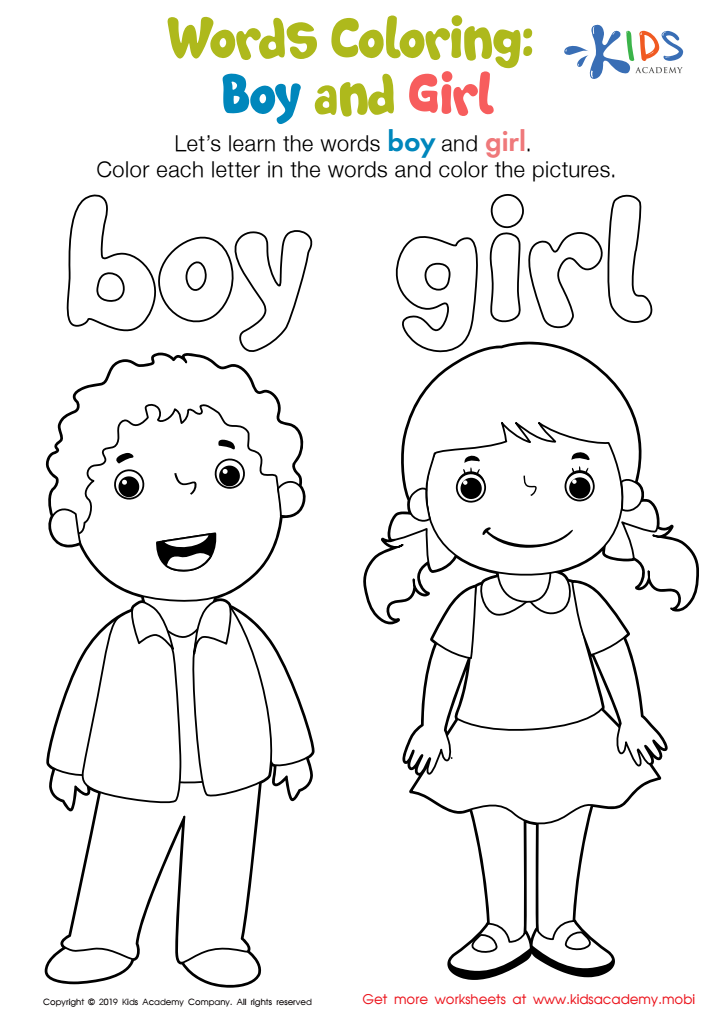
Boy and Girl Words Coloring Worksheet
Assign to My Students
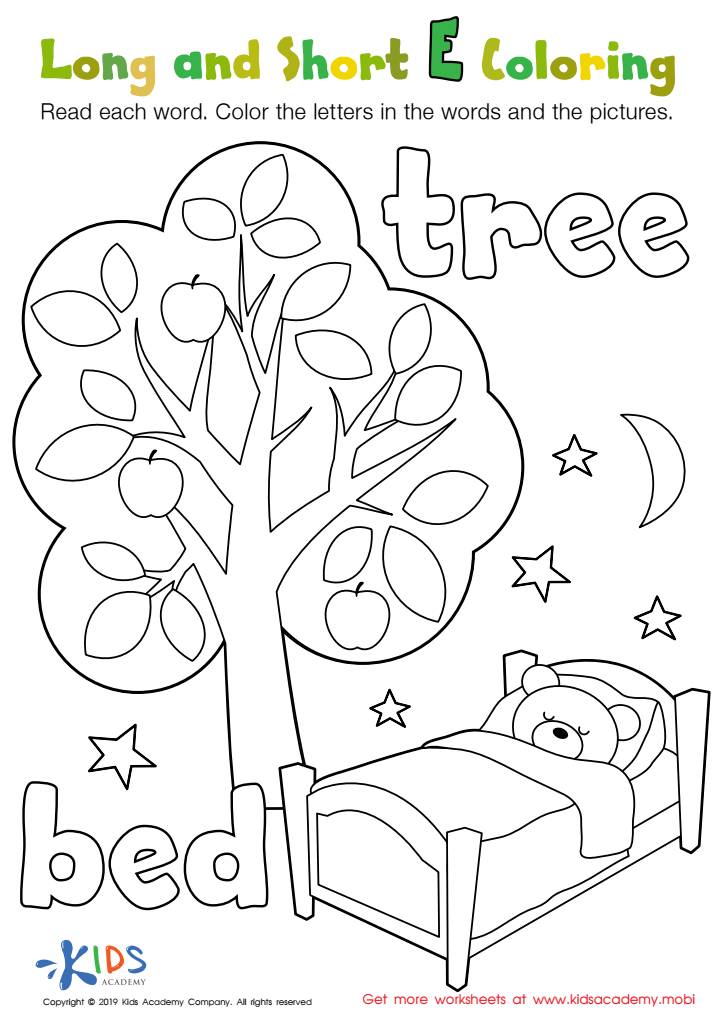
Long and Short E Worksheet
Assign to My Students



Hand-eye coordination and vocabulary development are crucial for the growth of 3-year-olds, and activities like coloring pages play a vital role in fostering these skills. Firstly, hand-eye coordination is essential for daily tasks, including writing, eating, and playing. Engaging children in coloring activities helps them strengthen these skills as they learn to control movements and improve precision. As they manipulate crayons or markers, they also foster fine motor skills, which are foundational for future academic success.
Simultaneously, incorporating vocabulary building into coloring activities enhances language development. When adults encourage children to name colors, describe objects, or form sentences about what they’re coloring, they broaden their vocabulary. This dialogue promotes cognitive development, strengthens communication skills, and helps children express themselves effectively.
Moreover, combining these activities creates a fun, interactive learning environment. By using coloring pages with thematic content, parents and teachers can introduce concepts ranging from animals to emotions, enriching children’s knowledge and context learning. Overall, prioritizing hand-eye coordination and vocabulary development through engaging and playful activities fosters well-rounded growth, setting the stage for a successful transition into more advanced educational settings. Therefore, both parents and teachers must recognize and value the importance of such foundational activities.








