
Categorization skills Animals Worksheets for 3-Year-Olds
3 filtered results
Difficulty Level
Grade
Age
-
From - To
Subject
Activity
Standards
Introduce your 3-year-old to the exciting world of animals with our engaging categorization skills worksheets! Designed to captivate young minds, these worksheets help preschoolers differentiate and classify animals, enhancing their cognitive development and critical thinking. By sorting animals based on various attributes, children will improve their observation skills and vocabulary. The colorful, age-appropriate activities ensure that learning remains fun and interactive. Perfect for home or classroom settings, these worksheets lay a strong foundation for early science education. Help your little one explore and organize the animal kingdom in a playful and educational manner. Prepare them for lifelong learning with Kids Academy!
Favorites
With answer key
Interactive
 Assign to My Students
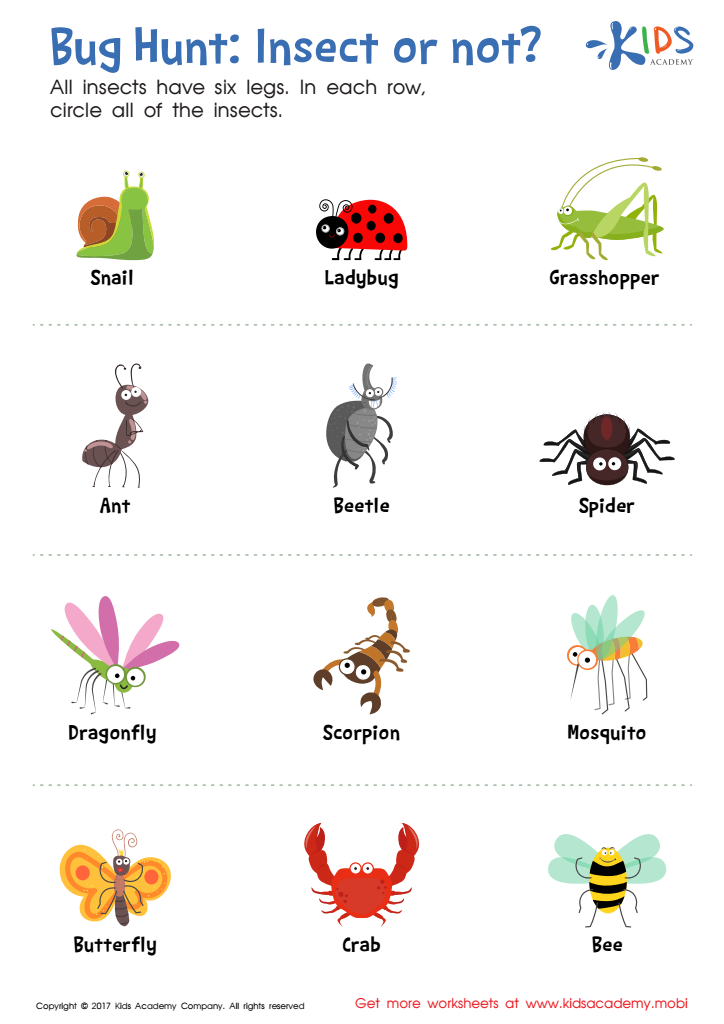
Insect or Not? Worksheet
Worksheet
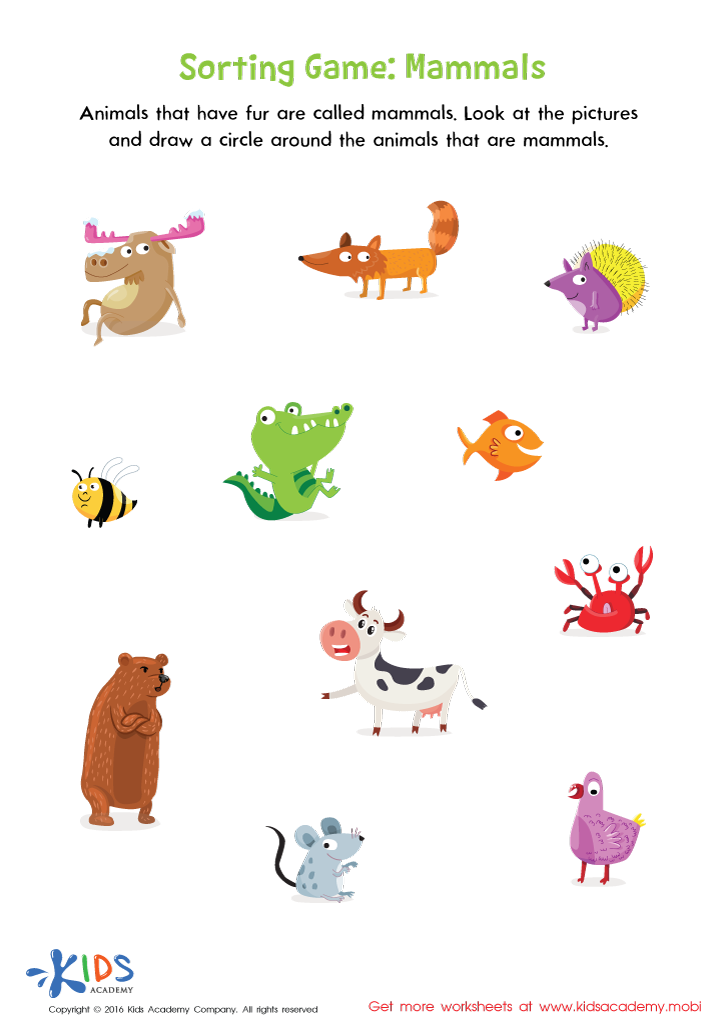
Mammals Sorting Worksheet
They'll practice sorting animals and learn their features with this fun worksheet.
Kids can test their scientific knowledge with this fun worksheet! They'll view pictures of animals, identify mammals based on their fur, and practice sorting them. This colorful worksheet is a great way for kids to learn about the differences between mammals and other animals.
Mammals Sorting Worksheet
Worksheet
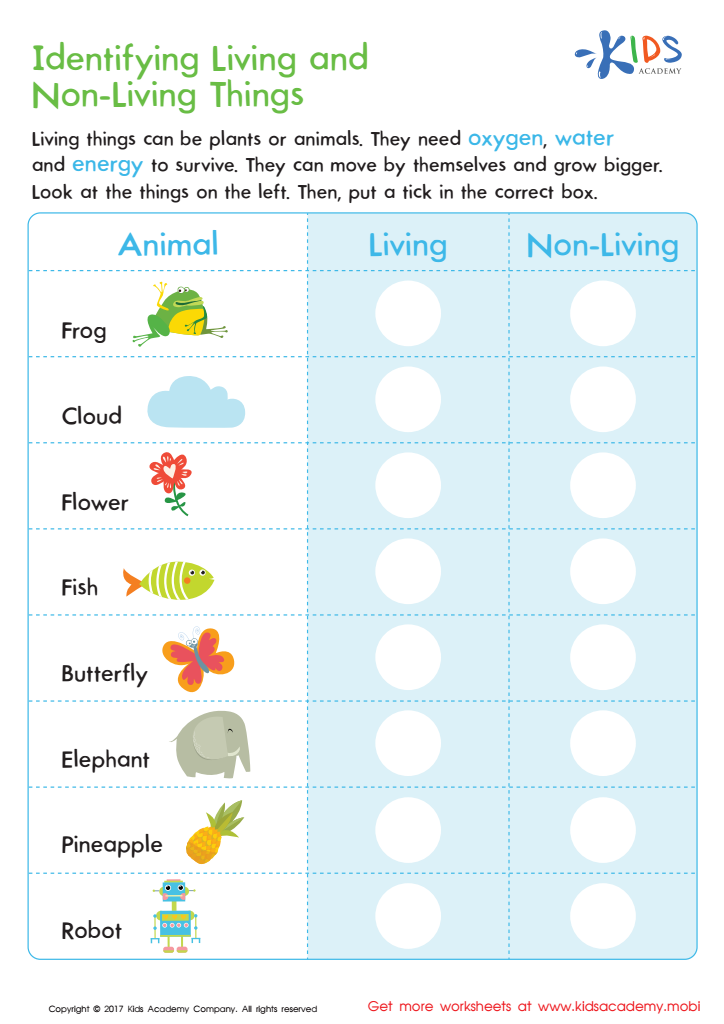
Identifying Living or Non–living Worksheet
Help your child learn to sort and categorize in a new way! Teach them to classify things as living or non-living using this worksheet. It's the perfect way to build their scientific understanding, and to have some learning fun! Print this worksheet and watch them discover the world of science!
Identifying Living or Non–living Worksheet
Worksheet
Join Kids Academy for Free
Who is primarily going to use this learning content?








Categorization skills play a crucial role in early childhood development, serving as the building blocks for logical thinking and organizational skills. For 3-year-olds, learning to categorize animals is particularly significant because it is both engaging and educational. This process allows young children to make sense of the world around them, understanding similarities and differences among various creatures.
When parents and teachers focus on developing these skills, children learn to group animals based on shared characteristics, such as habitat, size, or diet. This practice not only enhances their cognitive abilities but also boosts language development as they learn new vocabulary words. For example, kids might learn to distinguish between mammals and reptiles, or between farm animals and wild animals, increasing their breadth of understanding.
Additionally, categorization helps improve memory and recall. By organizing information into groups, children find it easier to remember facts and concepts. Socially, discussing and categorizing animals can also promote cooperative learning and play, where children interact and share their thoughts.
In summary, prioritizing categorization skills in early education sets the foundation for future academic success. It enriches cognitive development, language acquisition, memory, and social interaction, making it a key focus for parents and teachers of 3-year-olds.








