
Alphabet Recognition Writing Worksheets for 3-Year-Olds
3 filtered results
Difficulty Level
Grade
Age
-
From - To
Subject
Activity
Standards
Welcome to our Alphabet Recognition Writing Worksheets for 3-Year-Olds! Our engaging and colorful worksheets are designed to introduce young learners to the letters of the alphabet in a fun and interactive way. Each activity encourages letter recognition and proper writing techniques through tracing and writing exercises, enhancing fine motor skills. With playful illustrations and kid-friendly themes, children will find joy in learning and developing their literacy foundation. These worksheets provide parents and educators with essential resources to support early childhood education at home or in the classroom. Start your child's learning journey today with our exciting alphabet activities!
Favorites
With answer key
Interactive
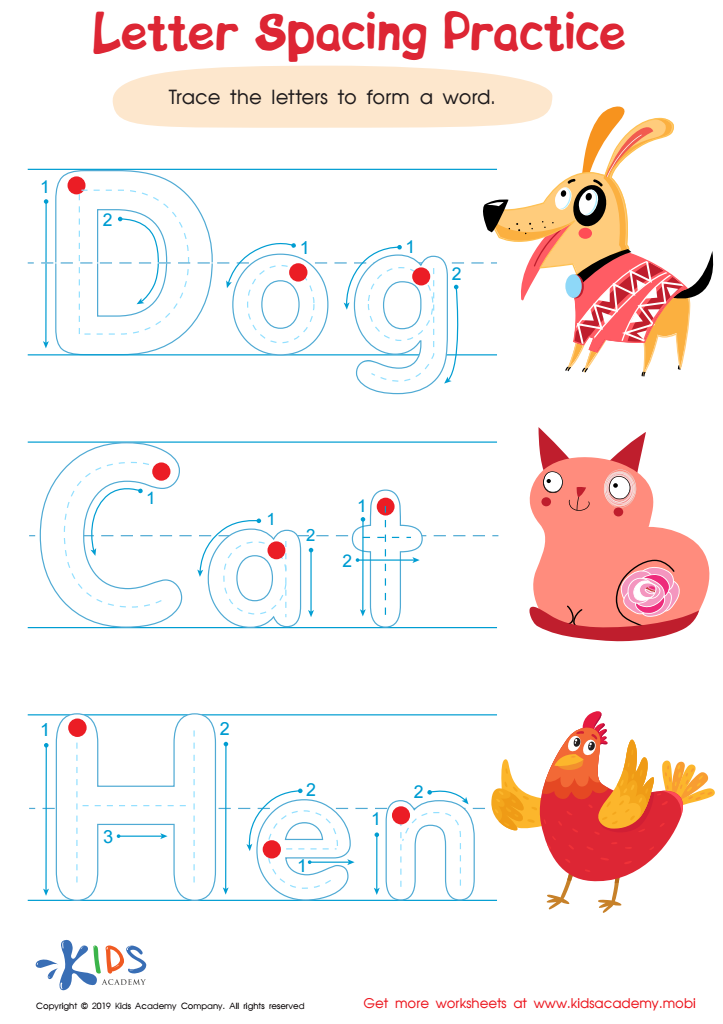
Letter Spacing Practice Worksheet
Encourage your preschoolers to practice writing with this worksheet. Ask them to identify the animals in the picture and help them trace the letters to form the words. It'll help develop their writing skills and even if they make mistakes, you can guide them with a helping hand.
 Assign to My Students
Letter Spacing Practice Worksheet
Worksheet
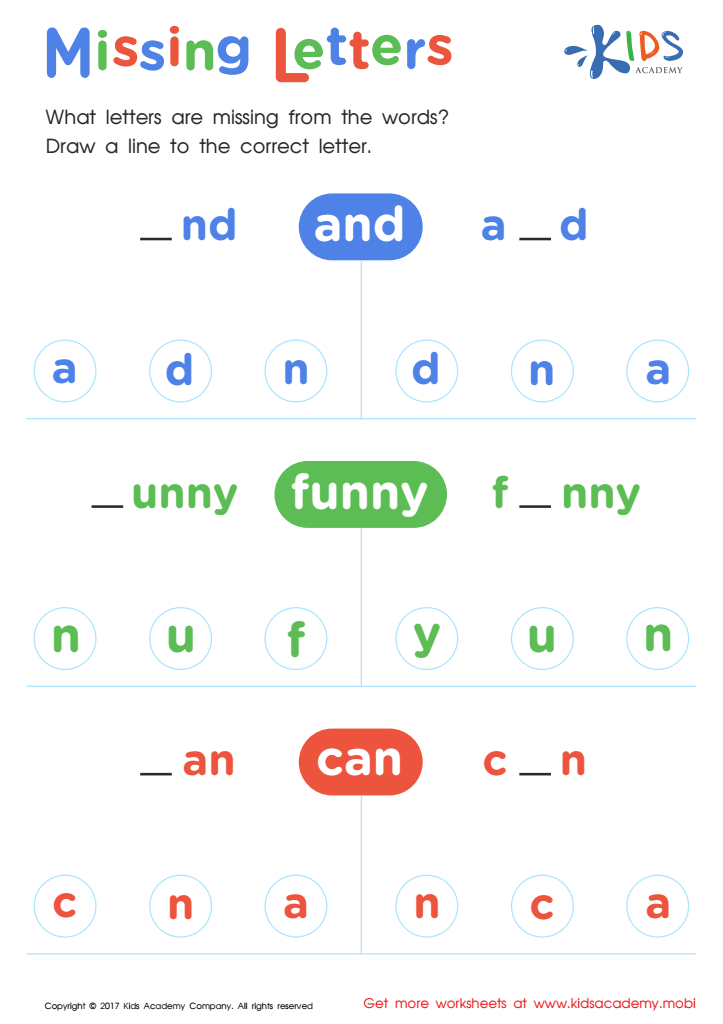
Missing Letters Worksheet
Review sight words with this fun matching worksheet from Kids Academy! Look at the sight words in the middle, read them aloud and find the missing letter on each side for each word. Draw a line to the correct letter to complete the sheet!
Missing Letters Worksheet
Worksheet
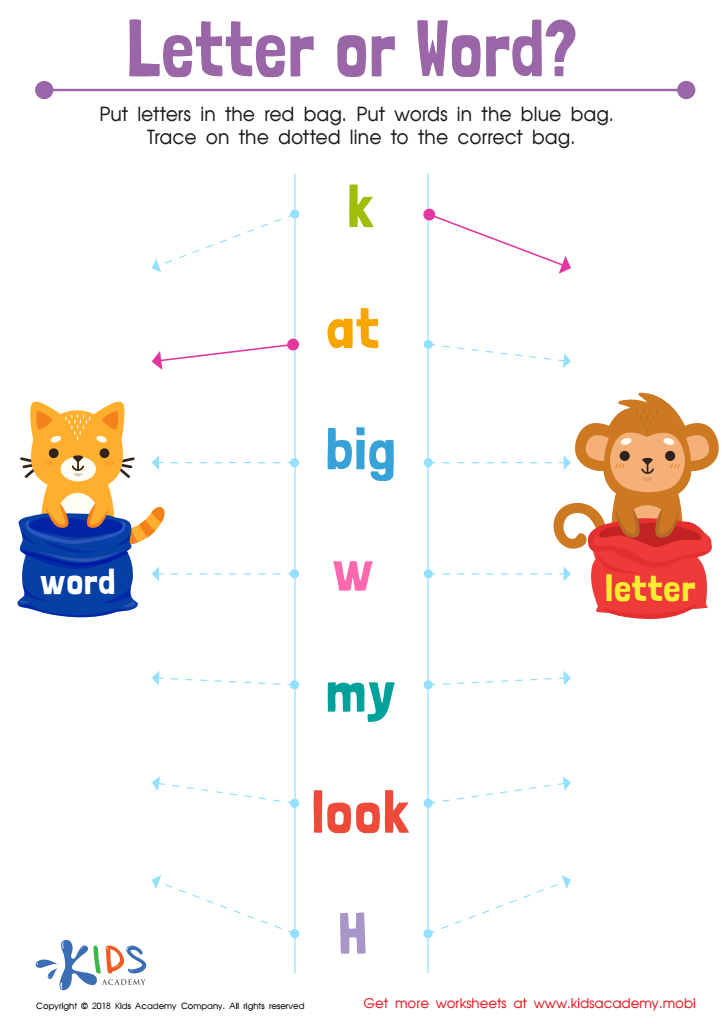
Letter or Word? Worksheet
Help your kids differentiate between words and letters. If they can recite their alphabets and identify common words, this tracing sheet will be a breeze. Have them trace on the dotted lines to place the letters in the red bag with the kitten, and the words in the blue bag with the monkey.
Letter or Word? Worksheet
Worksheet
Join Kids Academy for Free
Who is primarily going to use this learning content?








Alphabet recognition is a fundamental skill for early literacy development in children, especially for 3-year-olds. Parents and teachers should care about this skill because it serves as the foundation for reading and writing. At this age, children are like sponges, eager to absorb new information, including letters and their sounds. Understanding the alphabet helps children recognize words, facilitating a stronger vocabulary and early comprehension skills.
Additionally, alphabet recognition supports cognitive development. It sparks curiosity and promotes critical thinking as children connect letters with objects, sounds, and their meanings. Moreover, engaging in activities that foster letter recognition can help cultivate fine motor skills through writing and drawing, which are essential for later academic success.
Incorporating playful and interactive alphabet activities creates a positive learning environment, making it fun and enjoyable. This engagement boosts a child's self-esteem and motivates them to further explore literacy concepts. By prioritizing alphabet recognition, parents and teachers can lay a solid foundation for a child's lifelong love of reading and writing, nurturing their overall educational journey. Thus, fostering alphabet recognition in early childhood is vital for both mastering literacy skills and supporting broader cognitive and social development.








