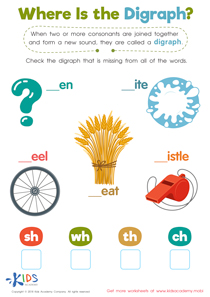
Sound recognition Beginning Consonants Worksheets for Ages 4-5
3 filtered results
-
From - To
Kickstart your child's reading journey with our engaging "Sound Recognition Beginning Consonants Worksheets for Ages 4-5." These carefully crafted worksheets introduce young learners to the essential skill of identifying beginning consonant sounds in a fun and interactive way. Simple exercises with vibrant illustrations help children associate sounds with corresponding letters, laying the groundwork for strong phonetic awareness. Perfect for preschool and kindergarten students, these resources support early literacy development and enhance listening skills while making learning enjoyable. Give your child a head start in reading by incorporating these sound recognition exercises into your daily routine!
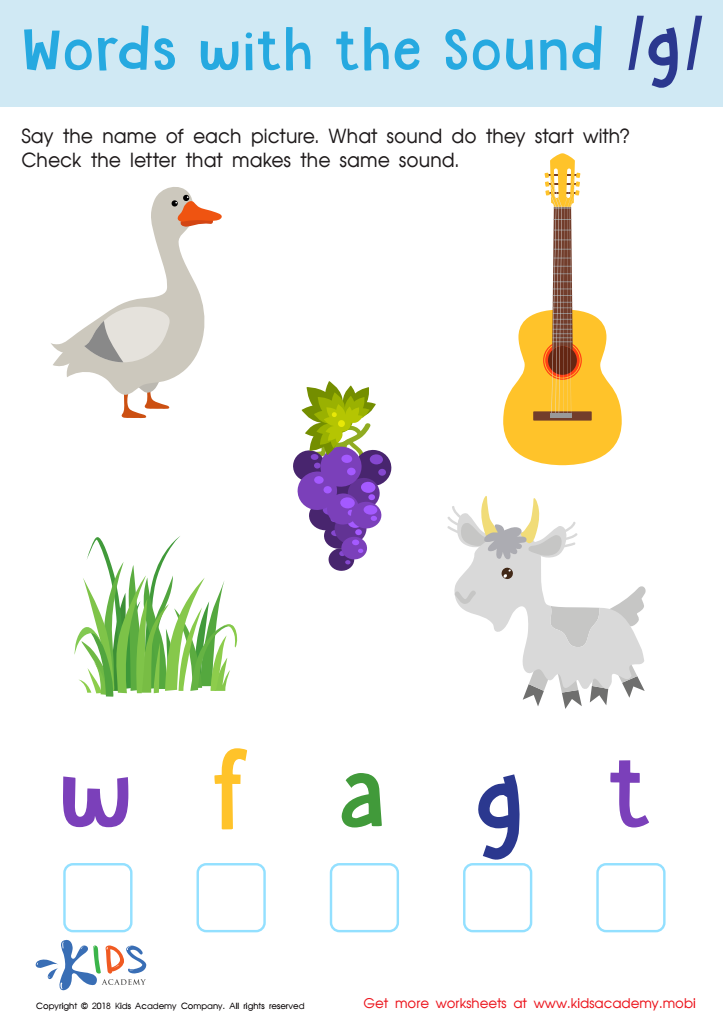
Words with sound g Reading Worksheet
 Assign to My Students
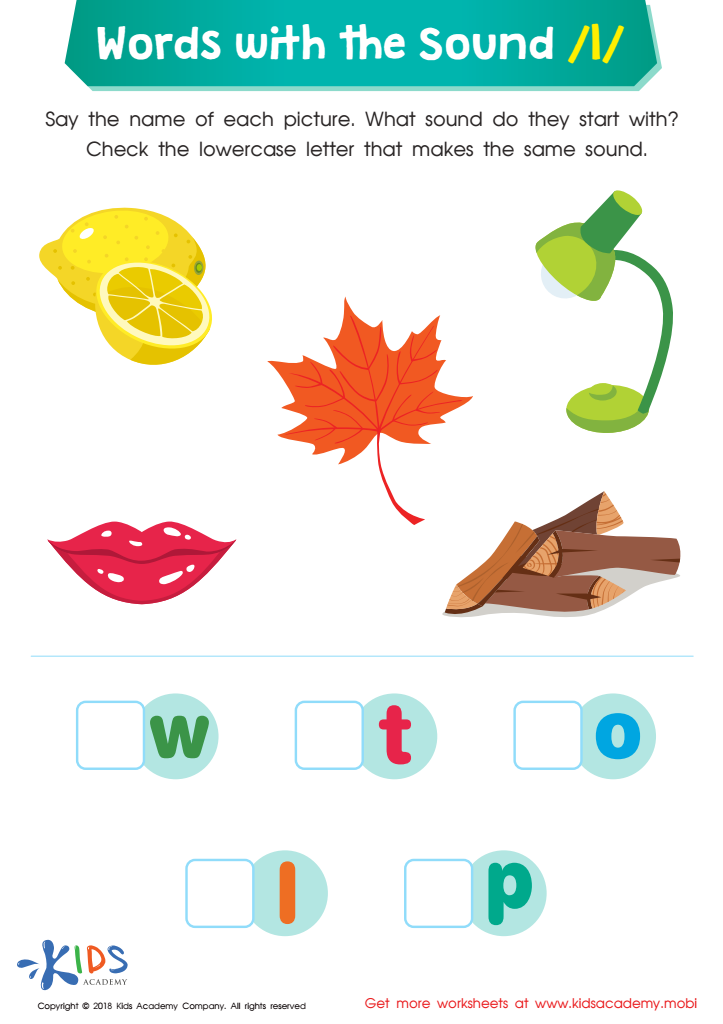
Words with Sound L Reading Worksheet
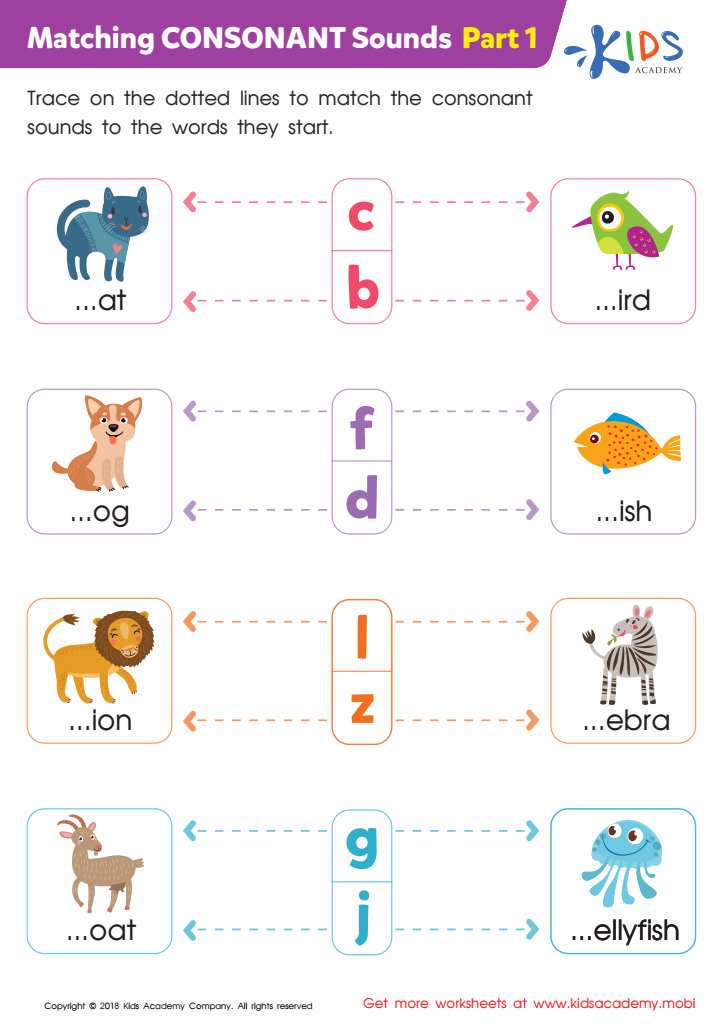
Matching Consonant Sounds: Part 1 Worksheet


Sound recognition and beginning consonants are fundamental skills for young children, typically around ages 4-5, setting a crucial foundation for their reading and writing development. Parents and teachers should prioritize these skills because they directly influence phonemic awareness, which is the ability to hear, identify, and manipulate individual sounds in words. This awareness is essential for decoding words during early reading stages.
Recognizing beginning consonants helps children understand that words are made up of individual sounds. This comprehension aids them in connecting letters to their corresponding sounds, which is a prerequisite for successful reading. For instance, knowing that "b" makes the /b/ sound and "c" makes the /k/ or /s/ sound enables children to start blending these sounds to form words.
Additionally, early success in these foundational literacy skills can increase a child's confidence and motivation in learning. Activities like games and exercises that focus on beginning consonants make learning engaging and enjoyable, which encourages a positive attitude towards educational activities.
In summary, caring about and promoting sound recognition of beginning consonants prepares children for more advanced literacy tasks, supports phonemic awareness development, and fosters a love for learning—all critical steps in becoming proficient readers and effective communicators.