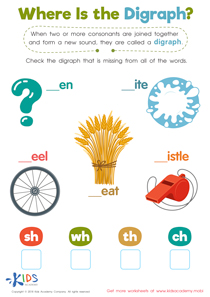
Vocabulary enhancement Beginning Consonants Worksheets for Ages 4-5
3 filtered results
Difficulty Level
Grade
Age
-
From - To
Subject
Activity
Standards
Discover our engaging Vocabulary Enhancement Beginning Consonants Worksheets designed specifically for ages 4-5! These interactive resources foster essential early literacy skills by helping children recognize and practice words that start with different consonants. Our worksheets provide fun activities that enhance vocabulary development while building phonemic awareness. Each sheet includes vibrant illustrations and relatable examples, promoting an enjoyable learning experience. Perfect for home or classroom use, these worksheets encourage young learners to explore new words and connect sounds to their meanings. Designed to support preschool and kindergarten curriculums, our Beginning Consonants Worksheets are an excellent tool for nurturing your child’s reading journey!
Favorites
With answer key
Interactive
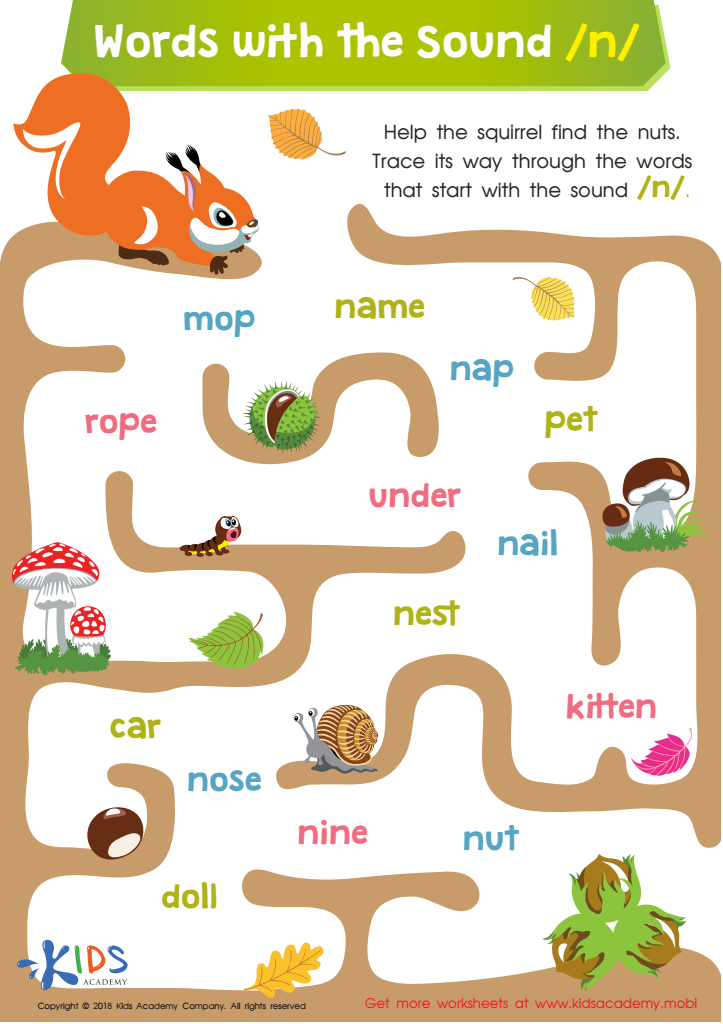
Words with Sound N Reading Worksheet
Young readers will love the colourful pictures and simple sight words on this download worksheet. They can trace their way through the maze as they help the cute squirrel reach his acorns, finding words with the sound "n" as they go. It's a fun way to work on reading skills - they won't even realise they're learning!
 Assign to My Students
Words with Sound N Reading Worksheet
Worksheet
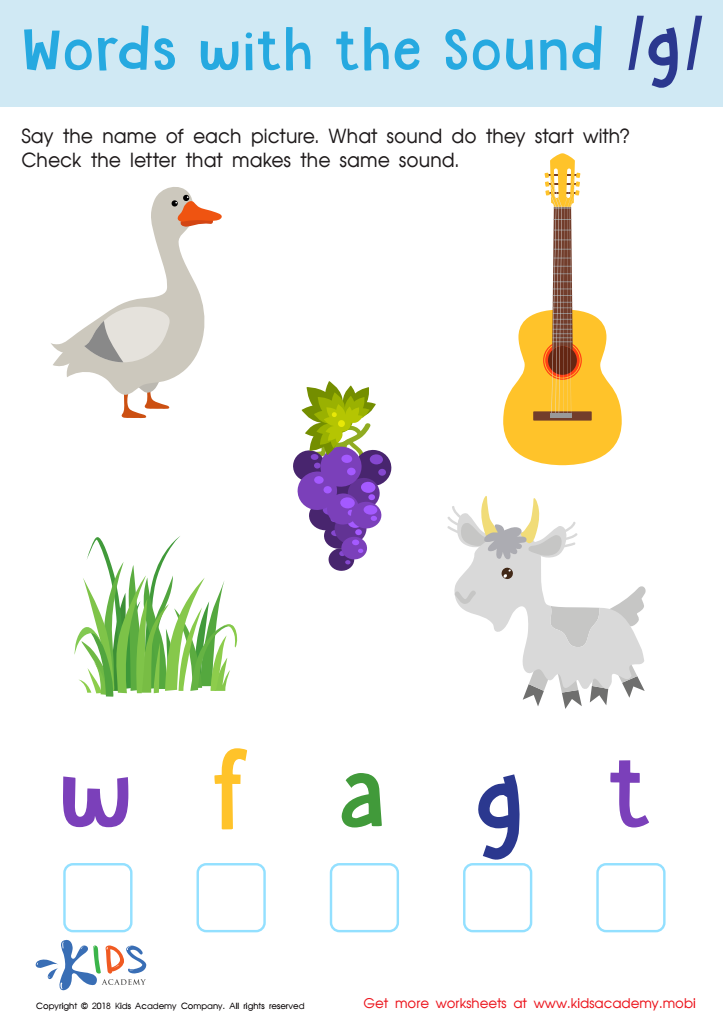
Words with sound g Reading Worksheet
Help your child learn the soft "g" sound with this phonics worksheet. Ask them to name each picture, then identify the letter sound it begins with. If it's "g", they can check the box. Have them repeat each word, listening for the soft "g" sound before moving on to the next page.
Words with sound g Reading Worksheet
Worksheet
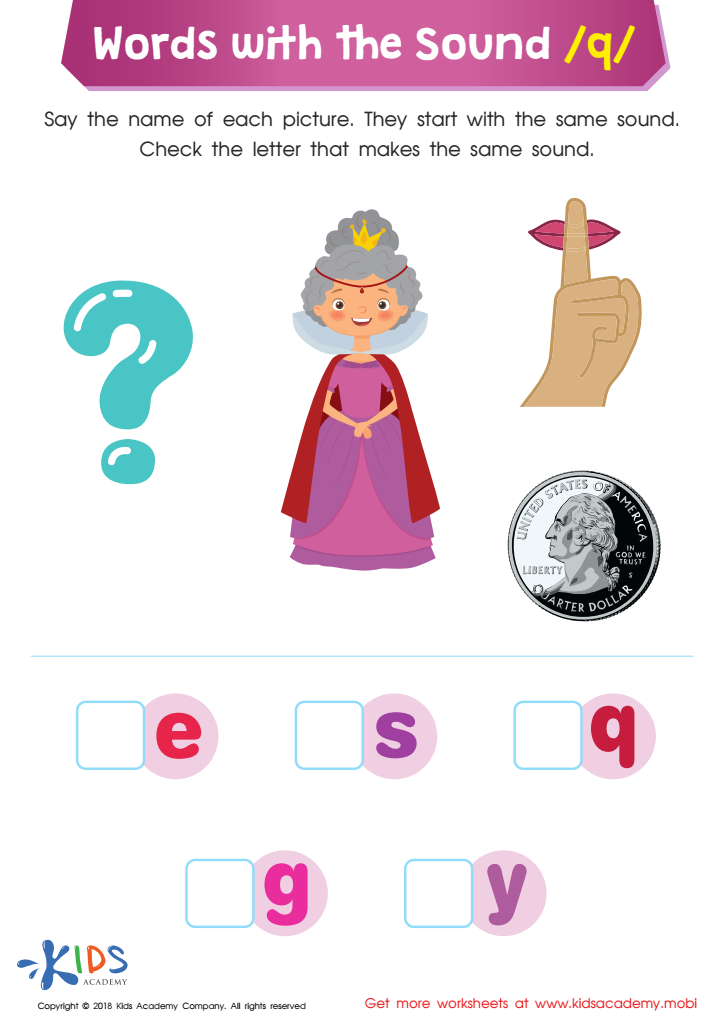
Words with Sound Q Reading Worksheet
Beginning readers will love this free PDF worksheet! Bright colors and familiar pictures make it fun, as they say the name of each image and work on fine motor skills. Letters “q” is featured among others, helping to recognize and isolate its sound, which is often seen with a “u” behind it.
Words with Sound Q Reading Worksheet
Worksheet
Join Kids Academy for Free
Who is primarily going to use this learning content?


Vocabulary enhancement, particularly focusing on beginning consonants for children ages 4-5, is crucial for several reasons. First, early language development lays the foundation for literacy skills. By focusing on beginning consonants, children learn to recognize sounds associated with letters, which is essential for decoding words. This phonemic awareness cultivates their ability to read fluently and enhances overall literacy.
Secondly, vocabulary enhancement at this age supports cognitive development. As children learn new words and their meanings, they expand their ability to express themselves, thereby improving their communication skills. This capacity for expression boosts confidence and encourages engagement in conversations, fostering social interaction and emotional skills.
Moreover, research indicates a significant correlation between vocabulary knowledge and academic success later in life. By encouraging vocabulary growth early on, parents and teachers directly contribute to a child’s long-term educational outcomes.
Lastly, the exploration of beginning consonants can be fun and engaging, involving playful activities that stimulate curiosity and a love for learning. By integrating these learning experiences into daily routines, caregivers can create a rich language environment that supports and nurtures a child's burgeoning vocabulary. This effort is vital in shaping well-rounded and confident learners ready to tackle the challenges of formal education.