Vocabulary enhancement Beginning Sounds Worksheets for Ages 4-5
3 filtered results
-
From - To
Discover our engaging Vocabulary Enhancement Beginning Sounds Worksheets designed specifically for children ages 4-5. These worksheets help young learners develop essential language skills by focusing on identifying and practicing the initial sounds in words. With colorful illustrations and interactive activities, children will find joy in learning as they connect letters to sounds, boosting their vocabulary and phonemic awareness. Perfect for at-home learning or classroom activities, these worksheets encourage exploration and recognition of beginning sounds in a fun, approachable manner. Start your child's journey to literacy and enhance their language skills with these delightful resources today!
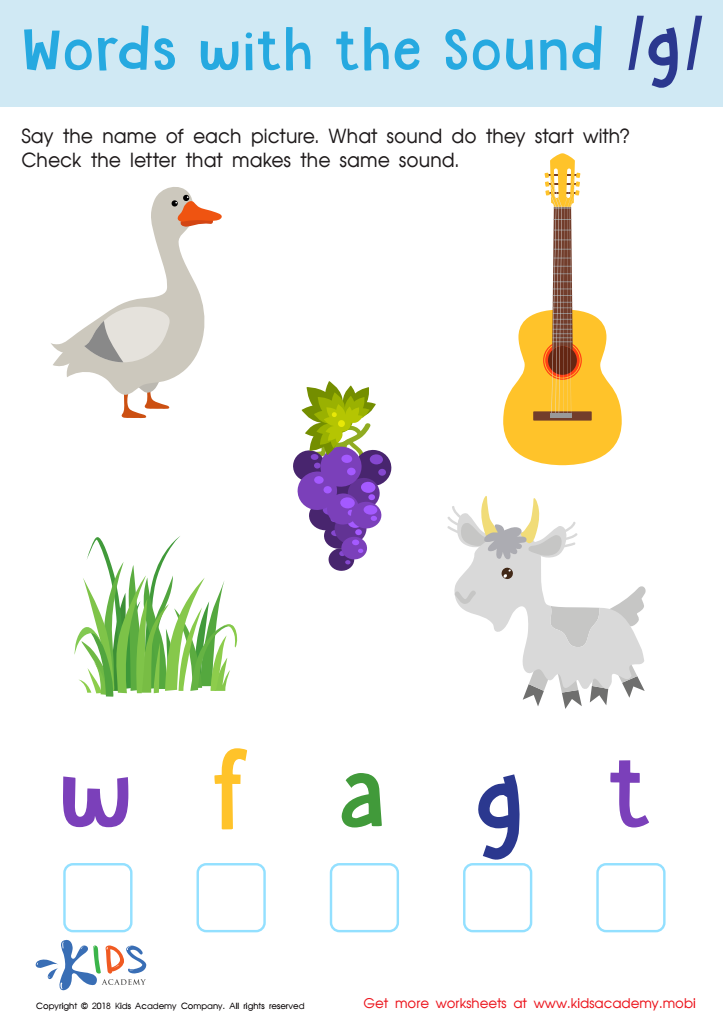
Words with sound g Reading Worksheet
 Assign to My Students
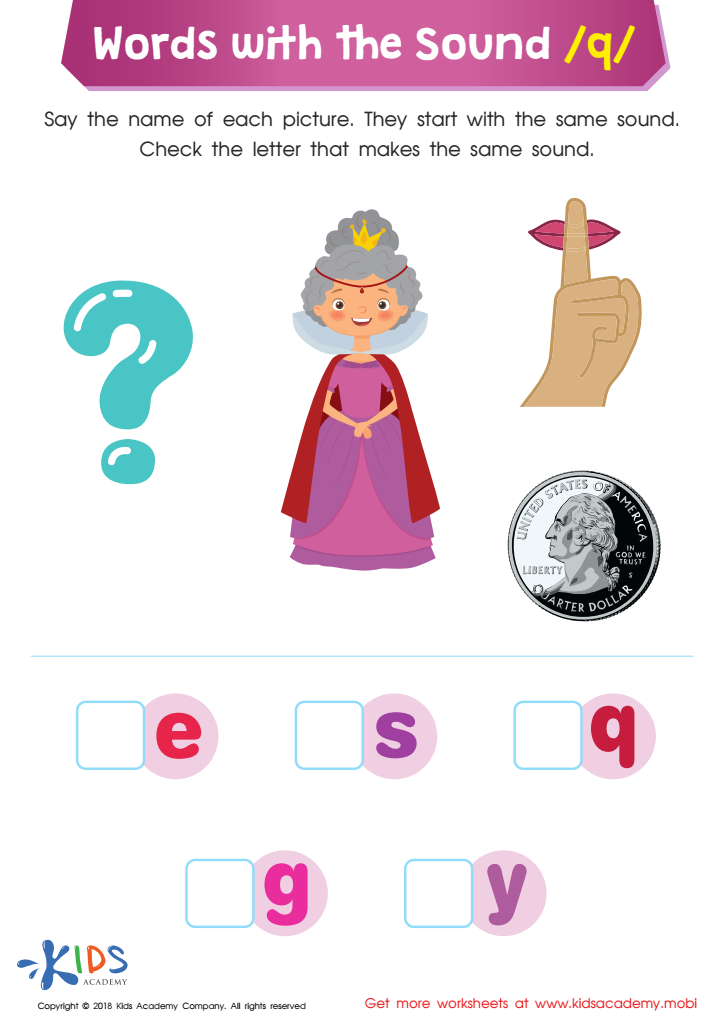
Words with Sound Q Reading Worksheet
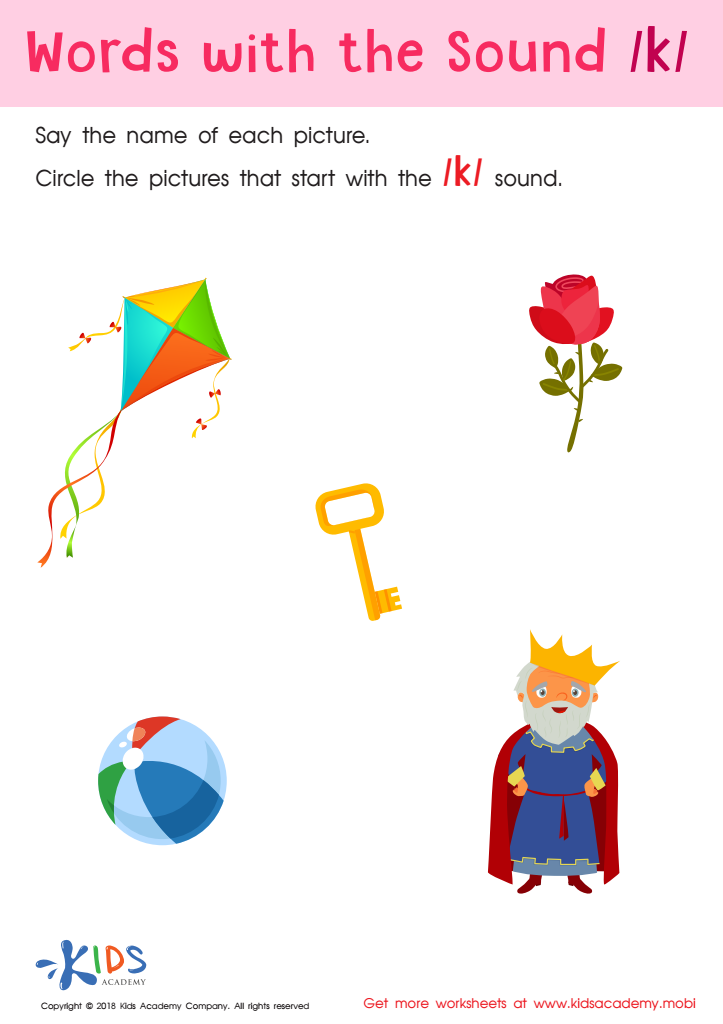
Words with sound k Reading Worksheet








Vocabulary enhancement, particularly focusing on beginning sounds, is crucial for children aged 4-5 as it forms the foundation of their literacy skills. At this age, children are developing phonemic awareness, which is the ability to hear and manipulate sounds in words. Fostering an understanding of beginning sounds is essential because it helps kids decode words, improving their reading abilities later on.
Parents and teachers should prioritize this aspect of learning, as it not only strengthens vocabulary but also boosts overall language development. Engaging children in activities that emphasize beginning sounds, such as rhyming games or alliteration exercises, stimulates curiosity and promotes language exploration. This kind of early exposure to sounds helps improve listening skills, enhances articulation, and builds confidence in using language.
Moreover, a strong vocabulary allows children to express themselves more clearly and understand information better, thus contributing to their overall academic success. When children grasp how words rhyme or begin with the same sound, they begin to see connections between language, which is fundamental for comprehension. Therefore, investing time in vocabulary enhancement centered around beginning sounds is vital for fostering early literacy and equipping children with essential tools for future learning experiences.







