Vocabulary expansion Beginning Sounds Worksheets for Ages 4-5
6 filtered results
-
From - To
Enhance your child’s vocabulary with our engaging Beginning Sounds Worksheets, tailored for ages 4-5. These printables make learning fun, helping young learners recognize initial sounds while building a robust vocabulary foundation. Featuring colorful images and interactive activities, our worksheets foster phonemic awareness, making early literacy a delightful experience. Perfect for preschool and kindergarten students, these tools are designed to support the development of essential reading skills. Empower your child's linguistic journey with our expertly crafted resources, ensuring a confident step toward fluent reading and effective communication. Explore now to elevate your child's vocabulary proficiency effortlessly.
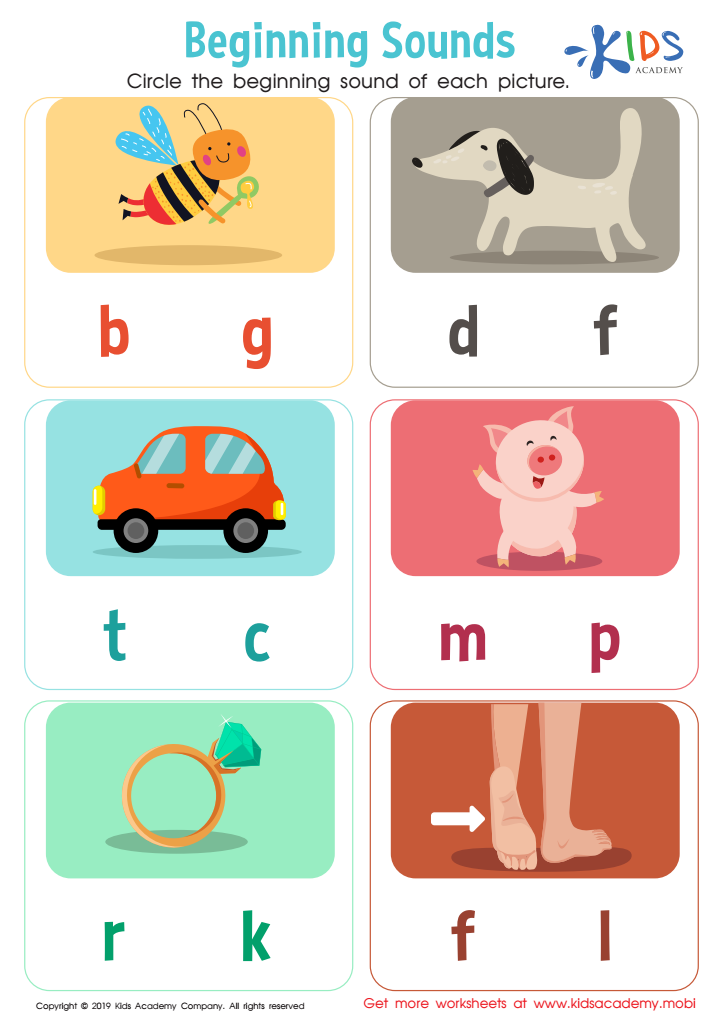
Beginning Sounds Worksheet
 Assign to My Students
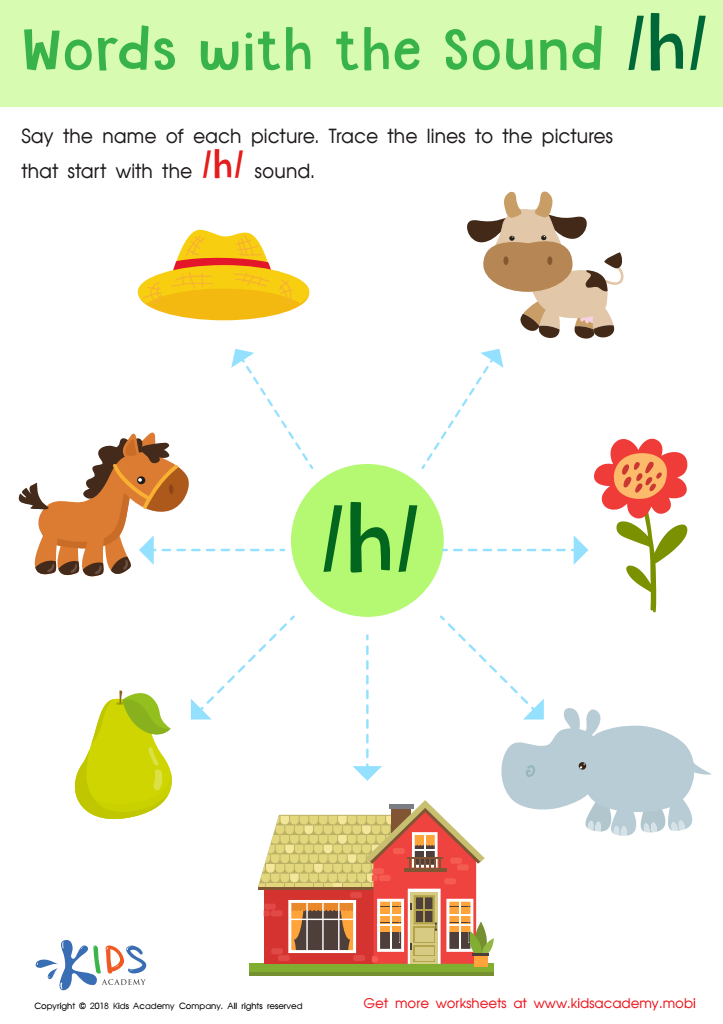
Words with sound h Reading Worksheet
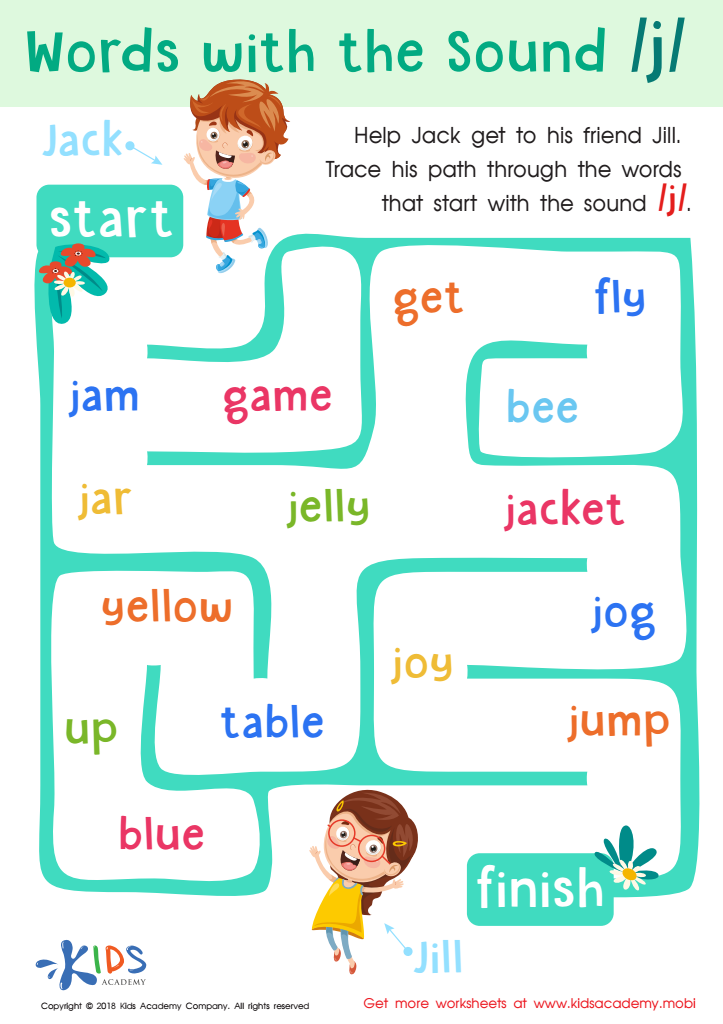
Words with sound j Reading Worksheet
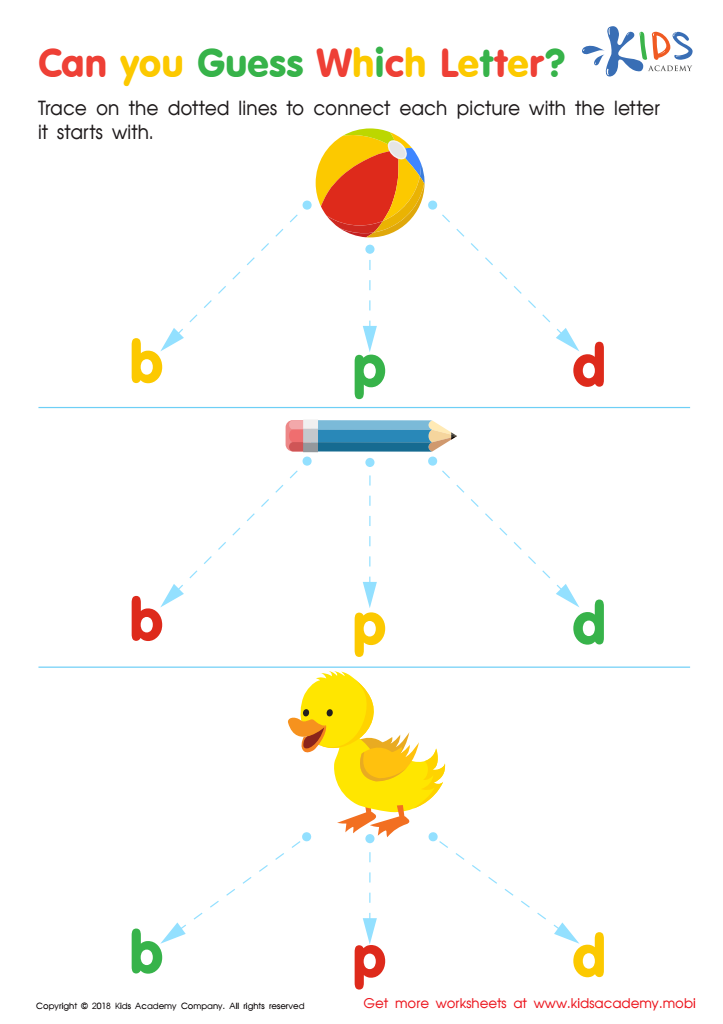
Can you Guess Which Letter? Worksheet
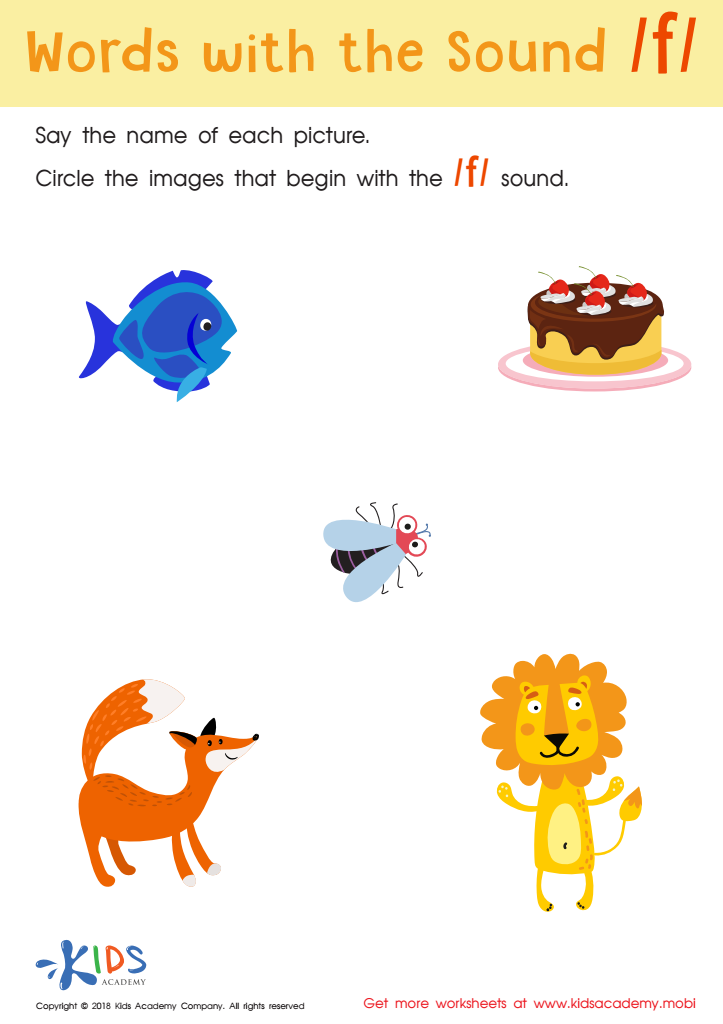
Words with sound f Reading Worksheet
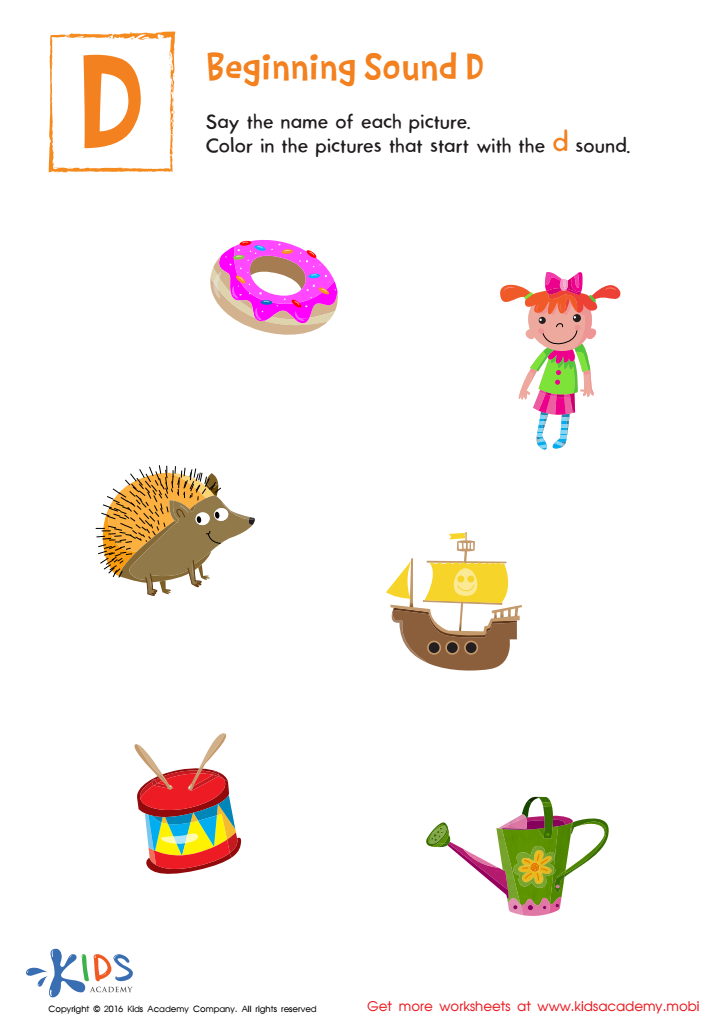
Beginning Sound D Worksheet








Vocabulary expansion and understanding beginning sounds are crucial language skills for children ages 4-5. During this formative period, these abilities lay the foundation for effective communication and later academic success. When parents and teachers focus on vocabulary building, they help children gain a richer grasp of language, enabling them to express thoughts, emotions, and needs more clearly. A broad vocabulary at an early age is closely linked to better reading comprehension and writing skills as children progress through school.
Moreover, understanding beginning sounds—the initial phonemes in words—is a critical component of phonemic awareness. This skill is essential for learning to read because it helps children break down words into smaller, manageable sounds, improving their ability to decode unfamiliar words during reading. Activities like playing sound-matching games or reading rhyming books can make learning beginning sounds enjoyable, reinforcing this important pre-literacy skill.
Parents and teachers play pivotal roles in nurturing these competencies by providing rich and engaging language experiences. Through storytelling, conversation, and interactive play, adults can introduce new words and model the sound structures of language, fostering a growing curiosity and appreciation for words and their meanings. Investing time in vocabulary and sound awareness at this early age builds a strong linguistic foundation, setting children on a path to lifelong literacy and effective communication.







