Alphabet Recognition Letter Sounds Worksheets for Ages 4-5
4 filtered results
-
From - To
Discover our engaging Alphabet Recognition and Letter Sounds Worksheets designed for young learners aged 4-5! These interactive resources help kids master the basics of letter recognition and sound association in a fun, hands-on way. Each worksheet is crafted to foster early literacy skills, featuring vibrant visuals and age-appropriate activities that capture children's imaginations. As they trace, match, and identify letters, children will build confidence and a solid foundation for reading. Perfect for classroom use or at-home learning, our worksheets offer an essential tool for parents and educators dedicated to nurturing a love for letters and sounds in early learners. Start their journey today!
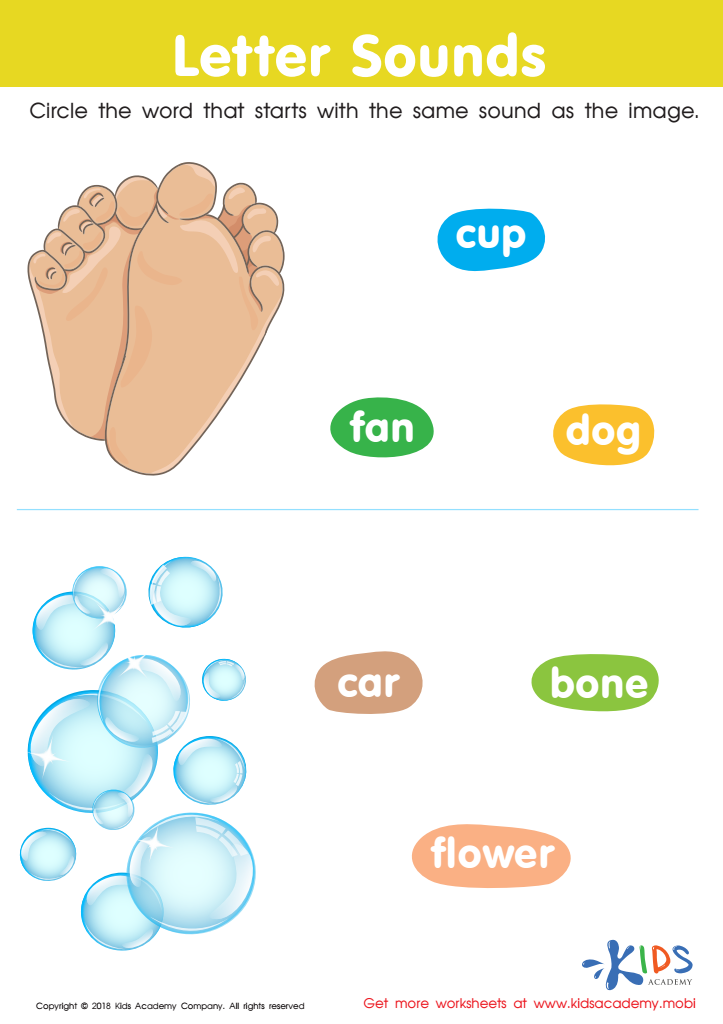
letter sounds Worksheet
 Assign to My Students
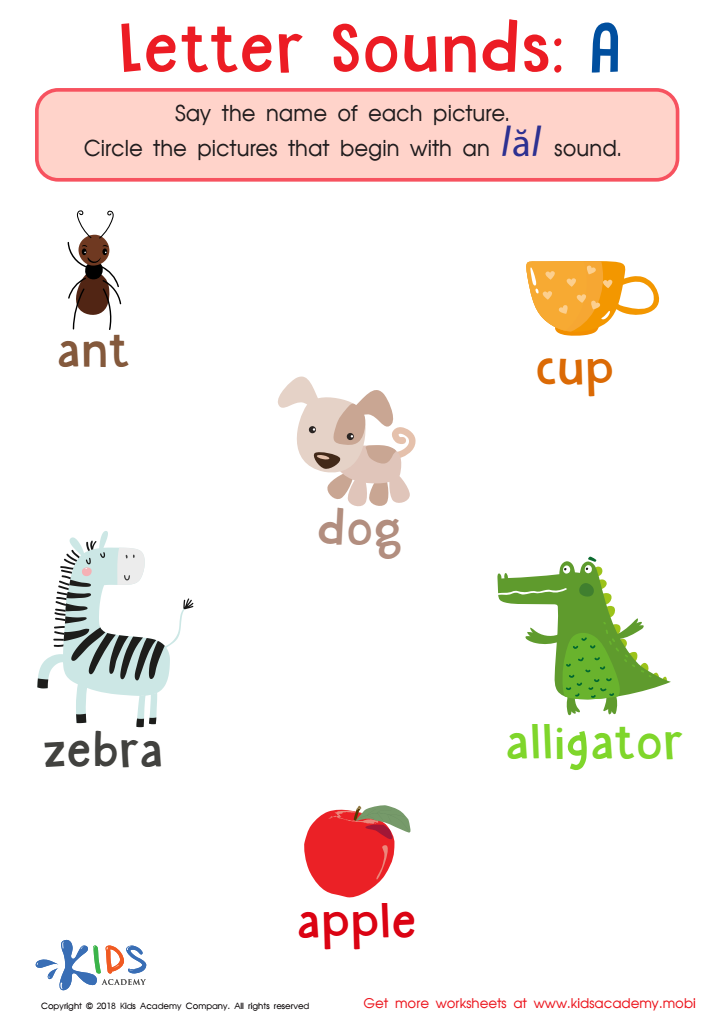
Letter A Sounds Worksheet
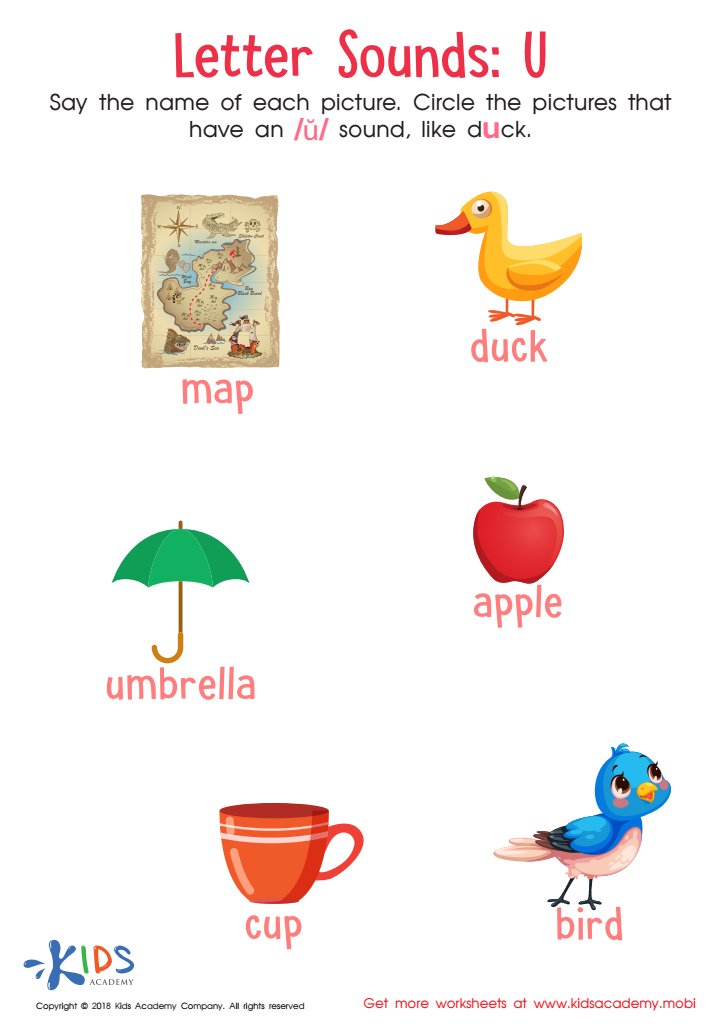
Letter U Sounds Worksheet
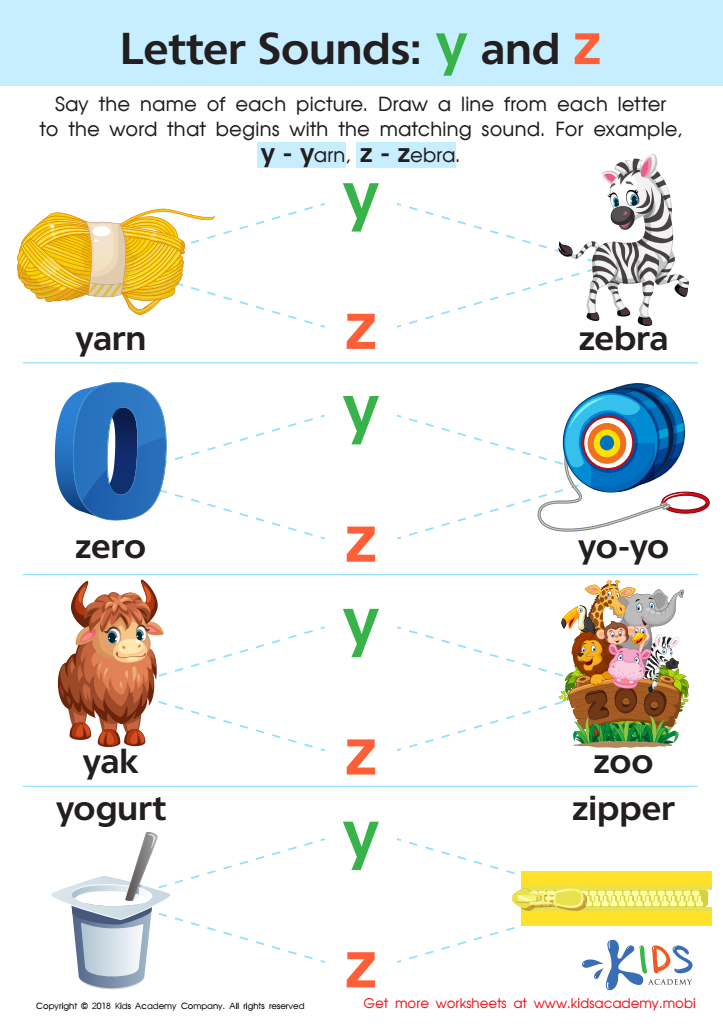
Letter Y and Z Sounds Worksheet








Alphabet recognition and understanding letter sounds are foundational skills essential for early literacy development in children aged 4-5. Parents and teachers should prioritize these skills because they form the building blocks for reading and writing, which are crucial for academic success.
Recognizing letters enables children to identify and manipulate the alphabet, fostering their confidence and interest in reading. When kids learn the sounds each letter makes, they begin to understand how letters connect to form words, facilitating phonemic awareness. This awareness is critical as it aids in spelling and decoding unfamiliar words, enhancing their reading fluency.
Moreover, early engagement in alphabet recognition supports cognitive development, promoting critical thinking and auditory discrimination. These skills are essential for children to process language effectively—not just in literacy, but in communicating and understanding spoken language.
Fostering these skills early encourages a love for learning and often leads to better educational outcomes. Children who grasp alphabet recognition and letter sounds within this critical period are more likely to become proficient readers, affecting their overall academic trajectory positively. By emphasizing these skills, parents and teachers play a vital role in shaping engaged, literate individuals equipped for lifelong learning.







