Letter-sound correlation Letter Sounds Worksheets for Ages 4-5
4 filtered results
-
From - To
Introduce your little learners to the basics of phonics with our "Letter Sounds Worksheets for Ages 4-5." Designed to enhance letter-sound correlation, these engaging worksheets help children recognize and associate letters with their corresponding sounds. Through fun and interactive activities, kids will develop foundational reading skills essential for early literacy. Perfect for home or classroom use, these printables are tailored to keep young minds interested and motivated. Start building your child's confidence in reading today with our expert-designed learning resources! Visit Kids Academy now to explore our comprehensive collection of educational materials.
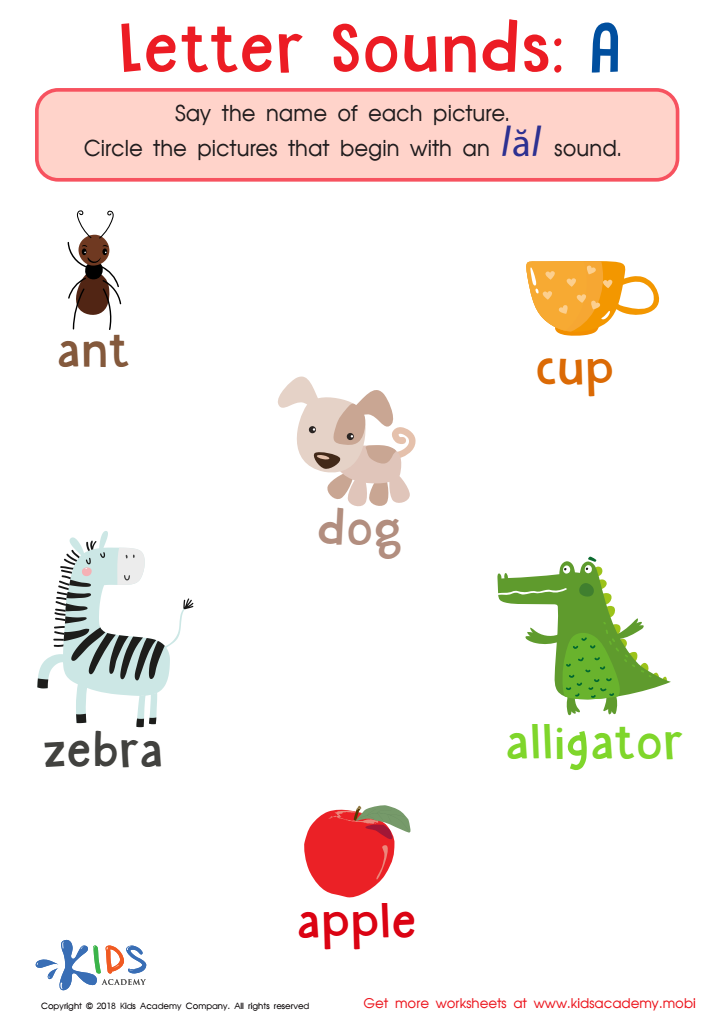
Letter A Sounds Worksheet
 Assign to My Students
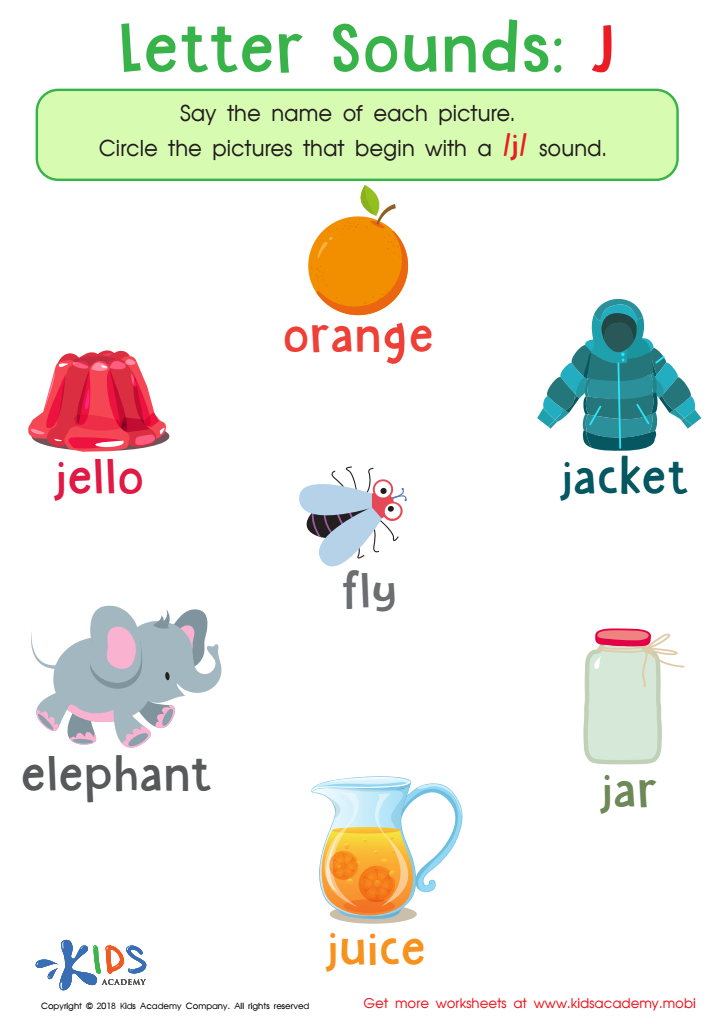
Letter Sounds: J Printable Worksheet
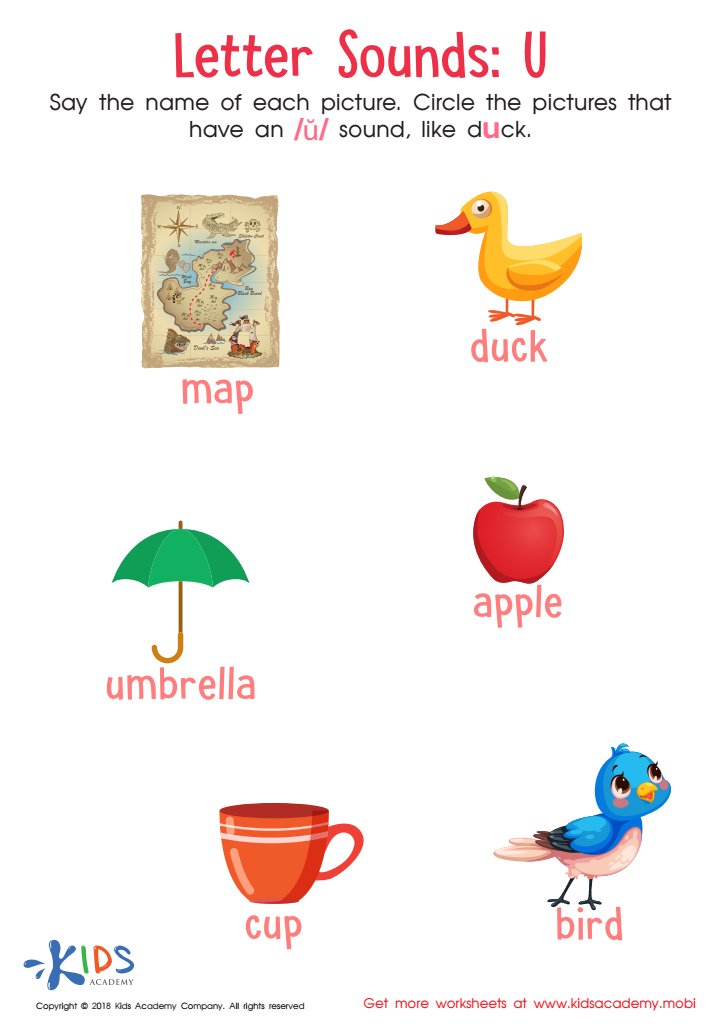
Letter U Sounds Worksheet
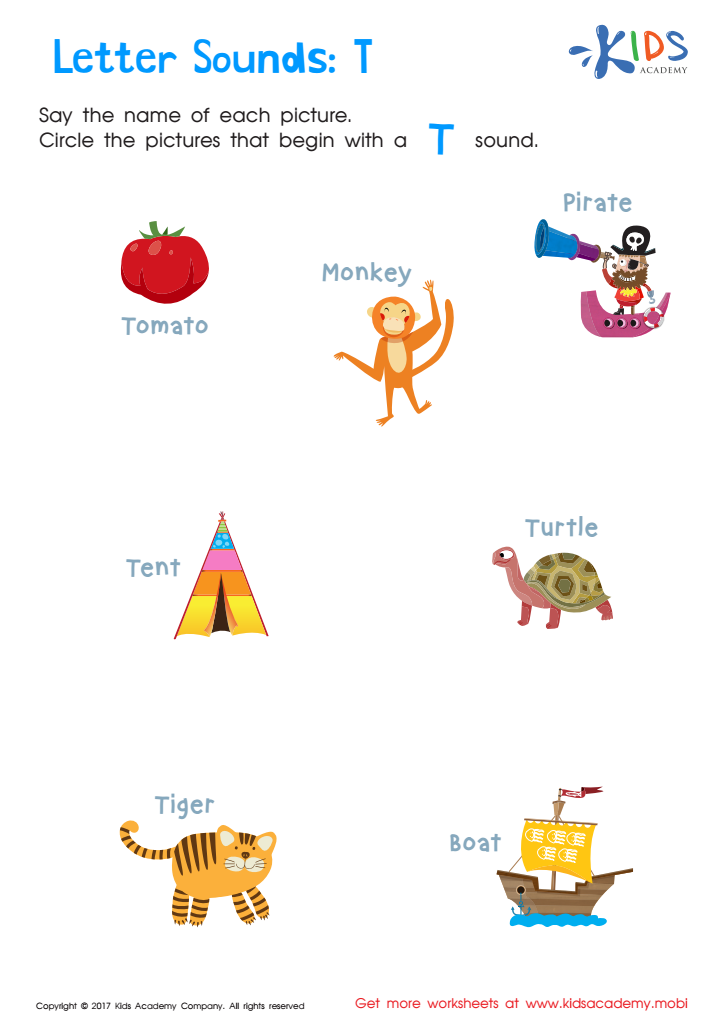
Letter T Sounds Worksheet








Parents and teachers should care about letter-sound correlation for children ages 4-5 because it's a foundational skill for reading and writing development. At this critical age, children are in a sensitive period for language acquisition, and understanding the relationship between letters and their corresponding sounds (phonemic awareness) sets the stage for successful literacy.
Phonemic awareness is crucial because it helps children decode words when they start reading. By recognizing that letters represent specific sounds, children can blend these sounds to form words (sounding out) or isolate them in spelling. This skill directly impacts their ability to develop fluency, comprehension, and a love for reading.
Furthermore, early mastery of letter-sound correlation supports early writing attempts and enhances vocabulary development, as children can start experimenting with putting sounds together to form words. This not only fosters confidence but also ensures they are on track with their expected milestones, which can impact their overall academic success.
Providing rich letter-sound correlation experiences at ages 4-5, through engaging and interactive activities, can make the learning process enjoyable and effective. It's an investment in their educational foundation that will facilitate a smoother transition into subsequent learning stages and encourage lifelong literacy skills.







