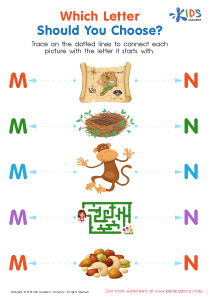
Lowercase letter writing Lowercase/Small Letters Worksheets for Ages 4-5
3 filtered results
-
From - To
Unlock your child's writing potential with our engaging "Lowercase Letter Writing" worksheets designed for ages 4-5. These interactive and fun-printable sheets help young learners master the alphabet with ease. Each worksheet is crafted to develop fine motor skills while introducing proper handwriting techniques. Colorful visuals and tracing exercises make learning lowercase letters enjoyable and effective. Foster your child's early literacy with our expertly designed resources, setting the foundation for reading and writing success. Perfect for parents and teachers alike, these worksheets offer a proven approach to mastering small letters in a joyful and rewarding way.
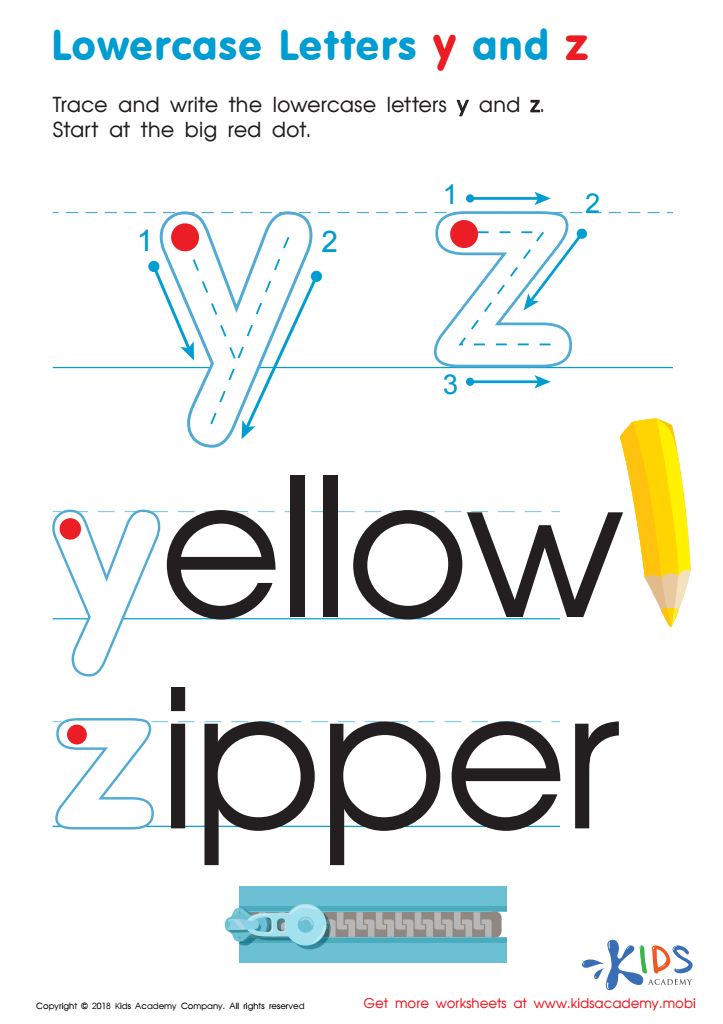
Lowercase Letters y z Worksheet
 Assign to My Students

Lowercase Letters j k l Worksheet
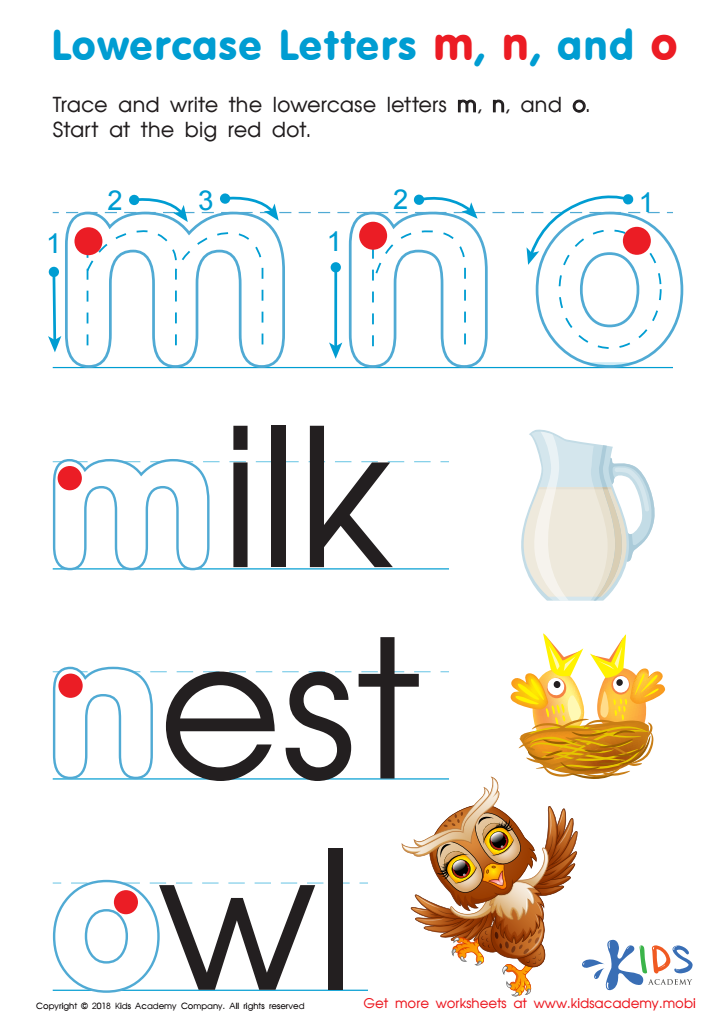
Lowercase Letters m n o Worksheet


Parents and teachers play a vital role in early childhood development, and fostering strong lowercase letter writing skills in children ages 4-5 is crucial. Lowercase letters are fundamental building blocks of written communication; approximately 95% of written English text is comprised of lowercase letters. Mastering these early ensures children can read and write efficiently, setting a solid foundation for future literacy.
Young children typically start with uppercase letters because they are simpler to form and recognize. However, transitioning to lowercase letters helps develop fine motor skills, hand-eye coordination, and cognitive abilities essential for more complex tasks. By integrating lowercase letter practice early, educators and parents help smoothen this transition, making writing feel less daunting and more automatic for youngsters.
Comfort with lowercase letters also builds confidence and encourages more frequent writing practice. This can lead to enhanced spelling and phonetic skills, as children learn to associate sounds with their written symbols more naturally. Additionally, consistent practice can decrease the frustration often experienced by young learners, fostering a positive attitude towards learning.
Overall, emphasizing lowercase letter writing in early education enriches a child's linguistic skills, enhances self-reliance, and prepares them for academic success through a balanced and comprehensive approach to literacy development.