Filters

7 filtered results

Clear all filters
Favorites
With answer key
Interactive

7 filtered results

Difficulty Level

Grade


Welcome to our engaging "Reading Comprehension Rhyming Worksheets" designed specifically for children aged 4-5! These worksheets provide a fun and interactive way for young learners to enhance their reading comprehension skills through the magic of rhymes. Each activity encourages vocabulary development and critical thinking while fostering a love for language. Kids will enjoy connecting words, identifying patterns, and practicing pronunciation, all within a playful framework that makes learning enjoyable. Perfect for preschoolers and kindergarteners, our worksheets pave the way for early literacy success and cultivate confidence in reading. Dive in and watch your child's reading skills flourish!

Check out this FREE Trial Lesson on Rhyming for age 4-5!

Recognize Words that Rhyme

Favorites
With answer key
Interactive
  • 4-5
  • Reading comprehension
  • Rhyming
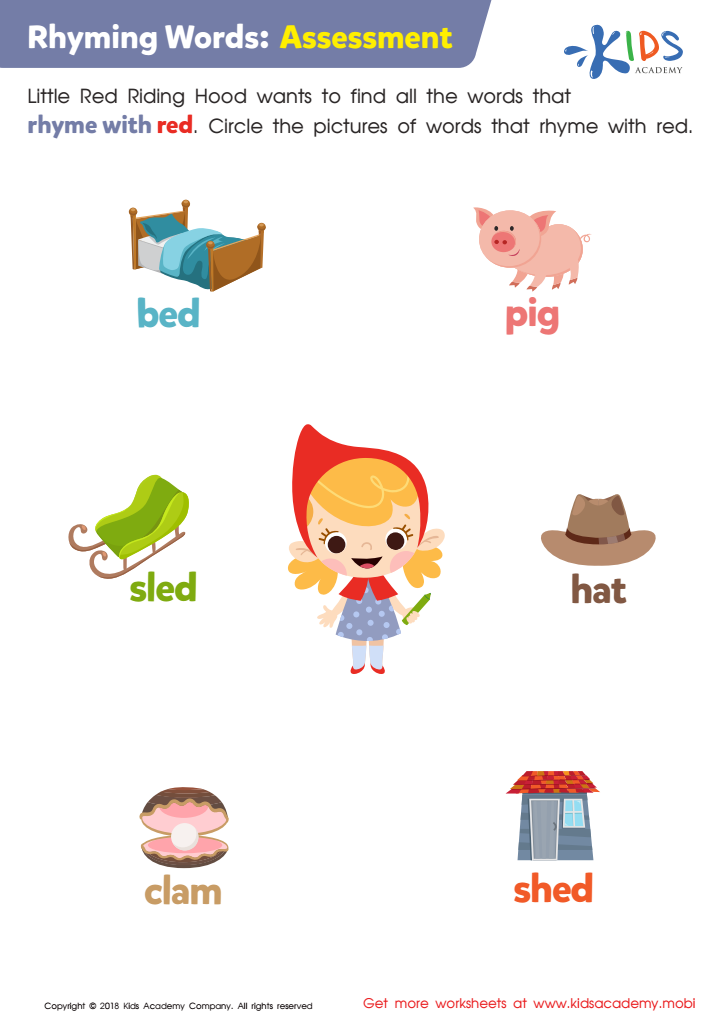
Rhyming Words: Assessment Worksheet

Rhyming Words: Assessment Worksheet

Help Little Red Riding Hood find rhyming words with "red". Download and print this worksheet. Have your child circle the rhyming words and pictures. Get them to say each word out loud and compare it to the word "red". When they're done, review the answers and talk about any words that don't rhyme.
Rhyming Words: Assessment Worksheet
Worksheet
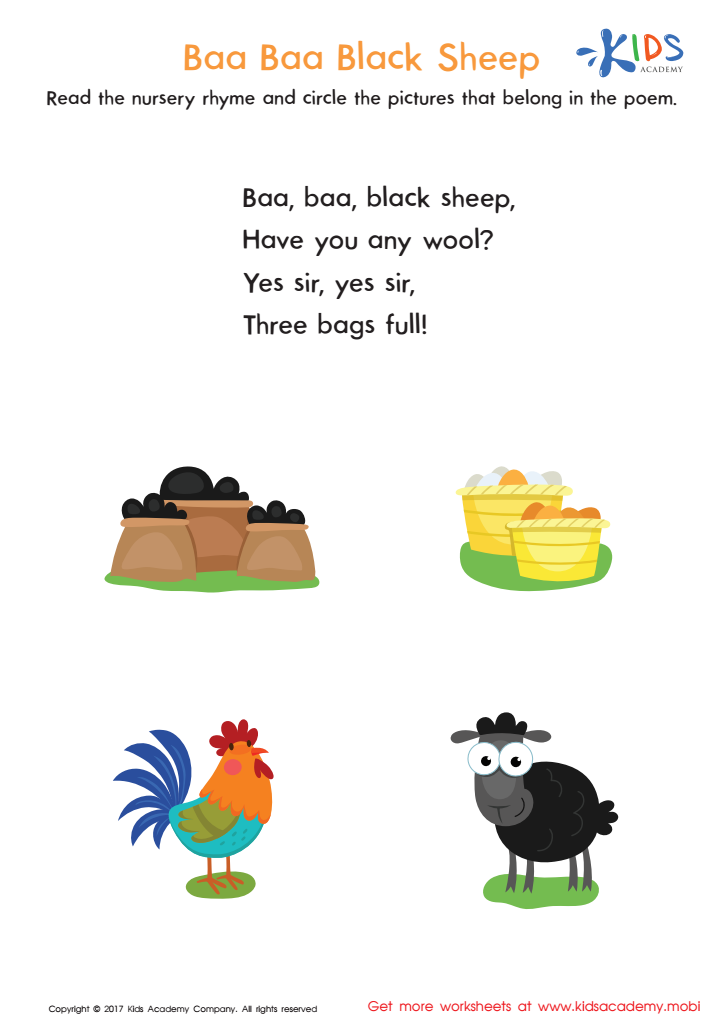
Baa Baa Black Sheep printable worksheet

Baa Baa Black Sheep Printable

Jumpstart your child's reading skills with this printable Baa Baa Black Sheep worksheet! Recite the lines with them, then have them select the pictures associated with the poem to test comprehension. Fun and educational!
Baa Baa Black Sheep Printable
Worksheet
Rhyming Words Worksheet PDF

Rhyming Words Rhyming Worksheet

This worksheet is great for honing pre-reading skills. It helps kids make connections between pictures and written words, use problem-solving, and recognize sounds and words that rhyme. Have fun exploring rhyming words with your child, and they'll be rhyming in no time!
Rhyming Words Rhyming Worksheet
Worksheet
Picture Rhymes Printable

First Words: Picture Rhymes Worksheet
Rhyming helps kids understand language, read and write better. This printable worksheet boosts problem-solving and cognitive skills with vibrant pictures. It teaches kids to identify words, recognize rhymes, complete mental tasks and write words. An extra activity: show them how rhyming words share some of the same letters.
First Words: Picture Rhymes Worksheet
Worksheet
Rhyming Words Worksheet for Kindergarten

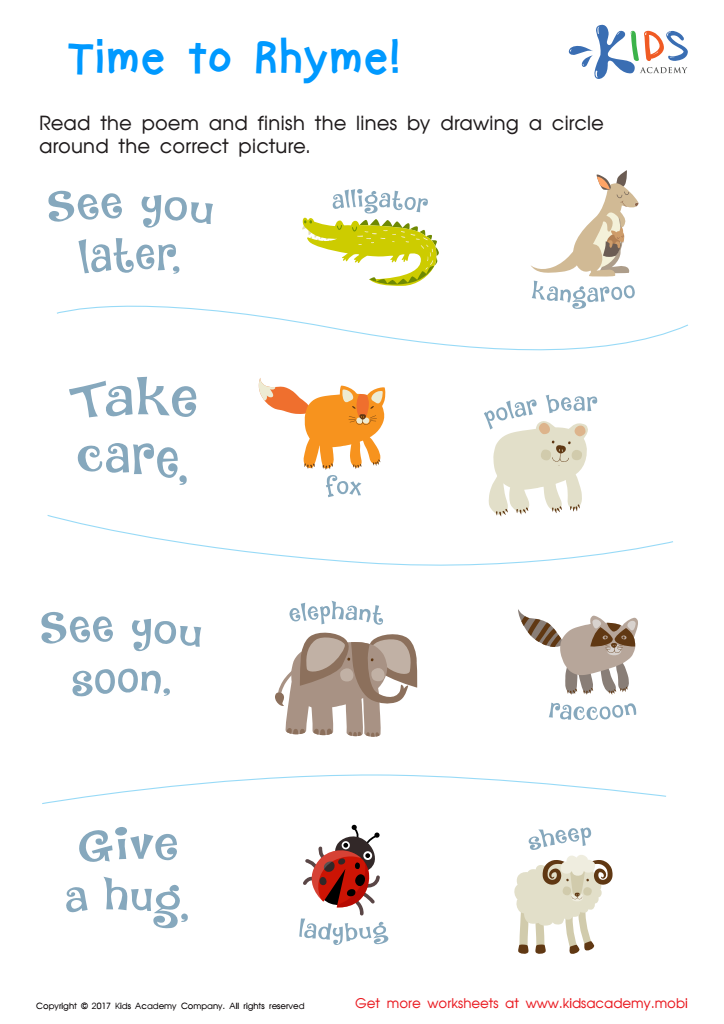
Time to Rhyme Rhyming Worksheet

This worksheet helps kids learn catchy sayings with rhymes, notice words and sounds that rhyme, and use problem solving to solve expressions. By using these expressions in everyday talk, kids gain the repetition needed to internalize the skills they've learned. Check out our nursery rhymes to further support them!
Time to Rhyme Rhyming Worksheet
Worksheet
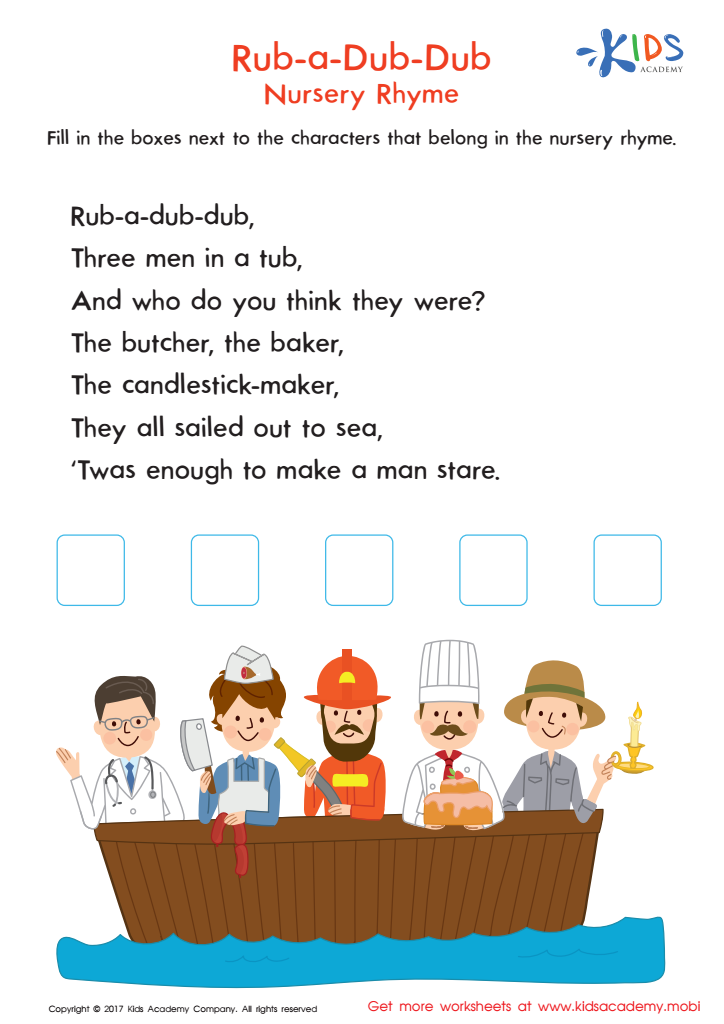
Printable nursery rhyme: Rub a Dub Dub

Rub a Dub Dub Printable

Delight your child and foster early reading skills with this printable nursery rhyme, Rub a Dub Dub! Let your little reader select the three men in the tub and practice important reading comprehension skills.
Rub a Dub Dub Printable
Worksheet
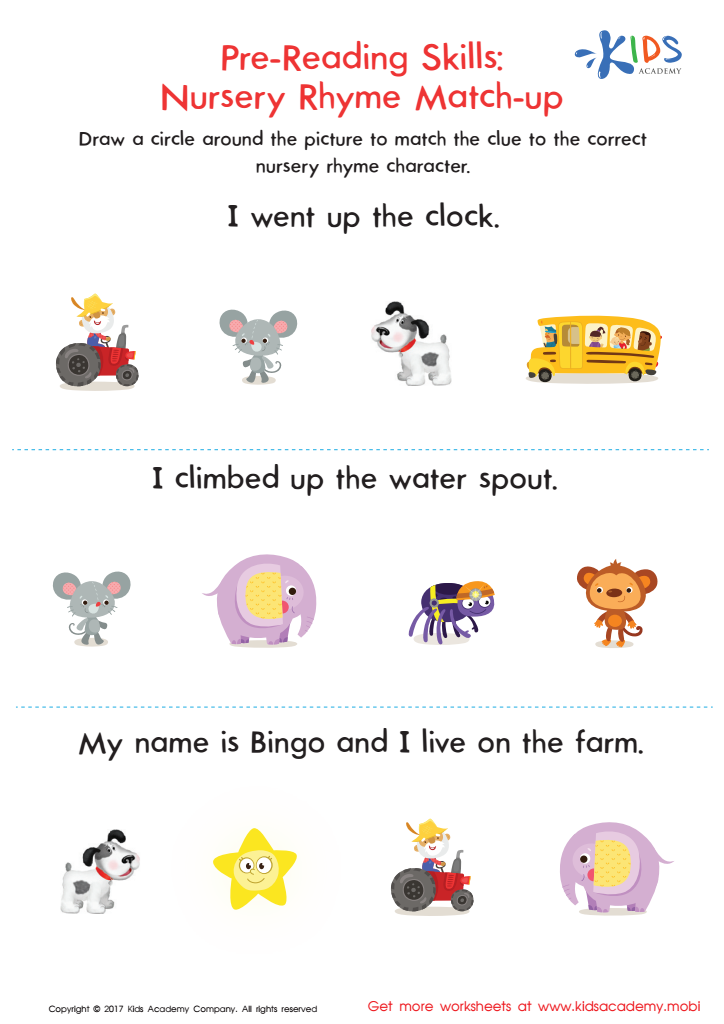
Nursery rhyme match-up worksheet

Nursery Rhyme Match–Up Worksheet

This worksheet helps kids build pre-reading skills using stories they know and love! By connecting with prior knowledge, kids can develop ideas about characters and set the stage for reading strategies.
Nursery Rhyme Match–Up Worksheet

Worksheet


Reading comprehension and rhyming play a crucial role in the literacy development of children aged 4-5. At this stage, children are like sponges, soaking up language and making connections through various sounds and patterns. Rhyming facilitates phonemic awareness, which is the foundation for reading. When children recognize rhyming words, they improve their ability to segment and blend sounds, essential skills for decoding new words as they begin to read independently.

Additionally, engaging with rhymes enhances vocabulary development. When children encounter rhyming texts, they are exposed to new words in a playful and memorable context, making it easier for them to grasp and use these words in their own speech. Furthermore, rhyming activities and stories foster listening skills, boost memory, and promote a love for books which serves to motivate lifelong reading habits.

Parents and teachers should prioritize reading comprehension through rhyming because it builds not just literacy skills but also confidence in children's verbal abilities. Moreover, when children engage joyfully with language, it nurtures a positive attitude towards learning. Ultimately, strong foundational skills in reading comprehension and rhyming set children on a path for future academic success.