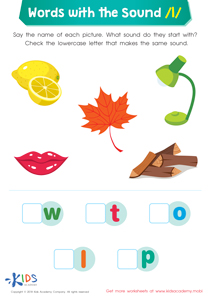
Uppercase identification Uppercase Letters Worksheets for Ages 4-5
5 filtered results
-
From - To
Introduce your child to the world of uppercase letters with our engaging Uppercase Identification Worksheets designed specifically for ages 4-5! These worksheets provide a fun and interactive way for young learners to recognize, trace, and master uppercase letters. Filled with colorful illustrations and age-appropriate activities, children can practice their letter identification skills while enhancing their fine motor abilities. Our worksheets make learning enjoyable, promoting confidence and literacy development. Perfect for at-home learning or classroom settings, these resources ensure that your little one gets a strong foundation in the alphabet. Start your uppercase adventure today!
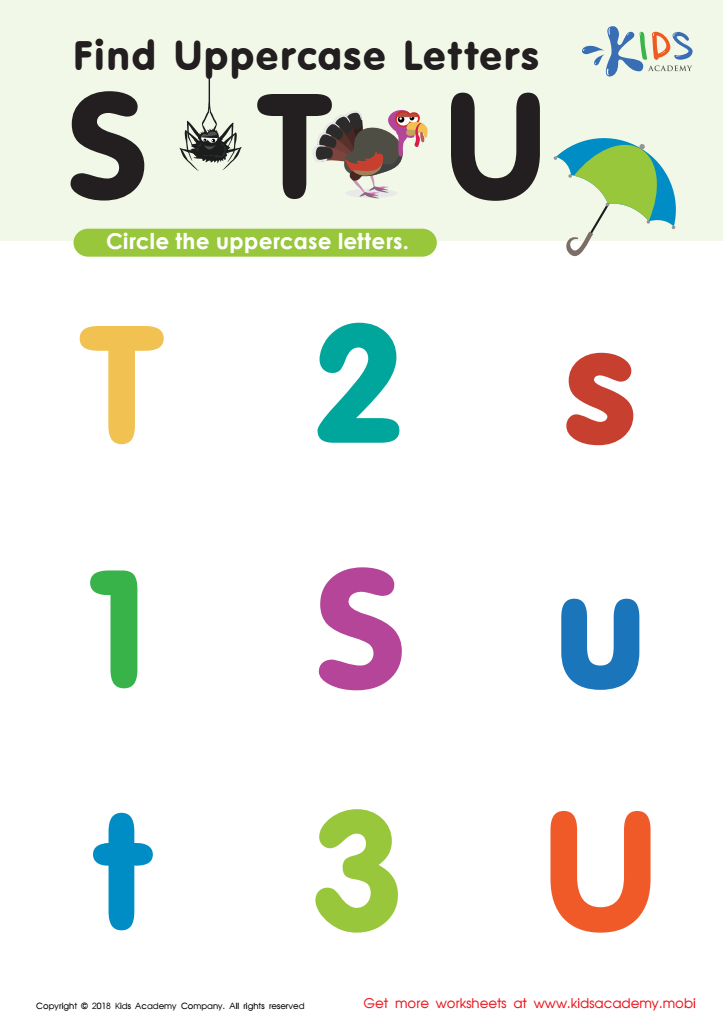
Find Uppercase Letters Worksheet
 Assign to My Students
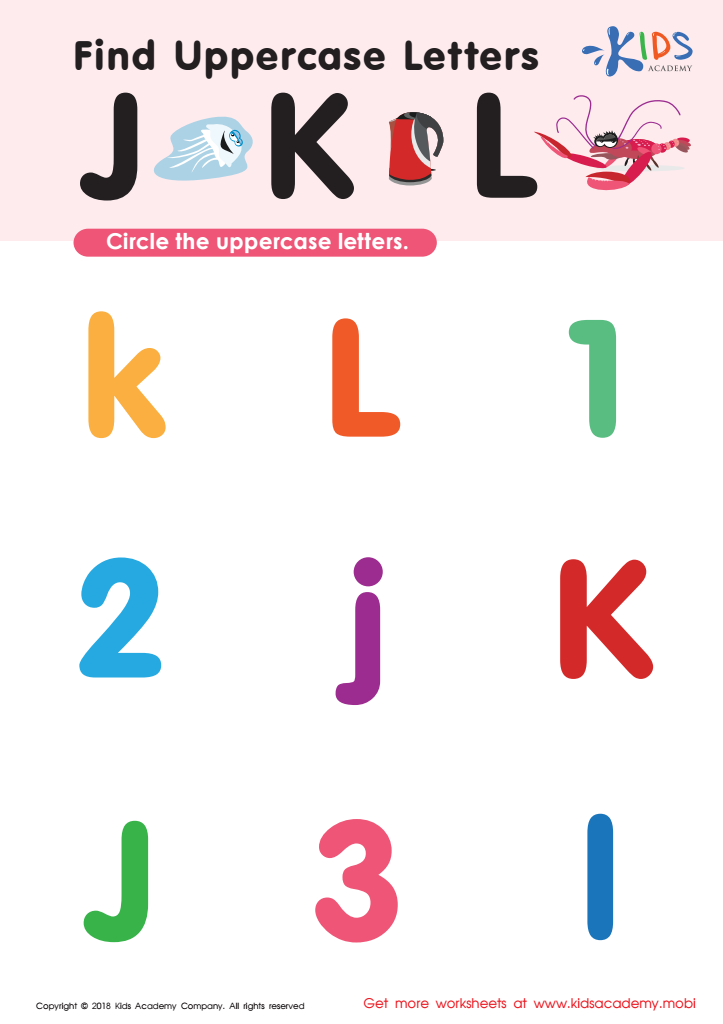
Find Uppercase Letters J, K, and L Worksheet
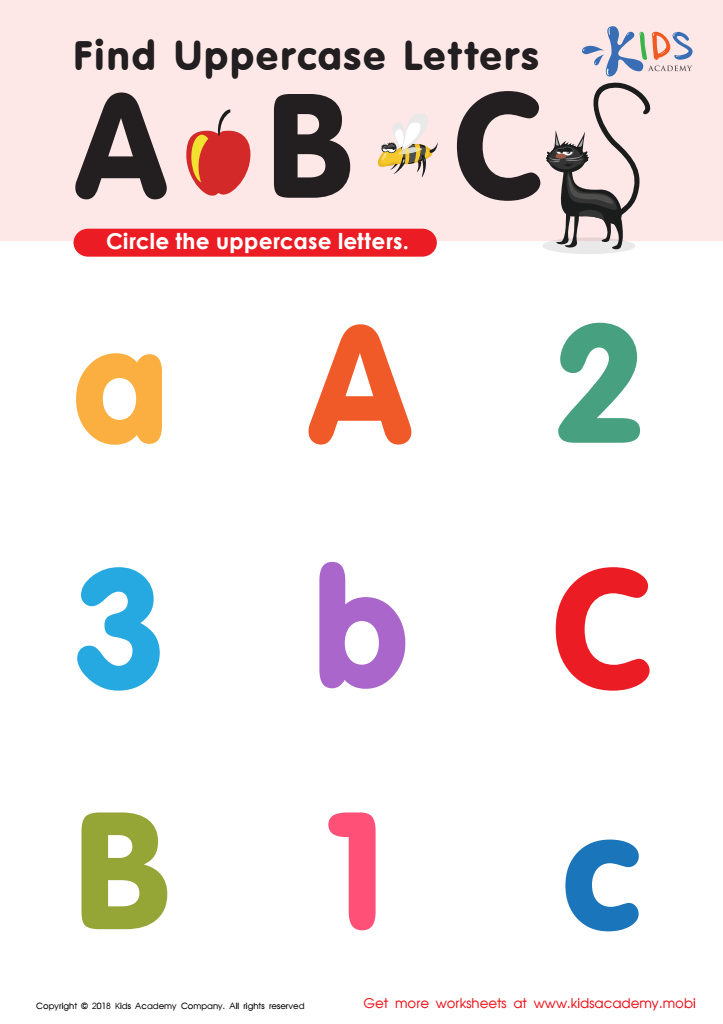
Find Uppercase Letters A, B, and C Worksheet
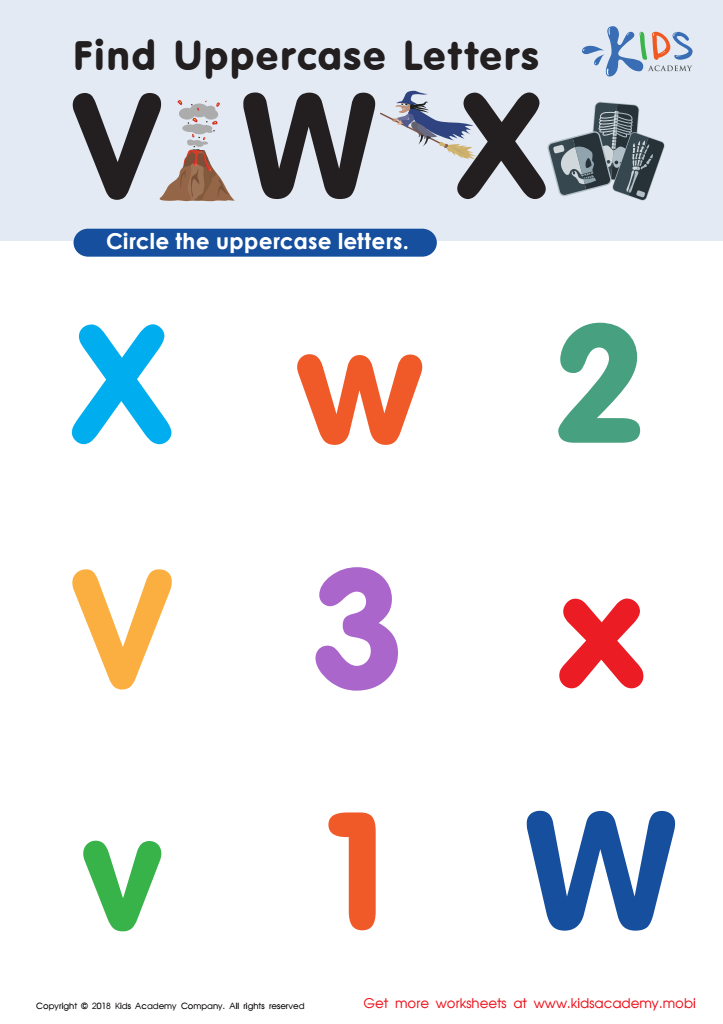
Find Uppercase Letters V, W, X Worksheet
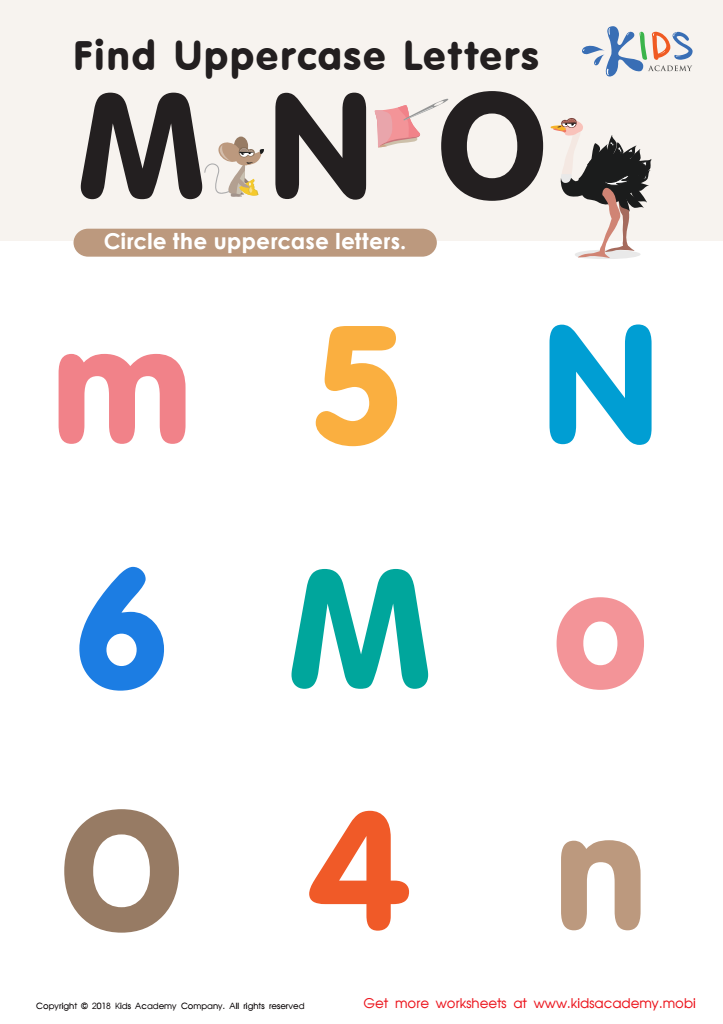
Find Uppercase Letters M, N, and O Worksheet








Uppercase letter identification is a fundamental skill for children aged 4-5, laying the foundation for literacy and communication. At this age, children are beginning to recognize letters and their sounds, which are essential components of reading and writing. Understanding uppercase letters helps them learn how to form words and sentences, enabling early literacy development.
Parents and teachers play a crucial role in nurturing this skill, as it enhances cognitive development and boosts language acquisition. Recognizing uppercase letters enables young learners to identify their names, important signs, and other written materials in their environment, which fosters confidence and independence.
Additionally, uppercase letters are often more visually distinct and memorable for young children. Introducing and engaging them in activities that focus on letter recognition, such as games, songs, and arts and crafts, makes learning fun and effective. When children can identify uppercase letters, they are more prepared to transition into uppercase and lowercase letter matching and their sounds and writing skills.
In summary, both parents and teachers should prioritize uppercase letter identification, as it plays a vital role in helping children build a strong literacy foundation and develop key cognitive and social skills essential for their educational journey.