Fine Motor Skills Color Words Worksheets for Ages 4-5
4 filtered results
-
From - To
Enhance your child's fine motor skills with our engaging Fine Motor Skills Color Words Worksheets, designed specifically for children ages 4-5. These fun and educational worksheets are tailored to help young learners master color words while improving their hand-eye coordination and precision. Perfect for early childhood development, each activity combines coloring, tracing, and writing exercises that make learning both enjoyable and effective. Ideal for preschool and kindergarten classrooms or at-home practice, our worksheets provide a solid foundation in essential early learning skills. Boost your child's confidence and set the stage for future academic success with our expertly crafted resources.
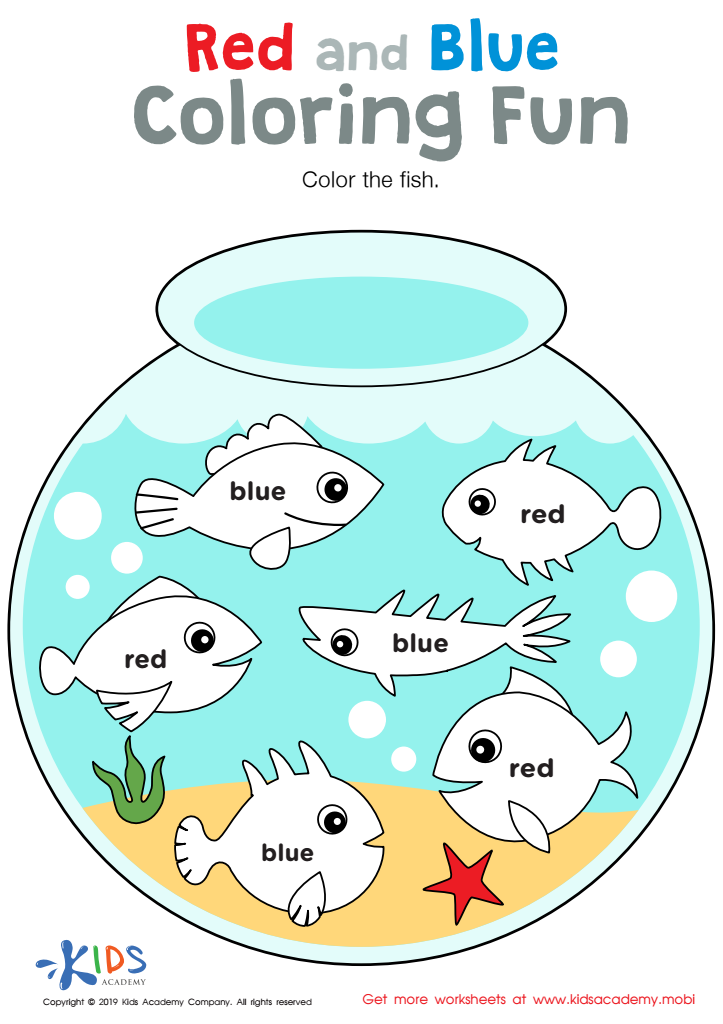
Red and Blue Coloring Fun Worksheet
 Assign to My Students
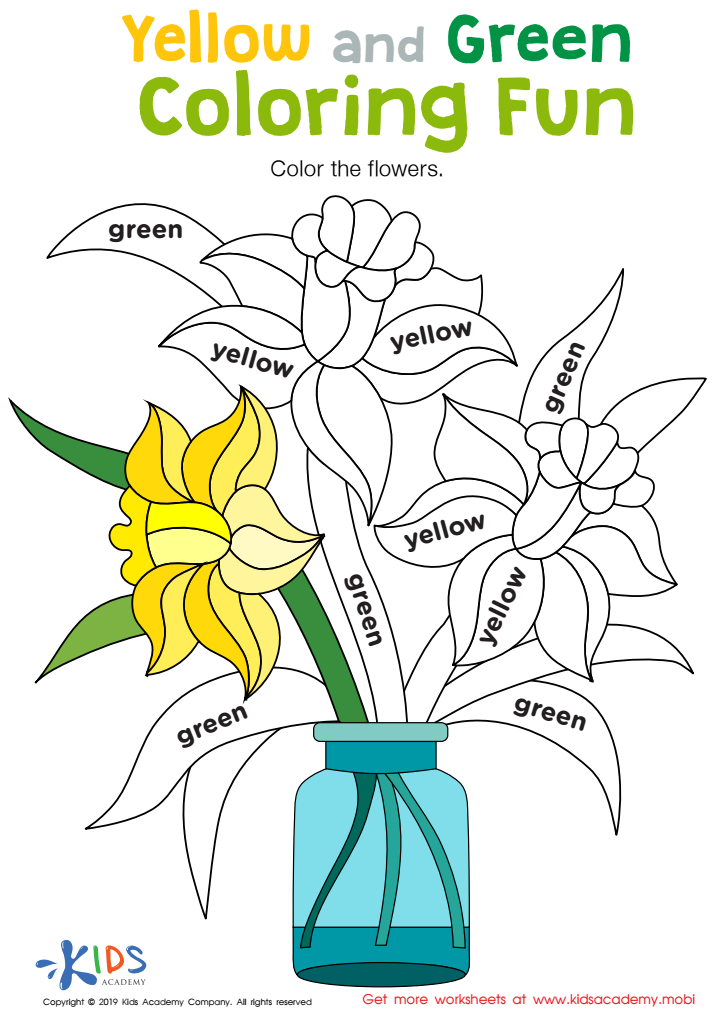
Yellow and Green Coloring Fun Worksheet
Assign to My Students
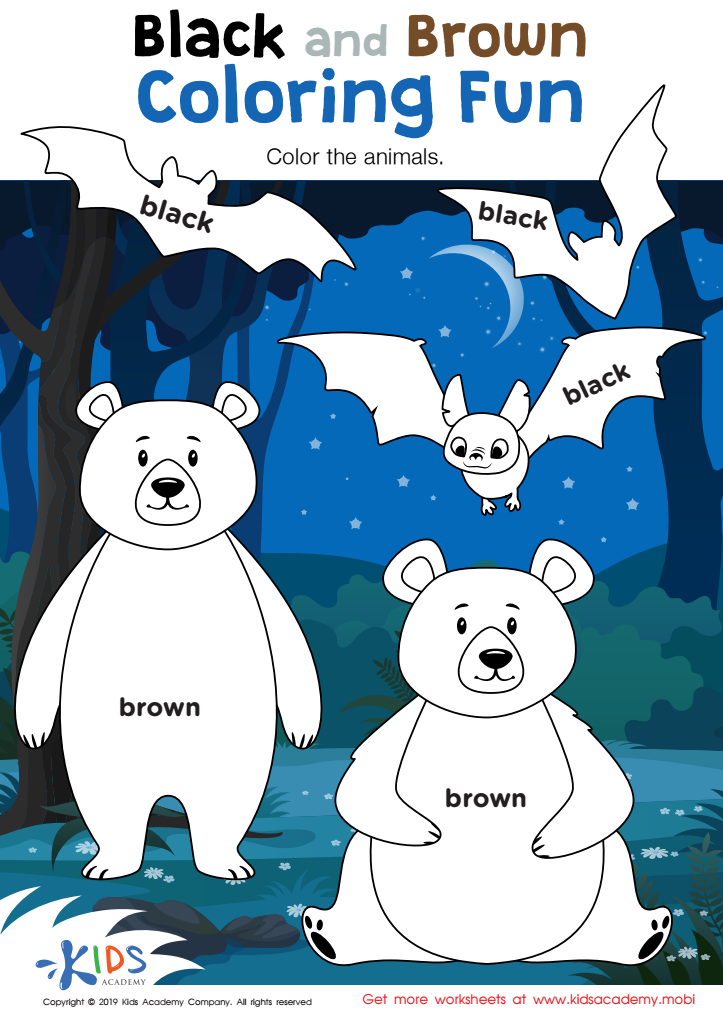
Black and Brown Coloring Fun Worksheet
Assign to My Students
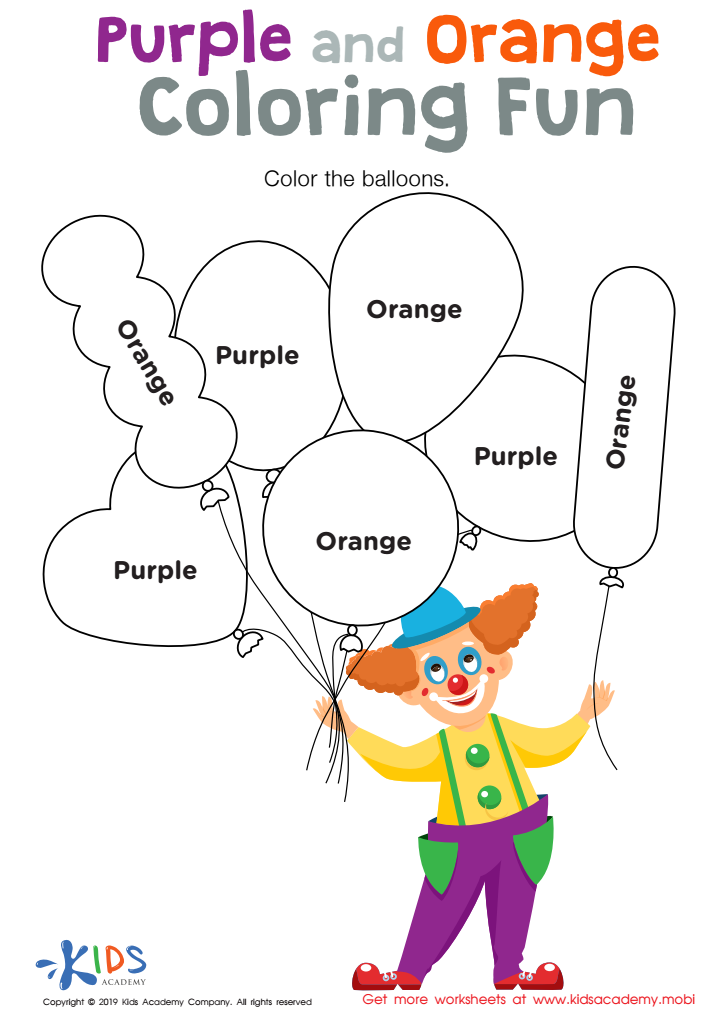
Purple and Orange Coloring Fun Worksheet
Assign to My Students



Fine motor skills are the foundational abilities that involve the use of the small muscles in the hands and fingers, crucial for tasks such as writing, buttoning clothes, and tying shoelaces. For children aged 4-5, developing fine motor skills is essential as they prepare to enter kindergarten and engage in more structured learning environments.
Engaging children in activities that enhance fine motor skills, like coloring within lines and learning color words, serves multiple developmental functions. First, coloring helps refine hand-eye coordination, bolster hand strength, and improve grip control—preparing little hands for holding pencils or other writing instruments. Familiarity with color words not only enriches their vocabulary but also reinforces cognitive skills like memory, matching, and attention to detail. By identifying and naming different colors, children enhance their visual discrimination skills, which are fundamental for recognizing shapes, patterns, and eventually letters and numbers.
Moreover, these activities can boost confidence and independence, allowing children to complete tasks without constant adult assistance. They also foster creativity and self-expression, which are important at this tender age. Overall, for parents and teachers, investing time in activities that promote fine motor skills and color recognition sets a strong academic and developmental foundation, ensuring that children are well-prepared for future schooling.








