
Basic math abilities Worksheets for Ages 4-5
3 filtered results
Difficulty Level
Grade
Age
-
From - To
Subject
Activity
Standards
Discover our engaging Basic Math Abilities Worksheets designed for ages 4-5! Perfect for preschool and kindergarten learners, these worksheets cover fundamental concepts like counting, number recognition, basic addition, shapes, and more. Crafted by educational experts, these printable resources turn learning into a joyful experience, nurturing mathematical curiosity and building a strong foundation. Whether at home or in the classroom, our themed worksheets combine colorful illustrations with interactive exercises to captivate young minds. Empower your child with essential math skills through fun and effective practice. Spark early math success today with Kids Academy's carefully curated collection!
Favorites
With answer key
Interactive
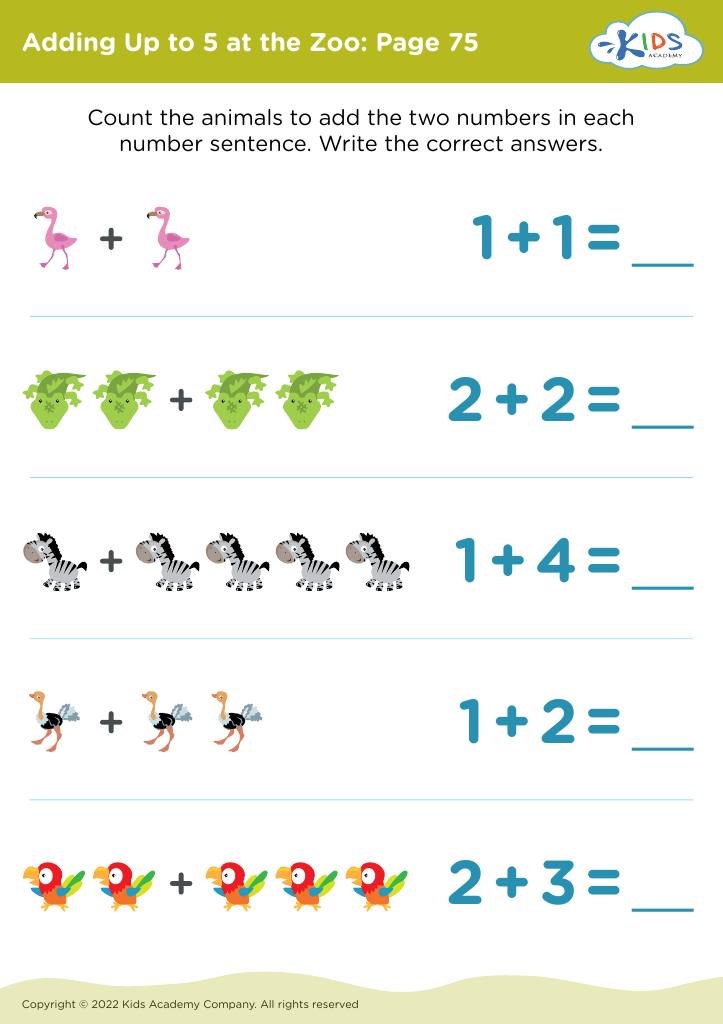
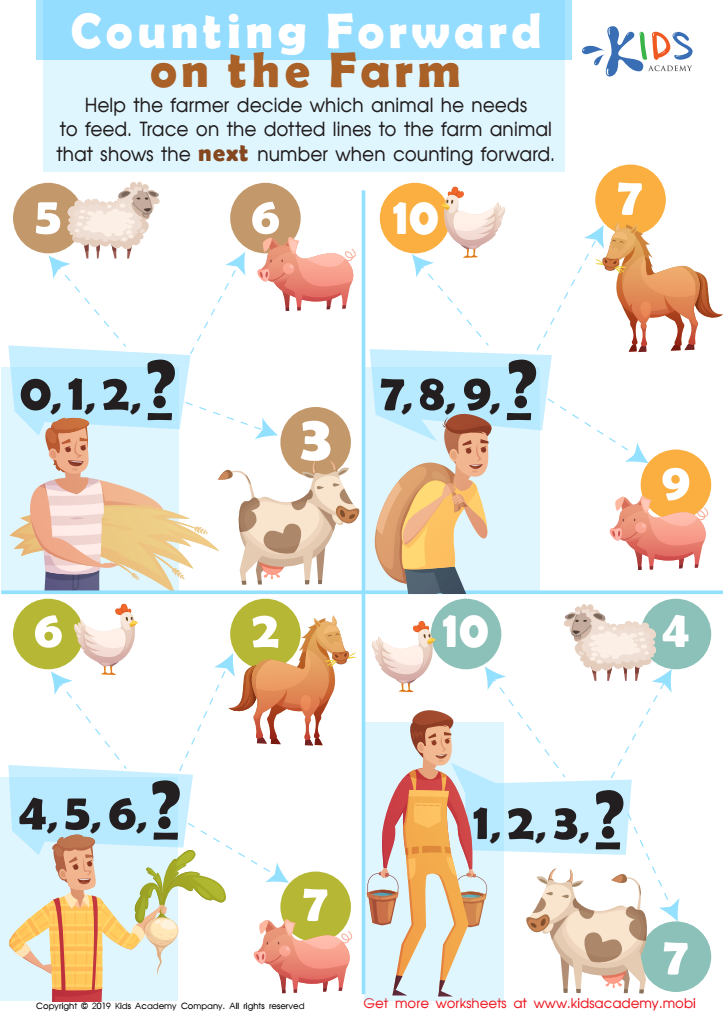
Counting Forward On the Farm Worksheet
Help your child practice counting with this fun worksheet. Have them help a farmer feed the right animal by counting on from a starting point. This activity will help them build number line thinking and refine fine motor skills.
 Assign to My Students
Counting Forward On the Farm Worksheet
Worksheet
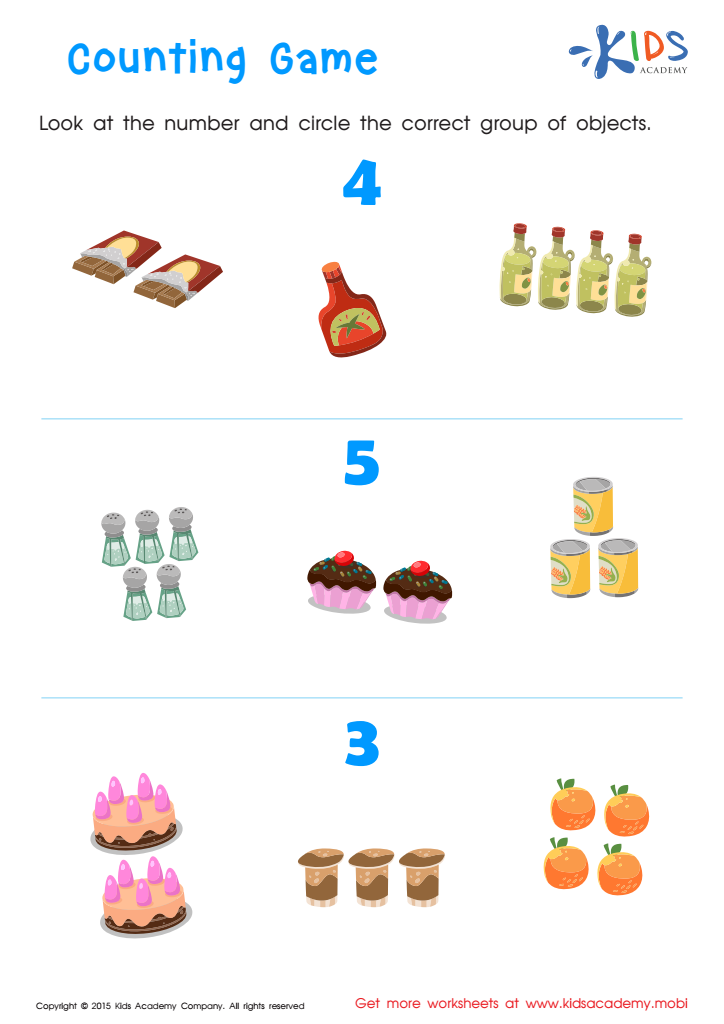
Counting Worksheet
Kids can connect printed numbers to groups of objects on this worksheet, helping them learn math by visually seeing item groups. Give your preschooler a fun, interactive way to learn counting!
Counting Worksheet
Worksheet
Join Kids Academy for Free
Who is primarily going to use this learning content?



.jpg)




Parents and teachers should care about basic math abilities for ages 4-5 because early mathematical skills are foundational to a child's cognitive development. During this developmental stage, children are like sponges, absorbing information and forming neural connections. Introducing basic math concepts such as counting, recognizing numbers, and understanding simple patterns helps set the groundwork for more complex mathematical reasoning later in life.
Developing math skills early also fosters critical thinking and problem-solving abilities. These skills are not only crucial for academic success but also for everyday decision making and logical reasoning. Moreover, early exposure to math concepts can boost a child’s confidence and interest in the subject, reducing math anxiety that often develops in later years.
Mastering basic math skills is equally essential for social interactions. Activities like sharing, dividing groups fairly, and following sequences in play teach cooperation and fair play. Additionally, basic math lays the groundwork for STEM (Science, Technology, Engineering, Mathematics) education, fields that are increasingly vital in our technologically advanced world.
In essence, developing basic math abilities at an early age paves the way for academic success, personal confidence, and the ability to navigate and understand the world more comprehensively, making it a crucial area of focus for parents and teachers alike.








